Here’s your guide for exploring the southeastern Virginia natural gem that is the Great Dismal Swamp.
Spread across parts of southeastern Virginia and northeastern North Carolina, the Great Dismal Swamp has a long and storied history. Having once spanned one million acres and served as a home for Native Americans and freedom seekers, the refuge is now a national wildlife refuge.
Whether you want to casually admire the area’s beauty or prefer to venture deep into the swamp, here’s your guide for exploring the Great Dismal Swamp National Wildlife Refuge.
History of the Great Dismal National Wildlife Refuge
With its rugged nature and bountiful resources, the swamp has long served as a refuge for people and wildlife.
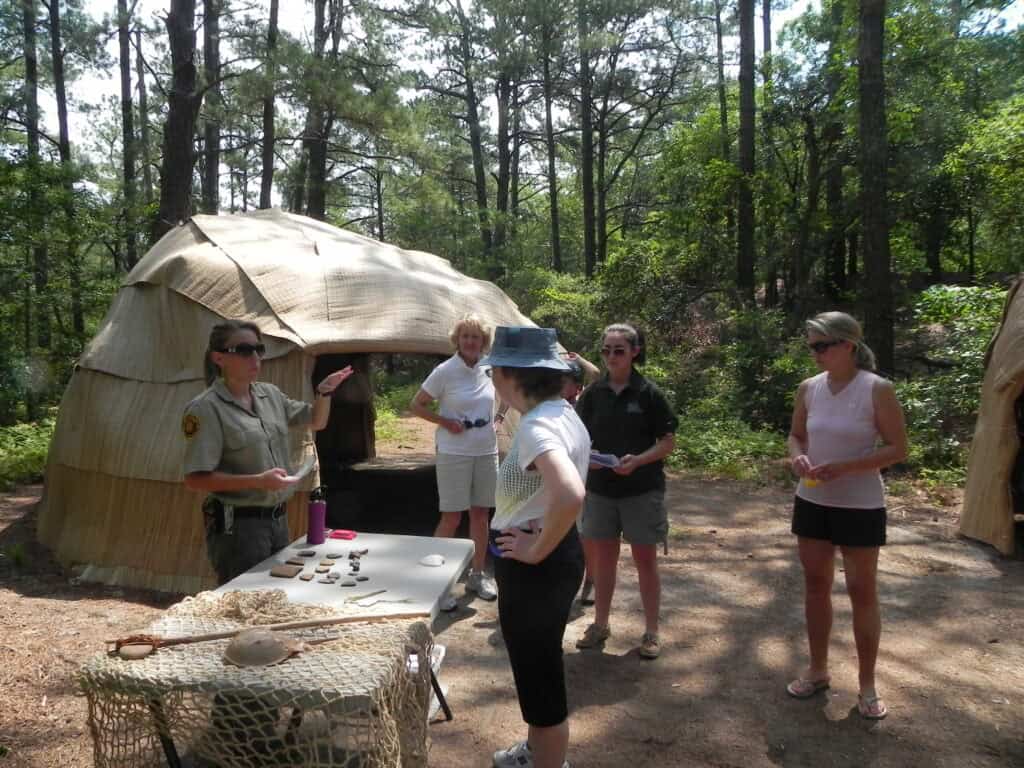
Surprisingly, indigenous peoples such as the Nansemond, Meherrin, Yeopim, and Lumbee lived on mesic islands in the swamp 5,000 years ago. Their tools, including weapons and projectile points, have been uncovered through archaeological digs.
The swamp was later used as a hiding place by those seeking freedom, from the late 1600s through the Civil War. Self-emancipated African Americans, free Black folks, indigenous people, and certain Europeans numbering around 50,000 lived on remote islands in the swamp. Those fleeing slavery also used the swamp as a stopping point on their way to the north.
In 1728, the swamp was named by William Byrd II while he traveled there to survey the line dividing Virginia from North Carolina. Not surprisingly, he found the moist ground to be dismal.
George Washington later put his stamp on the swamp when he and a group of investors formed the Dismal Swamp Company in 1763. The idea was to create usable land by draining the swamp. To that end, they formed drainage ditches and roads using the labor of enslaved workers. Even though the effort didn’t take off, it kick-started a lumber harvesting boom in the swamp.
Nearly 200 years later, nearly all the swamp’s lumber had been harvested. In 1973, on George Washington’s birthday, the forest products company, the Union Camp Corporation, donated 49,097 acres of swamp land to the Nature Conservancy. It was then transferred to the Department of the Interior’s U.S. Fish & Wildlife Service, becoming the Great Dismal Swamp National Wildlife Refuge.
Congress later passed the Dismal Swamp Act of 1974, which directed the U.S. Fish and Wildlife Service to manage the area to protect and preserve its ecosystem.
The Great Dismal Swamp now spans 113,000 acres, making it the largest intact remnant of an original swamp that once covered more than a million acres.
Lake Drummond
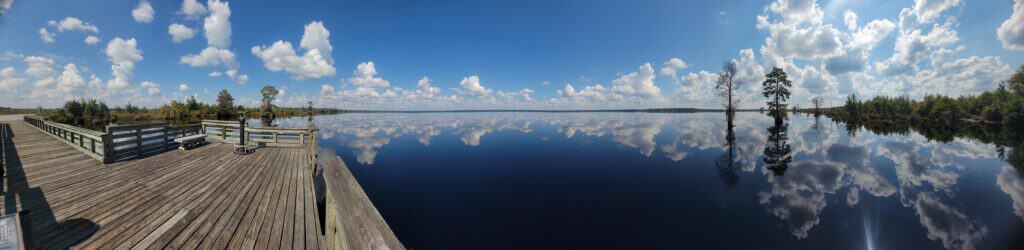
Formed 4,000 years ago by a fire that burned multiple feet of peat soil, the 3,100-acre Lake Drummond is a focal point of the refuge. Despite the purity of the water, the lake has a distinct dark brown color to it because the water is stained as it percolates through the peat soil.
An assortment of fish call the lake home, including mud sunfish, yellow perch, brown and yellow bullhead catfish, bowfin, and crappie. (Don’t believe the myth that there are alligators in the lake.)
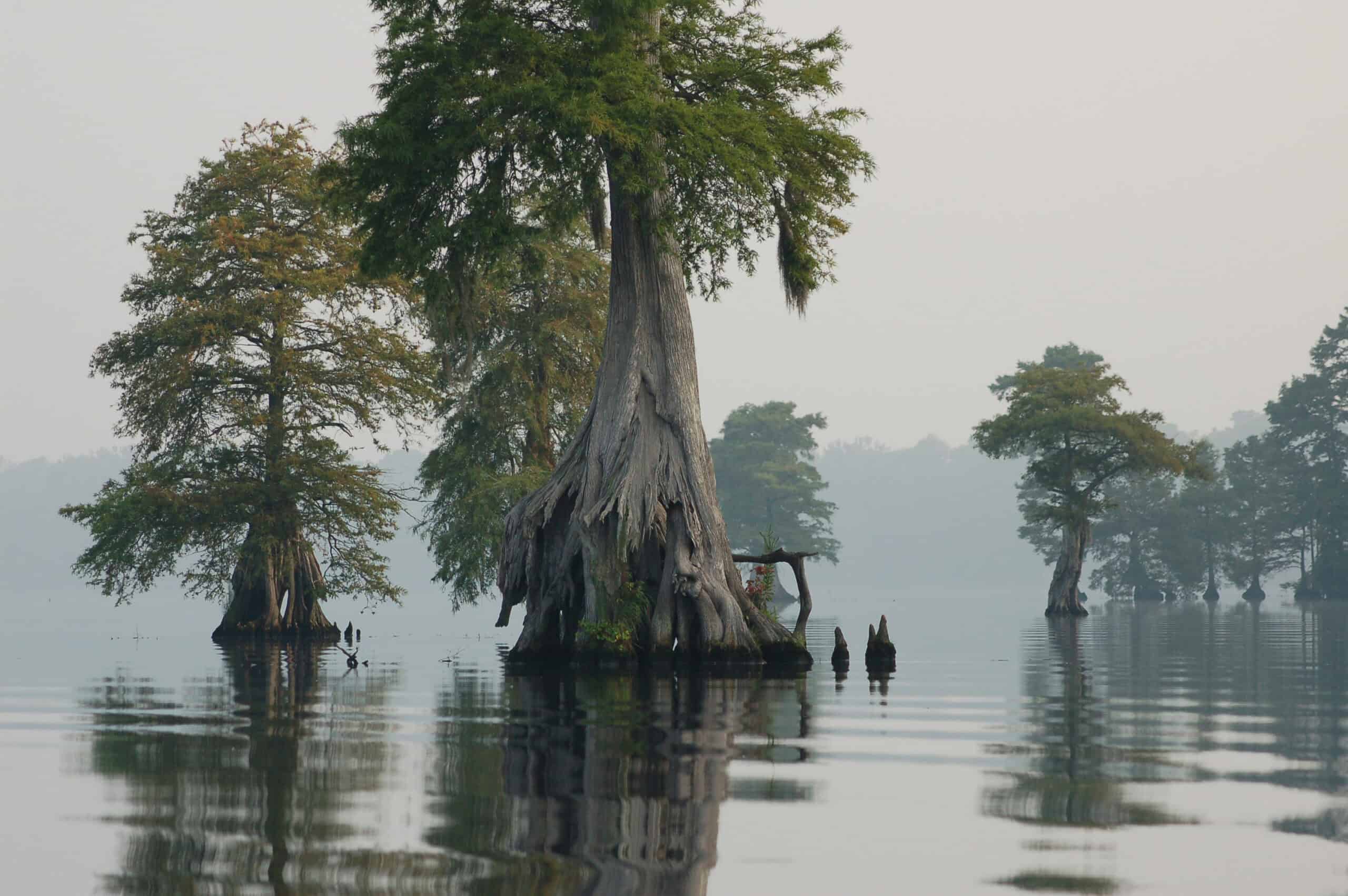
If you visit during winter, be on the lookout for tundra swans and snow geese—they use the lake as a resting place. During the summer, you’re likely to see great blue heron, great egret, northern parula, and prothonotary warblers nesting in the cypress trees.
The lake serves as the main water source for the Dismal Swamp Canal on the eastern edge of the refuge. The canal was proposed by George Washington but spearheaded by Patrick Henry, the governor of Virginia at the time. It was dug by hand by slaves. Surprisingly, it is the oldest continually operated canal in the country.
Activities
Whether you’d like to experience the refuge from the comfort of your car or immerse yourself in its unique sights and sounds, there are plenty of activities to keep you busy at the Great Dismal Swamp National Wildlife Refuge.
Auto tour
Explore the reserve by taking a ride along Lake Drummond Wildlife Drive, the refuge’s most popular destination. To access the 6-mile one-way self-guided route, start at the Railroad Ditch trailhead at 3120 Desert Rd. in Suffolk. It’s a gravel road with three boardwalks that you can stop at for additional exploration. Keep an eye out for such creatures as turtles, snakes, river otters, and black bears.
A $5 vehicle permit is required, so be sure to bring cash. If you plan to explore the park by car often, consider the $25 annual pass. The drive is open from 7 a.m. to 7 p.m. April 1 through Sept. 30, and 7:30 a.m. to 5 p.m. Oct. 1 through March 31.
Boating
Non-motorized and motorized boats with no more than 25-horsepower motors are permitted on Lake Drummond, but not in the ditches because they aren’t maintained for passage. Keep in mind that the lake has an average depth of 3 feet.
A boat ramp can be found at the end of Lake Drummond Wildlife Drive. Boating permits aren’t required.
Birding
The swamp is home to roughly 200 species of birds, as well as 100 species of butterflies and skippers.
You’re bound to see a wide variety of birds, no matter the season. Winter is ideal for spotting tundra swans and snow geese on Lake Drummond. While cruising along Lake Drummond Wildlife Drive, you might also spot waterfowl and wading birds along the ditches.
Those looking to go birding away from the crowds might enjoy the trails within the Jericho Lane entrance or Washington Ditch entrance, where waterfowl and songbirds are plentiful.
Fishing
Reel in a chain pickerel, crappie, sunfish, or catfish from Lake Drummond or Feeder Ditch. Fishing is permitted in the refuge during daylight hours year-round in accordance with Virginia regulations.
Hunting
Hunt for white-tailed deer, black bear, turkey, coyote, and grey squirrel in the refuge on Thursdays, Fridays, and Saturdays from Oct. 1 through the first Saturday in January. A refuge hunt permit is required.
Trails
There are four trail entrances at the refuge, including the Portsmouth Ditch entrance, Jericho Lane entrance, Washington Ditch entrance, and Railroad Ditch entrance.
Those interested in running or hiking will be happy to hear that there are more than 40 miles of earthen road trails. Additional trails take the form of elevated boardwalks. The 9-mile round-trip Washington Ditch Trail and the 6-mile round-trip Pine-Pocosin-Loop offer scenic views.
With limited cell service, it’s a good idea to download the trail guide ahead of time.
Park officials note that October to May is the ideal time to explore the trails system because of the moderate temperatures and lack of insects.
Reminders
Those visiting the refuge should keep a handful of important reminders in mind.
- Use of the trails and lake for boating is permitted daily from sunrise to sunset.
2. While pets are allowed, they should always be leashed.
3. The handling and feeding of wildlife are strictly prohibited.
Volunteering
If you’re one of the more than one million people who call the surrounding area home, consider getting involved by volunteering for the U.S. Fish and Wildlife Service. There are plenty of opportunities depending on your skillset and interest, ranging from front desk greeters and field assistants to carpentry/maintenance/construction workers.
Even if you can’t commit to a regular volunteer schedule, you can help out with various events and refuge activities. Email GreatDismalSwamp@fws.gov to learn about specific opportunities.