Texas Longhorn cattle have a rich, centuries-long history that has led to the prestigious state icon they are today.
Texas Longhorns are more than just hearty cattle—or the burnt orange football team mascot from the University of Texas at Austin. They are the official large mammal symbol of Texas, with a storied history from mingling with Christopher Columbus to a record-breaking auction in Fort Worth, plus lots of notable moments in between.
Texas Longhorn cattle are impressive, majestic, and Texan through and through. But where did they come from—and why are they still so popular at auction today? Follow us on a deep dive into this fascinating creature and its Texas roots.
Spanish lineage
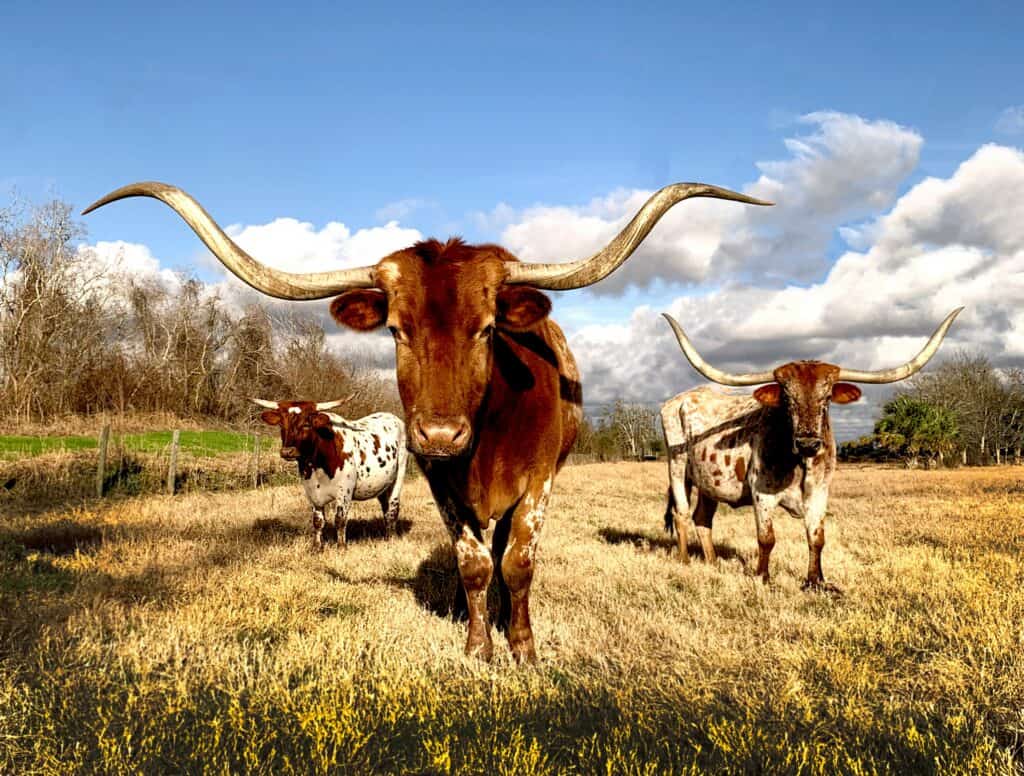
According to the Texas Historical Commission (THC), the first Texas Longhorn cattle came to the state with Spanish explorers and settlers in the late 1600s. However, records show that cattle were brought to the New World in 1493 by Columbus, followed by other Spanish explorers who brought cattle to northern Mexico and then Texas, per Texas Monthly. Either way, the iconic beast has been part of America since before it was founded!
And Texas is so proud of them.
“Texas Longhorns are the original cattle of Texas,” Will Cradduck, herd manager for the Official State of Texas Longhorn Herd, told Texas Farm Bureau. “They were here in Texas before this area was settled. They were introduced by the Spanish in the 1500s and were the first and only cattle for about 350 years.”
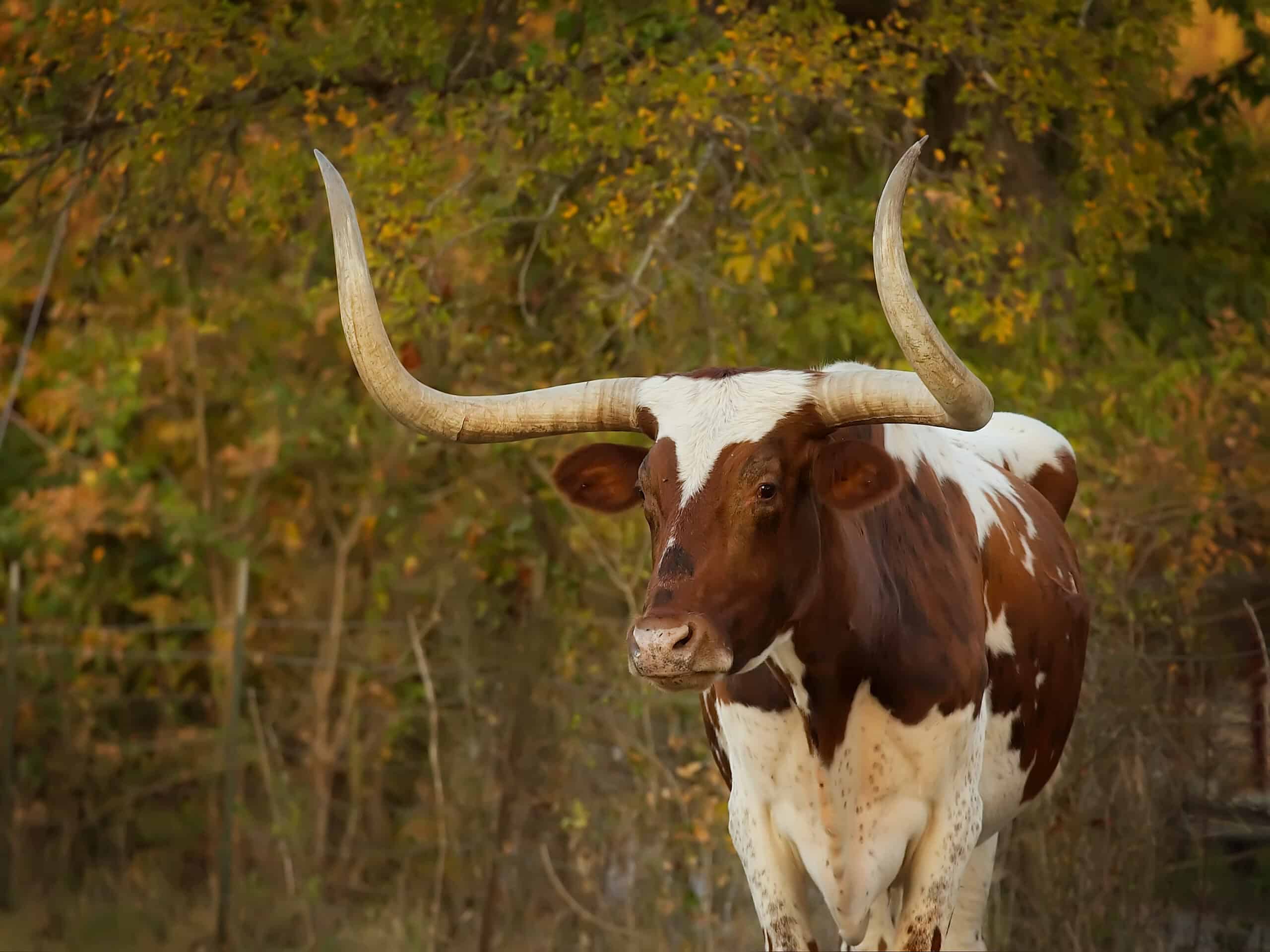
The cattle explorers left behind in Texas eventually evolved to protect themselves from mountain lions, wolves, and other predators by growing the horns they’re so famous for today. In fact, DNA testing has confirmed that the Texas Longhorns evolved without human intervention, and those that exist today are still purely Spanish.
Nearly wiped out
Texan Longhorns reproduced and spread throughout the state, roaming wild and doing their best to avoid being hunted for their meat and hides. After the Civil War, many of the longhorns were rounded up and driven north by Texas cowboys along trails like the Chisholm Trail to railheads in Kansas, where they were loaded onto railcars and sold at market.
The THC estimates that nearly 10 million cattle were driven north to be sold at market between 1867 and 1880 to help boost the Texas economy. This might have been good for the state, but it wasn’t great for the breed.
At this point, other types of cattle were becoming more popular for their meat, yet the population of Texas Longhorn cattle continued to decrease. That changed when a Western writer named Frank Dobie decided to help. He recruited local businessmen and ranchers to organize a herd of Texas Longhorns and donated them to the Texas Parks Board in 1941.
This official herd lived at two state parks until a permanent home to Fort Griffin Historic Site in 1948, where the Official State of Texas Longhorn Herd still lives and is managed by the THC.
Texas history icon
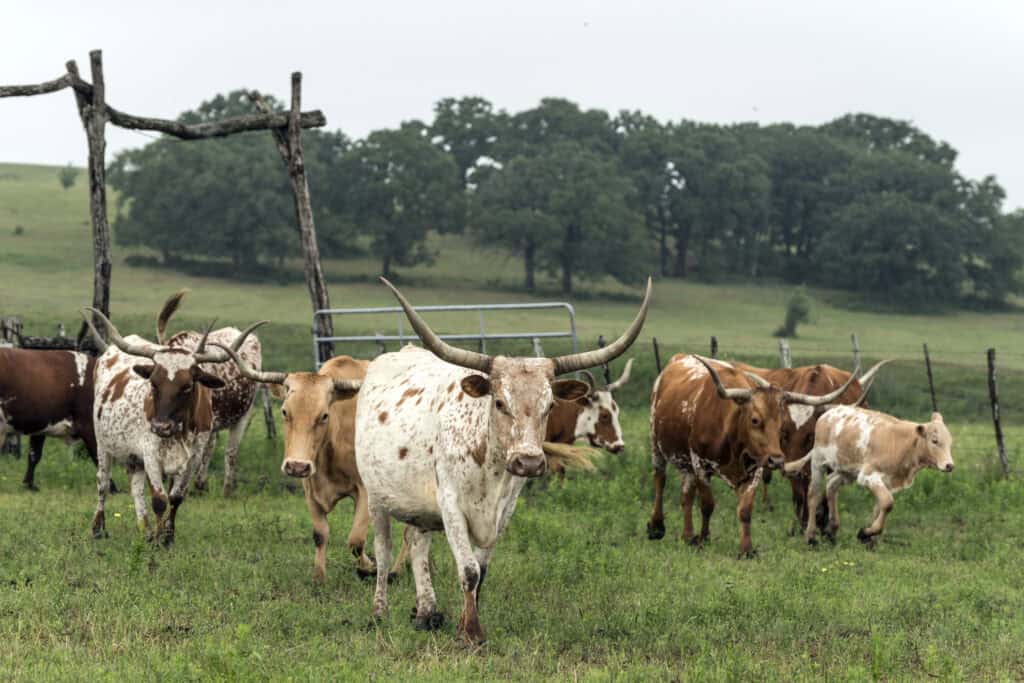
Cradduck, who has managed this official herd for 16 years, told Texas Farm Bureau that the 250 cattle making up the herd hold “a large portion of the entire breed’s remaining genetics in the world.” “It’s kind of a big deal,” he added. “We think there’s only a few thousand of this kind of Longhorn left in the world that are genetically pure, historically correct Texas Longhorns.”
Deborah Davis, president of the nonprofit Cattlemen’s Texas Longhorn Conservancy, estimates there are only about 3,000 historic Texas Longhorns alive today.
“When people see a Longhorn, they think the Old West, they think Texas, they think cowboys,” she previously told Texas Monthly. “It’s an icon of our history, the history of this country.” (We couldn’t agree more!)
Notable moments for Texas Longhorns
Over the years, Texas Longhorns have been gaining in popularity as they became mascots, inspired organizations, and made money at auctions.
UT Austin made a Texas Longhorn named Bevo their official mascot in 1916, and the mammal was adopted as the official Texas large state mammal in 1995.
In 1964, Charlie Schreiner III established the Texas Longhorn Breeders Association of America in San Antonio, which registered cattle with pedigree records. It now has records on more than 450,000 Texas Longhorns. Members of this prestigious organization also enjoy youth activities, a magazine, shows, contests, and a Longhorn beef program.
Although they aren’t popular for their meat anymore, people still love the look and status of Texas Longhorns. That could be why one sold in Fort Worth in 2017 for a record-breaking $380,000. A few years later, a Texas Longhorn sold for nearly double that at $700,000 from a ranch in Tulsa, Oklahoma!
According to the Texas Standard, the appeal lies in their majestic straight backs, colorful fur, and extremely long horns. “It’s like a mix between buying a piece of fine art and a racehorse,” they wrote.
We get the appeal. After all, having a living piece of Texas history on your land is something priceless!