Iowa’s April weather can turn extreme fast. From historic blizzards to record tornado outbreaks, discover the wildest April storms in Hawkeye State history.
If you’ve lived in Iowa for a while, you know April doesn’t follow rules—especially when it comes to the weather.
April is supposed to be the month when winter loosens its grip: snow melts into muddy fields, tulips push up through thawing soil, and farmers start getting ready for planting season. But in Iowa, April has a habit of reminding everyone that seasons are more suggestion than certainty.
Over the decades, the Hawkeye State has seen April blizzards that shut down entire regions, tornado outbreaks that rewrote record books, and weather whiplash that swung from sunshine to severe in a matter of hours.
Keep reading to learn more about some of the wildest April weather events in Iowa history.
The historic blizzard of April 1973
If there’s one April weather event Iowans still talk about decades later, it’s the blizzard of April 1973.
It started on Apr. 8, when forecasts called for just a few inches of snow, which isn’t that unusual for early spring. But the snow started falling heavily on Apr. 9—and it kept falling.
By the time the blizzard ended, much of the state was buried under 20 inches of snow, with winds reaching up to 65 miles per hour. Snowdrifts measured more than 15 feet in some areas, stranding motorists and effectively paralyzing large parts of Iowa.
Many power outages caused by the storm were reported, and schools, businesses, and government offices were closed for days. In some cases, emergency responders had to use fire trucks to reach people who couldn’t leave their homes.
Roads to hospitals were impassable in some areas, so babies were born in doctors’ offices instead. The storm even contributed to fatalities, including several heart attacks linked to shoveling snow.
The National Weather Service later described the storm as “possibly the worst April blizzard on record in Iowa.”
Tornado season, supercharged
If winter overstays its welcome in April, spring storms more than make up for it.
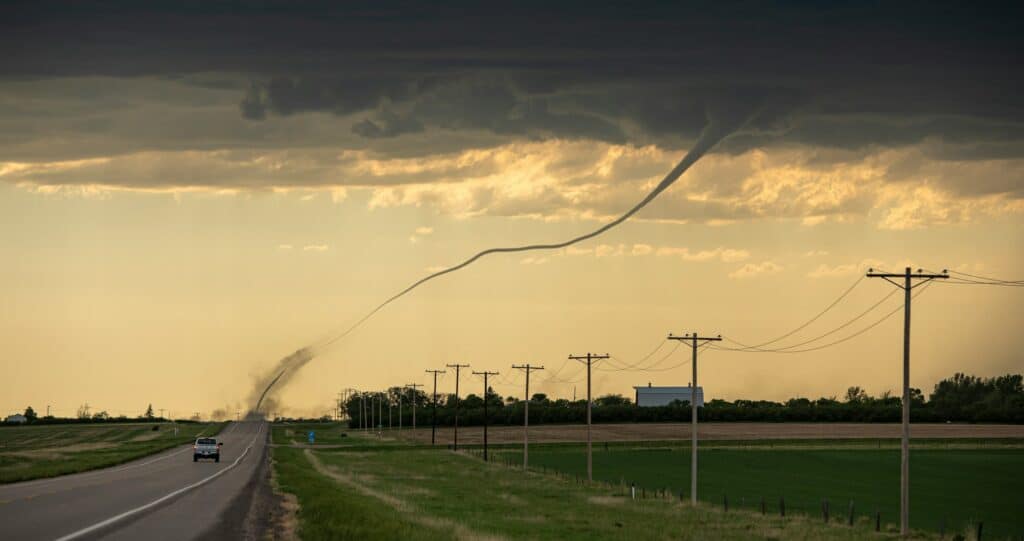
Iowa sits squarely in Tornado Alley, and April is when the severe weather season starts ramping up. But some years go far beyond what’s considered normal. Take April 2024, for example, when the state recorded 49 tornadoes in a single month—the most ever for April in Iowa history.
On Apr. 26 alone, a record 29 tornadoes were recorded across the state. Among them were multiple EF-3 tornadoes with winds exceeding 160 miles per hour, including one that devastated the town of Minden, destroying homes and businesses and leaving at least one person dead. Multiple EF-2 tornadoes touched down in south-central Iowa later that same evening.
Hail and tornado combo
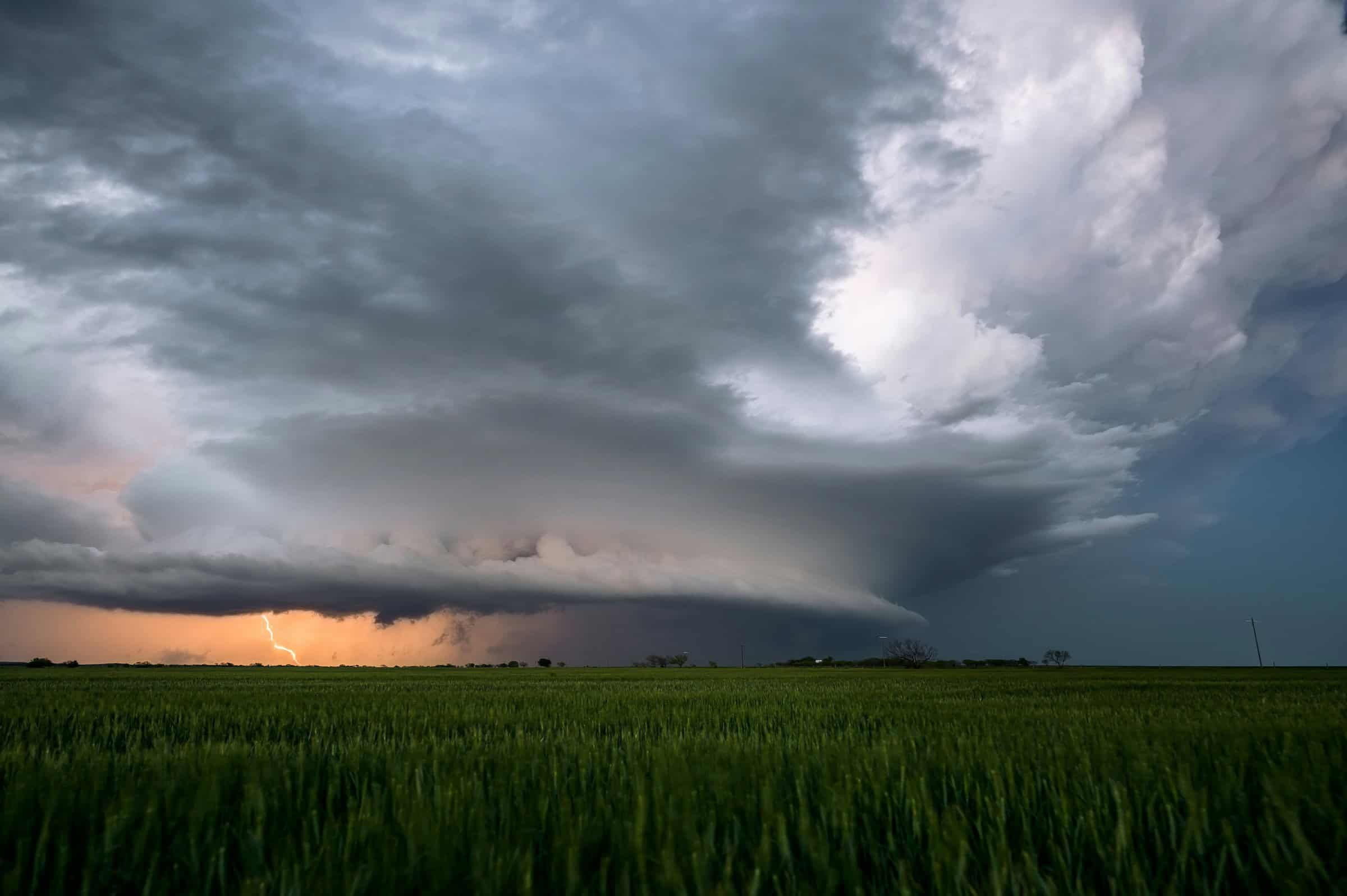
One storm on Apr. 17, 2025, produced baseball-sized hail and two tornadoes in Iowa. The hail had a diameter of almost 3 inches, and the stronger of the two tornadoes had winds that reached up to 110 miles per hour. The tornado also had an unusually large width of almost two miles.
The second tornado was smaller, with a width of about one-quarter mile and winds that topped out at about 60 miles per hour.
Twin twisters of 1878
Extreme April weather isn’t just a modern phenomenon. On Apr. 21, 1878, two devastating tornadoes tore through Iowa, traveling almost simultaneously along the Maple and Boyer rivers.
At least 28 people were killed, and another 57 were injured during the Easter Sunday extreme weather event. According to one report, a cow was carried about 10 miles by the storm.
Deadly multi-state tornado outbreak
On Apr. 14, 1886, a deadly tornado outbreak ripped through Iowa and several other Midwestern states. At least 19 tornadoes were reported in Iowa alone. The most destructive, an F-4, touched down near Griswold, traveled northeast, and destroyed many homes and businesses in Coon Rapids.
Minnesota—particularly St. Cloud, Sauk Rapids, and Rice—was hit especially hard by the outbreak, with about 72 people reported dead and more than 200 others injured.
Mississippi River Flood of 1965
The Mississippi River Flood of 1965 affected residents living along the river from Minneapolis to Hannibal, Missouri. In Iowa, Lansing and McGregor were most affected.
In Lansing, the river reached major flood stage (about 20 feet) on Apr. 20 and crested at a record 22.5 feet on Apr. 24. In McGregor, it reached major flood stage (about 22 feet) on Apr. 20 and crested at a record 25.38 feet on Apr. 24.
The historic flood was caused by rapid snow melting and heavy rainfall. It’s estimated to have caused more than $10 million in damage.
April 2026 and beyond: What to expect
Iowa’s wild April weather may be becoming more pronounced. Recent years have brought more frequent severe weather events, including record-breaking tornado counts and increasingly volatile storm systems.
The Farmers’ Almanac says April 2026 will be warmer than normal, with precipitation levels in northern Iowa below normal and above normal in the south. For context, average daily high temperatures in Des Moines during April range from 57 to 68 degrees Fahrenheit, and daily low temperatures range from 38 to 48 degrees. The city receives an average of 2.9 inches of rainfall in April.