Explore Utah’s best natural wonders, from the “Mighty 5” national parks to hidden gems, slot canyons, and surreal desert landscapes worth the trip.
Utah doesn’t just have spectacular scenery—it’s home to awe-inspiring landscapes that feel almost unreal. The “Mighty 5” national parks (Arches National Park, Zion National Park, Bryce Canyon National Park, Canyonlands National Park, and Capitol Reef National Park) may get most of the spotlight, but they’re only scratching the surface of Utah’s natural wonders.
Across the Beehive State, you’ll find everything from narrow slot canyons and massive natural bridges to bizarre rock formations that look like they belong on another planet. Add in world-class powder snow and some of the darkest, clearest night skies on Earth, and it’s easy to see why Utah is widely considered one of the most beautiful states in the US.
Keep reading to discover 11 of Utah’s coolest natural wonders and what makes each one worth visiting.
1. Arches National Park
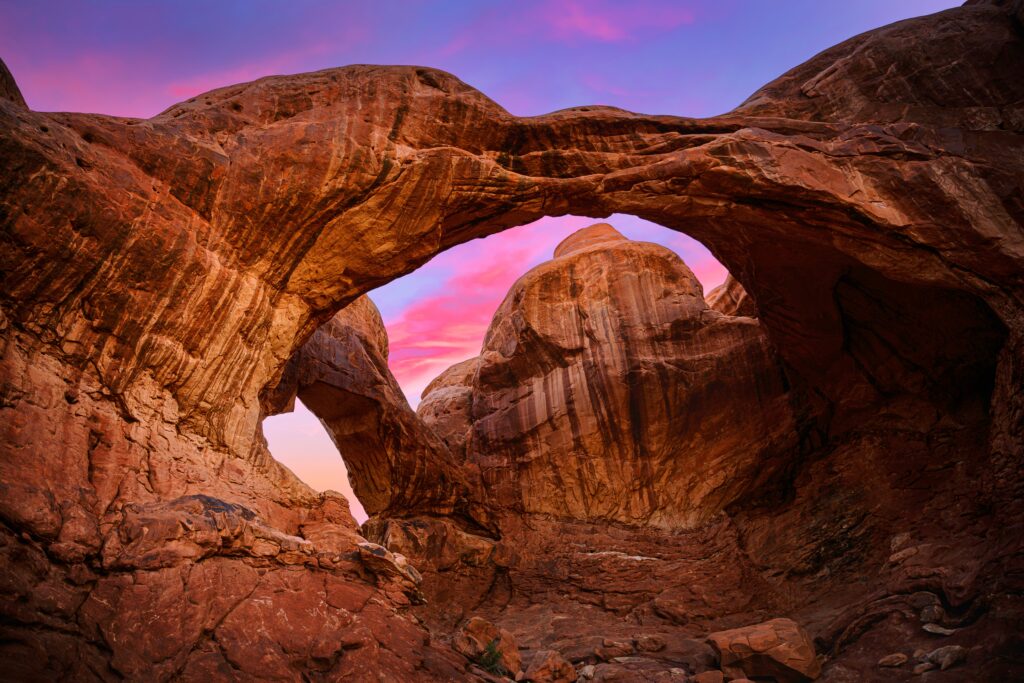
At Arches National Park, you’ll find more than 2,000 natural sandstone arches carved by wind and water. Delicate Arch may be the most well known, but Landscape Arch, one of the longest natural arches in the world, is another showstopper.
There are hiking trails for all skill levels, ranging from easy walks to more challenging routes, that lead to viewpoints and arches you can’t see from the road. Stargazing is a popular park activity (in 2019, it was certified as an International Dark Sky Park), as is camping at Devils Garden Campground, Arches National Park’s only campground.
2. Bonneville Salt Flats
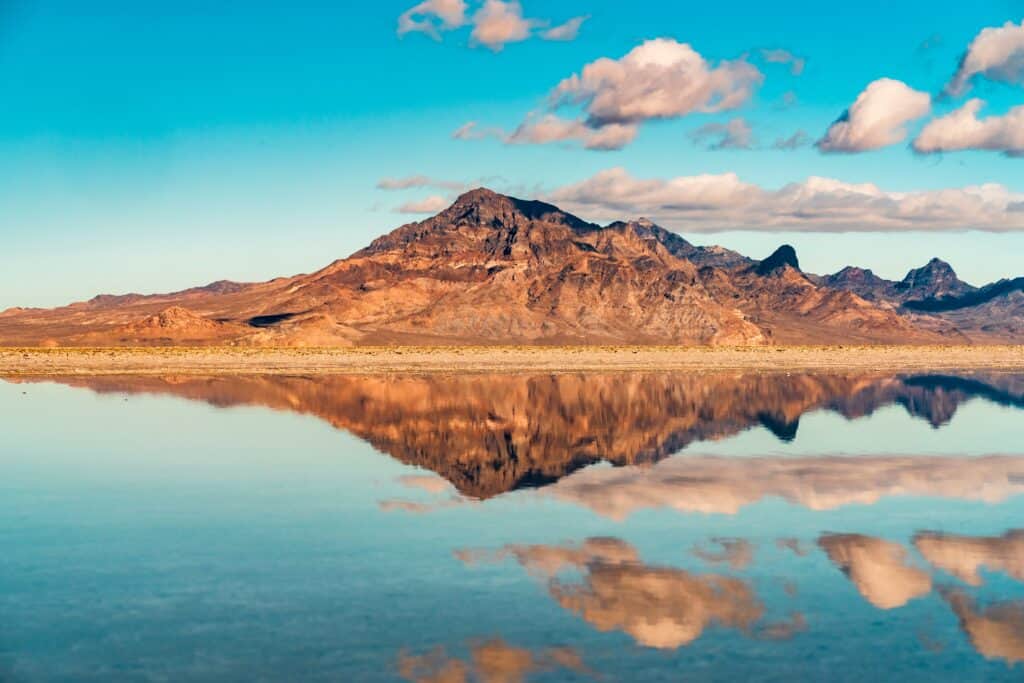
The Bonneville Salt Flats stretch across 30,000 acres and create one of the most unique landscapes in the area. Formed from an ancient lakebed, the vast salt crust often looks like a mirror or as if it’s covered in snow.
Because the area is wide open and incredibly flat, it makes for the perfect natural speedway. Bonneville Speedway attracts thousands of thrill seekers and racers every year with events like Speed Week and World of Speed.
Even if you don’t have a need for speed, you can still enjoy the flats. Visitors come to walk the glittering surface and witness sunsets that reflect across the salt.
3. Bryce Canyon National Park
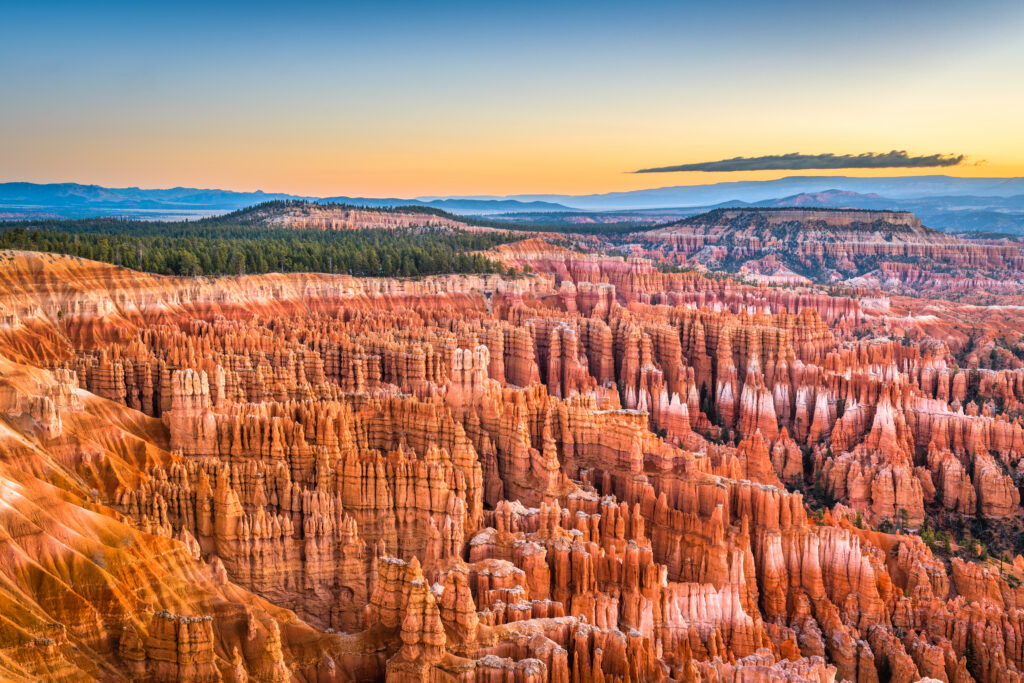
Bryce Canyon National Park is famous for having the world’s largest concentration of hoodoos (uniquely shaped rock formations created by erosion). These towering formations glow in shades of red, orange, and pink and can reach up to 200 feet tall.
Throughout the park, they fill massive natural amphitheaters, such as Bryce Amphitheater, which lies below the Rim Trail hiking path. Other trails will lead you through the maze-like landscape and allow you to get a closer look at the park’s thousands of hoodoos.
Bryce Canyon has several scenic overlooks, including Sunrise Point, Sunset Point, Inspiration Point and Bryce Point, that offer sweeping views and are especially popular at sunrise and sunset.
4. Canyonlands National Park
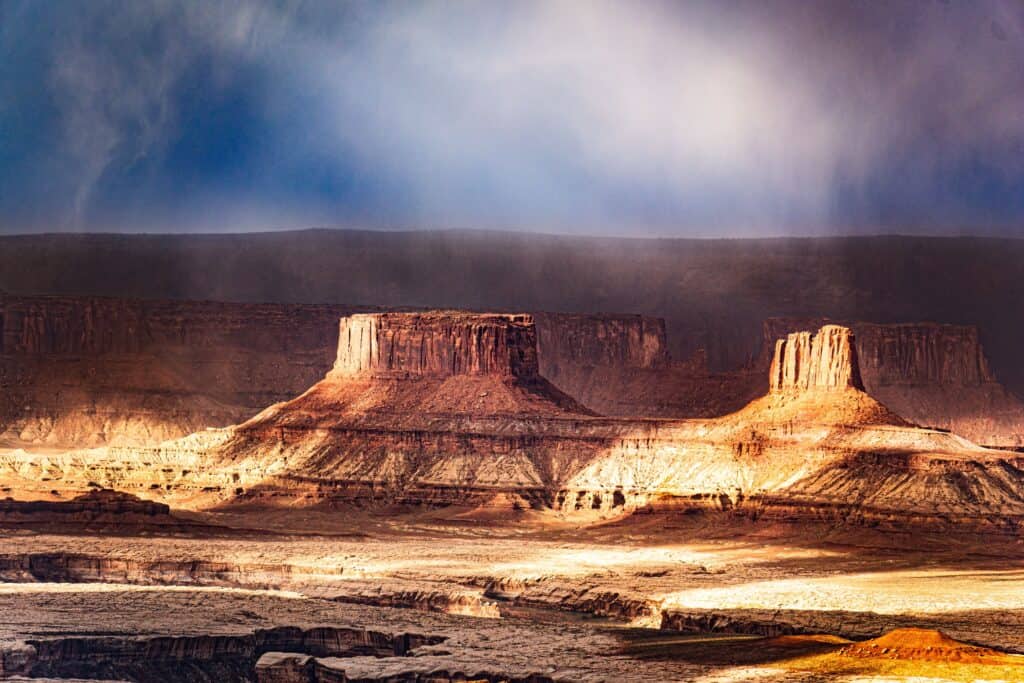
Canyonlands National Park is a vast desert landscape shaped over millions of years by the Colorado and Green rivers. The 337,598-acre park is divided into three distinct districts: Island in the Sky, The Needles, and The Maze. Each one offers visitors a different perspective on the park’s rugged terrain.
Island in the Sky sits atop a massive mesa and provides a panoramic view of the area, while The Needles is known for its colorful rock spires and excellent hiking, and The Maze offers one of the most remote backcountry experiences in the southwest.
5. Capitol Reef National Park
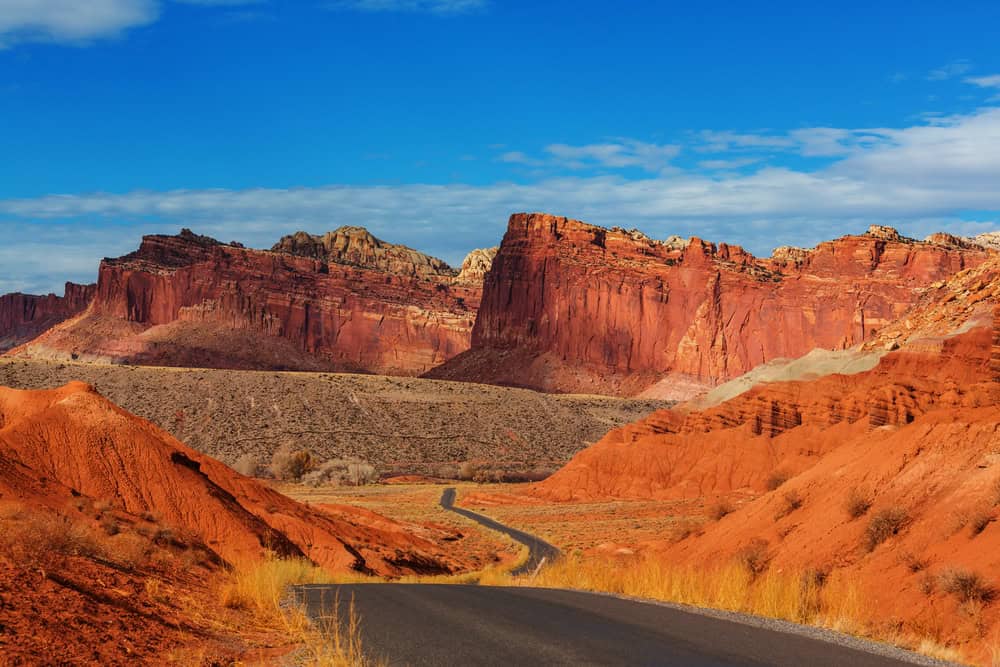
At Capitol Reef National Park, the main attraction is Waterpocket Fold, a 100-mile-long “wrinkle” in the earth’s crust formed roughly 65 million years ago. This dramatic geologic feature defines the park’s landscape, which consists of cliffs, domes, and canyons. Another popular sight is the striking Hickman Bridge, a natural arch spanning about 130 feet across and rising 125 feet high.
If you want to hike and don’t mind getting wet, explore water-filled routes like Halls Creek Narrows, which may require wading—or even swimming—through sections of canyon.
The park’s Fruita area helps set it apart from others in this guide: It features preserved orchards that are part of a protected area listed on the National Register of Historic Places. When fruit is in season, look for “U-Pick Fruit” signs indicating where you can harvest fruits, including apples, apricots, peaches, pears, and plums.
6. Cedar Breaks National Monument
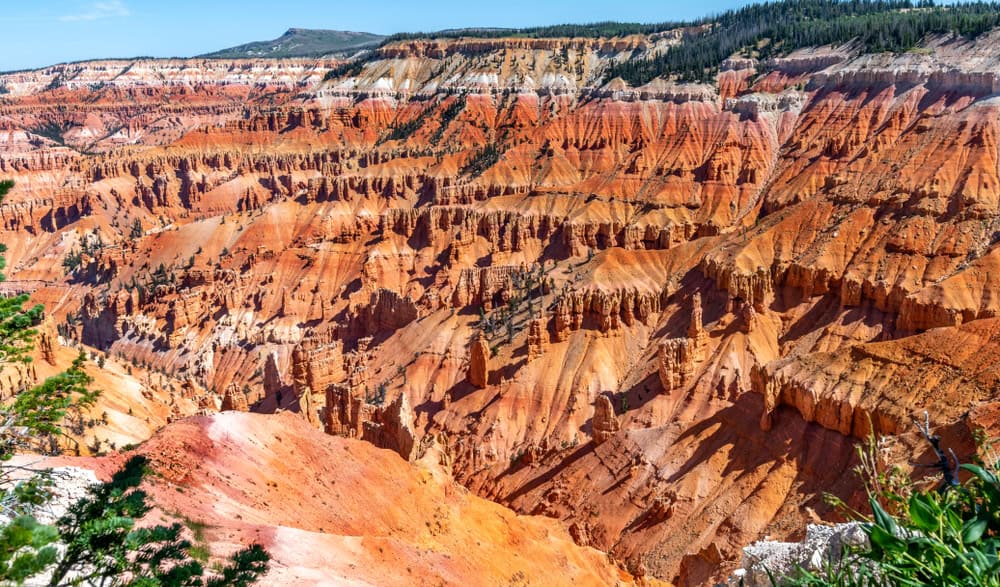
Perched at more than 10,000 feet, Cedar Breaks National Monument crowns the edge of the Grand Staircase (more on this natural wonder later) and overlooks a 2,000-foot-deep natural amphitheater.
Similar to the Bryce Amphitheater, the half-mile-deep amphitheater is full of hoodoos, as well as jagged fins and intricately carved cliffs. Cedar Breaks also provides a contrast to Utah’s desert landscapes, with wildflower meadows, bristlecone pines, and cool mountain air.
7. Fantasy Canyon
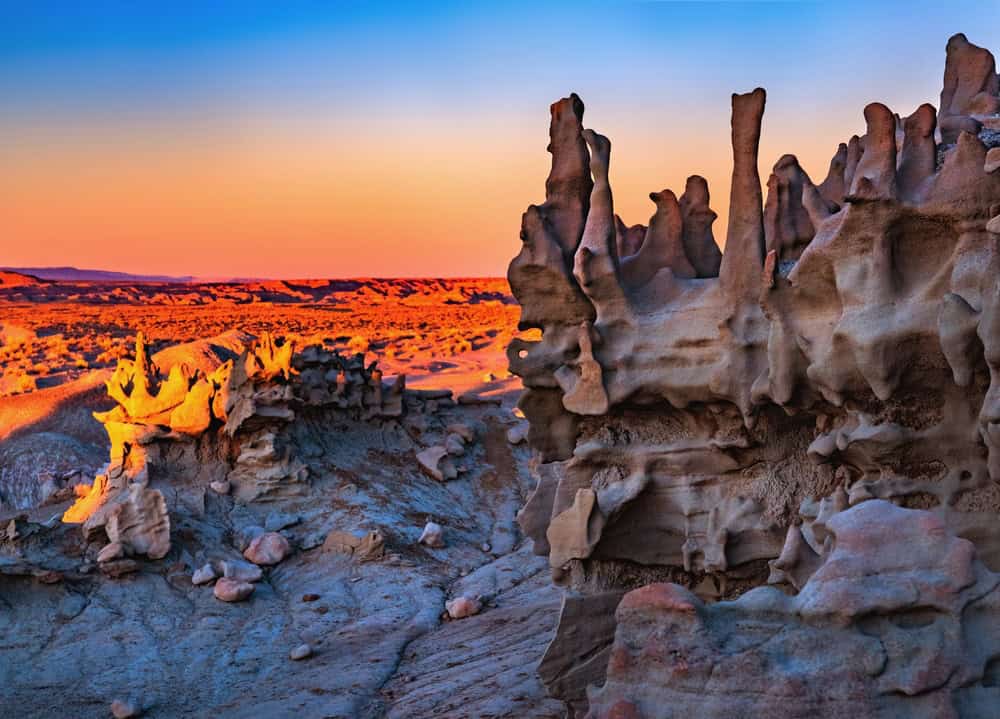
Fantasy Canyon might be relatively small in size (it’s only about 10 acres), but it’s packed with some of the most intricate and unusual rock formations in Utah. The soft sandstone has been sculpted by the elements into unique forms that resemble everything from castles and alien creatures to swirling towers and melted wax figures, depending on who’s looking.
A short, easy loop trail winds through the area, allowing you to get extra close to the formations without working up too much of a sweat.
8. Goblin Valley State Park
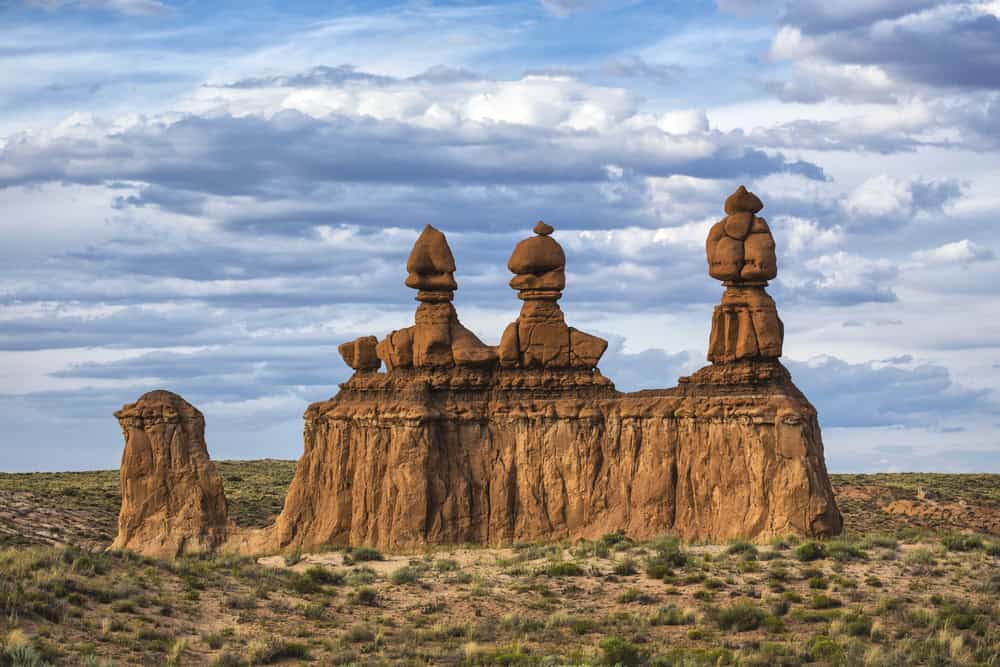
Enter Goblin Valley State Park and you may feel as if you’ve stepped onto the planet Mars. The park is home to thousands of mushroom-shaped hoodoos—or goblins—that create a maze through a lunar-like landscape. Visitors are welcome to wander among the formations (unlike in some protected areas where you’re required to stay on marked trails).
9. Grand Staircase-Escalante National Monument
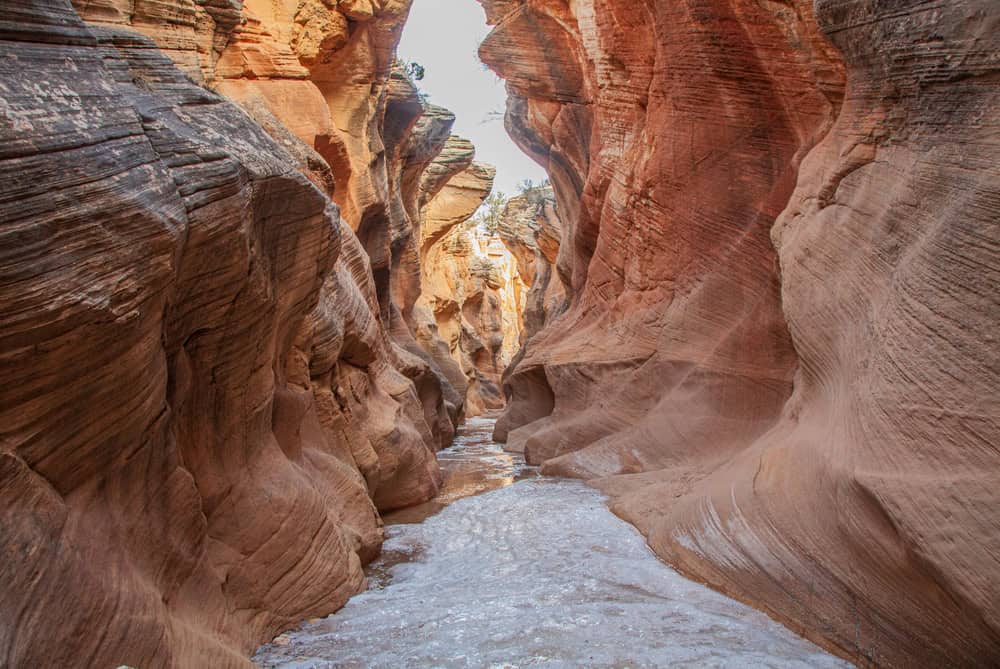
Spanning almost 1.9 million acres, Grand Staircase-Escalante National Monument is one of the largest and most remote protected landscapes in the US. Its name comes from the “Grand Staircase,” which is made up of colorful sedimentary rock layers, or steps, that stretch about 100 miles from Bryce Canyon toward the Grand Canyon. These layers form a series of dramatic cliffs (Pink, Gray, White, Vermilion, and Chocolate) that represent millions of years of geologic history.
Often called a “science monument,” the area is rich in fossils and offers valuable insight into prehistoric ecosystems, including the age of dinosaurs.
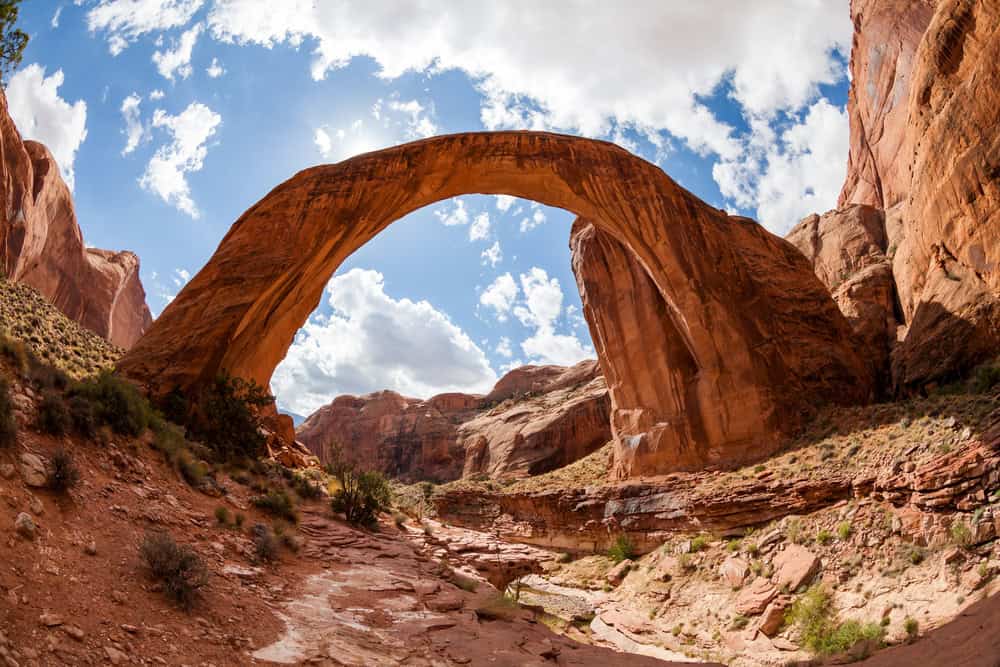
10. Rainbow Bridge National Monument
Rainbow Bridge National Monument measures about 300 feet across and 275 feet high, making it one of the world’s largest known natural bridges. Formed over millions of years by water erosion and weathering, this sandstone arch is located in a remote canyon setting within Glen Canyon National Recreation Area.
The monument is most commonly accessed by boat via Lake Powell, followed by a short scenic hike from the dock. If you’re feeling adventurous, you can also reach it by hiking one of two trails that begin near Navajo Mountain.
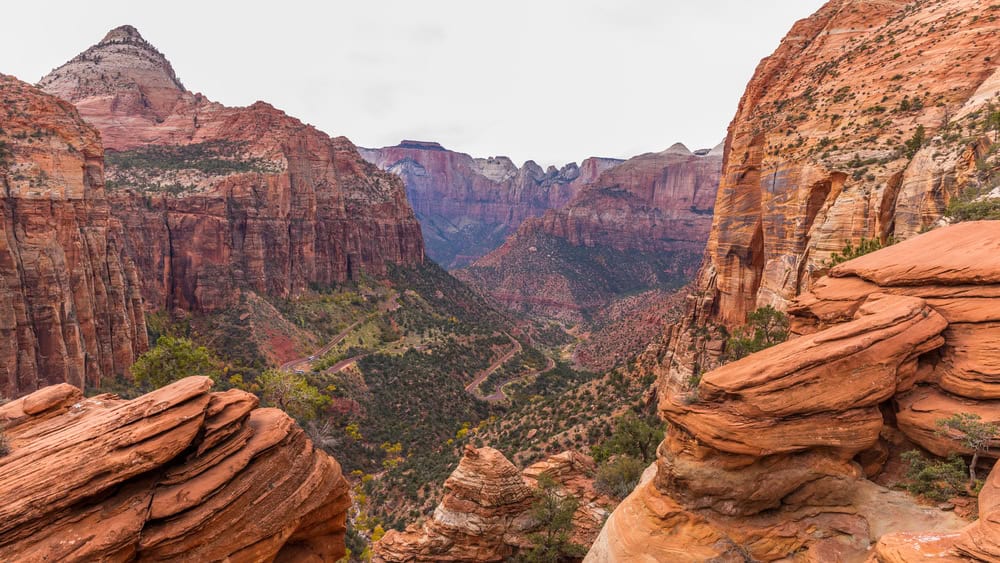
11. Zion National Park
Zion National Park covers about 150,000 acres and showcases diverse landscapes, from desert to forest, and iconic scenery.
Utah’s first national park is home to imposing red cliffs and narrow slot canyons, as well as the winding Virgin River. Canyon walls rise 2,500 feet above lush valley floors, hanging gardens, and emerald pools to create a striking contrast between desert and oasis.
Legendary hikes like Angels Landing and The Narrows have helped make Zion famous, but you don’t have to be in tip-top shape to enjoy the park: even scenic drives and easy trails reveal its beauty.