Politics and the economy hit the Golden State Tattoo Expo hard in 2026. See how organizers and artists adapted to a smaller, fiercer event.
Known internationally as the top tattoo convention in the United States for bringing together world-class talent, the Golden State Tattoo Expo draws artists from Italy, Yugoslavia, the United Kingdom, Korea, Russia, Japan, and countries spanning the Americas. In years past, the convention was larger, offering collectors hundreds of artists to choose from along with various forms of entertainment. “This is down to the core this year,” explains one of the organizers—tattoo artist and “Ink Master” judge Nikko Hurtado.
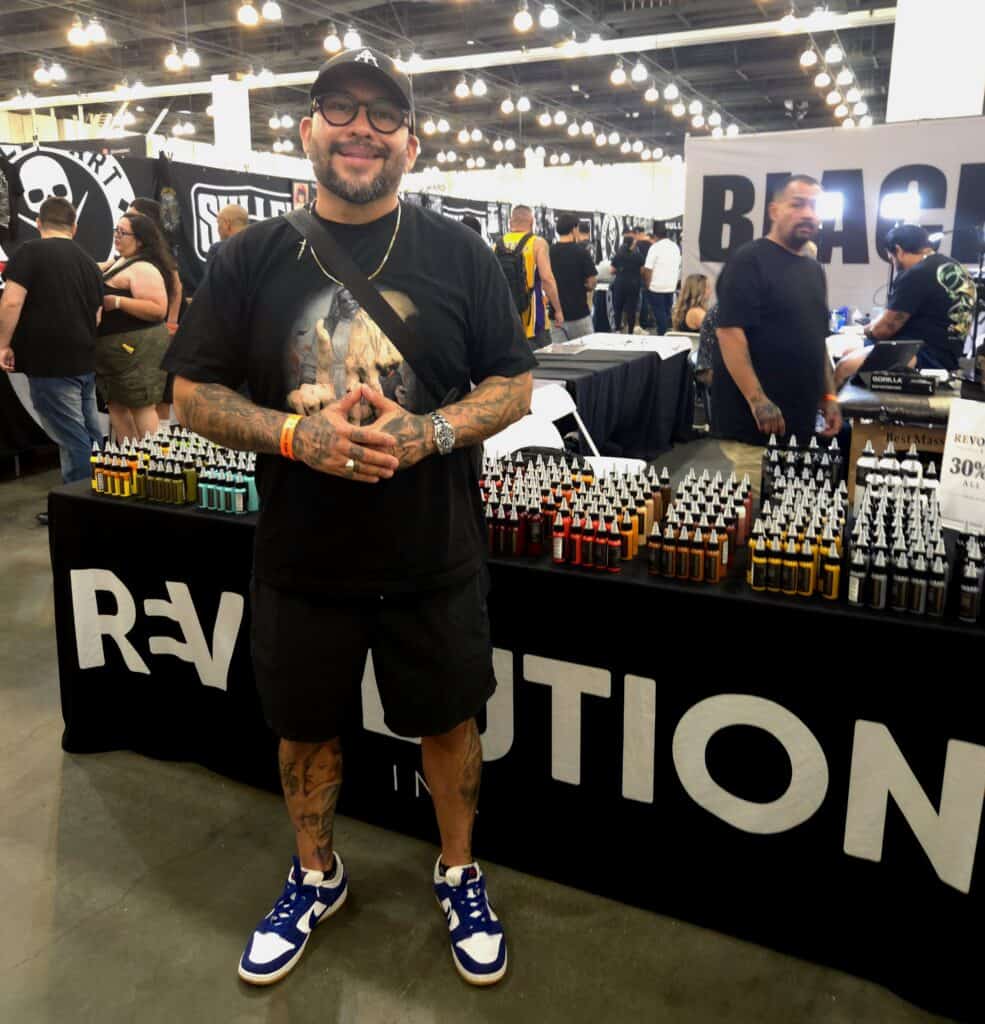
Hurtado has co-hosted the show since its 2016 premiere. After exploring various acts, layouts, and ways to run the convention, the 2026 expo brought the focus back to the artists, collectors, entertainment, and the daily “best of” competitions that have become a highly anticipated part of the weekend. Typically boasting an additional 30% of space, the 2026 show still had more than 300 artists registered, although more than a dozen booths sat empty.
The reason boils down to politics. Tattoo artists tend to form lasting bonds and stay in touch throughout the year. When asked where some of the missing artists were, friends offered one explanation: the current political climate in the United States, namely the difficulty of navigating the country’s visa process. The United States now has stricter vetting and longer administrative pauses for visas, posing a challenge that some international artists chose to avoid. Some couldn’t get approved for visas in time.
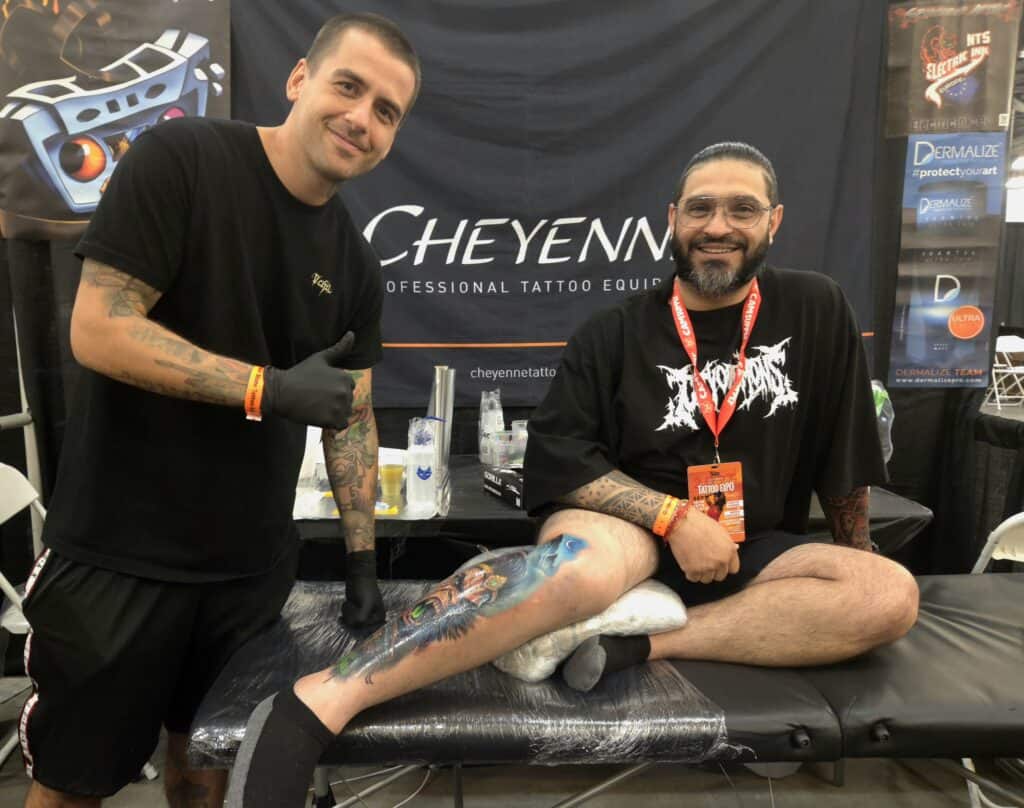
Others, such as Misi Furucz, were able to make the international trip. From Yugoslavia, Furucz spends roughly eight weeks in America tattooing and then eight weeks in his home country. “I want to live here,” he explains, elaborating that he is tying up loose ends and spending time with family back home. An award-winning international artist, Furucz was booked for large-scale tattoos throughout the weekend.
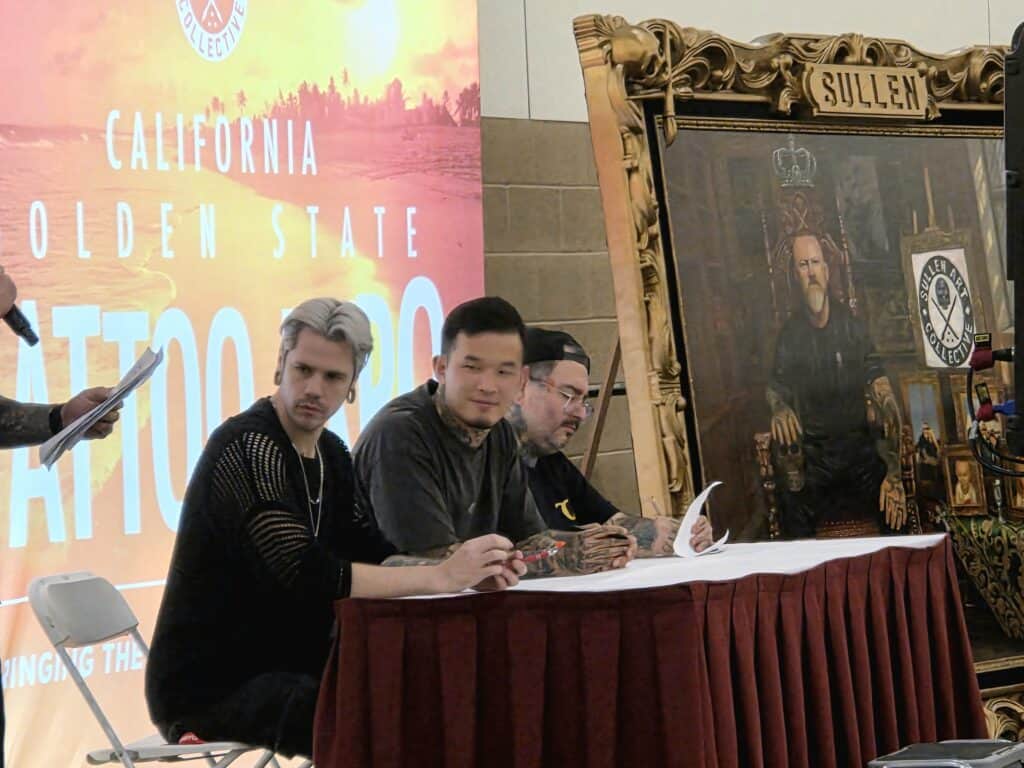
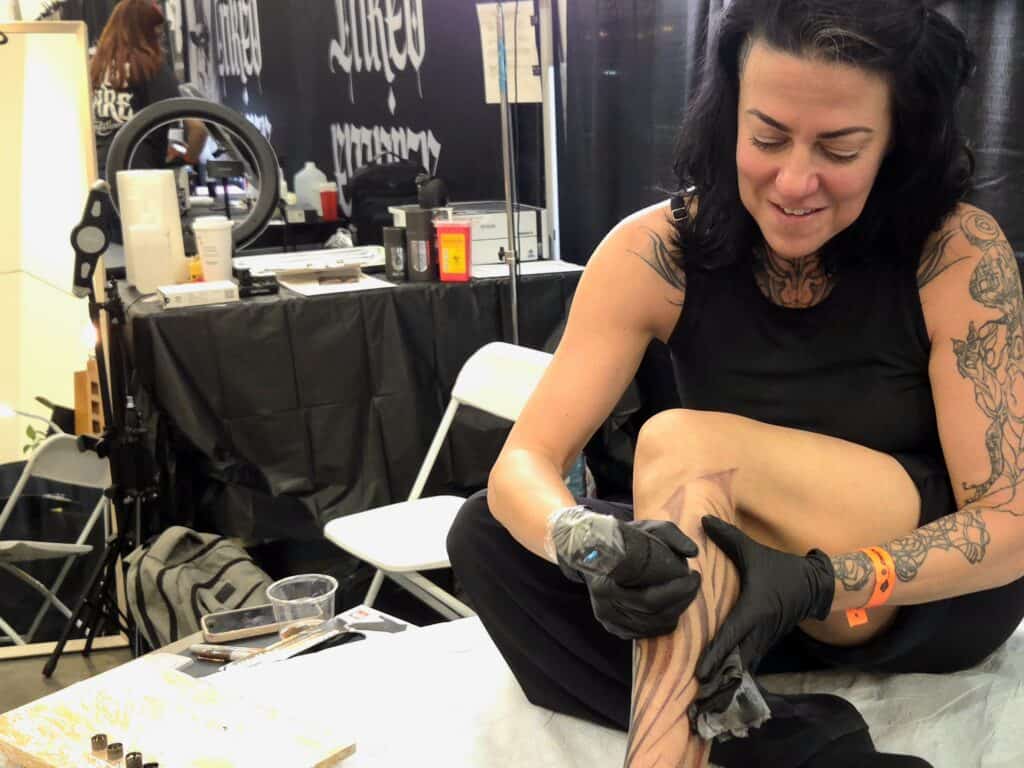
However, many booths sat empty, with artists hoping for a walk-up to book a session. In some instances, friends, family, and wives hopped on the table to give their artist a chance to demonstrate their skills. Although thousands attended, many people were curious about booking future sessions as a way to save up for the desired piece. Even the “core” aspect of the convention pointed toward a broader slump in the economy.
“The American economy is f*****,” Hurtado said, noting that conventions nationwide are seeing a slump. According to him, there is very little predictability in knowing which convention will do well and which won’t. Rather than relying solely on conventions to bring collectors through their doors, artists increasingly need to put themselves out there on social media.
“Put pictures and videos of what you’re interested in on your page,” he explains. “Not every post, but sprinkled in.” If an artist is interested in martial arts, for example, Hurtado suggests putting videos or other martial arts-related content on their page to attract like-minded collectors. He also points toward how diverse tattooing has become, gesturing to the room full of artists. Artists now come from various ages, backgrounds, ethnicities, and interests, giving collectors more opportunities than ever to find an artist they are comfortable with.
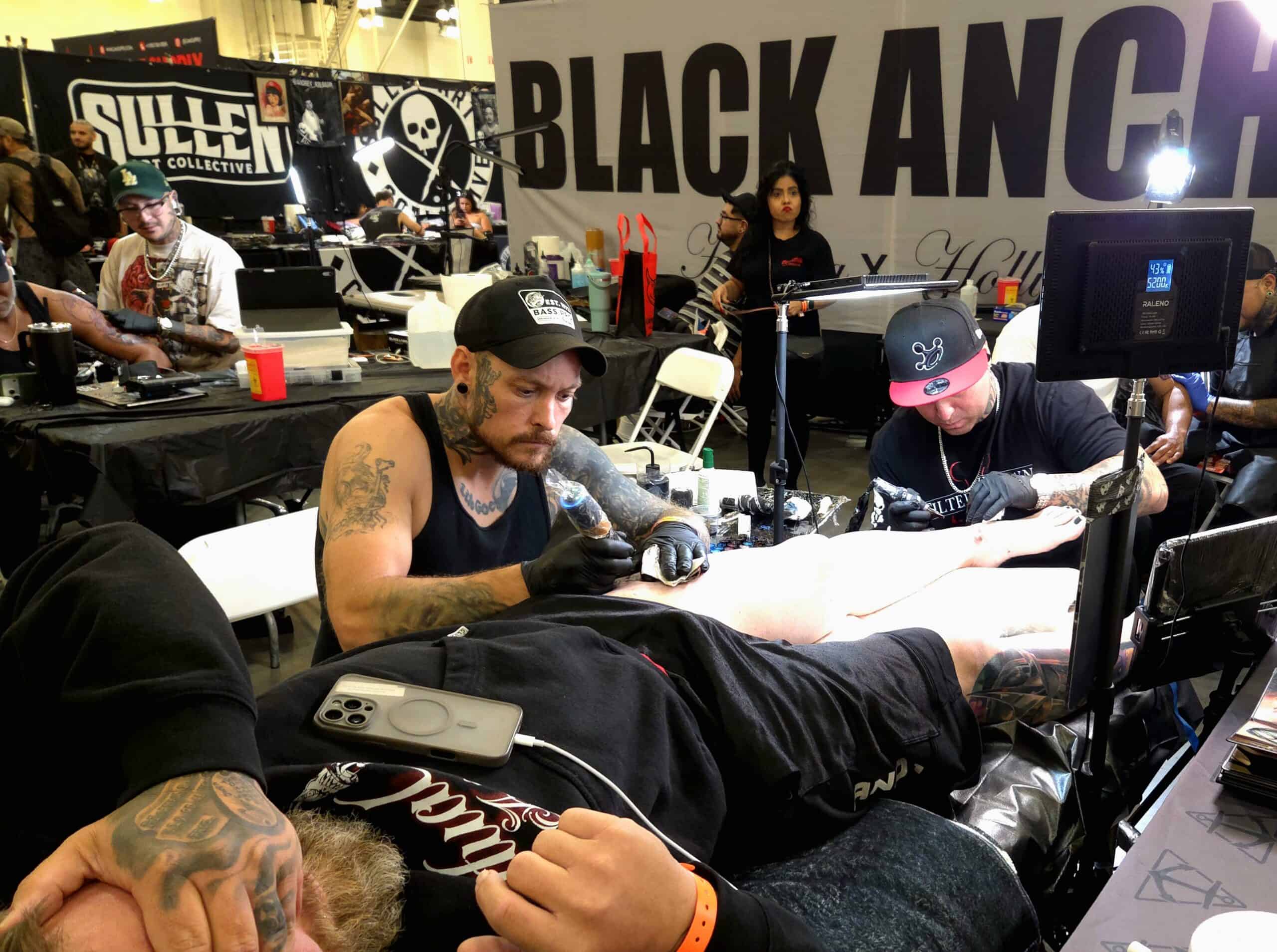
Hurtado hosted, but he also had a table representing rEvolution Ink, his branded tattoo ink. Several artists collaborated at the booth on a full-leg piece, while others worked diligently on various vibrant, colorful tattoos. Hurtado is known for his elaborate color realism, but hosting is a different ball game. “I’m not sure if it’s imposter syndrome or anxiety walking up to each booth,” he said with a smile. As part of being a host, Hurtado walked up to each and every booth to say hello and see what artists were working on. While he had his own work and his own brand represented at the expo, the job also required him to step away from his station and engage with the artists who had traveled to Pasadena.
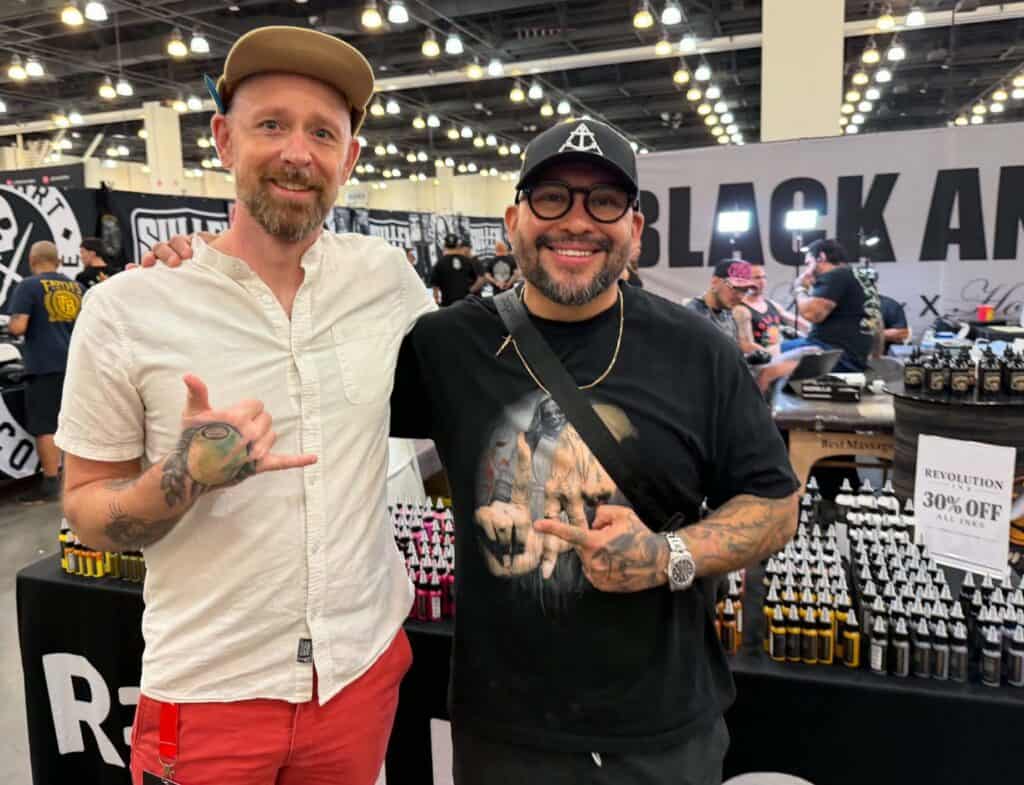
That interaction is part of what makes a convention different from simply booking a tattoo at a local shop. Artists who may spend most of the year working independently suddenly find themselves surrounded by peers, competing against one another, sharing techniques, catching up with friends, and introducing collectors to styles they may not have encountered before.
The convention floor reflected how much the tattoo industry has grown beyond the tattoo machine itself. CAM Supply Inc. sat near the center of the convention, selling needles, aftercare, machine covers, and other supplies that tattooers may need. Separate machine booths, including Bishop, offered equipment, while ink companies such as RAW and Eternal had their own stands. InkJet Stencils had a stencil printer running free of charge for artists, showing off a printer large enough to print entire back pieces on a single sheet.
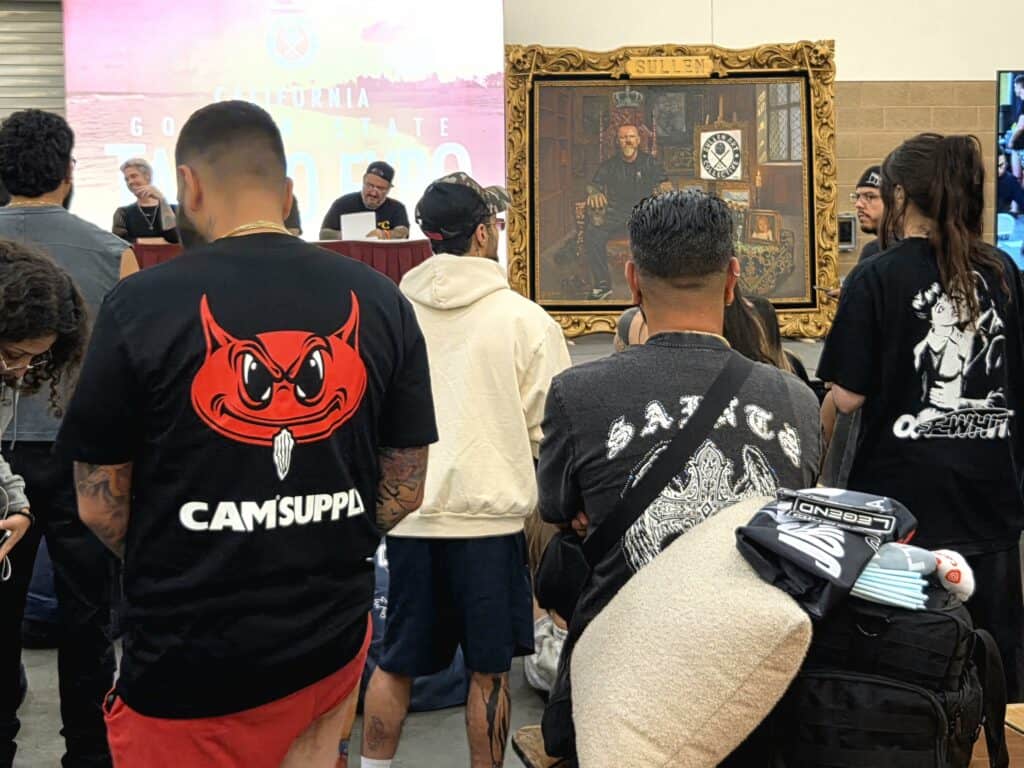
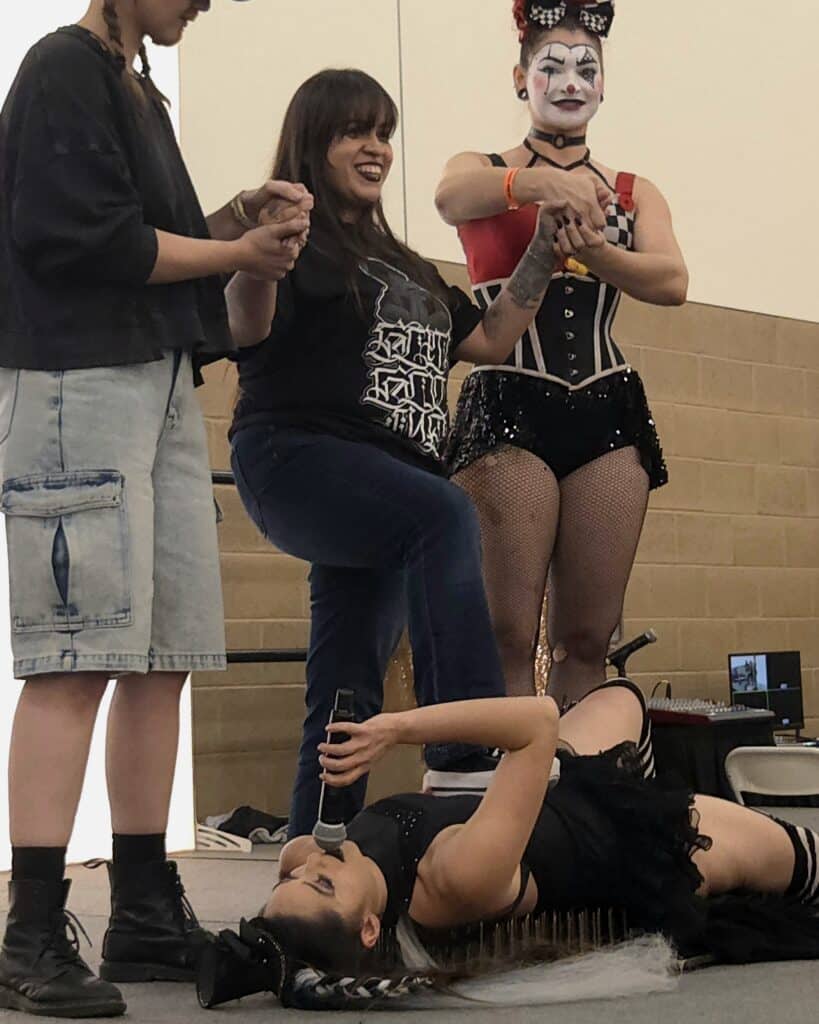
Beyond CAM was Sullen Clothing, an art collective with shirts, hats, and other forms of wearable art. Sullen Clothing was the convention’s presenting sponsor and host. Near the front, a stage hosted “freak shows” by FreakShow Deluxe, including performances featuring hypermobility, sword swallowing, and burlesque dancing. The stage also became the center of a celebration for Sullen Clothing owner “Uncle Jeremy,” who was recognized not only for his birthday, but for 25 years of Sullen. The crowd sang before presenting him with a giant oil painting in honor of the milestones.
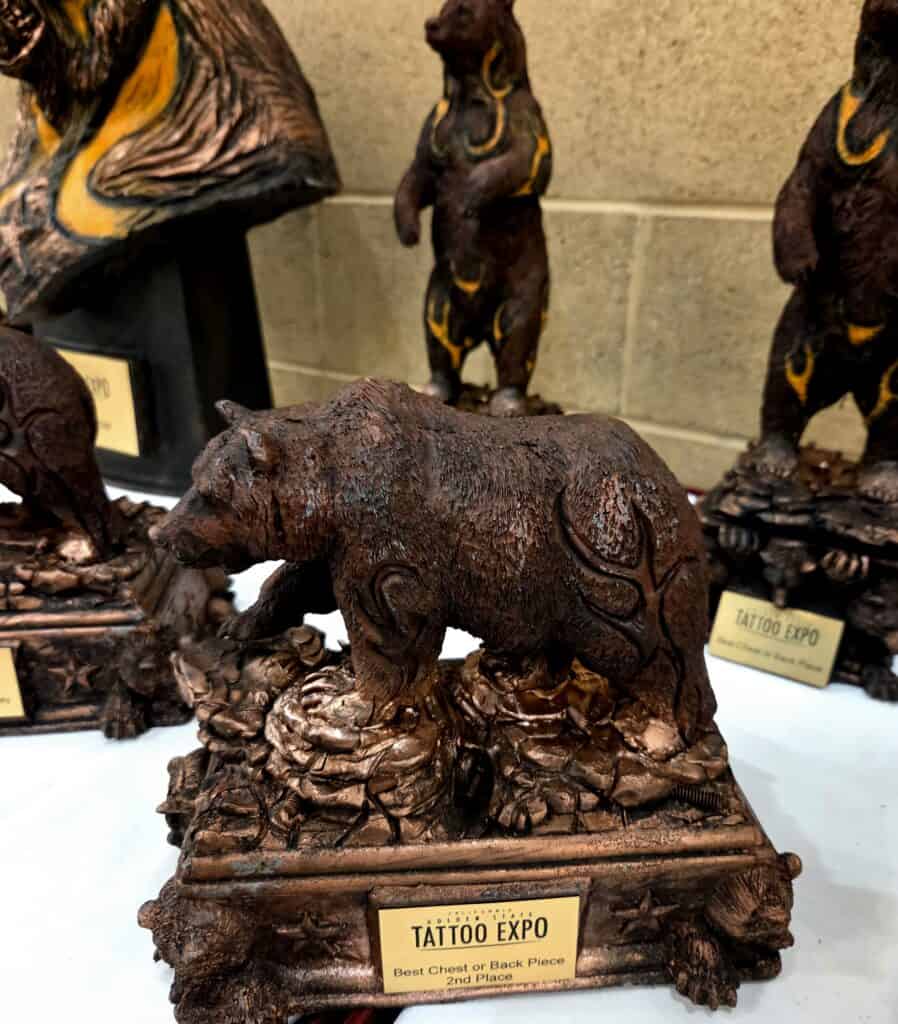
For artists, however, some of the weekend’s most anticipated moments came when the machines stopped humming and the human canvases were called to the stage. Winners received hand-carved bear trophies in 17 categories. “Many artists attend conventions to compete for the one-of-a-kind prizes,” explained SAL, an artist at Sea of Ink.
With slower foot traffic, the increased difficulty of getting into the convention—artists must be approved for quality to attend this show—and the sheer talent on display throughout the weekend, winning an award at Golden State Tattoo Expo offers major bragging rights.
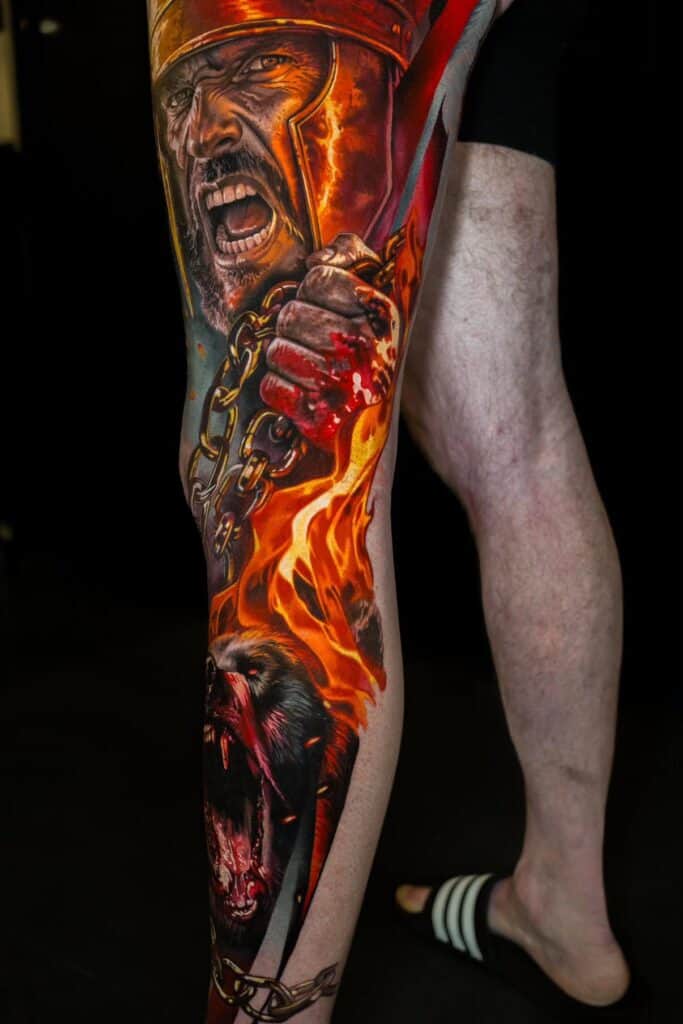
The Best of Show award at the 2026 Golden State Tattoo Expo went to the collaborative team of artists Ievgen Knysh, Lotus Onyx, and Nihataz. “Last year we did our first collaboration at the Golden State Tattoo Expo in Pasadena,” the winners shared. “This year we decided to do it again.”
“The idea came from our client and his football rivalry. We built the entire piece around a Roman warrior holding a massive chain, with a wounded bear below him. The warrior’s screaming face, the blood-covered hand, heavy chain, fire, red and orange reflections, and the stadium in the background all became one large composition running almost the entire outside of the leg.”
Elsewhere, artists practiced the art of tebori—a traditional Japanese tattooing method that uses a stick-and-poke approach. Collectors who underwent the method shared something surprising. “It doesn’t hurt like a machine does,” explained Bobby, a collector who sat for two days with Kashu Horishin, an artist who is part of the Jess Yen family.
Sitting on a mat on the elevated floor as Bobby lay on his stomach, Horishin took his time creating elaborate art in traditional tattoo styling. Across the aisle, Jess Yen and Lucy Hu also tattooed, using conventional machines. The tebori stage offered an intriguing entry into the sea of artists, giving collectors another glimpse of how varied the history and practice of tattooing can be.
Saturday brought its own excitement when Beaverduck showed up to make comedy videos and Carmen Electra showed up to get inked. True to LA fashion, the celebrities blended into the crowd, creating whispers as they passed by but becoming part of the experience for everyone else.
For three days, the Pasadena Convention Center became a meeting place for an industry that Hurtado has watched change since he first began co-hosting the expo in 2016. The convention may have been smaller this year, but the challenges facing the industry did not stop artists from traveling internationally, competing for trophies, meeting collectors, collaborating with one another, or simply showing up to see old friends.
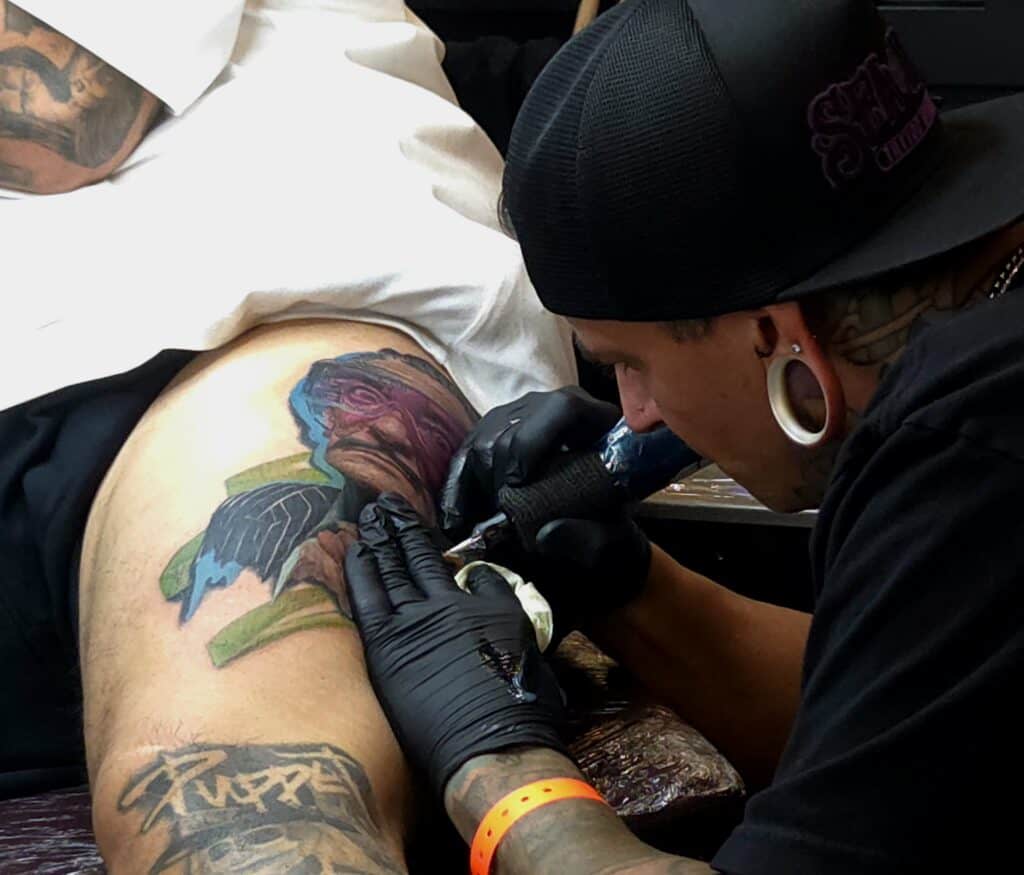
For Hurtado, that means putting the emphasis back on the artists themselves—even when the economy, travel restrictions, and unpredictable convention attendance make the industry harder to navigate. And perhaps that is what “down to the core” ultimately means.
Strip away the celebrities, vendors, entertainment, trophies, and even the massive convention center, and the Golden State Tattoo Expo remains what it has always been: world-class artists gathering to tattoo, create, and share an art form that continues to evolve. Even when politics and economics attempt to leave a mark on the industry, only the tattoo machines can leave a mark of permanence.