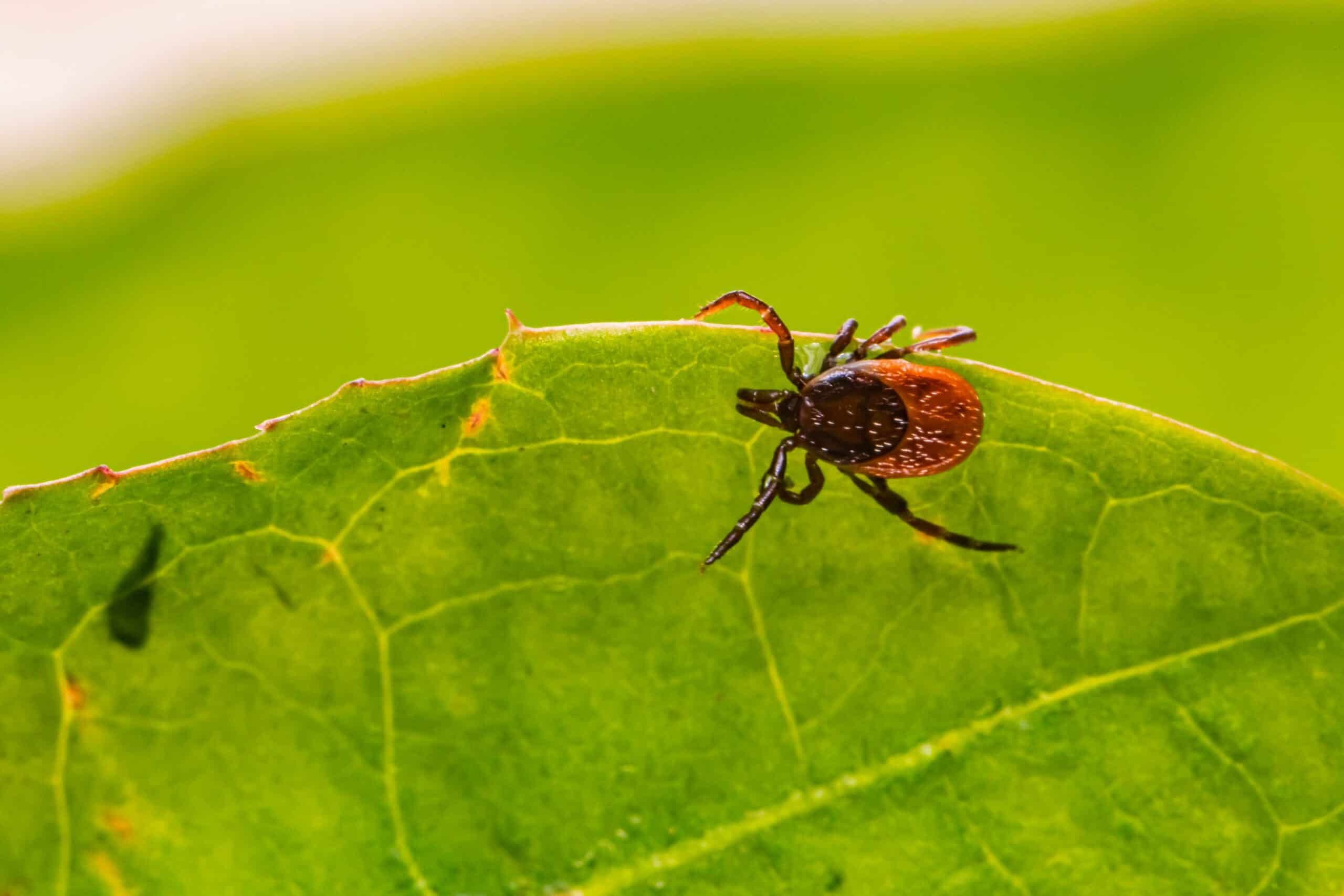
Cases of tick-borne diseases, including Lyme and anaplasmosis, have soared in Michigan over the past five years. Here’s what to know to protect yourself.
As much as I will forever sing the praises of living in Michigan with its salt and shark-free waters and lack of (mostly) poisonous snakes, there is one great fear I have in this state:
Ticks.
According to the Michigan Department of Health and Human Services (MDHHS), tick-borne diseases have increased at an alarming rate over the past five years in our state. For instance, reported cases of Lyme disease have soared 168 percent, and that is just the cases we know about—unfortunately, Lyme disease is an often under-recognized and underdiagnosed condition. Rates of anaplasmosis, another bacterial infection from ticks, also rose by over fivefold since 2020.
Ticks in Michigan scare me because they can be so hard to spot, and frankly, all of the things I enjoy most about living in Michigan during warm weather, like our wonderful outdoors, forests, and beaches, also seem to carry the risk of tick exposure. Even our yard, full of farm fields, trees, and a hay pasture for our beef cattle, feels like a constant threat. I don’t want to live in fear of ticks all summer long, so I’m taking a deeper dive into what to know about ticks in Michigan, where they are most active, and how to best avoid them.
Where are ticks in Michigan?
The MDHHS explains that black-legged ticks, which are most likely to spread diseases, are most active in Michigan from March through November. (Basically, the good months.) They are found most often in woody, grassy, or heavy brush areas, but as weather and geography change, they are being found in more populated areas. The Lansing State Journal reports that ticks are becoming more common in urban and city areas of Michigan, too. Ticks have even been found at Michigan beaches, hanging out on the grassy parts of the dunes, so your walk to the beach could pose a tick risk.
In Michigan, the most heavily tick-infested areas are in the Upper Peninsula (pretty much the entire U.P. has ticks!), the southernmost counties of the lower peninsula, and the east and west “shores” of the state. The innermost counties have lower known reported cases of Lyme disease, but keep in mind, the data map from MDHHS is from 2023, so cases have increased even since then. Ticks have been creeping in and up through the state over the past five years, so unfortunately, they are basically everywhere in Michigan.
Today was also the day I learned that ticks in all their life stages—meaning even baby ticks that are barely larger than the period at the end of this sentence—can bite and infect people. They are literal blood-sucking creatures who require a constant fresh supply of blood from a host, like a mammal, to survive.
How to decrease your tick risk
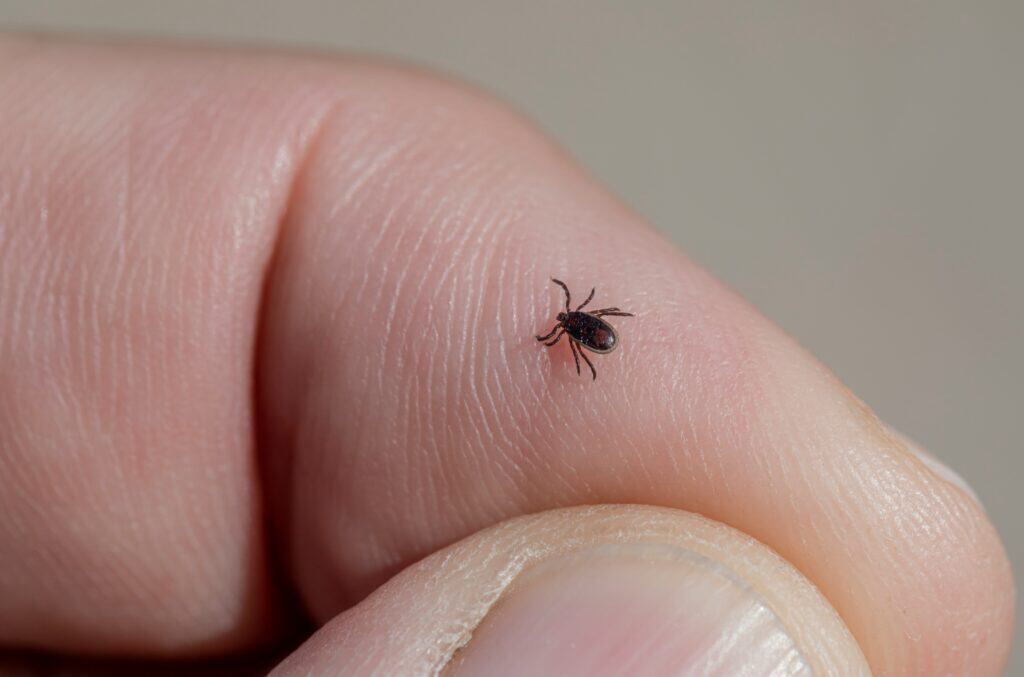
Ticks can be very small, as tiny as a sesame seed, making them hard to spot and even harder to avoid. They like to hang out outside but are always looking for a host, like a warm human or animal body, to latch onto and suck its blood during a feeding. (Is this sounding like something out of a horror film or what?)
That means that doing something as simple as brushing by a branch or bush with a tick lurking can provide a way for it to hop onto you for its next meal. Ticks are also conniving enough to choose well-traveled paths to wait by and can identify a host by smell, detecting carbon dioxide, or even a shadow. If you aren’t thoroughly horrified by now, let me hit you with this fun fact: Ticks create their own version of “cement” and fasten a feeding tube with barbs on it through your skin to suck your blood—all while also producing an anesthesia-like substance so you cannot even feel what they are doing.
I know. I told you I was afraid of them, and now you can see why, I’m sure.
All this to say, once a tick takes hold, the risk of getting bitten and having the bacteria transmitted through the saliva (which is how the diseases are passed on) is much greater. So the goal is always to decrease your risk of the tick 1) finding you and 2) attaching itself to you. To accomplish those goals, you can:
- Avoid grassy and high-brush areas. Stick to the center of trails when hiking and avoid brushing up against vegetation and grasses.
- Keep your lawn mowed and free of clutter, piles of wood, or other debris that could hide ticks or rodents.
- Always wear full-coverage clothing for outdoor activities.
- Check your entire body for ticks after being outdoors. They prefer areas of thin skin, like behind the ears and the scalp, and hidden, warm spots, like armpits, knee creases, and groins.
- Train your children to check for ticks after playing outside. My kids know this is a must in our house, especially after their cousin was bitten by a tick while playing in his backyard, where there was no tall grass at all.
- Use physical barriers, like gravel or mulch, to “fence” in play areas in your yard to prevent tick migration.
- Consider adding free-range chickens to your yard, if allowed, as chickens are natural tick predators.
- Use an EPA-approved tick repellent. Repellents containing citronella and creeping thyme have been found to be effective in repelling ticks. The EPA also has an online tool to help you find the right repellent for your activity and prevention needs.
- Coat your clothes with tick-killing permethrin (this chemical is not safe for skin, but can be used on clothes and shoes). You can also buy pre-treated clothes and shoes.
- Take a shower or bath as soon as possible after spending time outdoors to better locate and remove ticks.
- You can kill ticks on your clothing by drying it at high heat for 10 minutes.
- Check your pets, as they can carry ticks inside from the outdoors.
Protect your pets
Speaking of your furry friends, Kristine Smith, DVM, DACZM, Medical Lead, Preventatives at Zoetis Petcare, notes that one of the best things you can do to protect your pets is to ensure they are using available preventative medications and vaccines, such as:
- For dogs: Simparica Trio (sarolaner, moxidectin, and pyrantel chewable tablets) and the Vanguard crLyme (Borrelia burgdorferi vaccine). Dr. Smith notes that this trio of monthly chewable meds is highly effective in killing six species of ticks within eight hours, as well as blocking infections that may cause Lyme disease. The vaccine is the first and only recombinant Lyme vaccine for dogs developed to protect against diverse strains of the disease. Protection lasts 15 months.
- For cats: Revolution Plus (selamectin and sarolaner topical solution): “This is a once-monthly application that kills four types of ticks for a full month after one dose, including the lone star tick, Gulf Coast ticks, black-legged ticks (a.k.a. deer ticks), and American dog ticks,” Dr. Smith explains.
What to watch for
If you do find a tick on your body or on your pet, the first piece of advice—which I admit I would probably not adhere to myself—is to not panic. Not every tick carries diseases, and even if you are bitten, it does not mean you will be infected. A tick needs at least 36 hours to transmit the bacteria that can cause Lyme disease, so removing it before then eliminates the ability of the tick to make you sick.
Thus, it is a far greater risk to be bitten by a tick and not realize it, so spotting a tick can be looked at as a good thing, because then you can remove it and, if needed, have it tested and checked for diseases. If you spot a tick on your body, follow these steps as recommended by Michigan State University:
- Use fine-headed tweezers to pull the tick directly up.
- Do not twist or squish the tick. They embed head-first into your skin, and twisting could break the body off, leaving the head in your skin and a possible route for disease transmission.
- Once the tick is removed, clean the area with soap and water and rubbing alcohol or iodine, if you have it.
- Place the tick’s body and parts in rubbing alcohol or freeze them to preserve them.
- Contact your doctor for the next steps.
- If desired, you can submit ticks directly to the MDHHS for free or via photo for identification.
Symptoms of Lyme disease or other tick-borne infections can take weeks to develop, but if you know you have been bitten by a tick or near an area with ticks and develop symptoms such as an unexplained rash, fever, achy joints, or muscle pain, contact your doctor.