Boondocking, free camping, or dispersed camping in Arizona is a great way to experience freedom—and unbeatable views—on a budget.
Mellow weather is upon us, making it the right time to pack a bag, pitch a tent, and enjoy the great outdoors. With holiday spending behind us and tax season before us, finances might be a little tight. Fortunately, a slimmer budget doesn’t mean forgoing the wonders of nature or sacrificing views. Dispersed camping, also known as free camping or colloquially as boondocking, involves camping for free on public lands, such as national forest or BLM land. Typically, these camping designations do not offer amenities, which can be an added layer to the adventure!
Dispersed camping is often done in increments of 14-days or less, as this is the federal limit for camping in one spot. What’s appealing about this concept, though, is getting to camp in various places without factoring the price of lodging into the overall trip cost. For example, my husband, dog, and I were able to travel all over New Mexico for a week while boondocking, dining wherever sounded good, exploring all the fun stops, and soaking in hot springs—all for under $1,000. This style of vacation requires a little bit of planning and flexibility, but when done right, can be an unforgettable adventure full of beauty, freedom, and views—all without breaking the bank.
8 scenic spots for dispersed camping in Arizona
Ajo Scenic Loop
Ajo Scenic Loop is a 10-mile loop of views completed by rolling hills, native cactuses, song birds, and tranquility. Full of plenty of places to boondock, the Ajo Scenic Loop is only a few miles away from Ajo (and it’s important amenities), while offering the tranquility of the Sonoran Desert. Campers from all over have reported over 15 perfect spots for dispersed camping, but note that camping here is best done a few weeks after the Rubber Tramp Rendezvous has passed, lest you risk overcrowding.
Access is generally considered easy, as the dispersed camping here can be done in RVs, tents, or a vehicle.
Ironwood Forest National Monument and Ragged Top Mountain
If you want to feel like you’re sleeping in a national forest with nothing but desert views and access to hikes kissed by perfection through petroglyphs and old boomtown artifacts, then go boondocking at Ragged Top Mountain in the Ironwood Forest National Monument.
While camping close to the top with the best views can be done via Sasco Road to Silverbell Road, this option requires high-clearance vehicles. Alternatively, if you have a rig or just want to keep it simple, the more manageable route is via Avra Valley Road from I-10. Just outside of Tucson, this dispersed camping ground—offering absolutely zero amenities—boasts views similar to the those of Saguaro National Park.
Hiking to the top of the mountain is generally considered strenuous, but there are alternative paths that offer a glimpse of petroglyphs, Hohokam sights, and the remnants of Sasco Ghost Town—a previously booming mining town that has long since been abandoned.
Kofa National Wildlife Refuge
Near the California border, off King Road near Quartzite, is the Kofa National Wildlife Refuge. Dispersed camping is welcome here, as long as set-ups are at least a quarter mile from water and vehicles remain within 100 feet of the road.
Established in 1939 as a refuge for bighorn sheep, this wildlife refuge is known not only for its vast flora and fauna but also for stunning sunsets and views of surrounding mountain ranges. This is a peaceful, beautiful locale ready to set the stage for dispersed camping. Be warned, though, that the nearest town isn’t all that near, and there aren’t any amenities, so arrive prepared.
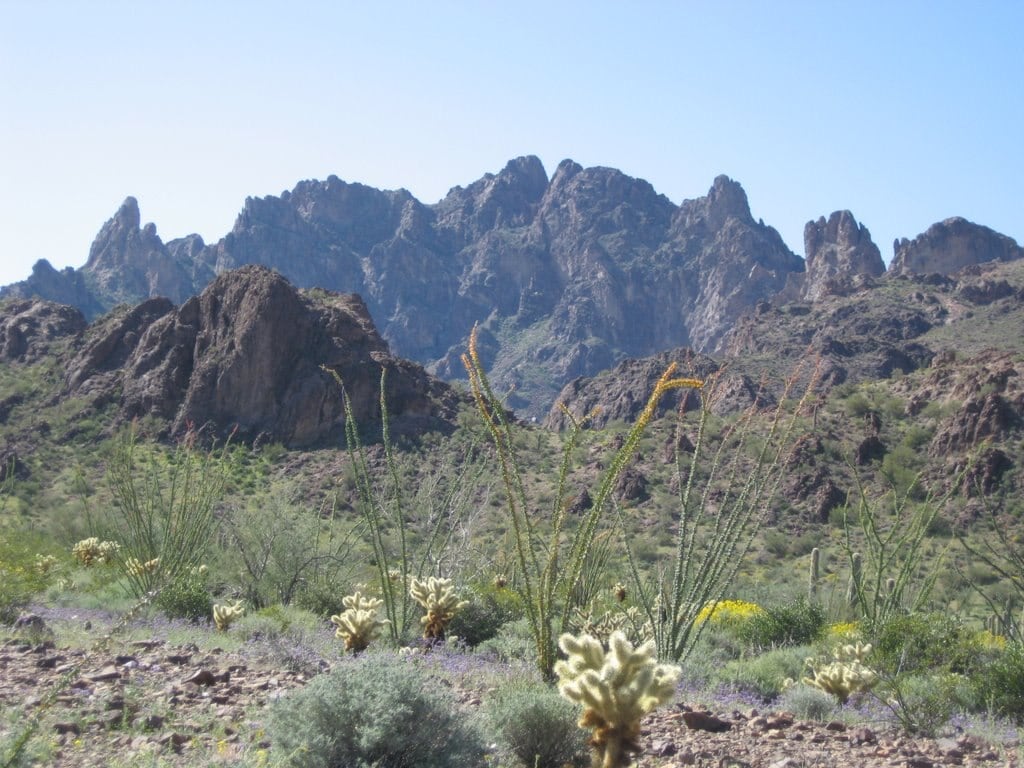
Coconino National Forest near Sedona, Forest Roads 525 and 89B
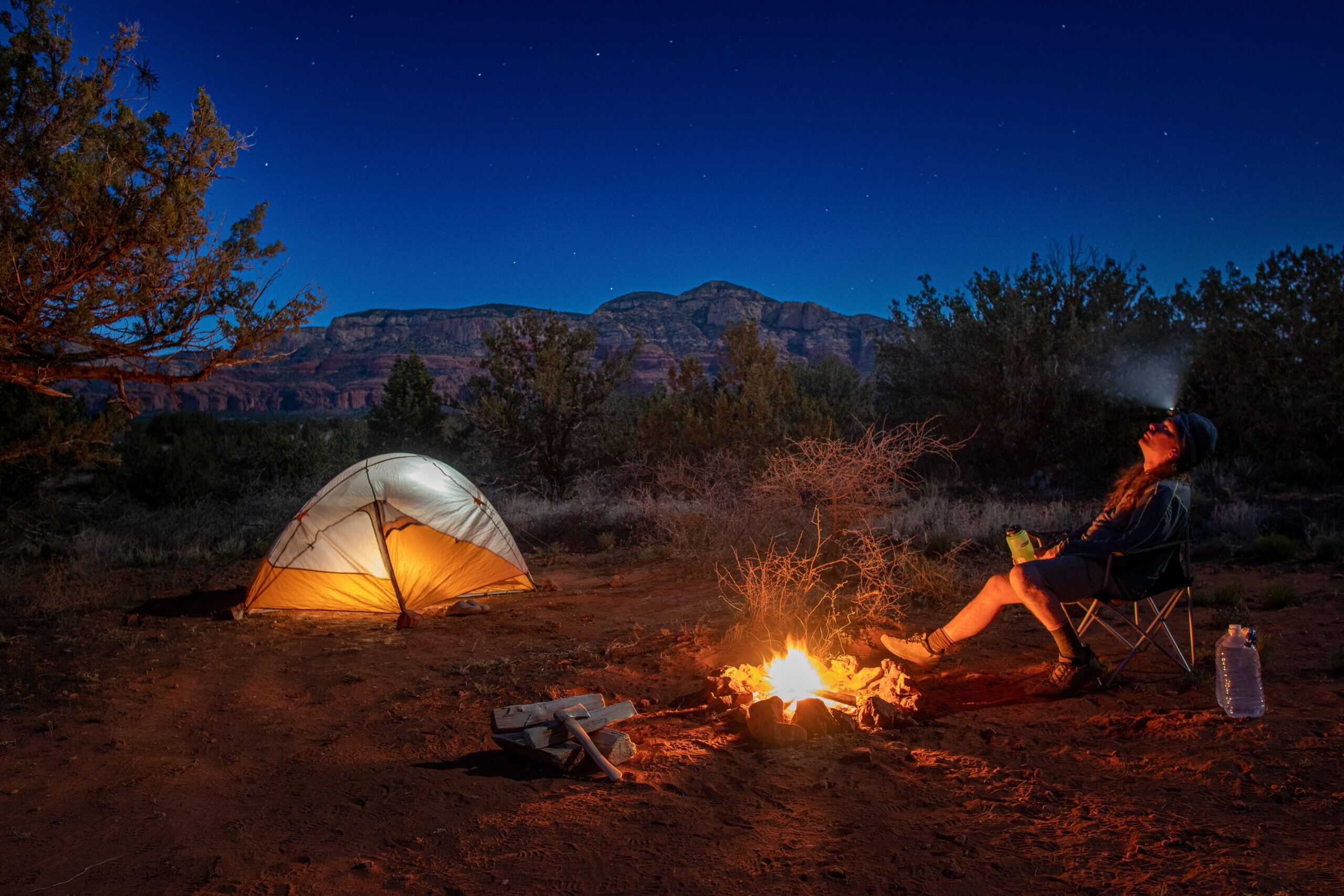
Want the views of Sedona without the high price tag? Dispersed camping is allowed in West Sedona off Forest Roads 525 and 89B. With around eight main areas for boondocking, this spot is rightfully popular and fills up fast. Be sure to arrive early in the day to set up camp so you can ensure a peaceful stay in Sedona beneath the night stars.
Be warned that forest roads can get rutted and washed away with weather, so be sure to check on road conditions before setting off.
Tonto National Forest
Head on out to Tonto National Forest’s Rim Road near Pinetop, along Forest Road 300. Here, stunning vistas and views from the Mogollon Rim set the stage for a pine-scented, starry-night stay in rustic camp. Forest Roads 300, 512, and 188 all offer a bounty of boondocking locations.
While most of the trek is generally accessible by any vehicle, high clearance is strongly encouraged after it rains, because, again, forest roads can get rutted.
Roosevelt Lake
Technically part of the Tonto National Forest, there is a dispersed camping spot alongside Roosevelt Lake, not far from Tonto Basin. To reach it from Highway 188, take the pull-out where a paved road leads down to the sandy shoreline. Many RVs can make it to the shore to camp, though lower-clearance cars have definitely needed boosts to get out. Free, scenic, and beautiful, this is not remote dispersed camping, but it is a rare chance to boondock by the water.
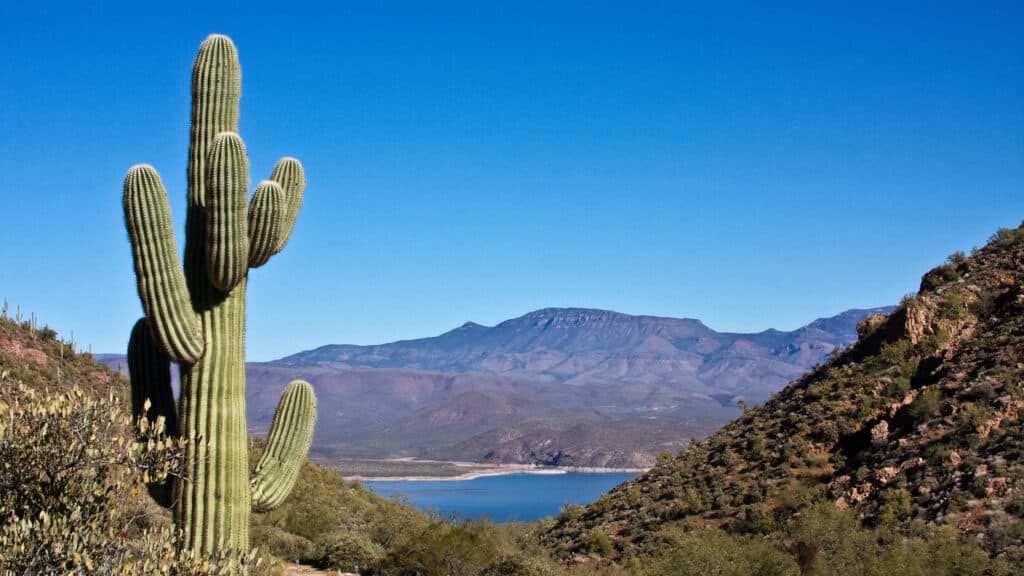
Oak Flat Campground
Oak Flat Campground provides another opportunity to stay in Tonto National Forest. In the midst of Devil’s Canyon in Superior, this campground offers amazing views, many hiking trails, and a short drive to towns in the Copper Corridor. Hikes in this area are often compared to the Grand Canyon, as the steep canyons and rock formations create an undeniable likeness.
Be aware, though, that camping here will only be an option for so long—the land itself is part of a lengthy legal dispute between the local Natives that view the land as sacred and a company that views mining in the area as inevitable.
Safford BLM land
Bureau of Land Management land is similar to national forests when it comes to dispersed camping—as long as there are no signs saying otherwise, and you are at least 200 feet from water, camping is allowed for up to 14 days.
Safford has a vast array of BLM land. Some of it simply offers views of the giant sky and mountains in the distance, while other portions sit on rock-hounding areas, offering views of hilly terrain full of various agate. BLM in Safford is relatively easy to get to, though larger clearance or All Wheel Drive vehicles are best for navigating tricky terrain.
Tips and tricks for the best possible time
Since dispersed camping means NO amenities—think no water, restrooms, or trash service—you need to be prepared. Here are some tips and tricks on what to bring and how to be.
- Limit your first dispersed camping experience to 2 nights maximum
- Bring plenty of drinkable water, as there are no services
- Bring a trash bag to pack all of your trash out
- Practice the “leave no trace” principles
- Bring a shovel to bury excrement
- Dispersed camping lacks blacktop, which means less heat is absorbed. Nights can get chilly, so bring a blanket and jacket
- Always make sure you have enough gas in the tank
- Tell a friend where you’ll be—this lessens the risk of spotty service
- If you can, bring a telescope for the darker skies
- Always have a flashlight/lantern on hand
- Don’t camp near waterways (stay at least 200 feet away)
- Always respect signs
- Check road and weather conditions before going out
- Mind any fire bans
- While most dispersed camping is allowed for up to 14 days, if an officer or ranger asks you to move, oblige
- For more tips on where to stay, check out iOverlander, Campendium, or FreeRoam—all of these apps have real user tips on where to stay
- In general, BLM land and National Forests are open to dispersed camping unless otherwise posted
- If you are unsure about a place, sit and watch your surroundings for at least 30-60 minutes. Usually, you will know if it is safe to stay within that time
Dispersed camping is a freeing feeling unlike any other. Once you gather all your preferred supplies—such as a camping coffee pot and portable stove—getting into the swing of it is an exciting, intoxicating, andperhaps even addicting form of travel that will stick with you for years to come. My suggestion, though, is to always trust your intuition, even when it doesn’t make sense. Staying alert is imperative as you learn the ropes and begin developing rapport with an area—including the land, animals, and faces. Happy camping!