Have you ever asked yourself, “Why is Reno called the Biggest Little City? It all has to do with a growing town, a contest, and a street-spanning arch.
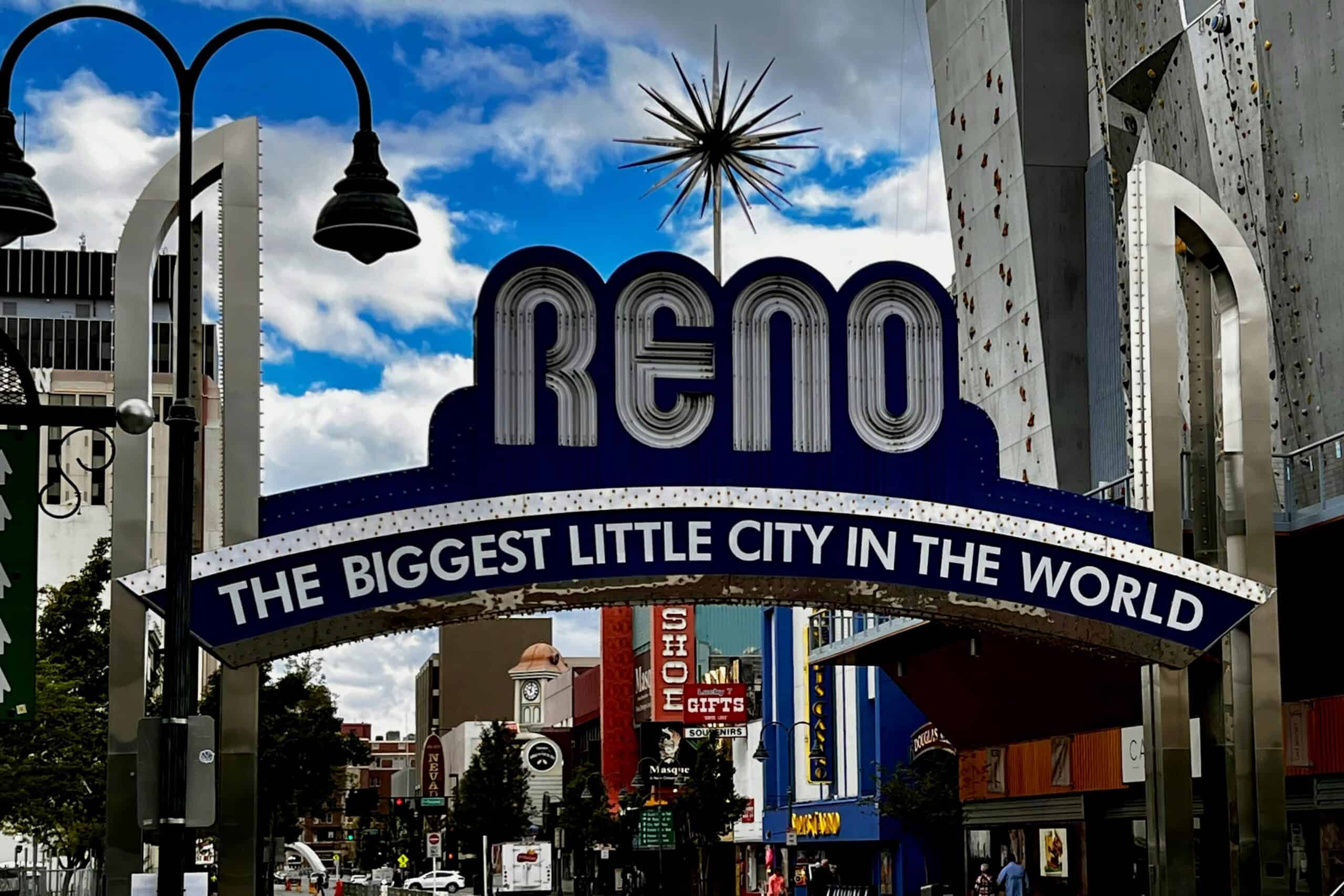
If you see the Reno Arch in person or in photos, you can’t miss the words, “The Biggest Little City in the World.”
It certainly looks good up in lights on the steel-truss arch, but what does it mean? And why is Reno called the Biggest Little City?
The answer to those questions lies in the past, present, and future of the Biggest Little City, from its beginning as a toll bridge crossing to its continued development as a vibrant Nevada destination.
A river and a railroad run through Reno
Situated in Northwest Nevada’s Washoe County along the Truckee River, Reno was long ago home to the Washoe and Paiute people. European American settlers began to pass through the area in the 1850s.
The discovery of the Comstock Lode in 1859 attracted all brands of pioneering spirits to nearby Virginia City. Soon after, the son of an area rancher established a ferry across the Truckee River with a bridge and a hotel (the modern-day site of the rebuilt Virginia Street Bridge and Riverside Artists Lofts). The toll bridge changed hands and was renamed Lake’s Crossing in 1861.
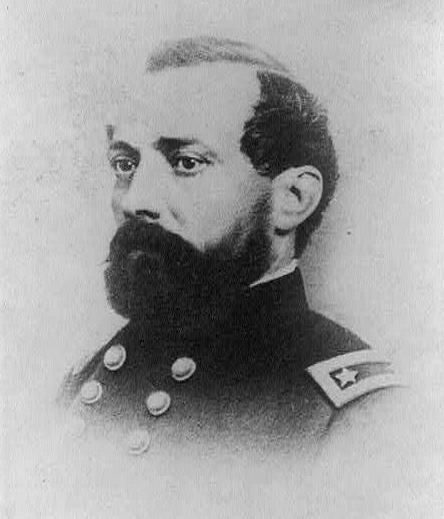
In 1868, the Central Pacific Railroad (CPRR) chugged into town and auctioned off lots for homes. Lake’s Crossing was renamed for Gen. Jesse Lee Reno, a Union officer who was killed by a gunshot to his chest at the Battle of South Mountain during the Civil War.
Quickie divorces and a booming economy
Once the lots were auctioned off, Reno hit the ground running. It soon became a major stop and distribution point along the Transcontinental Railroad.
The University of Nevada relocated to Reno from Elko in 1885, bringing higher education to the area. Reno was officially incorporated as a city in 1903.
By this time, the city was beginning to earn a reputation as a divorce mill due to progressive laws, including a short residency requirement. This attracted the rich and famous, among others, to relocate to Reno, while also boosting the economy.
The state’s tourism bureau, Travel Nevada, explains, “New construction added a sense of style and sophistication to the growing town, while culturally Reno matured through the opening of the new Carnegie Free Public Library and the founding of the Nevada Historical Society in 1904.”
In an article for KUNR, historian Alice Barber writes that Reno had a surprisingly urban feel as early as 1910: “Visitors often arrived expecting to find a backward frontier outpost and instead found a university, a charming downtown, and an air of cultural sophistication owing in no small part to the cosmopolitan crowds who were beginning to visit Reno to get a six-month divorce.”
An arch is built across Virginia Street
Fast forward to the 1926 completion of the Victory and Lincoln Highways (now I-80 and US-50). To celebrate these shiny new highways, Nevada and California co-hosted the Transcontinental Highway Exposition of 1927 in Reno. The city promoted the party by building an arch across Virginia Street at Commercial Row.
The original arch was steel and scaffolding-like, designed to resemble similar gateway structures in California, according to the Reno Historical website. It featured hundreds of incandescent light bulbs with torches bracketing the word “Reno,” written in all caps. It also showcased the exhibition name and the dates, June 25-Aug. 1, 1927, in slightly smaller lettering.
The Transcontinental Highway Exposition was rumored to be a legendary affair, with multiple days of partying, pigging out, and downing whiskey. The arch, meanwhile, was such a big hit that the city decided to make it a permanent installation.
In 1929, the Reno Arch received a small facelift when the city held a contest for the public to pick an official slogan to replace the exhibition name. G.A. Burns of Sacramento was awarded $100 for his winning slogan, “Reno, the Biggest Little City in the World.”
Reno Historical found some of the other contest suggestions in UNR’s Special Collections, including “Reno: Here in Nevada Where the Sagebrush Grows, Nature Has Forgotten to Record Its Woes” and “Reno: If You Are in a Rush, We Will Get You a Divorce in Three Months.”
Why is Reno called the Biggest Little City?
Reno wasn’t the first town in the country to brandish the “biggest little city” title. As Barber explains in her KUNR article, cities including Wichita, Memphis, and Sioux Falls tried it out to attract new residents.
“The phrase wasn’t about size so much as attitude,” she writes. “Our communities, they were saying, might be small, but they were big in vision, pride, and opportunities.”
Reno showed early signs of its eventual slogan in 1901, when a local reporter called it the “Biggest Little City on the Pacific Coast.” In 1910, promotional cards for a Reno heavyweight prizefighting championship between Jack Johnson and Jim Jeffries featured the slogan, “The Biggest Little City on the Map.”
Big and little changes for the Reno Arch
Gambling was legalized in Nevada in 1931. That, paired with an even shorter divorce residency requirement of six weeks, helped turn Reno into a popular tourist destination and the Reno arch into a landmark.
Reno dropped the town moniker in 1934, displaying only the word “Reno” in large, capital letters. The slogan returned to the arch a year later due to public protest.
In 1963, the city erected a new Reno Arch with plastic panels and a rotating star.
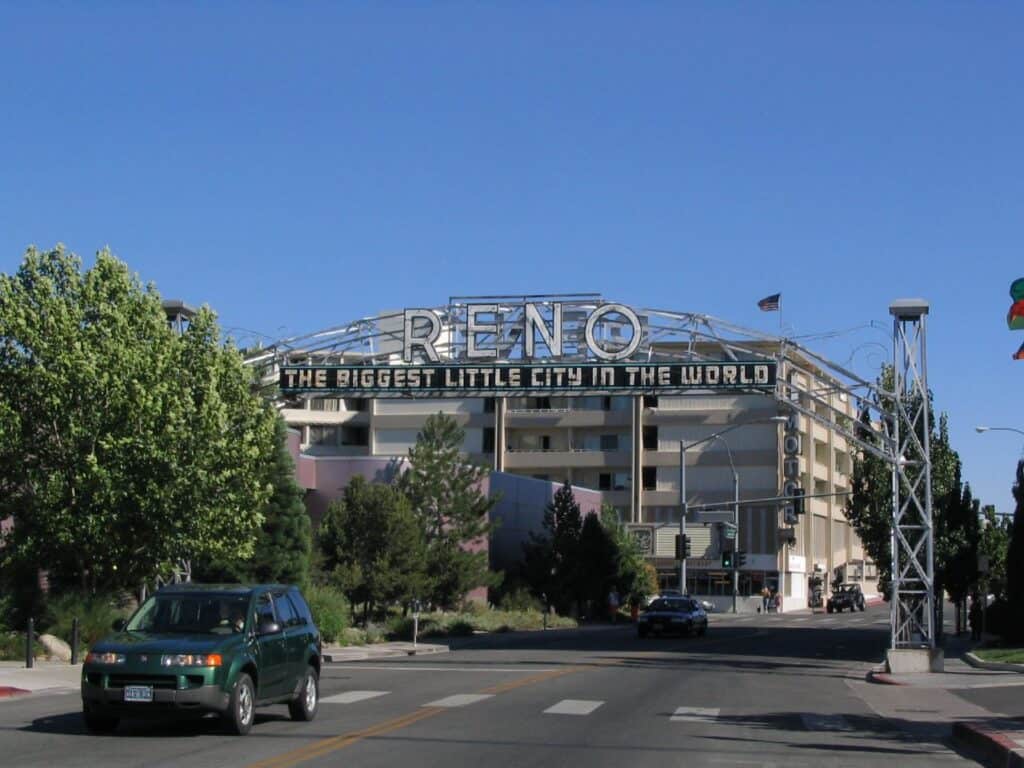
That version was replaced by the YESCO sign company in 1987. In 2009, the steel-truss arch was retrofitted with red, white, and yellow bulbs. In 2018, the city changed it to blue and silver as a nod to the University of Nevada, Reno’s Wolfpack sports teams.
Reno is still the Biggest Little City
Time has passed, businesses have changed, but the Reno Arch and its “The Biggest Little City in the World” slogan remain. The arch and slogan are an iconic part of downtown Reno, serving as the entryway to dining, shopping, arts, culture, and entertainment, close to The Row (Silver Legacy, Eldorado, and Circus Circus), Whitney Peak, and the city’s newest addition, Partnership Plaza.
The original arch from 1926 can be seen on Lake Street, south of the Truckee River.