Many of Utah’s fruits, including apples, were decimated this spring, triggering a state of emergency. Here’s how you can help local farmers bounce back.
There’s no beating around the bush: Utah’s farmers were dealt a bad hand this year. On the same orchards where trees typically stand tall and full in the fall, there are now barren trees with no plump, juicy apples for farmers to sell for profit. And it’s all thanks to a freak freeze that hit the state this April.
But that’s not actually where the story starts. Before the freeze, Utah experienced a warmer-than-usual winter that kickstarted some crops’ growing cycles. In fact, according to the National Weather Service, parts of Utah, like Salt Lake City, experienced their warmest winter in recorded history. (Weather began being recorded fastidiously in the late 1800s.) This alone had farmers worried for what was to come.
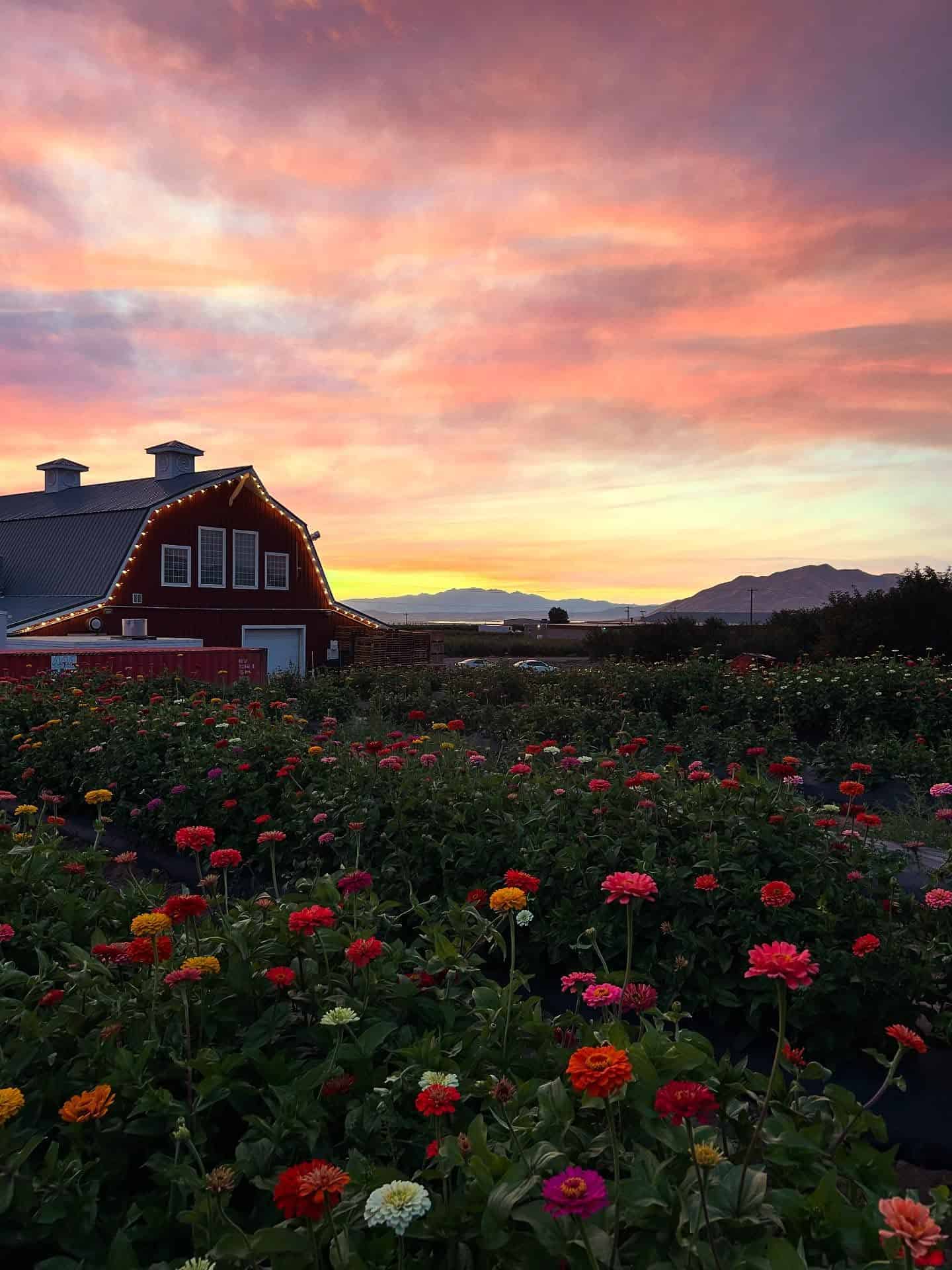
“There was some nervousness about the warm winter, for a few reasons,” says Paden Kunz of Rowley’s Red Barn. “Firstly, it was a dry winter, and lack of water can always affect the harvest negatively, but also the early warmth brings out the blossoms for trees and other spring crops early.” Rowley’s has two Utah locations: one in Santaquin and one in Washington.
Generally, the further along fruits are in their growth cycles when a freeze happens, the worse off they are. So, Utah’s apples didn’t stand a chance when winter’s warm days spiraled into a freeze in April. As farmers explained to the Utah Farm Bureau Federation earlier this year, they’d simply hoped to make it to May, when the potential for freezes drops significantly.
That tragically didn’t happen. According to a press release from the office of Utah Governor Spencer J. Cox, 95% to 100% of apples, cherries, plums, and more were wiped out in areas that experienced freezing temperatures on April 3, 4, 17, and 18. The governor then declared a state of emergency to try to aid farmers where possible.
Thankfully, freezes of this magnitude aren’t common. “Freezes can happen at that time of year not infrequently, but … the early warmth made the crops much more vulnerable to a freeze at that time than they would normally be,” Kunz told us. “The farm has really only been hit this hard by a freeze one other time at the very start of the 2000s (at least in living memory).”
Rowley’s Red Barn isn’t alone: Scores of orchards and farms across the state are also struggling. Selling fresh produce and experiences like apple picking are how these businesses make their money, but with entire crops decimated, their pockets are hurting. “Obviously we are very hurt by the freeze—we effectively lost everything on our trees (which is the VAST majority of the farm’s revenue),” Kunz says.
All is not lost, though. “Fortunately we do have our store (the red barn) and our agrotourism in the fall that can help offset some of that pain,” Kunz adds. At Rowley’s Red Barn, visitors can taste-test their way through homemade baked goods, ice cream, and slushies; purchase their favorite seasonal fruits and vegetables; go pumpkin picking; and participate in seasonal events like the upcoming Fall Festival, among other fun activities. The 2026 festival is slated to begin on Sep. 19 and will feature train rides, live music, lively corn hole games, and more.
Insurance has also helped ease the financial strain of this spring’s freeze. Luckily for Rowley’s Red Barn, “most” of their crops were insured. Still, Kunz explains, “Not every crop is insurable, and even then ones that are insured can only return between 50% to 65% of the money an average expected harvest would have brought.” Because of this, Kunz doesn’t expect finances at the farm to fully balance out for several years.
That’s where Utah’s local superheroes—aka you—come in. Uplifting small businesses is always the right move. “The best way people can support us is by shopping local, visiting both our stores (Santaquin and Washington), and supporting our events this fall. Word of mouth is our bread and butter for advertising—tell your friends, bring your family, and let us spoil you with the ‘charm of the farm,’” Kunz tells us.
One positive aspect of this tragedy is that freezes are largely self-contained. Kunz explains that, for the most part, only this year’s crops are affected, and next year should be back to business as usual. “We continued watering only enough to keep the trees healthy, and tried to run minimal maintenance to prevent disease and other damage to our orchards,” he says. “If we can get a decent amount of water, and no hard freeze next year, the crops should bounce back just fine.”