Born in Taos from experimental architecture built from recycled materials in the 70s, Earthships have since evolved into a sustainable housing alternative.
If you live in New Mexico, chances are you or someone you know has stayed in an Earthship, which isn’t some wild UFO like its name might suggest. With eco-consciousness on the rise, this alternative way of living is growing in popularity. It offers a unique way to get off the grid while maximizing sustainability.
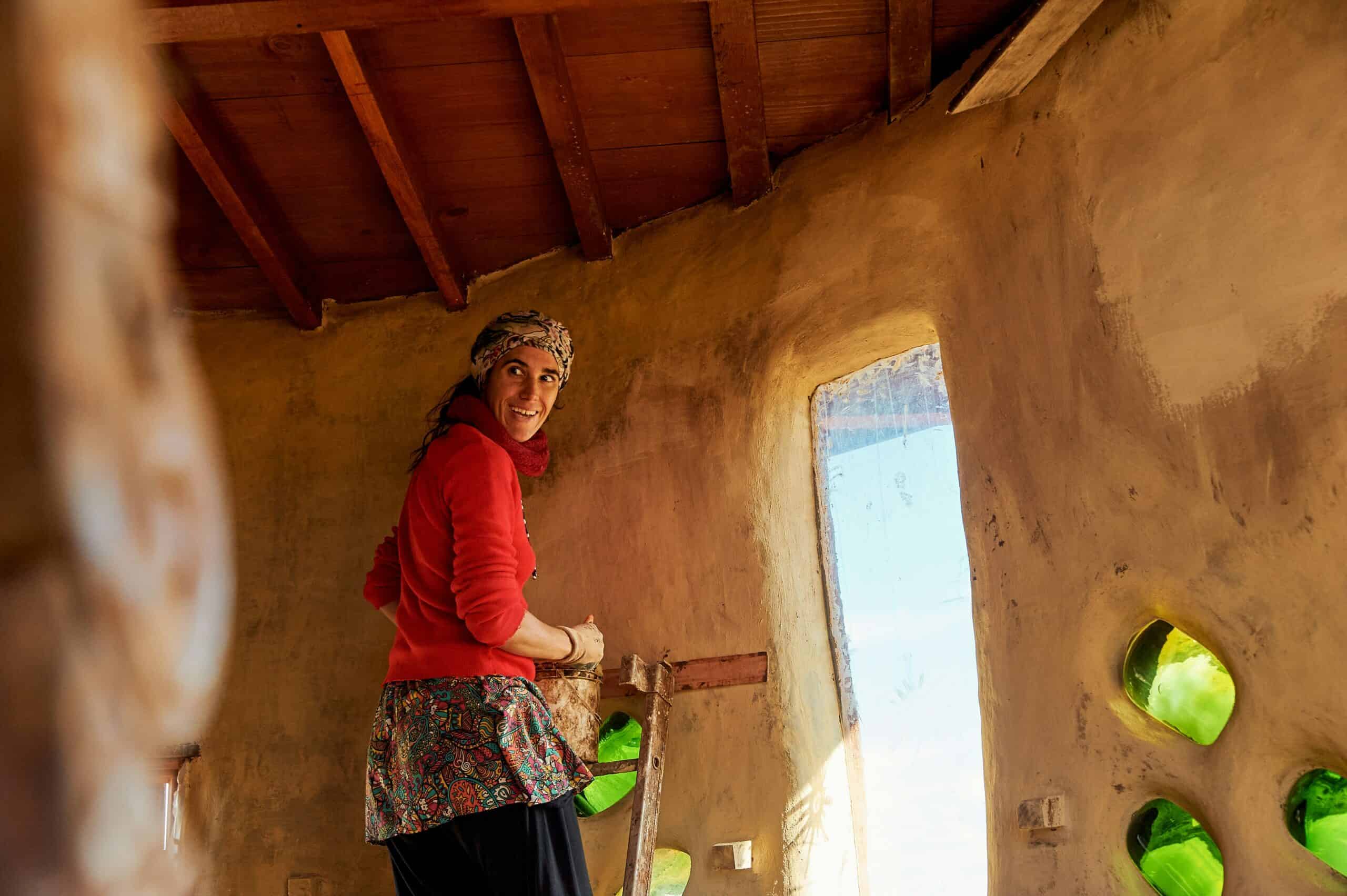
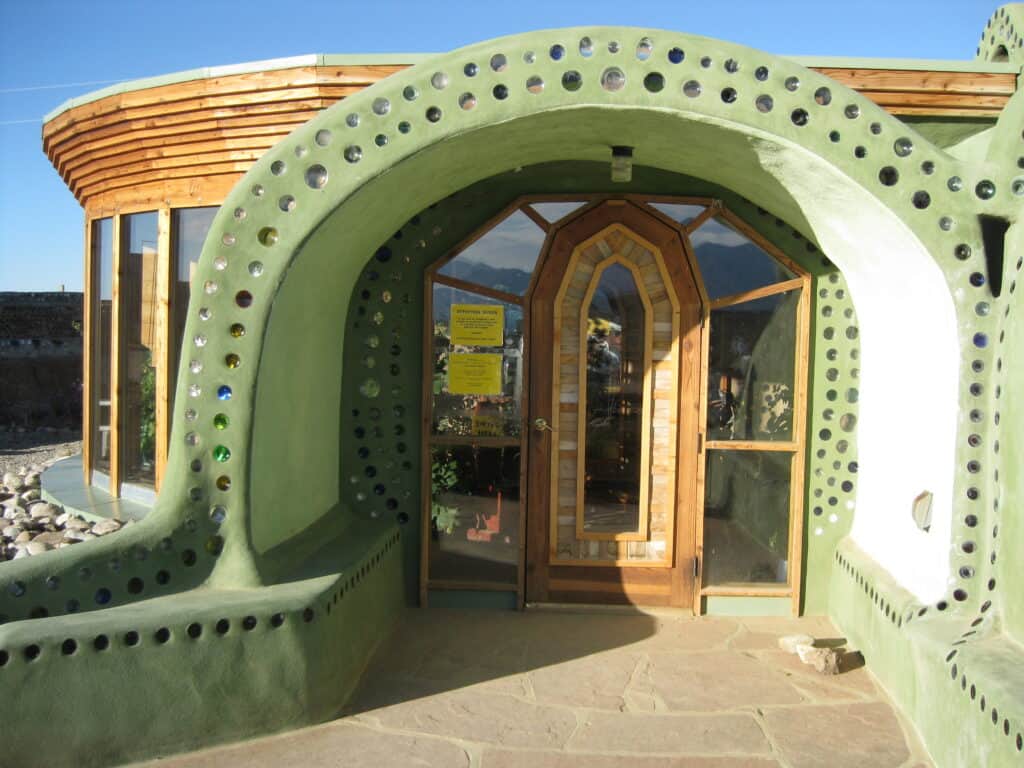
Designed to work with the natural surroundings, this intentional home style was first developed using empty beer and wine bottles as a structural building material. Earthships are typically built with recycled and natural materials, including earth-packed tires, glass bottles, cans, adobe, and other reclaimed materials.
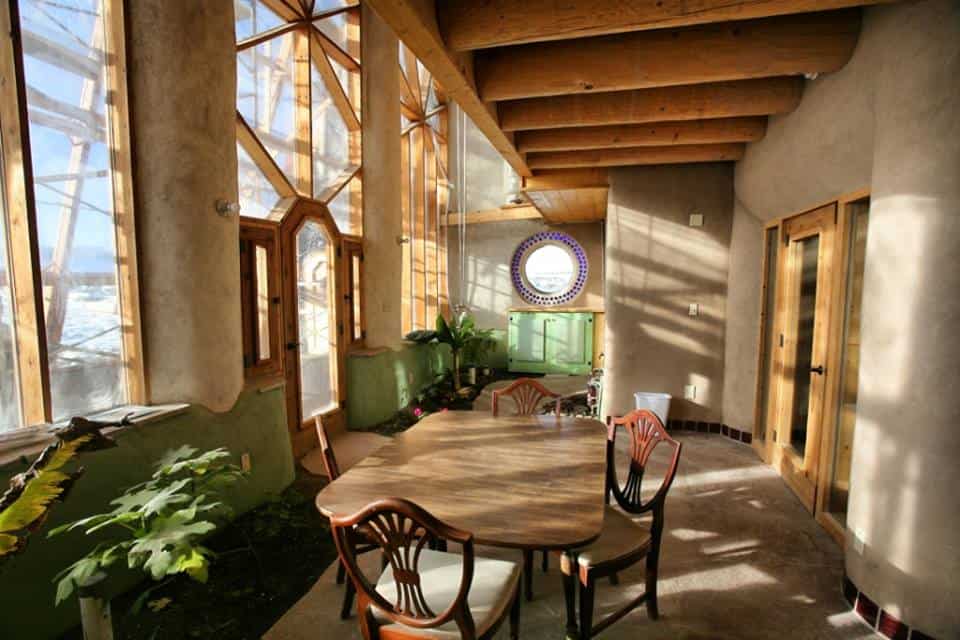
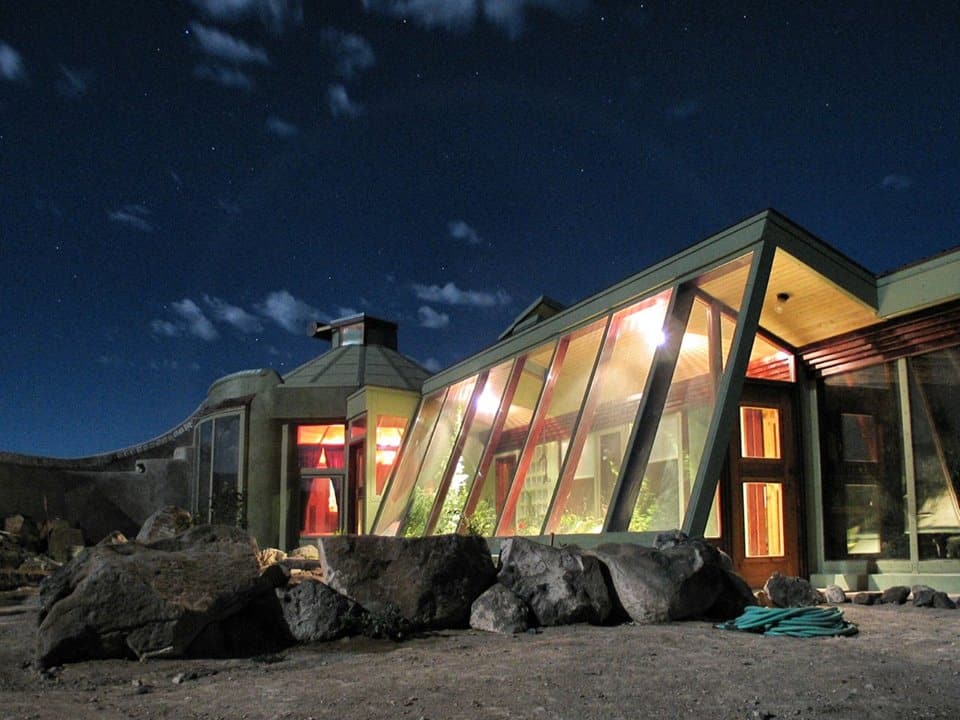
The thick walls create thermal mass that helps to regulate indoor temperatures (without central air and heating), while passive solar design, solar panels, and sometimes wind power provide energy. Some designs use conventional plumbing, while many incorporate gray-water systems, permaculture, and rainwater collection. They often include an attached greenhouse, typically serving as an entryway. These self-contained homes are designed to minimize their environmental footprint while remaining functional in remote and suburban neighborhoods.
Architect Michael Reynolds built the Earthship prototype in 1972 in Taos, New Mexico. Reynolds, who studied architecture at the University of Cincinnati, sought ways to make housing both more affordable and environmentally sustainable. His early experiments focused on using discarded materials—particularly aluminum cans, bottles, and tires—as building materials rather than sending them to landfills.
One of his first structures, a home called the “Thumb House,” helped establish the basic principles that would eventually become the Earthship concept. Thumb House—which used recycled beer and soda cans as a wall base—still stands today, along with Hobbit House—the first official Earthship built in 1979.
Modern-day Earthships
Since the evolutionary Earthships of the 70s, the concept has shifted from experimental houses built with recycled materials into a more refined system of off-grid, self-sufficient architecture. Reynolds and the Earthship Biotecture Academy have continued developing the designs, improving insulation, passive solar heating and cooling, solar power systems, water collection and filtration, and indoor food production.
Modern Earthships use more sophisticated electrical and plumbing systems, and their layouts can be adapted for different climates and household needs while still relying on the core principles of food, energy, clean water, shelter, garbage management, and sewage treatment—or “meeting all six human needs,” as the academy describes it.
Since the Thumb House, Earthships have expanded beyond Taos. Variations of these eco buildings are being constructed in other parts of the Land of Enchantment, the United States, and internationally—including Kansas, Montana, and Alberta, Canada.
Designers have continued experimenting with local and reclaimed materials, more efficient solar technology, improved ventilation, and systems for treating and reusing household wastewater. Perhaps the biggest evolution has been moving from simply building a house out of discarded materials to creating a home where the structure itself coordinates with nature for comfortable, sustainable living.
Who Earthships are for
People who choose to live in Earthships tend to be independent, environmentally conscious, and perhaps a bit counterculture—willing to live differently from the mainstream; it’s a direct way to push back against overconsumption, after all. Earthship dwellers may be drawn to reducing their dependence on public utilities, generating their own electricity, collecting their own water, growing food, and reusing materials that would otherwise become waste. Think elevated homesteaders, but not in the “Yesteryear” sense, more modern. For some, it’s an environmental choice; for others, it’s about self-sufficiency, resilience, or simply wanting a home that feels more connected to the land.
That said, living in an Earthship requires dwellers to have more than a simple interest in sustainability. Residents need to be comfortable with hands-on maintenance, unconventional systems that require specialists or DIY knowledge, and fewer conveniences than a conventional home may offer. Someone who enjoys—or doesn’t mind—homesteading, building, gardening, problem-solving, and controlling how their household operates may find the lifestyle particularly appealing. In many ways, an Earthship attracts someone who sees a house as more than a place to live—rather, as a living system that requires participation from the people who inhabit it.
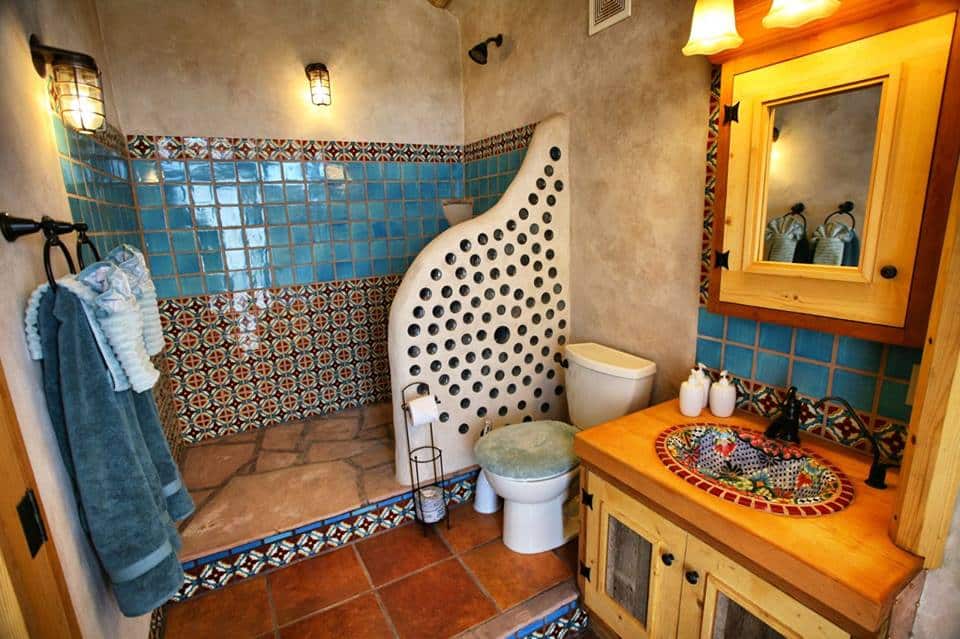
In fact, a close friend of mine lived in one for a couple of years—a rental with a walk-in entryway greenhouse, a wall of glass-bottle-bottom windows that produced spectacular color, a staircase leading to a bedroom designed to imitate a pyramid, and a shower with gravel flooring to keep it natural. True to form, the rental also included a decent amount of land to grow, build, and play upon.
Since it was older and built in the 80s, it still had some shortcomings that modern builds have resolved. The thermal mass wasn’t fully there, so in the winter, she’d need to huddle in front of the wood-burning stove—but that was more of a treat once pinon was added. There was also a strange slope to the upstairs balcony that ultimately led to a constant battle with mold within a kitchen wall. Fortunately, cleaning and proper maintenance mitigated the issues, but these efforts highlight what kind of effort someone must be comfortable with to enjoy Earthship life.
If you’re curious about experiencing this unique way of life for yourself, short-term Earthship rentals in Taos start at $245/night. You can stay for as little as two nights or as long as a month.
Where to build one
So you’ve seen one, stayed in one, and want to call one home, but in the town you already live in. Fortunately, you can legally build Earthships throughout New Mexico. However, these homes are not exempt from ordinary building regulations.
A new Earthship generally needs zoning and planning approval for the parcel, approved construction plans, a building permit, inspections like any other dwelling, and ultimately a certificate of occupancy. Electrical, plumbing, mechanical, structural, and energy-code requirements still apply. Because Earthships commonly use unconventional assemblies—such as earth-packed tire walls—the builder may also need approval through New Mexico’s Alternative Materials, Methods, and Assemblies process. The state requires alternative construction to meet the rest of the applicable building and safety codes, and New Mexico now also maintains codes for earthen construction. It isn’t easier than building a conventional home, but it paves the way for long-term sustainability (and potential financial savings when you consider utility costs and inflation).
Where you can build an Earthship depends primarily on the individual parcel and the local zoning authority of the municipality. That said, Earthships aren’t restricted to Taos, but Taos County is particularly accommodating because alternative and sustainable construction has a long history there. The county even provides an Alternative Materials certification as part of its permitting paperwork.
However, an Earthship still has to meet requirements such as setbacks and site rules, along with structural standards for snow, wind, frost depth, seismic conditions, insulation, foundations, etc. So, buying a remote piece of desert land—even in Taos County—doesn’t automatically mean you can build one there.
When choosing a location for your own Earthship, the first questions are whether the parcel is buildable, what its zoning allows, whether subdivision or HOA restrictions apply, and how water and wastewater will be handled legally. While you may wonder where you can build your own Earthship, Taos County is the obvious leader, but it isn’t the only possibility. New Mexico has a statewide earthen-building code. So you can be an Earthship Dweller even further south, maybe even as far south as Los Cruces.
Counties to consider
Though not an exhaustive list, here are a few counties that would make it a little easier to navigate the unique building and permitting process of Earthships.
Taos County
This is clearly the no-brainer pick. Earthships have been built in Taos for decades, and the county’s residential permit process specifically addresses alternative methods and materials.
Its current guide says residential construction using an alternate material or design requires an Alternative Methods and Materials certification rather than being prohibited outright. That’s a huge distinction for an Earthship. Taos County is also rewriting its land-use regulations, emphasizing sustainability, water conservation, environmental stewardship, and alternative approaches to development.
Santa Fe County
Santa Fe County is a solid choice to explore. Its Sustainable Land Development Code promotes sustainability and green development, and the county recognizes the New Mexico Earthen Building Materials Code.
It also specifically exempts structures built to the state earthen-building standards from its normal residential HERS-70 energy requirement. That’s pretty meaningful because the county isn’t treating earthen construction as inherently incompatible with its development regulations.
The downside is that Santa Fe County has a fairly sophisticated zoning and development-review system, including community overlays, so the exact parcel matters enormously. (AKA, there are HOAs and more rules to follow here.)
Sandoval County
Sandoval County has some delightfully rural areas to consider. The county doesn’t issue the actual building permit itself; the state CID does, while the county handles zoning compliance and floodplain review.
The county explicitly encourages property owners to talk with Planning & Zoning before developing a property, though a rural parcel could already be zoned appropriately, potentially making an Earthship easier to pursue here than in a municipality with extensive local rules and regulations.
Torrance County
This is an interesting one if you’re looking for rural, relatively inexpensive land rather than an established Earthship community. Places such as Moriarty and Mountainair are in Torrance County, and the county has a dedicated Planning & Zoning office that handles rural development.
Although it may lack the explicit Earthship and alternative-construction history that Taos has, it’s worth investigating if you’re looking for a more rural setting and fewer layers of local development rules to navigate.
Finding the right property
To find the right place to build, the parcel you pick matters. Here are some of the most important factors to consider:
- Residential zoning or an established residential use
- No HOA
- Generous setbacks
- No restrictive subdivision covenants
- Adequate legal access
- No problematic floodplain
- Enough acreage for septic or wastewater requirements
- A legal water source or a path to permitting a well or cistern system
- Favorable solar exposure
- A planning department willing to work through alternative methods and materials
That last point is particularly important because “off-grid” does not mean “outside the building code.” New Mexico’s state earthen code gives you an established pathway for some unconventional construction, but a full Earthship can still require engineering and approval for alternative materials. And very cooperative zoning and planning boards.
The easiest way to experience sustainable Earthship living is to rent one for the short or long term, or simply buy one that is already built—though that may be harder to find. Once you live in an Earthship, you may not want to leave. Even though my friend eventually had to move, she has lived in alternative, eco-conscious housing ever since.