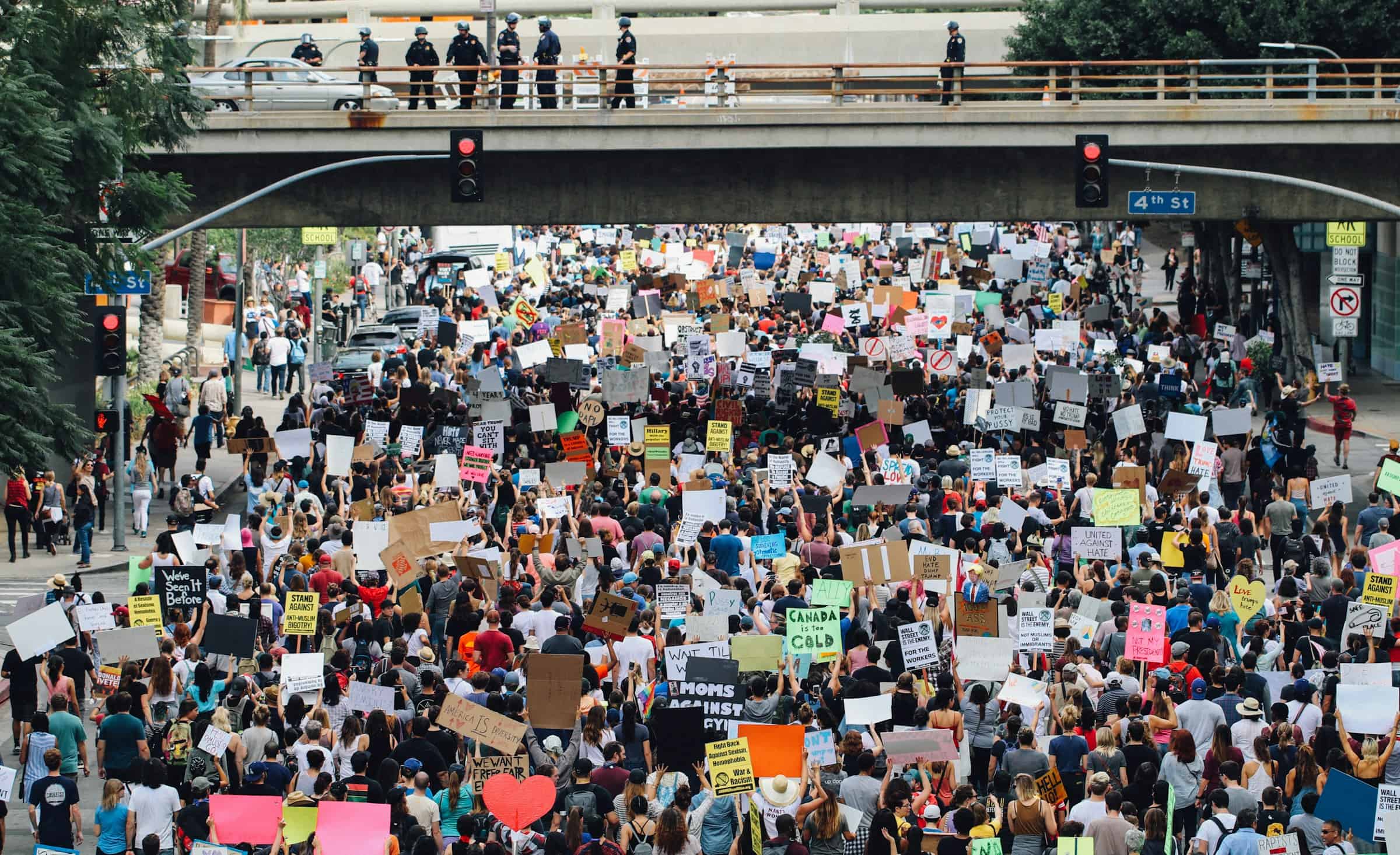
Want to affect positive change in your city, state, nation, or community? Know your rights and stand up for them at a peaceful protest in Nevada.
Nevadans have a long history of protesting local, national, and global political issues, from women’s suffrage and civil rights to current anti-ICE and No Kings movements.
In January, students at Nevada schools, from Las Vegas to Reno, walked out of their classrooms to protest ICE. And the Nevada Current reports membership has surged for ICE resistance networks such as the grassroots LV Defensa. Meanwhile, 20,000 people from all over Nevada participated in No Kings protests against President Donald Trump’s policies in March.
The right to exercise free speech and assembly through peaceful mass demonstrations is a fundamental element of our democracy, protected by the U.S. Constitution. “Congress shall make no law respecting an establishment of religion, or prohibiting the free exercise thereof; or abridging the freedom of speech, or the press; or the right of the people peaceably to assemble, and to petition the Government for a redress of grievances.”
If you’re passionate about protesting for or against a cause in the Silver State, it’s important to know your rights, what to expect, and who to turn to for help if you want to stay safe and avoid violence.
Read on for some tips and resources for protesting peacefully in Nevada.
Fight for the right to protest
Even though, as the American Civil Liberties Union (ACLU) of Nevada puts it, it’s “unconstitutional to make protesting illegal,” there are limits on what you’re allowed to do at a protest. Rules regarding speech, photography, sound, permits, and other aspects of protests vary between private and public property.
According to the office of Nevada Attorney General Aaron D. Ford, “On private property, the general rule is that the owners of that property may set rules limiting your free speech. If you disobey the property owner’s rules, they can order you off their property (and have you arrested for trespassing if you do not comply).”
Public property, such as a street, sidewalk, plaza, or park, is considered a traditional public forum. These have the strongest First Amendment protections, the ACLU notes. Some of your rights, as explained by the ACLU, include:
- Police officers cannot view your phone or other device, including photographs or videos, without a warrant.
- While officers may pat you down if they think you have a weapon or have committed a crime, you can refuse a search of your belongings.
- If detained, calmly ask the officer if you are free to go. If you are, walk away. If not, you may invoke your Fifth Amendment right to remain silent until your lawyer is present.
- Learn the difference between officer requests and orders. Lawful orders must be followed, but requests can be denied.
- If you think your rights have been violated, take notes, including the officers’ badges, patrol car numbers, and agency; get contact information from witnesses and photo or video evidence of incidents or injuries.
- You can choose to leave a protest if you think it’s becoming dangerous or if dispersal orders have been declared.
To learn more about your rights as a protester, visit these websites: Protesters’ Rights in Nevada, from the ACLU, and Your Rights: Demonstrations and Protest, from the Office of the Nevada Attorney General.
They’ll be watching you
Recent protests in Nevada have largely remained peaceful with limited arrests. Still, there have been cases of violence by the government, unwanted police contact, arrests, injuries, and even death across the nation.
“Police have, in extreme circumstances, been known to inflict bodily harm by physical force, rubber bullets, bean bag rounds, live ammunition, tasers, tear gas, and/or pepper spray,” notes the ACLU.
Additionally, the ACLU and several media reports claim that federal agencies are implementing technology nationwide, including facial recognition, cell phone jammers, data interception, and immigrant trackers that monitor and control protests.
The Las Vegas Metropolitan Police Department (LVMPD) supports individuals’ right to protest and assemble, but urges peaceful gatherings. “It is important to understand which objects are prohibited, which traffic rules must be followed, and under what circumstances a protest may become illegal or be dispersed by authorities,” the LVMPD notes on its website.
According to the department, common violations include damage to property, harming other protestors or bystanders, throwing objects, and intentionally obstructing the roadways. Clear and present danger of riot, disorder, interference with traffic, or other public safety threats may lead to the protest being shut down.
“Officers are present to make sure that both protestors and the public are safe,” explains LVMPD. “Police will not interfere with a protest unless illegal activity occurs.”
To learn more about law enforcement’s role in peaceful protests, read the Protest Safety page on the LVMPD website.
Get up, stand up!
If you’re interested in exercising your First Amendment rights by protesting and don’t want to do it alone, consider volunteering with progressive groups such as LV Defensa, a network organized by Southern Nevada activists to protect immigrants in Las Vegas.
The non-partisan, grassroots Indivisible Northern Nevada, which organized the Nevada No Kings protests, promotes positive change in the community, state, and nation by defending our democracy. This group also has a Las Vegas chapter.
If you are still a student, and you want to protest a cause during school hours, you also have support from the ACLU.
“While there are gray areas in this area of law surrounding student walkouts, many of those gray areas will likely be made clear should litigation arise, and as everyone knows, we are no strangers to Nevada courtrooms,” said ACLU of Nevada executive director Athar Haseebullah in a press statement. “We encourage Nevada school districts to spend their time ensuring all of our students have the support they need in the midst of barbaric federal actions that have led to family separation and immense fear instead of finding ways to try to chill or suppress speech.”
Looking for a protest to attend? Visit the Find a Protest website for protests and events in Nevada. These include Fight Facism Fridays or Stand up Saturday in Las Vegas and Henderson, Solidarity Saturdays in Carson City, or Tyranny Tuesdays in Reno.