Everything you need to know about digging up Georgia’s gold, gems, and shark teeth, from north Georgia mountains to Tybee Island.
Long before California’s forty-niners, there was Georgia’s gold rush—the first such precious metal mania in the U.S. kicked off in the north Georgia mountains in the late 1820s. That mining history left behind legends of mineral-rich soil unusually packed with rocks and gemstones, from Blue Ridge pegmatite fields to Coastal Plain riverbeds full of fossilized shark teeth.
If you’ve ever wondered about rockhounding, but didn’t know where to start your new hobby, we’ve got you covered. This guide covers the rules, the gear, and the best spots across Georgia for rock hunting.
What you need to know before you go rock hunting in Georgia
Know the rules
Georgia’s collecting rules depend heavily on whose land you’re standing on. Check official sources before digging.
State parks: Collecting rocks, minerals, or fossils isn’t allowed in Georgia state parks without written authorization from the Department of Natural Resources.
National forest land: In the Chattahoochee-Oconee National Forest, casual collecting of rocks, minerals, and gold for personal, non-commercial use is generally permitted in reasonable quantities, though specific district rules can vary. Check with the local ranger station before you dig.
Fossils: Collecting vertebrate fossils (think shark teeth with roots intact, bone, or anything from an extinct animal) on state or federal land typically requires a permit.
Artifacts: Archaeological and Civil War-era artifacts found on state land are protected by law. Leave them where they lie and report significant findings.
Private and fee-dig land: Most of Georgia’s best-known sites are privately owned pay-to-dig operations, which means the site’s own rules apply. Always get explicit permission before rock hunting on private property that isn’t an established fee-dig site.
Come prepared
You don’t need much to start rockhounding, mostly a sharp eye and natural curiosity. But a few tools make the difference between a casual stroll and a real haul.
Firstly, you’ll need some protection. Start with sturdy, closed-toe boots—north Georgia creek beds are slick and home to copperheads. Add a layer of bug spray to protect against ticks, which are heavy in the Blue Ridge region from spring through fall. Grab gloves and safety glasses, too, in case of any rogue sharp objects or edges underfoot.
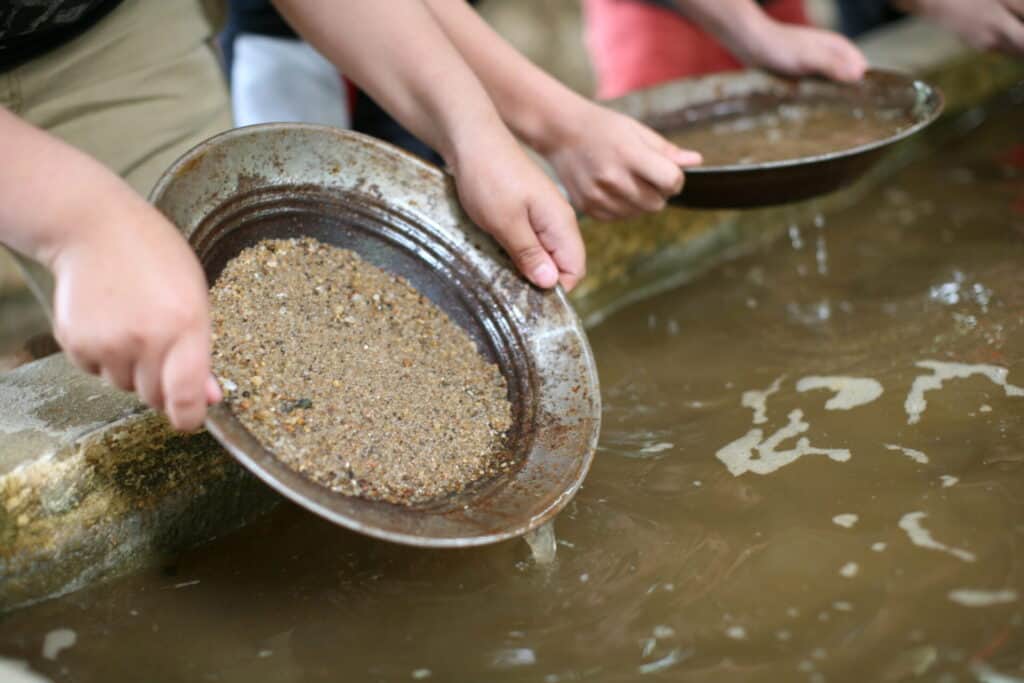
For gear, pack a small rock hammer, a chisel, and a garden trowel or hand rake for digging, and a mesh screen or gold pan if you plan on creek panning. Bring along a five-gallon bucket for storage and zip-top bags or newspaper to wrap and separate your finds.
And, of course, don’t forget the basics like sunscreen, water, and a fully charged phone.
The coolest rocks and minerals you can find in Georgia
There’s more than gold in them hills.
Staurolite (“fairy crosses”)
Georgia’s official state mineral, staurolite earns its name by forming naturally into small cross-shaped twin crystals. Folklore holds that the crosses formed from the tears of fairies grieving the death of Jesus. They’re most commonly found in the Blue Ridge counties of Cherokee, Gilmer, Pickens, and Fannin.
Quartz
Quartz is Georgia’s official state gemstone, and it shows up across the Piedmont region in forms ranging from clear crystal to smoky grey and rose quartz. Clear quartz has historically been found in Burke and DeKalb counties.
Amethyst
Georgia’s amethyst has a strong pedigree. The deep-purple “scepter” crystals once dug at the Jackson’s Crossroads Amethyst Mine in Wilkes County rivaled anything found worldwide, and legacy specimens from the mine still circulate among collectors at gem shows and rock shops across the state. The mine itself has since closed to the public, so if you’re after a piece of Georgia amethyst today, a local rock shop or gem show is a better bet than a shovel.
Rutile, kyanite, and lazulite
North-central Georgia’s pegmatite deposits produce some genuinely rare finds, including rutile crystals and iridescent hematite that collectors travel from out of state to dig for.
Corundum (ruby and sapphire)
Georgia was once the nation’s top producer of abrasive corundum, and while true gem-quality ruby and sapphire are rare finds, the mineral turns up in the same metamorphic belt that produces North Carolina’s famous Cowee Valley rubies just across the state line. Look for pink to reddish corundum in stream gravels in the far northeast corner of the state.
Garnet
Almandine garnet—the deep reddish-brown variety most common here—turns up widely across north Georgia, documented in locations from Paulding County’s Garnet Hill to Blue Ridge schist outcrops to Bartow County near Cartersville. It’s common enough that staurolite hunters in the Blue Ridge counties and corundum hunters at Chatuge Lake often pocket a garnet or two without setting out to find one.
Shark teeth
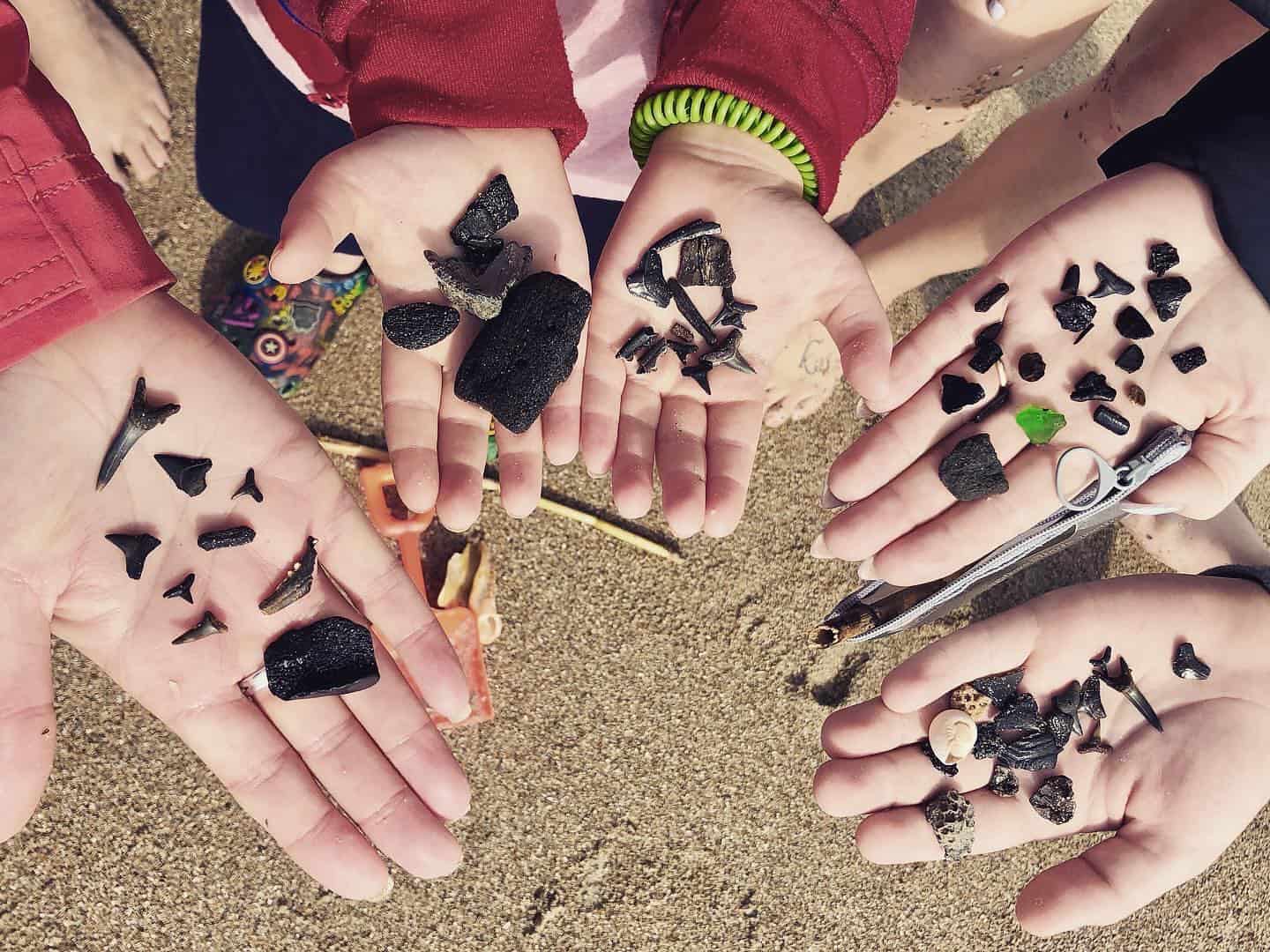
Georgia’s official state fossil turns up throughout the Coastal Plain and along the coast, where erosion regularly exposes them in riverbeds and beaches. Colors range from the common black and gray to white, brown, and reddish brown, and some trace back hundreds of millions of years.
Gold
Georgia’s Blue Ridge foothills were the site of the nation’s first gold rush, and placer gold can still be panned from the same creeks that drew prospectors in the 1820s and 1830s.
The best places to rock hunt in Georgia
Graves Mountain, Lincoln County
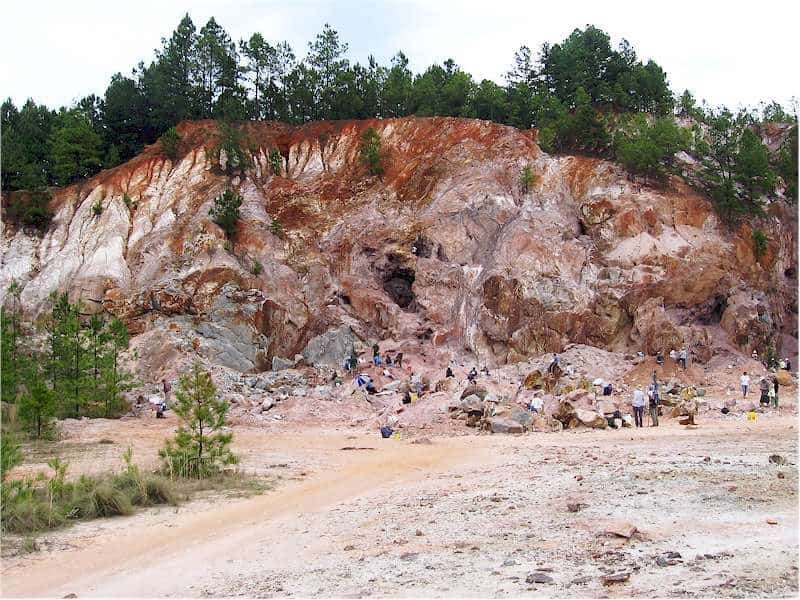
One of the most mineralogically diverse sites in the eastern U.S., Graves Mountain is known among collectors for rutile, pyrophyllite, and kyanite—specimens from here sit in the Smithsonian’s collections.
The mountain opens to the public twice a year for the biannual Rock Swap and Dig, typically a three-day weekend each April and October, 8 a.m. to 6 p.m., with a liability release required at the welcome table. Outside those dates, access is by appointment through longtime caretaker Junior Norman, who can reserve the mountain for groups as small as two collectors. Check with the Georgia Mineral Society for upcoming dig dates before making the trip.
Hogg Mine, Troup County (LaGrange area)
A fee-to-dig operation in the Piedmont’s schist and amphibolite country, Hogg Mine draws collectors after star rose quartz, black tourmaline, beryl, and aquamarine. It’s open to the public on Saturdays only; check the mine’s website for current dig dates. Diggers meet inside the McDonald’s on Whitesville Road in LaGrange (I-85, Exit 13) to sign a release form, then caravan to the site together at 9 a.m. sharp.
Public digs run $35 per person 16 and older; kids dig free with a paying adult. Bring your own tools.
Dahlonega’s gold mines, Lumpkin County
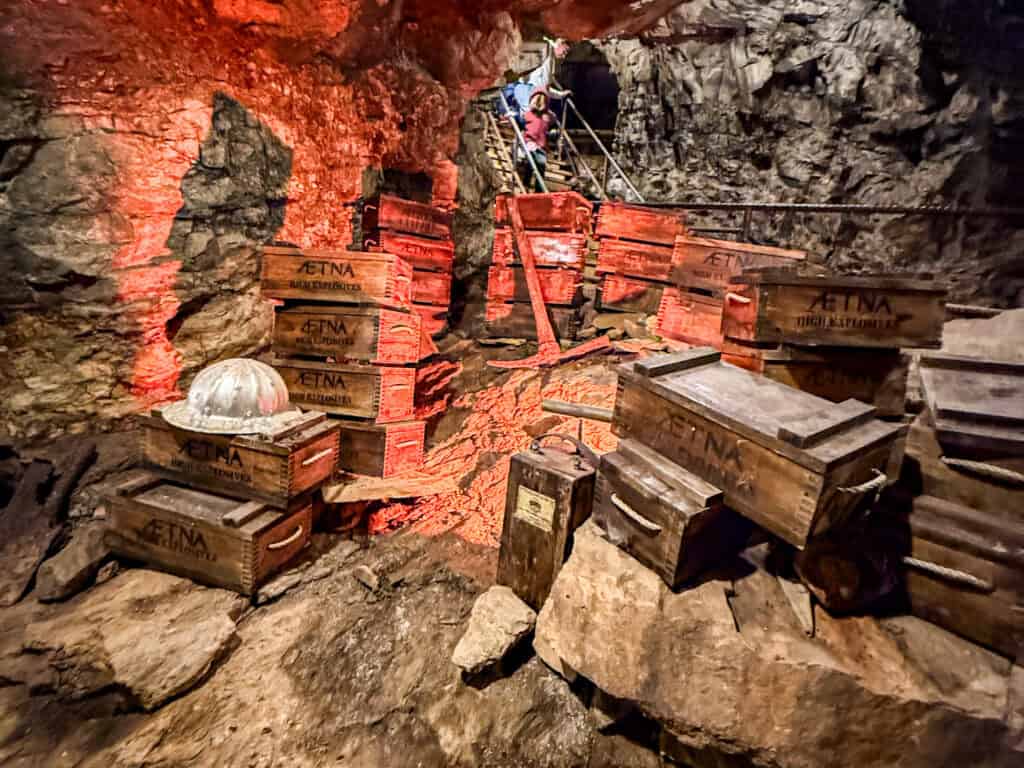
The birthplace of America’s first gold rush is home to several fee-based mines, including the family-run Crisson Gold Mine, open to the public since 1969 on a site worked commercially since 1847. Its 130-year-old stamp mill is the only one of its kind still operating in Georgia, and you can see it in action crushing gold-bearing quartz as part of the self-guided tour. Afterward, you can pan for gold or “grub” for gemstones on-site.
Nearby, Consolidated Gold Mine takes visitors underground into real mining tunnels on a guided 45-minute tour before turning them loose to pan for gold and gems. Each mine has literally left its mark on the state: Crisson and Consolidated each contributed gold to the Georgia Capitol dome’s regilding, continuing a tradition that dates back to 1958. Both are extremely family-friendly.
Dukes Creek Gold and Ruby Mines, White County
Just outside Helen, in Sautee Nacoochee, this commercial site uses shaded panning tables to sift gold, rubies, sapphires, and emeralds from ore mined on the family’s own land. The Jackson family has run the operation for more than 50 years, and the creek itself is tied to one of several 1828 gold discoveries that kicked off the rush, alongside the more famous Benjamin Parks find near Dahlonega. It’s open year-round, though it’s worth a call ahead to confirm daily hours.
National forest streams, north Georgia gold belt
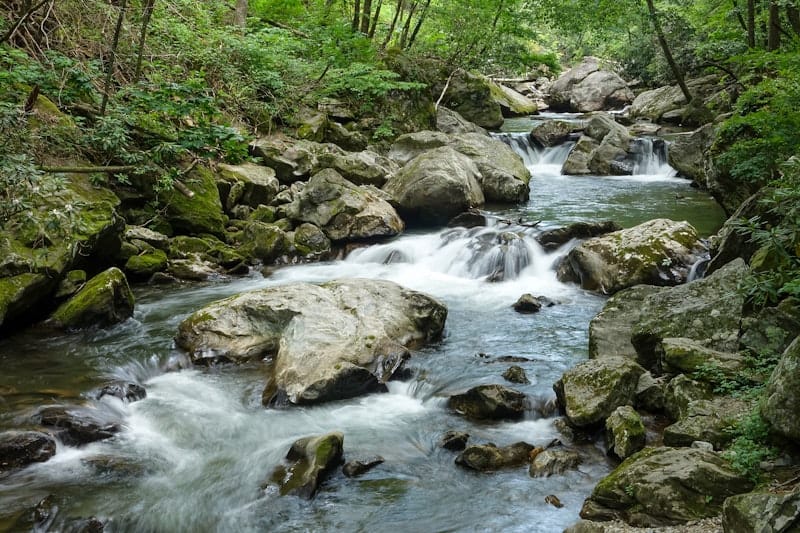
Prefer to pan for free? The Chattahoochee National Forest allows recreational gold panning in its streams with no permit and no fee, using just a gold pan and a small hand shovel or trowel.
The gold belt runs through the national forest roughly from Dahlonega through Lumpkin, White, and Habersham counties. Panners have had luck in waterways like Yahoola Creek, the Chestatee River, and Cavender Creek, all near Dahlonega.
Stick to hand tools and the streambed itself—no sluices, no digging into the banks—and check current stream status with the Chattahoochee-Oconee National Forest office before you head out, since a few streams sit inside protected wilderness corridors or close temporarily during trout spawning season.
Blue Ridge counties: Cherokee, Gilmer, Pickens, and Fannin
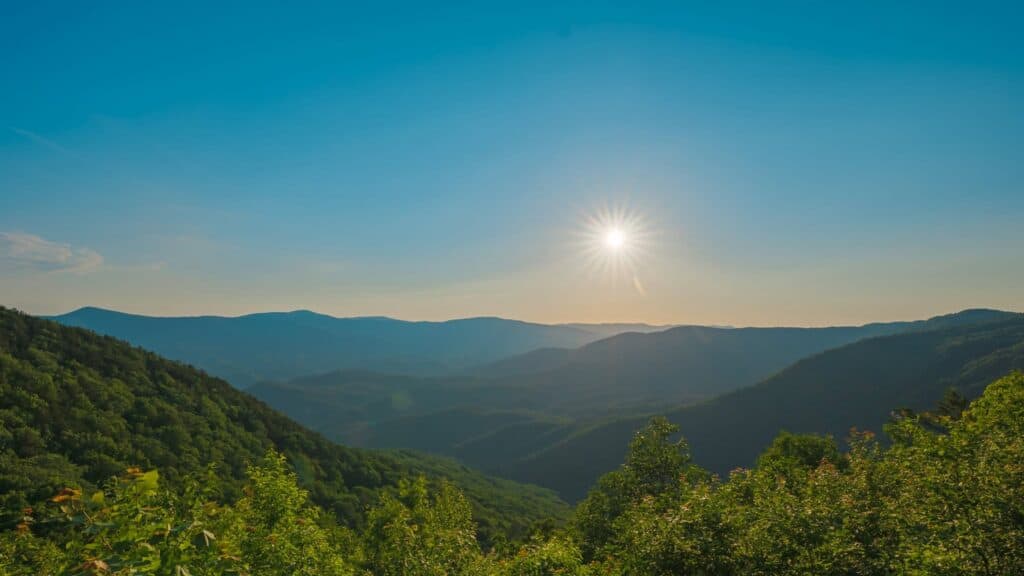
For staurolite hunters, this stretch of north Georgia is the place to look. Road cuts and creek gravel across Cherokee, Gilmer, Pickens, and Fannin counties turn up crosses after rain when the dark, reddish-brown crystals stand out against Georgia’s red clay. Just confirm you’re on public land or have landowner permission before you start digging.
Note that Fannin County’s Hackney Farm, long the best-known public dig site, has since changed hands and is no longer open to collectors. If digging isn’t in the cards, Pezrok in downtown Blue Ridge keeps a fairy cross display that’s worth a look.
Chatuge Lake, Towns County
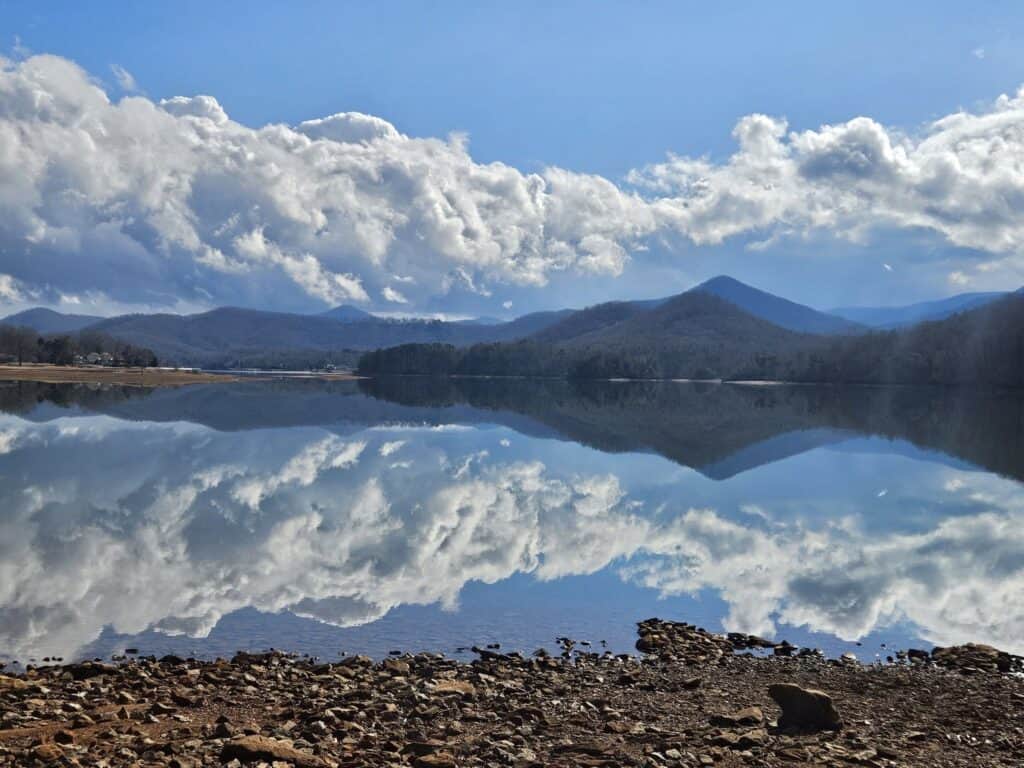
This TVA reservoir near Hiawassee, right on the North Carolina state line, is bordered by national forest on the Georgia side, and its shoreline gravels are a longtime favorite for casual collectors. At low water, the exposed shoreline yields a mixed bag: rutile, quartz, kyanite, and the occasional garnet or piece of corundum all turn up on the same stretch of gravel. No fees or reservations needed; just a pair of boots and patience. Water levels fluctuate seasonally, so a summer visit typically exposes the most shoreline to search.
Tybee Island and the Georgia coast
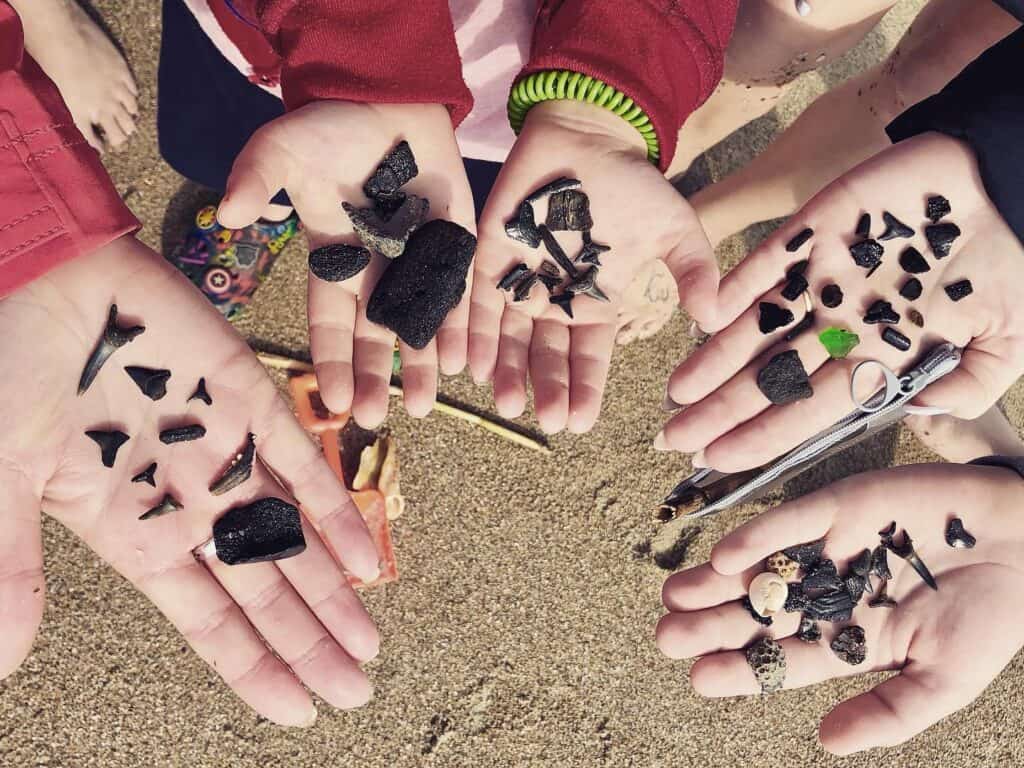
For shark teeth, the beaches and rivers of the Coastal Plain—Tybee Island chief among them—are the state’s best bet. The island’s fossil supply comes largely from Savannah River dredge spoil, so the north end of the beach at low tide tends to be the most productive stretch.
Look for small, dark triangles along the tideline, especially after storms, when wave action exposes the most fossils. For anyone who wants to venture further, a nearby dredge-spoil island nicknamed “Shark Tooth Island” is reachable by kayak or local charter.