Explore Estero Llano Grande State Park in Weslaco, Texas, home to the Rio Grande Valley’s largest wetlands and rare birding opportunities.
South Texas and the Rio Grande Valley are known for deep cultural roots, long-running traditions like weekly flea markets selling authentic Mexican and Tex-Mex food, and nature that abounds around every bend.
One of the best places to get your nature fix is about an hour northwest of Brownsville on the southern edge of Weslaco in Hidalgo County. Estero Llano Grande State Park spans 230 acres and is home to one of the most diverse habitats in the Rio Grande Valley.
It contains the largest wetlands environment in the entire World Birding Center network, which includes nine parks and nature preserves in the Rio Grande Valley. Managed by a partnership of the Texas Parks and Wildlife Department, the United States Fish and Wildlife Service, and the local communities, each park within the World Birding Center network works to preserve or reclaim the natural habitat (more on this later).
And there’s something else that is truly special about Estero Llano Grande State Park: It’s surrounded by water, from the Rio Grande tributary to water features like marshes and Alligator Lake, inhabited by a reptile that serves as its namesake. That, combined with nearby trees for coverage, draws birds you can only see at this location.
If you haven’t been, it’s time to get there. Here’s everything you need to know about how Estero Llano Grande State Park came to be, what there is to do at the park, and how to make the most of your visit.
The history of Estero Llano Grande State Park
Like most land before it was touched by people, the area where Estero Llano Grande State Park now sits was once filled with tall forests where birds would alight, lower shrubs that made excellent hiding spots for native animals, and grasses that nourished a variety of wildlife.
That all changed when Spanish explorers settled here, introducing non-native farm animals necessary for human survival but dangerous to the ecosystem. Those animals fed on the grasses and shrubs, thereby changing the landscape and habitat.
It only got worse in the 1900s when developers nicknamed the Rio Grande “Magic Valley” in an attempt to entice investors and settlers to move to what they described as a lush, year-round farming paradise. And it worked—the population boomed, putting greater strain on the terrain.
As settlers farmed and developers built, the land eroded and began washing into the waterways, killing fish and plants and making the once-flowing streams and rivers stagnant. The Texas Parks and Wildlife Department was alarmed, so they created the World Birding Center to restore the land to its original state.
The park was named after the large grassland that composed the plain—Llano Grande—and the low-lying flood land, or estero. Put together, the park name means “the wet place on the big plain.”
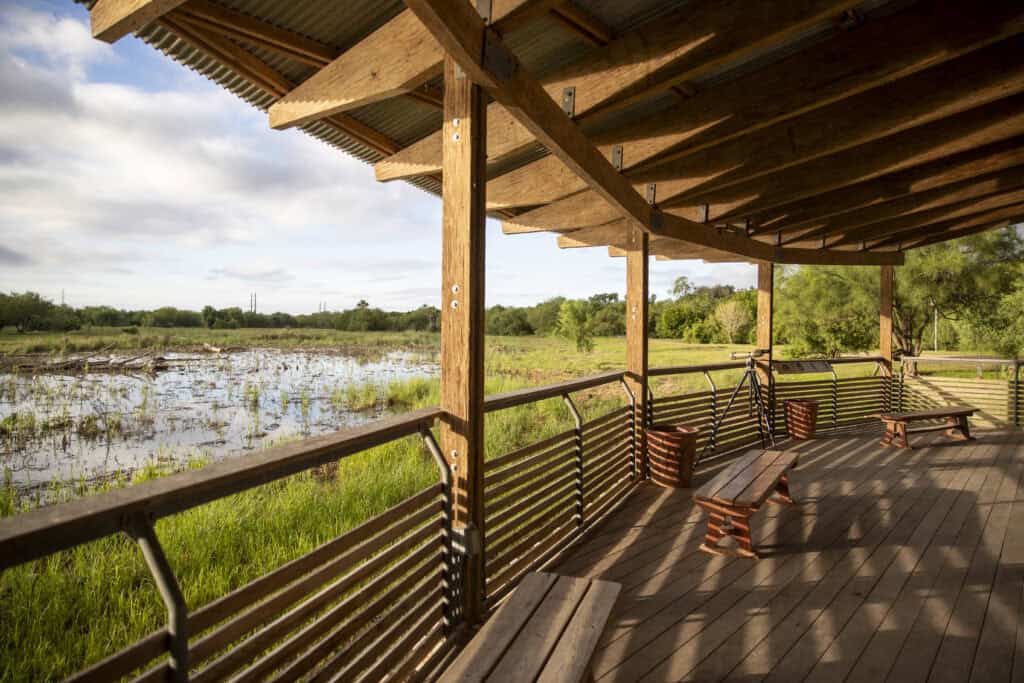
Today, Estero Llano Grande State Park remains free of car traffic, so you can enjoy a quiet stroll along a shallow lake, through woodlands, and amid a thorn forest, and enjoy some man-made additions like a wildlife-viewing deck, boardwalks, and five miles of trails.
Things to Do in Estero Llano Grande State Park
There’s so much to explore at Estero Llano Grande State Park, with trails, hundreds of varieties of birds, educational programs, and plenty of opportunities to become one with nature.
Enjoy some of the best birding in the country
Did you know that the Rio Grande Valley is at the northernmost range for numerous tropical species and that it is smack dab in the pathway of a major bird migration along the Gulf of Mexico’s coastline?
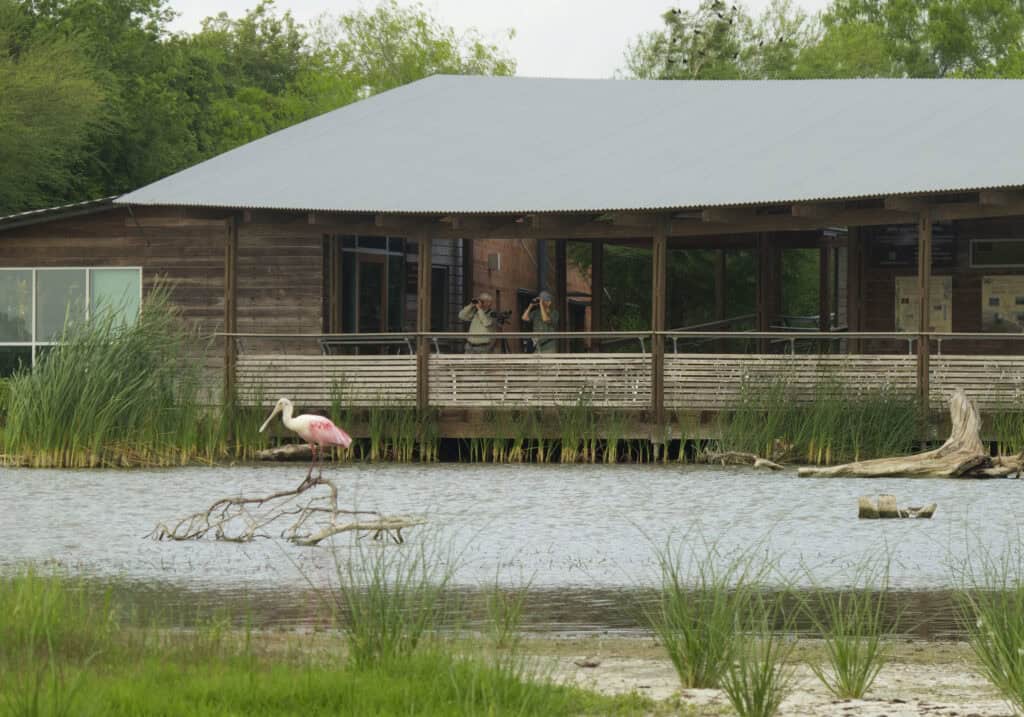
In fact, the best time to visit is right now, late summer, when shorebirds seek out the very water they know they’ll find at this park. If you’re lucky, you’ll see a lake covered in impossibly pink roseate spoonbills, long-legged ibises, snowy white egrets, and grand herons.
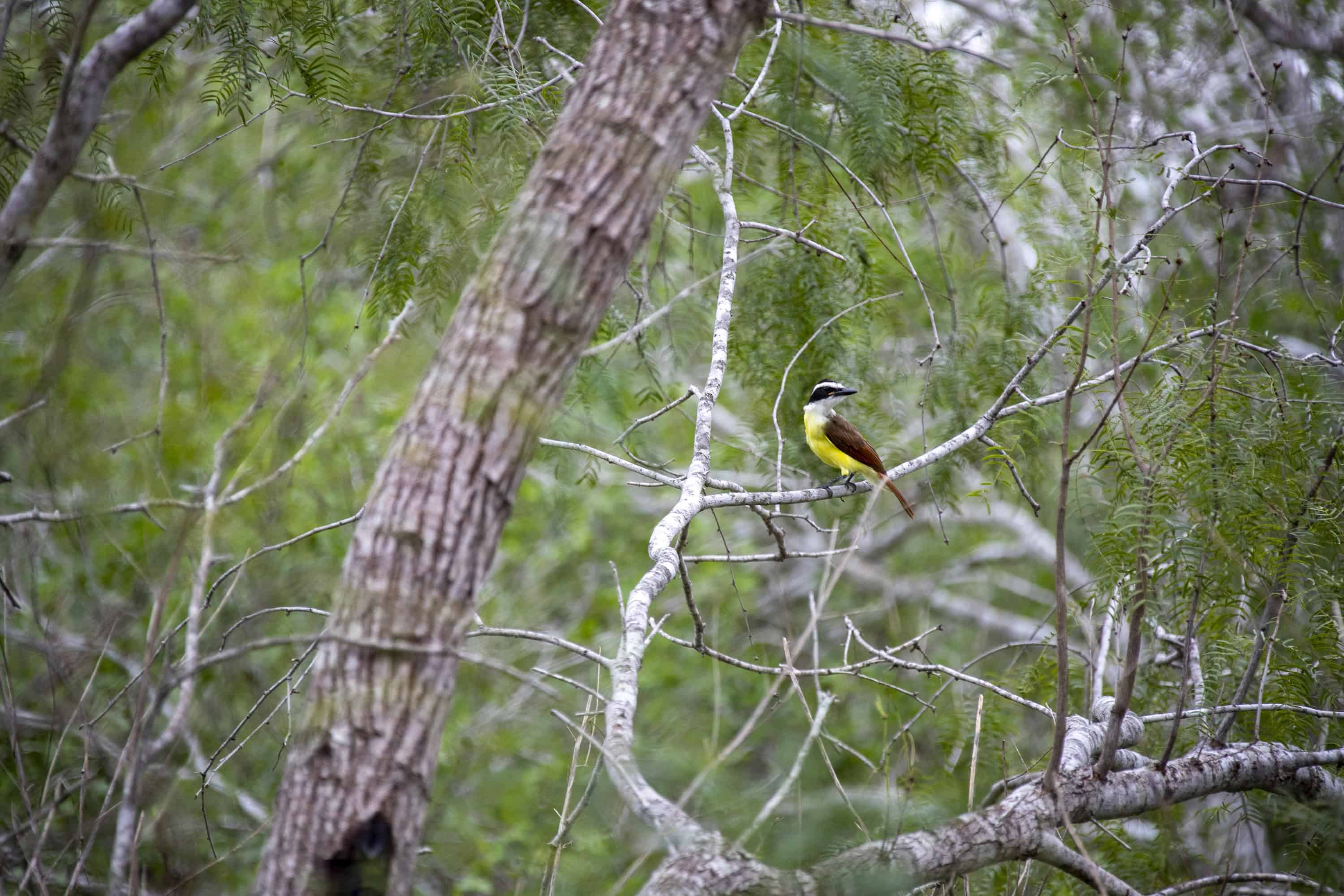
In the forested areas, you’ll spot wood storks, rare red-crowned parrots, and green parakeets that will make you wonder if you’ve stepped into an exotic pet store. And you’ll also see birds you can’t see anywhere else in the U.S, like the plain chachalaca and the altamira oriole.
The summer is also a great time to join a World Birding Center birding tour, where a naturalist will point out and identify the colorful and unusual birds that chirp and trill as you walk the paths.
That’s helpful, considering that Estero Llano Grande State Park is home to 340 bird species. A record 115 different bird species were spotted and identified in one magical day, so the odds are with you to capture some unique sightings.
Insider Tips: Follow a park map to Indigo Blind, tucked into the Tropical Zone, a reinvention of an abandoned trailer park. It’s the best place to see the rarest birds year-round. It is also ADA accessible. Don’t forget binoculars, sunscreen, a hat, and water, so you can spend all day racking up your own impressive bird-watching tally.
Walk trails that immerse you in nature
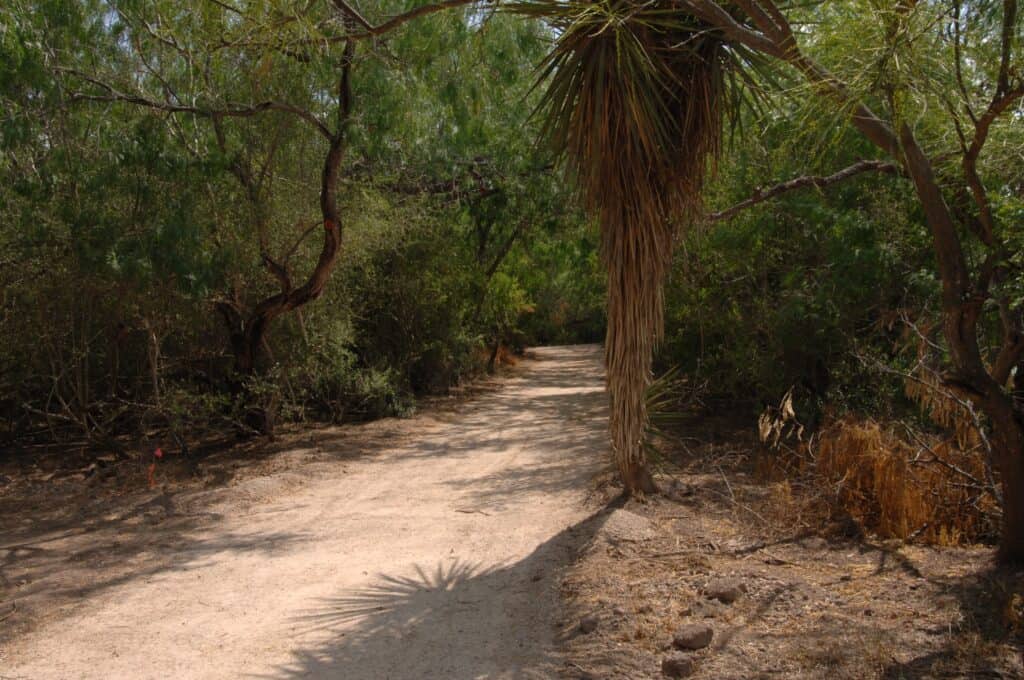
Sure, you can see a lot from the viewing deck near the Visitor Center, but entering nature via a walking trail will give you a much broader picture of this land. Five miles of trails take you on an exploration of wetlands, ponds, woodlands and thorn scrub.
After stopping at the Visitor Center for a map and some friendly guidance, follow Wader’s Trail to Ibis Pond and Dowitcher Pond and gaze at turtles sunning themselves, plopping into the water, and poking their heads out to see if you’re still watching.
Then follow the one-mile Camino de Aves Trail, a loop trail through South Texas brush and scrub and surrounded by honey mesquite and prickly pear cactus. If you’re lucky and on a tour, a naturalist might point out a Great Horned Owl and his family of owlets.
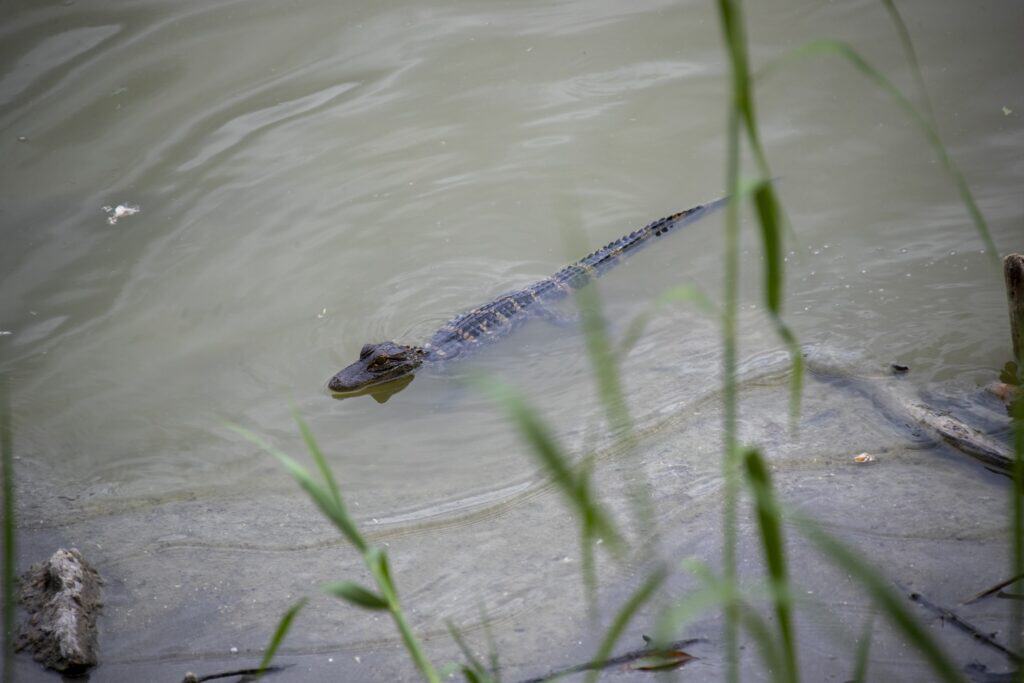
Your next stop is Alligator Lake, named first for its famous inhabitant and second for the shape of the lake itself. Look for a telltale ridged back emerging from the surface and two beady eyes peering at you from the water. For one of the best views of the park, head to the top of the levee and capture it all for The Gram.
In a nod to all the waterbirds that frequent this area, the aptly named Spoonbill Trail includes a boardwalk that crosses Ibis Pond—follow that, and it will return you to the Visitor Center. If you’re wondering about the Tropical Zone, it is on the other side of the entrance road, so pop on over there before you leave. You’ll see a short loop trail called Green Jay Nature Trail (the perfect place to see green jays, of course), and it’s worth walking just for the tree density and much-needed shade.
Insider Tip: Estero Llano Grande State Park loans out all-terrain wheelchairs for use in the park. Just call in advance to reserve a chair for your visit.
Get up close and personal with the wildlife
The main reason to visit Estero Llano Grande State Park is that it is protected land, which means it’s also protected wildlife.
There’s a good chance you’ll spot an alligator in Alligator Lake, a rarity in South Texas, so a special treat to the locals. But the Texas Parks and Wildlife Department tells visitors to go ahead and anticipate the possibility of seeing a wide range of wildlife, including bobcats, javelinas (which many people describe as a cross between a wild boar and an oversized rodent), raccoons, tarantulas, snakes, cottontail rabbits, jackrabbits, coyotes, armadillos, and frogs.
And while they may not “beep beep” like their cartoon versions, roadrunners are also a delightful sight here.
During the summer months and into September, sign up for a butterfly or dragonfly tour, where you’ll learn more than you ever could have imagined about these beautiful creatures.
Insider Tip: If you’re not into hiking, perch on the covered viewing deck, where patience pays off in stunning wildlife.
Know before you go to Estero Llano Grande State Park
Set your nav for 3301 S. International Blvd. in Weslaco, grab the family, and be prepared for a fun day at the park. Admission is only $5 per day, and children 12 and under are free.
Consider purchasing an annual Texas state parks pass for just $70—it gets you into 80 parks across Texas, including this one, for a full year.
Or consider a Texas Parklands Passport, especially if you’re over 65 years old, disabled, active-duty military, or a veteran. It gets you free or heavily discounted passes to parks like Estero Llano Grande.
Dogs are allowed in Estero Llano Grande State Park as long as they are leashed and remain outside Texas State Park buildings.
Finally, if you love your visit as much as we think you will, get involved in preserving state parks like this one by donating to the Texas Parks & Wildlife Department. You’ll ensure that the generations that come after you have the same access to what makes Texas so beautiful.