From a town that shares its name with a virus to a village that inspired formalwear, New York is full of places with silly names. Here are 12 of our favorites.
New York has plenty of unique town and village names, which can make for some entertaining moments watching people try to pronounce them correctly. A place with as much history as the Empire State naturally has some fascinating backstories behind the towns.
We’re going through a dozen of our favorite New York town names that will get a giggle and a smile out of you, while hopefully teaching a little something along the way.
Note that we’re only counting town and village names here. So, hamlets and neighborhoods like Climax and Hell’s Kitchen sadly won’t make the cut, despite their excellent nomenclature.
Butternuts
Many cities and towns on this list get their names from a word that reflects a deeper meaning or a longer phrase, drawn from origins such as Native American or Dutch settlers. Butternuts got its name from three butternut trees growing from one stump.
The town, located in southwestern Otsego County, has a modest population of about 1,750. Perhaps fittingly, the town executive council features a dog control officer, and a hamlet within Butternuts is called Rootville. Alas, that name is not a clever nod to the butternut trees. It’s an ode to Major Charles Root, a cheese manufacturer who ran several factories in the area.
Chili
A suburb of Rochester in southwestern Monroe County, Chili likely won’t have you singing any TLC or “I want my baby back, baby back, baby back.” That’s because the town, which has been around for over 200 years, is pronounced “CHY-lye” (each syllable rhyming with “sky”). The last census counted the population at 29,123, and the town has several parks for residents and visitors to enjoy during spells of nice weather.
There are two theories explaining where Chili got its name. Some believe it’s a variant of the South American country Chile, which was fighting for its independence. Others think the name comes from the Chiliasts, a religious group some early South Chili settlers belonged to. They subscribed to the millenarian theory, meaning they believe in 1,000 years of peace and the return of the Lord. Whichever theory you subscribe to, just make sure you’ve got that pronunciation down pat.
Coxsackie
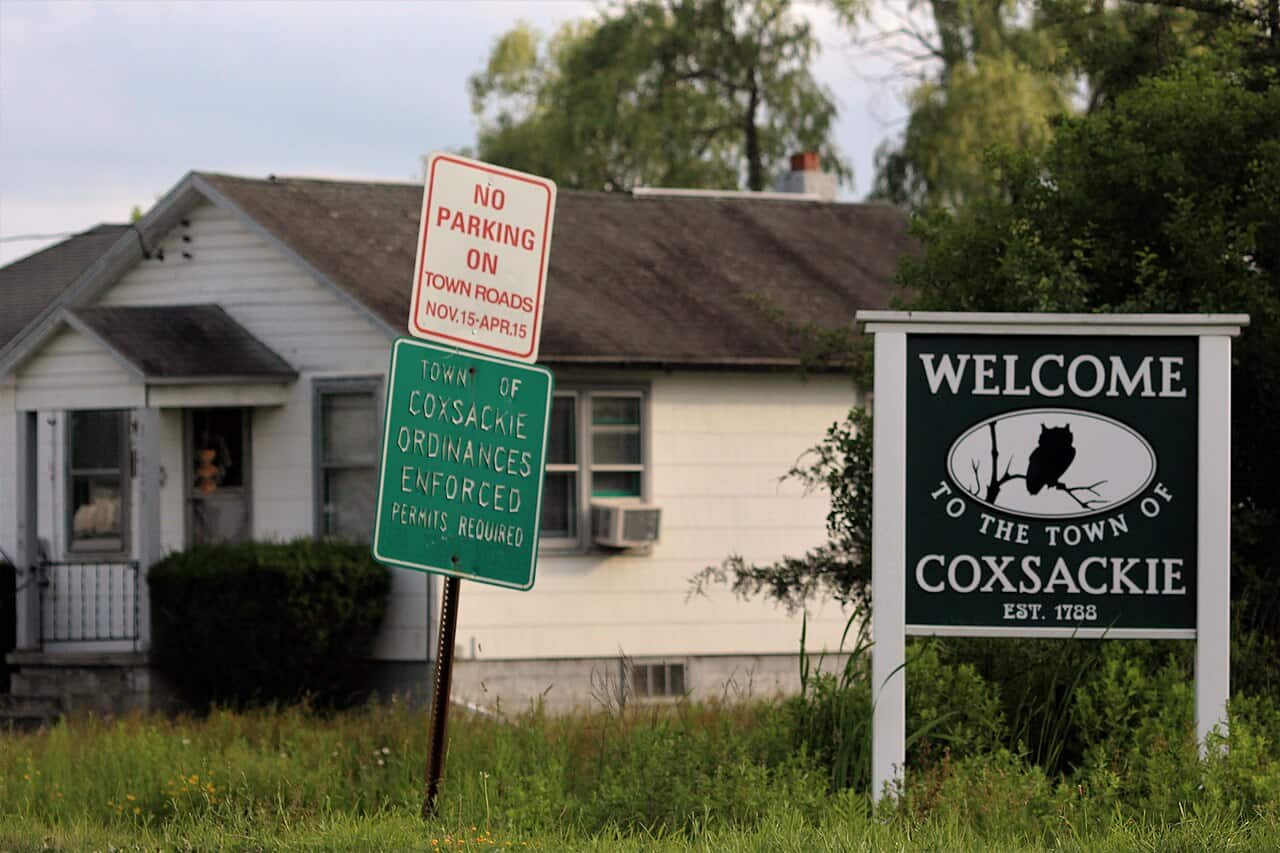
The town of Coxsackie—pronounced “kuuk-SAK-ee”—sits along the Hudson River. It’s one of Greene County’s larger towns, with a population of 8,382.
The town’s name most likely comes from a Native American term and has had over 60 different recorded spellings, including Koixhacking and Koxsackie. There are also local translations referring to geese (such as “Migrating Geese”) and owls (such as “Hoot of the Owl”). The town prefers the owl translations, using the bird as a local symbol.
Beyond the variety of names, Coxsackie is the only town on this list to have its own virus. The Coxsackievirus, a type of enterovirus, was discovered in either 1948 or 1949 by a New York State Department of Health scientist named Gilbert Dalldorf. Bonus: At the western edge of Coxsackie lies a hamlet called Surprise.
Fine
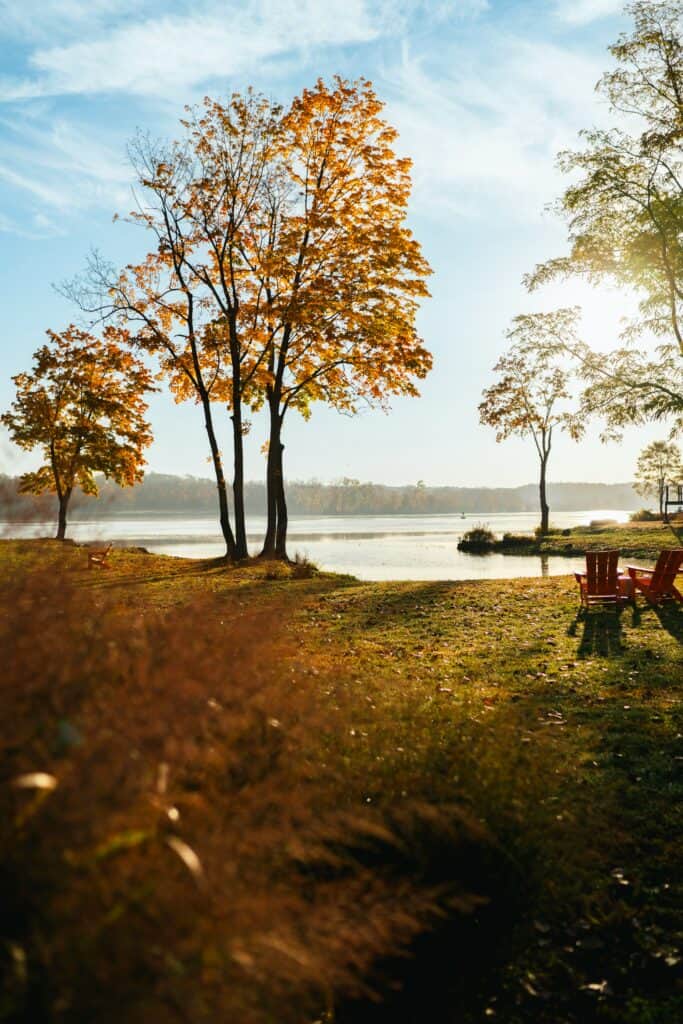
When the mighty fine Town of Fine was established in 1844, it was named after John Fine, who originally owned the land. The entire 169 square miles of Fine sits within Adirondack Park and is home to 1,304 people.
It’s a dream destination for outdoor enthusiasts, boasting hiking, mountain biking, cross-country skiing, snowshoeing, fishing, tennis, horseback riding, and more, along with numerous conservation trails.
Fishkill
Perhaps the most violent-sounding name on this list, Fishkill is about 60 miles north of New York City in southwestern Dutchess County. Fishkill has a population of 24,226; the town also surrounds part of the city of Beacon and includes much of the hamlet of Brinckerhoff, Merritt Park, and a village also named Fishkill. Phew, that’s a lot to remember!
Fishkill’s etymology traces to Dutch origin; “vis kill” means “fish creek.” In 1996, PETA asked the town to change its name to something that didn’t sound harmful to fish, but the Fishkill government declined to make the switch.
Fishkill has also played a key part in American history. During the Revolutionary War, an encampment in the town turned into the main supply depot for a Continental Army department, and the first copies of the New York State Constitution were printed in the town in 1777.
Horseheads
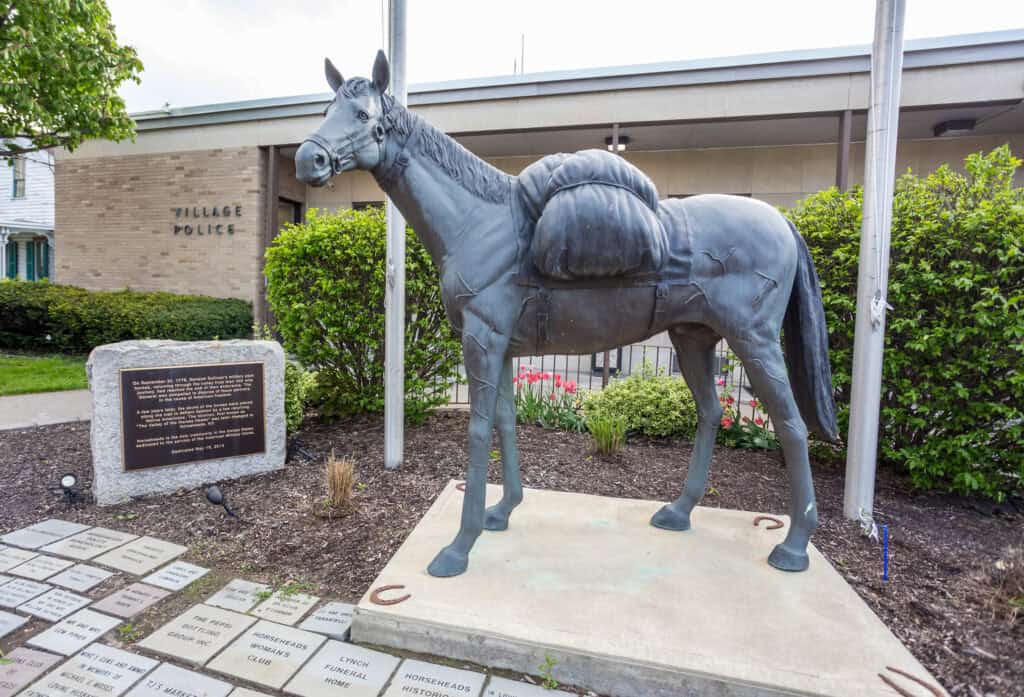
Horse heads in your bed = bad and likely a threat. Horseheads in New York = a charming, historic village of about 6,606 that serves as an entry point to upstate and the Finger Lakes.
Horseheads is the only town and village in the U.S. named after American military horses. Back in 1779, Major General John Sullivan led a group of about 5,000 troops during the American Revolutionary War, making a 450-mile trip through the Finger Lakes region. Sullivan’s men put down their exhausted pack horses here, and Native people later arranged the bleached skulls along a trail. Settlers who arrived in 1789 found them and named the place Horseheads. The village was initially incorporated as “Fairport,” which, let’s be honest with ourselves, is not nearly as catchy.
Neversink
A town in the Catskills, Neversink offers quite the mix of forests, water, plants, and animals. Though the town has existed since March 16, 1798, no one is quite sure where the name comes from. The best guess is that it’s translated from the Indian name, Mahackamack. What we do know is that for 80 years, “Neverdrink” would have been a more apt name, since Neversink didn’t sell any alcohol. The dry designation was lifted in 2015, so you can do a festive cheers with your friends while taking in some stunning sights.
Painted Post
Painted Post, a village of fewer than 2,000 people in Steuben County’s Erwin, was named for a post (albeit an unpainted one) the Seneca put up near the meeting of the Tioga, Cohocton, and Chemung Rivers. The post was used as a bulletin board and featured carvings from the tribe. The Seneca word for the area was TKäen DōD, meaning “land of the post.”
White settlers eventually painted over the post, which was viewed as disrespectful by members of the tribe. Today, a replica of the post stands in the village with a sculpture of a Seneca tribesman beside it.
Sleepy Hollow
Though it might evoke more spooky vibes than funny ones, Sleepy Hollow is still a pretty silly name. Sleepy Hollow is nestled on the east banks of the Hudson River, nearly 30 miles north of Manhattan. Back in the 1600s, the Weckquaesgeck Indians controlled the land. At first, the tribe coexisted with Dutch settlers, but the two sides eventually began a war. A Dutch colonist named Adriaen Van der Donck referred to the Pocantico River as “Slapershaven,” or “Sleepers’ Haven.” Over time, the name became Anglicized, leading to Sleepy Hollow.
However, the village went by several names over the next three centuries, including The Upper Mills, Beekman Town, and North Tarrytown. It wasn’t until 1996 that Sleepy Hollow officially adopted its present-day name, a nod to Washington Irving’s “The Legend of Sleepy Hollow.”
Speculator
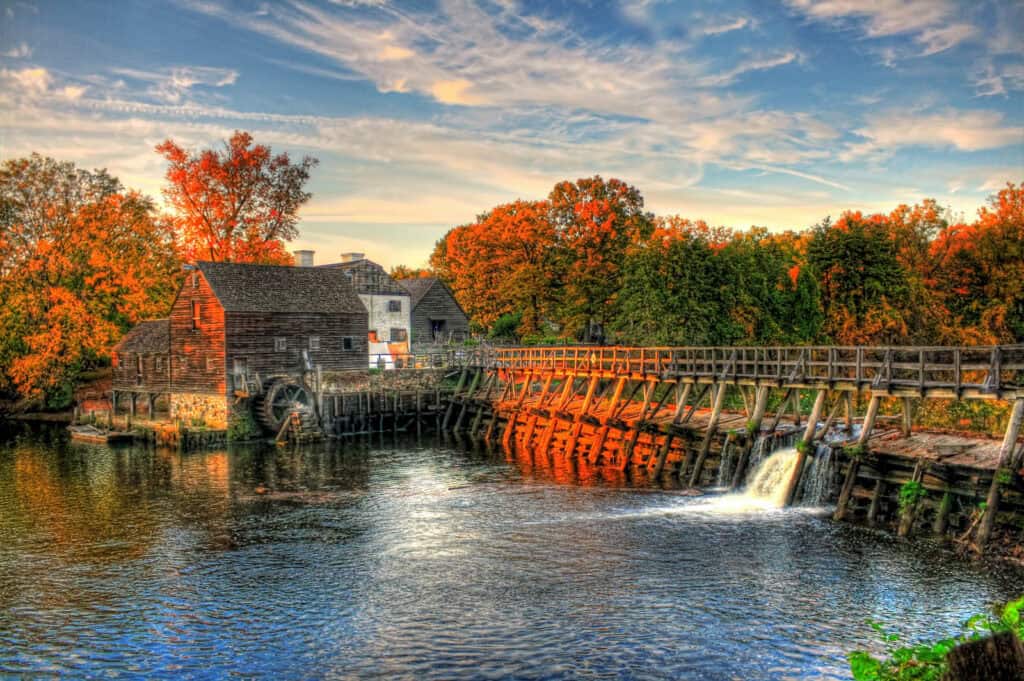
With a moniker of “All Season Vacationland,” Speculator‘s 406 residents live entirely within the town of Lake Pleasant. The area was initially occupied by Native Americans, including a notable Mohawk leader named Captain Gill. He served as a trail guide for incoming settlers, recounting historical stories and legends along the way. In 1864, a man named Joel Newton built a hotel and store and purchased a post office named “Newton’s Corners.”
That was the name of the village for 32 years until 1896, when it adopted Speculator, which came from the mountain across the lake. Early surveyors on the mountain searched for silver and other treasure, speculating on what they might discover.
Tuxedo
Tuxedo, a town and village, is nestled in Orange County along the Ramapo River, and its position on a map almost makes it look like a little bow-tie, à la a tuxedo accoutrement.
The town’s name comes from the Lenape word “tùkwsitu,” which means “place of wolf clan people.” Originally spelled both “Tucseto” and “Tuxseto,” the first recorded use of the name dates back to 1735, written in a land survey field book. The village of Tuxedo was incorporated earlier this decade, in 2021. That incorporated area includes the entire town except for Tuxedo Park, which is its own, separate village. Tuxedo Park is also where the fancy attire was first introduced in the U.S., and the town is home to the annual New York Renaissance Faire.
Wampsville
Wampsville is a small but mighty village within Lenox of only 573 people. It’s the seat of Madison County, allegedly because two of its neighbors, Oneida and Canastota, both wanted to be the seat and couldn’t settle who got it. Sometimes, it’s best to just keep quiet and let good fortune come to you.
Johann Myndert Wemple founded Wampsville, originally known as “Wempsville” in honor of the man. At some point, the second letter changed, and the village marches on as Wampsville.