Read all the major concerns NC residents have about the development of data centers in the state.
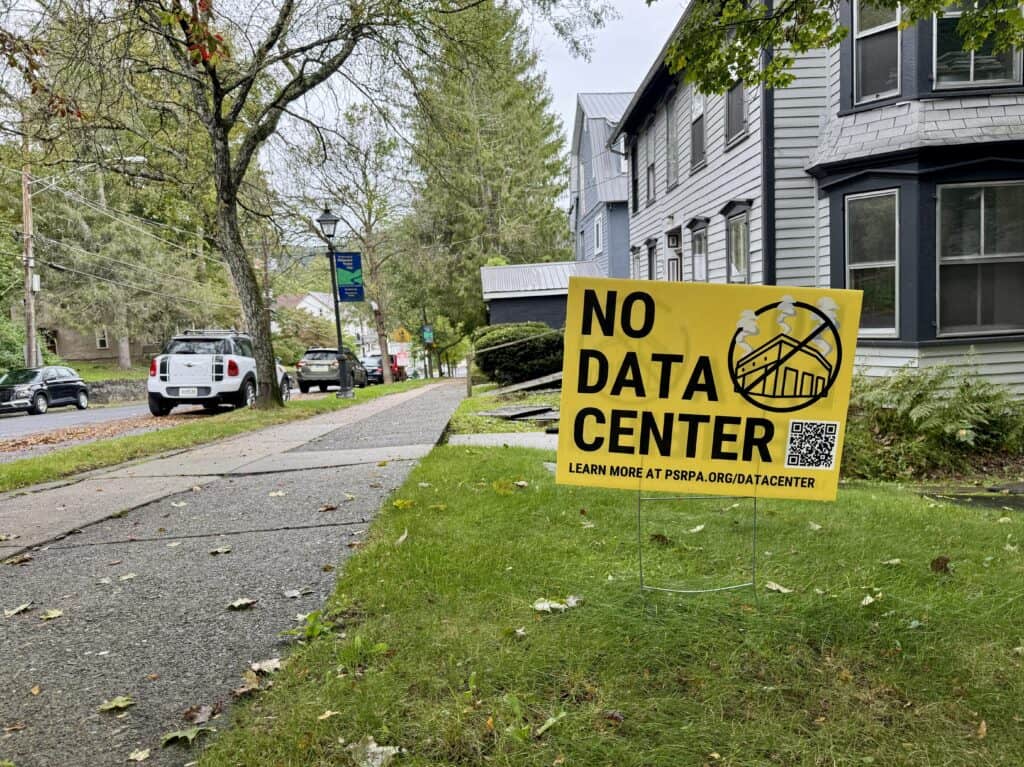
Early voting for the 2026 Midterm Elections is underway, and N.C. residents are prioritizing several issues as they decide which candidate’s bubble to fill on the ballot. One major issue that especially concerns the state is the rapid proliferation of data centers. In fact, an August poll by Elon University found that 53% of North Carolinians opposed building data centers in their neighborhood—a nine-point jump from the same poll taken just five months earlier.
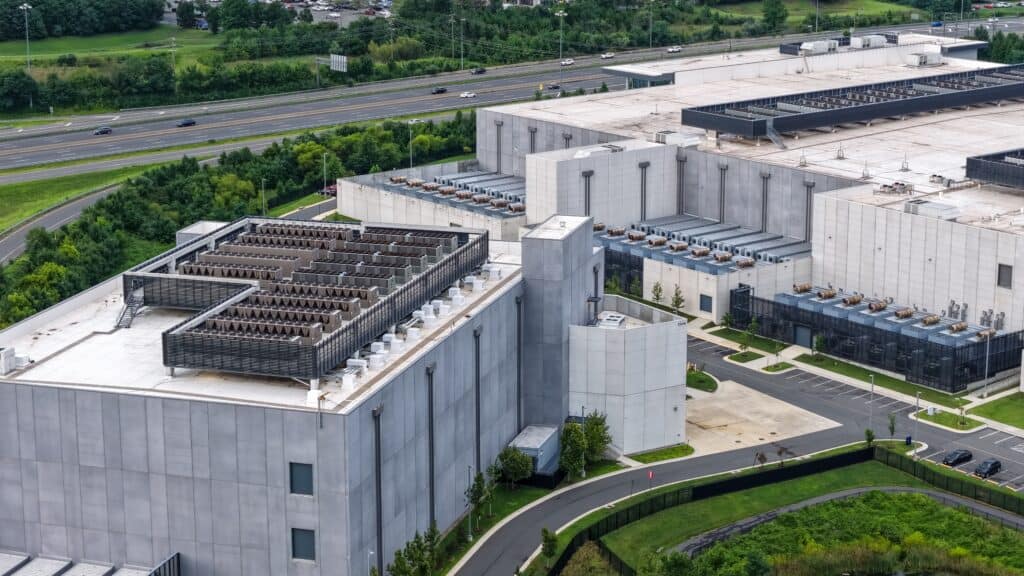
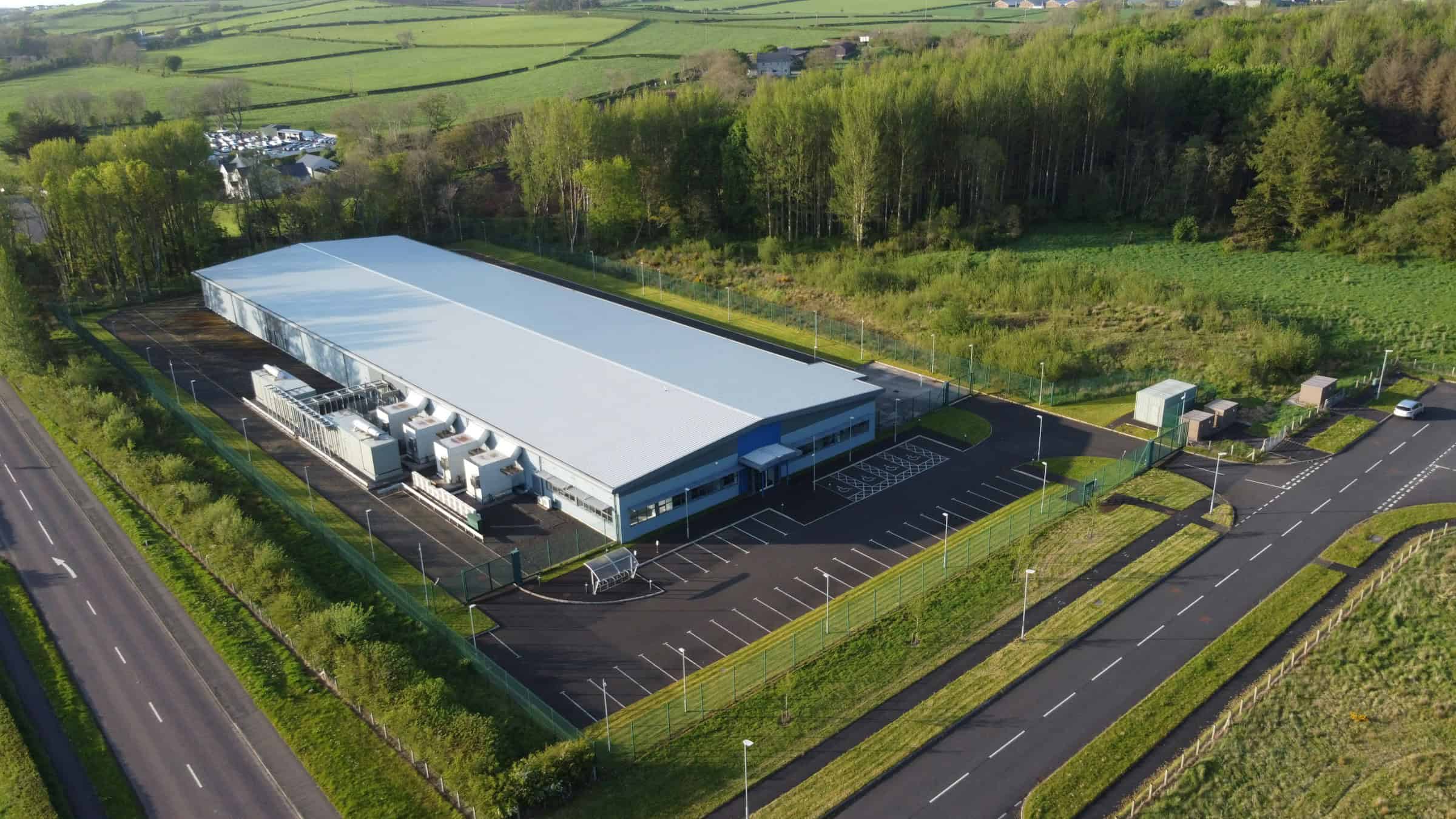
According to the Data Center Map, N.C. is already home to 97 data centers, with 35 in Charlotte and 20 in Raleigh-Durham. While some may attribute the opposition to the principle of NIMBY (Not In My Backyard), voters, candidates, and officials point to several significant short- and long-term consequences that are concerning for the entire state. Many advocates opposing data centers are especially sounding the alarm about the perceived lack of transparency and the need for tighter regulation around development.
According to a Sept. 4 LinkedIn post by analyst Frank Muraca, about 47 local governments statewide have temporarily placed moratoriums on data centers. However, several voters and policy experts say increased transparency isn’t enough, with the NC Budget and Tax Center even calling for a ban on subsidies for data centers.
With concerns that the government may be prioritizing corporations over people’s well-being, the most significant issues surrounding data center development center on rising energy bills, diminished quality of life, environmental injustice, and ethical ramifications.
1. Rising energy bills
One of the most significant concerns that N.C. residents have regarding data centers is the rising cost of utilities. According to a WRAL report on Facebook, Duke Energy wants to “raise residential electric rates by 11.6%,” citing increasing energy demands from data centers as one of the major reasons behind their decision—a proposed rate increase that N.C. Attorney General Jeff Jackson calls too high, per ABC11.
This comes at a time when 20% of Duke Energy customers are past due on electric bills. For those on low-income assistance plans, bills could go up by $52 each month, and that may only be the beginning.
Researchers from N.C. State University, Carnegie Mellon University, the University of Pittsburgh, and the University of Toronto predict that the energy demand from “data centers and cryptocurrency mining is likely to increase power costs in some parts of the country by up to 57% by 2030.” The parts of the country where energy prices would be expected to increase the most are areas where the development of data centers is concentrated, including eastern North Carolina.
Jackson Ewing, “director of energy and climate policy at the Nicholas Institute for Energy, Environment & Sustainability at Duke University,” also expressed concerns to WXII 2 regarding increasing water bills in municipalities where water is already more scarce, an issue potentially affecting several cities and towns across the state with 5.7 million N.C. residents in “areas of drought.”
Wake County Commissioner candidate Mona Singh has built a platform centering working-class families and has especially highlighted the unchecked proliferation of AI data centers as an issue she hopes to address. In a message to us, Mona Singh cited the rising costs of water and electricity as the most significant concern voters have expressed to her. Singh added, “A single-hyperscale data center can consume resources needed for 100,000 households. This hurts affordability because of increased energy and water costs, while producing few jobs once the construction is done.”
While the rising cost of utilities would ultimately trickle down onto household electricity and water bills, data centers often have tax exemptions and subsidies. According to an April report by the N.C. Dept. of Commerce, state exemptions from sales and use taxes have cost N.C. more than $20 million yearly, and the cost is predicted to increase to over $160 million after planned data centers are constructed. Additionally, several municipalities have also provided partial property tax exemptions to data centers.
U.S. Senate candidate and former N.C. Governor Roy Cooper is running on a campaign to lower energy bills by ensuring data centers pay their full share of their electricity costs, and working with tech corporations to establish self-sufficient energy grids.
2. Diminished quality of life and public health
Noise pollution is one of N.C. residents’ top concerns regarding data centers being built in their neighborhoods, per the N.C. League of Conservation of Voters Foundation. Noise levels by data centers can compare to living close to an airport.
In fact, a study conducted in Northern Virginia measured noise levels to be around 40 to 59 decibels, while other reports measure levels going up to 95 decibels. According to the Environmental and Energy Study Institute, noise levels above 85 decibels can damage hearing, while levels above 65 decibels can cause sleep deprivation, a decline in cognitive functioning, stress, and higher blood pressure. Light pollution from data centers that require 24/7 lighting can also cause sleep deprivation in nearby residential areas, as it affects the circadian rhythm and can disrupt melatonin production.
Emissions from data centers can also cause other public health issues such as “asthma, heart disease, and lung cancer.” Anita Moore, who is a part of the Haw River Assembly, a group focusing on protecting Jordan Lake and the Haw River, also mentioned concerns regarding water quality, telling ABC 11, “That water is going to have chemicals in it once it’s through, and so we want to make sure that there is regulation around where that water goes to, whose community it sits.”
According to The Guardian, municipalities and states throughout the country are struggling to mitigate and curtail some of the damages stemming from data centers, which include wastewater. Wyoming officials found Cupriavidus gilardii, a rare bacterium, in the water that a Meta data center was releasing. Mere inhalation of the droplets that evaporate can pose a public health threat, which is why the city of Cheyenne had to stop taking the data center’s wastewater.
The state of Virginia has had to take action against multiple data centers that have violated wastewater and wetland permits, while “stormwater runoff from an incomplete data center” in West Virginia has flooded nearby homes twice.
Beyond water quality, supply is another major concern that could affect N.C. residents. Jonathan Jacobs, the water resources director for the town of Apex told WRAL that while the town could currently support a nearly-200 acre proposed data center in New Hill, the water demands would ultimately put strain on the community. “If multiple significant users locate in the same service area, it becomes a regional question about water allocation and growth priorities,” Jacobs said, adding, “Our water sources are finite.”
Because there is no “centralized tracking” of data center emissions, air quality, or water usage done by the state, it’s also difficult for local zoning boards and utility commissions to plan for data centers. Jacobs stressed the need to consider infrastructure needs as data centers are being built faster than any legislative framework can catch up.
Currently, Apex is among 63 water systems under mandatory water restrictions due to drought conditions. With five Wake County water systems being under mandatory water restrictions, Mona Singh said, “Data centers are best suited for places where there are more resources than people. Wake County has more people than resources.”
3. Harm to the environment and cultural preservation
Singh supports moratoriums to ensure that Wake County can assess the “construction and operation of hyperscale data centers” and enact regulatory policies. “These policies must ensure that hyperscale data centers don’t strain essential resources such as water and cause environmental harm on air quality.”
Consumer Reports cites poor air quality as a major concern with data centers, as they often have backup gas- or diesel-powered generators in the event of a power outage. Some even rely on their own generators rather than connecting to the grid, such as Elon Musk’s xAI Colossus 1 and 2 facilities in Memphis, Tenn., which run on portable methane gas turbines. These generators especially emit hazardous pollutants that have been linked to cardiac and respiratory diseases, and an elevated risk of cancer.
Increased energy demands from data centers will also raise carbon dioxide emissions by up to 28% within the next four years, according to N.C. State University researchers. Data centers that require bright lights to run 24/7 can further increase electricity demand and affect neighboring residents’ sleep patterns; they can also impact “migration patterns and habitat development” for animals such as birds, butterflies, and turtles.
Data centers can also have a negative impact on water systems, as the construction work can lead to sediment erosion, which “lowers oxygen levels and disrupts nutrient levels” that are critical for local aquatic animals. The water usage from existing data centers can additionally exacerbate current shortages in areas hit by droughts, with a Bloomberg News analysis reporting that two-thirds of data centers since 2022 are in areas already facing a water shortage.
According to N.C. State College of Natural Resources, data centers that run on an open-loop evaporative cooling system can especially stress “municipal water supplies and aquatic ecosystems” by reducing “groundwater levels and streamflow.” The wastewater open-loop systems can release is often too warm and/or contains chemical pollutants such as biocides and anti-scalants, which can also harm aquatic wildlife. Removing these pollutants often adds stress to water treatment plants.
Attorney Abre’ Conner, also director of the Center for Environmental and Climate Justice at the NAACP, told Latino Reporter that residents living near data centers have cited “water contamination and murky colors.”
Stokes County locals who live along the Dan River are especially advocating against the development of data centers in their area after the county’s Board of Commissioners approved a future data center called Project Delta, despite the county Planning Board’s objections. Generations of residents have farmed and gardened near the area’s forests and stress the need to preserve its ecology and culture. The area itself has deep ancestral roots for many locals, as it is home to the Indigenous Saura people who lived along the Dan River centuries before the British arrived in villages across Sauratown and Sauratown Mountains.
Many emancipated families also established independent farms in the area after the Civil War, with descendants such as the Hairston and Bailey families still maintain ties to the area. According to archaeologists, the area also has Indigenous burial grounds and cultural heritage sites that could be harmed if a data center is built in the area.
4. Ethical concerns about the purpose of data centers
Secrecy around data center development is a factor behind many N.C. residents’ apprehension around them. According to state officials who spoke to WRAL, the state doesn’t even have a centralized log of data centers that are operating within N.C., and several facilities are “intentionally undisclosed for security reasons.”
This is why NC WARN, a nonprofit dedicated to promoting climate justice, filed a public records request earlier this month with the Department of Commerce and N.C. Governor’s Office for records “relating to state personnel involved in and resources spent recruiting data centers.”
For many N.C. residents, there are various ethical concerns regarding the intended purpose of these data centers. Several companies and government agencies rely on data centers for mass surveillance operations such as Flock cameras and U.S. Immigration and Customs Enforcement (ICE)—the latter of which is “using a facial recognition app called Mobile Fortify.”
Jamie Ager, a candidate running for the NC-11 seat, found that many western N.C. voters told him specifically about concerns over Flock cameras and the proliferation of mass surveillance, without regulatory guardrails to protect individual privacy.
Data centers are essential to collecting and storing personal data that is then used for targeted ads and AI-informed dynamic surge pricing. With the rise of AI, there has also been a surge in malicious deepfake content. While N.C. is one of 48 states that have passed legislation to address deepfake pornography, the state has yet to enact any laws regulating the use of deepfakes in political campaigns.
This is especially concerning as a recent Catawba College-YouGov National Survey found that two out of three respondents were “‘very or somewhat’ concerned about AI use in the midterm elections,” and almost 40% said they were “not very or not at all confident” in being able to detect AI-generated political content. This poll comes in an election cycle in which Republican State Sen. Michael Lee used AI-generated video content that portrayed his Democratic challenger Jessica Bichler as “a yoga instructor who was contorted into impossible poses.”
Experts like Francesca Tripodi, a UNC-Chapel Hill professor and “principal investigator for the Center for Information, Technology, and Public Life,” told News & Observer that growing bipartisan scrutiny of AI and the data centers it relies on may ultimately drive voters from both sides to the ballot box this year.