From zebras to hedgehogs, discover 9 exotic animals you can legally own in Colorado and what it really takes to care for them.
Colorado is known for its rugged wildlife: elk in the foothills, bighorn sheep in the mountains, prairie dogs scattered across the plains, and bears roaming through the forests. When you think of animals in Colorado, those are likely the creatures that come to mind. It’s far less likely that you picture zebras, hedgehogs, camels, or kangaroos. Still, while you’re much more likely to encounter the former wandering around the state, there’s always a chance you could spot the latter, too.
Colorado has very strict laws regarding the ownership of wildlife (basically, wild animals aren’t pets). But there are still a number of domestic and exotic species that residents can legally own. This list includes the usual household pets like cats and dogs, but it also extends to a surprising range of fish, birds, and mammals. Even though these animals are legal to own, it’s important to remember that many are still wild by nature. They can be aggressive and often require far more specialized care and knowledge than the average house pet.
Here’s a look at the exotic animals you can actually own in Colorado.
House-sized exotic pets
Let’s start with the animals you can keep inside the four walls of your home. While small, they’re just as fascinating and exotic as the larger ones. These house-sized, unique pets include the African pygmy hedgehog, the sugar glider, and the chinchilla.
The African Pygmy Hedgehog
The African pygmy hedgehog, also known as the four-toed hedgehog, might seem a little intimidating at first. Hedgehog? Don’t those have spikes? Aren’t they basically porcupines? But surprisingly, the two aren’t closely related. And unlike porcupines, hedgehog quills aren’t barbed or dangerous.
These quirky creatures are typically about 6 to 8 inches long, which is the perfect size for an indoor companion. But don’t equate “small” with low-maintenance; they still need a spacious enclosure, and since they’re mostly nocturnal, you can expect to hear them moving around while you’re trying to sleep. Hedgehogs are also shy creatures, meaning it could take some time before they warm up to you and show affection, but once they do, the bond you make is worth the wait.
Sugar Gliders
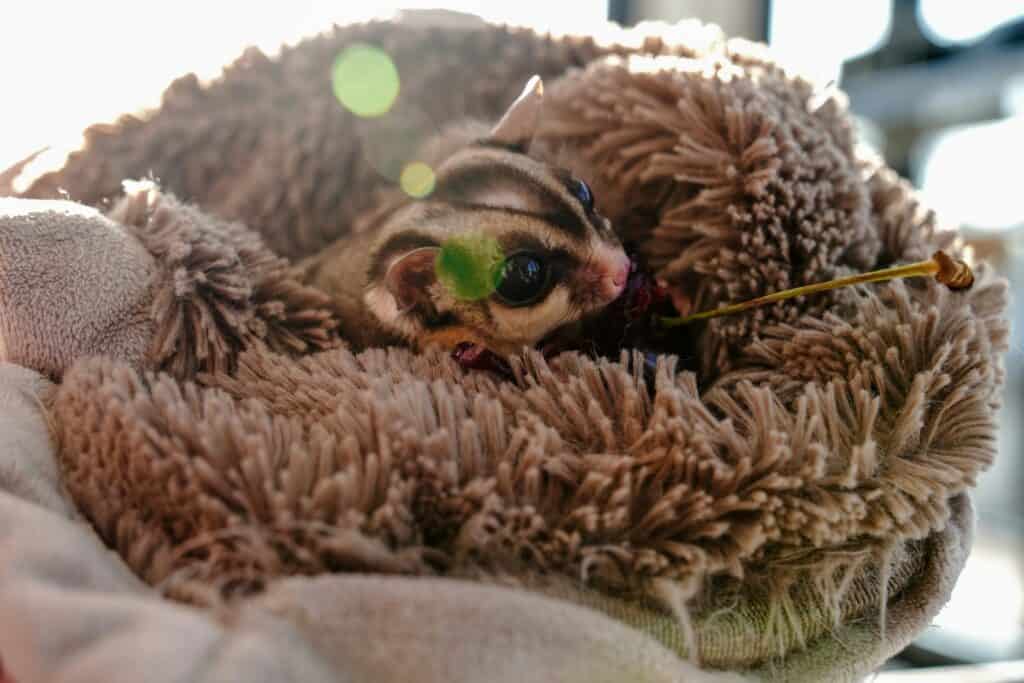
If you’re thinking of adopting a sugar glider, you’d better be ready to double it. Sugar gliders are colony animals and need to be kept in groups of two or more for their mental and social health. As the name suggests, these little creatures can glide (yes, basically a flying possum). In the wild, they rarely touch the ground, so as pets they need a tall enclosure with plenty of vertical space to climb, jump, and glide from perch to perch.
Their diet is just as specific as their setup. Sugar gliders are omnivores with a fast metabolism, and they require a balanced mix that can include fruits, vegetables, protein sources like cooked eggs or insects, and specially formulated glider diets. Despite being considered “wild” animals, they can form strong bonds with their owners. They’ll learn your voice and often come to greet you when you approach their home.
Chinchillas
Chinchillas are almost as fun to say as they are to keep as pets. These small rodents (yes, rodents can be cute) are known for being clean, quiet, and long-lived, often reaching 10 to 20 years with proper care. While they’re undeniably adorable, they’re not especially cuddly. Chinchillas are naturally shy and typically don’t enjoy being held.
Like the others on this list, they require very specific housing. They’re built for climbing and jumping, so they need a tall, multi-level enclosure with plenty of ledges and platforms rather than wide, open space. They’re also social animals and do best in pairs or small groups.
Bounce brigade
My fondness for kangaroos has largely been shaped by A.A. Milne’s characters Kanga and her son, Roo. I’ve always imagined them as sweet and nurturing, curious and spirited. And honestly, that impression isn’t too far off. Kangaroos are known for being playful, friendly, and surprisingly docile. Not only are you allowed to own a kangaroo in Colorado, but you can actually own up to six.
Red kangaroo
Red kangaroos are the largest and most recognized of the kangaroo species. They’re what you picture when you think “kangaroo.” As you can imagine, these animals require a lot of dedication, time, and care. We’re talking up to 20 years, which is about how long they can live.
Size-wise, male kangaroos stand between 5 and 6 feet tall and weigh anywhere from 120 to 200 pounds; females are about half that size. Kangaroos can spend some time indoors, but they also need regular access to a secure outdoor space where they can hop around and play. Since kangaroos can jump pretty high, you’ll need a tall fence to avoid the chaos of an escaped kangaroo, which happens more often than you’d think.
When cared for from a young age, kangaroos can develop strong bonds with their owners. But unlike dogs and cats, you shouldn’t expect them to walk on a leash, perform tricks, or spend time in public. They do best with a consistent environment and plenty of space to move around freely.
Wallaby
Wallabies are basically kangaroos, just smaller. Also part of the macropod family, these little (or maybe medium-sized) guys typically stand around 2 to 3 feet tall and weigh between 30 and 50 pounds. Like kangaroos, they have a relatively long lifespan, living up to 12 to 15 years in captivity.
And like their larger counterparts, wallabies can spend some time indoors but still need access to a secure, fenced-in outdoor space. Even at a smaller size, they can jump surprisingly high, so proper fencing is a must. No one wants to be responsible for a loose wallaby.
Backyard giants
Pets that bounce aren’t the only exotic animals that need a backyard. These next animals also require a good amount of outdoor space, specialized care, and a long-term commitment.
Camel
When I think of camels, I think of the desert, definitely not the mountains. However, it’s not just the desert that camels thrive in; it’s dry environments in general, making Colorado’s climate surprisingly suitable for them. Still, dry weather alone isn’t enough to properly care for a camel.
As massive animals that can weigh over 1,000 pounds, camels need plenty of open space, access to shade and fresh water, and a sheltered indoor area for colder weather and snow.
Since camels are naturally built to roam and travel long distances, secure fencing and a large outdoor enclosure are also essential.
Camels can also live for 40 to 50 years, making them a long-term companion. While they live for a long time, they also require a good chunk of time before they trust their human. Once they do, camels are known for holding a deep and loyal bond.
Alpaca/Llama
Let’s see if you can answer the age-old question: What’s the difference between an alpaca and a llama? I’ll give you a second…Got it?
Okay, here’s the basics: llamas are larger, stronger animals traditionally used as pack animals, and they’re easy to recognize by their long, banana-shaped ears. Alpacas, meanwhile, are smaller, fluffier, and best known for their soft fleece. Believe it or not, these look-alike animals are actually part of the same camelid family as camels.
Temperament-wise, the two are pretty different as well. Alpacas tend to be shy, quiet, and gentle, while llamas are more independent, confident, and occasionally a little rude, as in spit-on-you rude (llama drama).
Like camels, both alpacas and llamas do best in dry climates and need a good amount of outdoor space for grazing and exploring, usually at least an acre. They’re also highly social animals, so they do best when kept with other alpacas or llamas rather than alone.
Zebra
Out of all the animals on this list, if I had to choose one to own, it would absolutely be a zebra. I mean, what do you mean their coats naturally grow in perfect black-and-white stripes?
As stunning as they are, zebras require an enormous amount of care, patience, and resources. Despite their horse-like appearance, zebras are very different from domesticated horses. Their wild instincts remain strong, and earning a zebra’s trust can take a long time. Without consistent handling and training, they can become aggressive, unpredictable, and even dangerous.
Zebras typically eat grasses, hay, and alfalfa, and they need large, secure outdoor spaces where they can roam freely. They are incredibly strong and notorious escape artists, so fencing must be especially sturdy and well-built.
Like camels, zebras also have a long lifespan, often living 20 to 30 years in captivity. That makes owning one a major long-term commitment. And unlike some of the other exotic animals on this list, zebras are among the least likely to form a close bond with humans. While they are undeniably beautiful, they are still very much wild animals.