Explore 8 must-see Colorado natural wonders across the state, from the Pawnee Buttes to the Black Canyon of Gunnison, and the geologic stories behind them.
If you ask me, the entire state of Colorado should be named a natural wonder. With its high mountain ranges, crystal-clear rivers, hot springs, and rolling plains, plateaus, and mesas, it’s hard to beat. While it’s nearly impossible to list every river, peak, and hidden gem worth visiting, I’ll try to round up some of the most spectacular spots to add to your Colorado summer bucket list and get you started. Here are 8 to kick off your adventuring.
1. Garden of the Gods
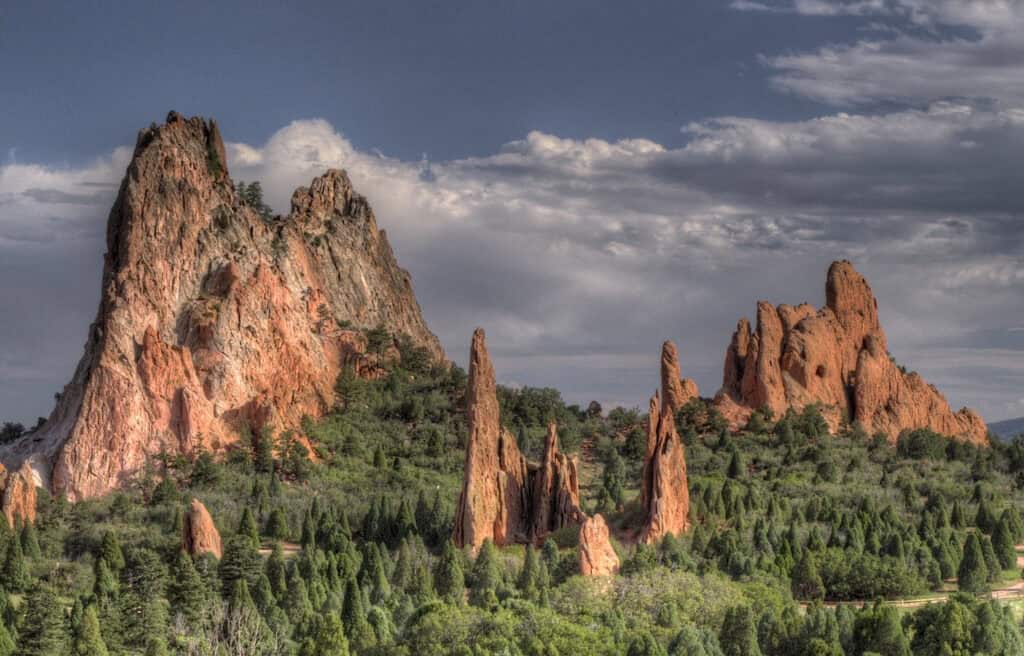
Garden of the Gods is exactly what it sounds like—a garden created for divinity. Known for its jutting, sky-reaching red rocks and designated a National Natural Landmark in 1971, the park’s formation dates back to the Pleistocene Ice Age (just a casual c. 2.58 million to 11,700 years ago).
The present-day rocks are the result of sedimentation, intense tectonic uplift, and erosion. To put that in simpler terms, stuff piled up, the ground got pushed up, and then it slowly wore away. With nearly 300 million years of formation, Garden of the Gods is considered one of the most extensive pictures of Earth’s history found anywhere in the United States.
The modern park came to be when two explorers stumbled upon the area. At first, one exclaimed that it would be the perfect spot for a biergarten, to which the other responded that it was more fit as a garden for the gods (hence the name).
Named a public park in 1909, you can visit Garden of the Gods in Colorado Springs for free and explore it in a number of ways, including vehicle tours (perfect for wintertime visits), Segway tours, bike tours, hiking, rock climbing, birding, and horseback riding. There are over 22 miles of trails, ranging from beginner to advanced, along with events like nature walks, the Geo-Trekker Theater, arts and crafts, children’s programs, and history talks.
Some of the most popular spots in the park include Cathedral Valley, Ute Valley Trail, Central Garden Trail, the unique Siamese Twins formation, the scenic High Point Overlook, and Balanced Rock.
2. Boulder’s Flatirons
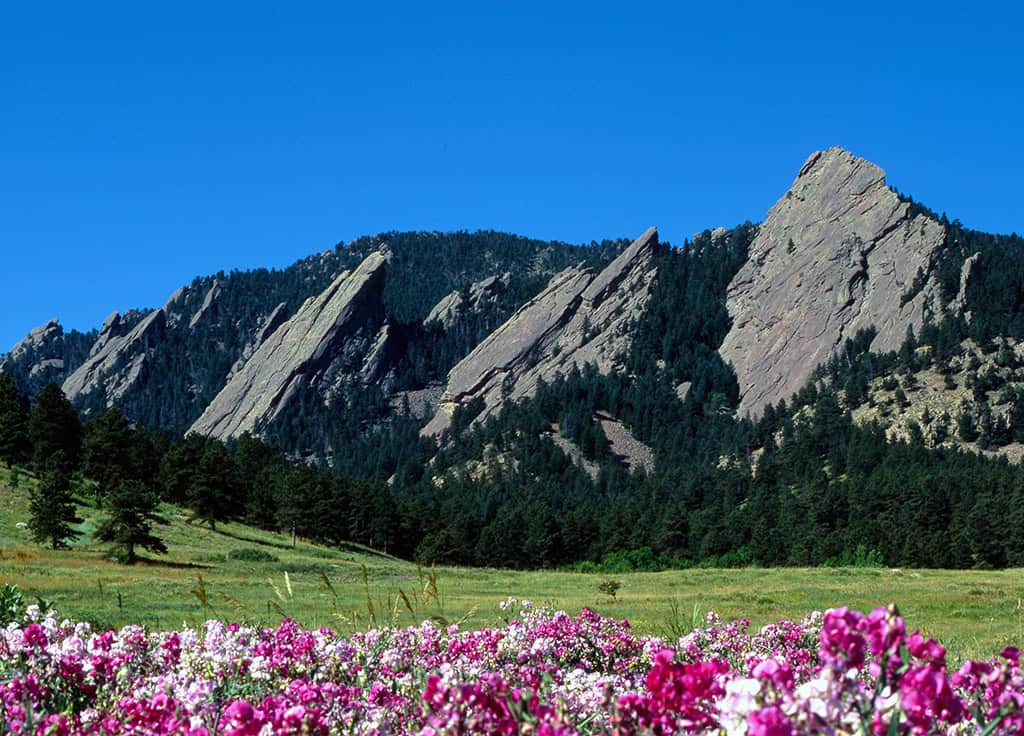
Whether you’ve been to Boulder or not, you’ve probably seen the Flatirons. They’re practically inseparable from the city, showing up on coffee cups, bumper stickers, business logos…everywhere. But what exactly are they, and what makes them so special? For starters, the Flatirons aren’t mountains; they’re actually considered rock formations, and there are five of them in total.
They were formed over hundreds of millions of years through a mix of sediment buildup, tectonic uplift, and erosion. What we have today started as layers of sand and gravel that eventually hardened into stone. Later, the same forces that pushed up the Rocky Mountains (thank you forces) tilted those layers almost vertically. Over time, wind and water wore them down into the dramatic, slanted formations, and voilà, we now have the Flatirons.
If you’re planning your visit to the Flatirons, there are plenty of great options. From hiking and climbing to simply lying out a blanket and taking in the view. The best place to start is Chautauqua Park. It’s the trailhead for many of the most popular hikes, but it’s also worth visiting on its own. You can spread out on the big grassy lawn, swing by the general store, grab a bite at the Dining Hall, or even stay overnight in one of the historic cottages or lodges.
Hiking-wise, one of the most accessible options is the Chautauqua and Bluebell Trail Loop, an easy 1.5-mile loop. If you’re up for more of a challenge, the Royal Arch Trail is a 3.5-mile out-and-back with a solid climb and truly spectacular views.
During peak season, the park gets crowded, and parking is limited. Luckily, Boulder has a free hiker shuttle that makes visiting the Flatirons easy and stress-free. Here’s all you need to know about taking it.
3. Pawnee Buttes
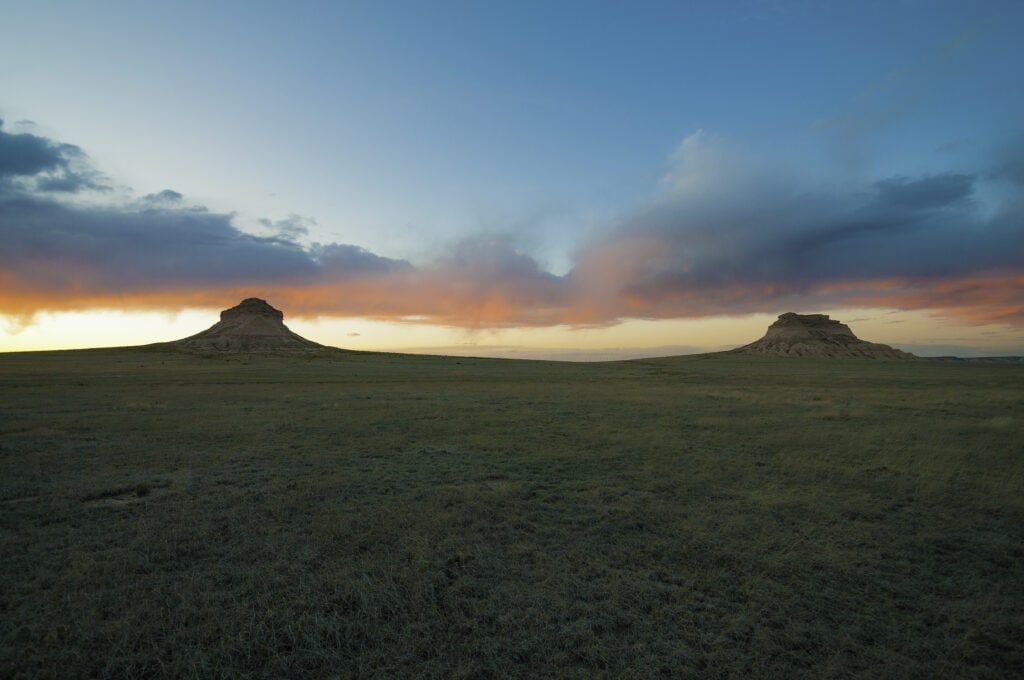
When you think of Northeast Colorado, you might picture gravel roads and wide-open prairie, and sure, that’s part of it. But spend a little time out here, and you’ll realize it’s so much more. Tucked within the Pawnee National Grasslands, a 30-by-60-mile stretch near Fort Collins and Greeley, and just 15 miles south of the Wyoming border, you’ll find the Pawnee Buttes: two towering rock formations rising hundreds of feet above the plains. Author James Michener once called them the “Rattlesnake Buttes” in his novel “Centennial,” and honestly, it fits. They’re a little wild and a little unexpected.
So what exactly are the Pawnee Buttes? Like so many of Colorado’s natural landmarks, they tell a long, layered story. The rock that forms the buttes dates back roughly 70 to 90 million years, when a shallow inland sea covered much of eastern Colorado. Back then, this landscape looked nothing like it does now. It was lush, green, and full of life. Millions of years later, the land gradually lifted, and wind and water went to work, slowly eroding the softer layers and leaving behind the harder-capped formations we see today. What remains is just a fragment of what once stood here. Believe it or not, the now-shortgrass prairie used to stretch hundreds of feet higher.
In more immediate history, the area has shifted from wild prairie filled with grazing herds like bison to land traveled and hunted by Native tribes, including the Cheyenne, Arapaho, and Pawnee. By the mid-1800s, settlers and cattlemen moved in, attracted to the open range. The Homestead Act of 1862 brought even more people, turning the region into a ranching hub. Unfortunately, that growth resulted in overgrazing, railroad expansion, and the near loss of the buffalo that reshaped the land. Harsh winters, drought, and the Great Depression eventually pushed most homesteaders out.
In the 1930s, federal efforts began restoring the prairie, and by 1960, the Pawnee National Grassland was officially established. Today, the grasslands feel different. They are simultaneously quiet and alive. The shortgrass prairie stretches endlessly and is filled with pronghorn, mule deer, coyotes, and rattlesnakes.
When visiting, you can observe from afar or there’s a roughly 4-mile out-and-back trail that leads you to the base of the first butte. The second sits on private land, so that one you’ll have to take in from afar. Regardless of how you choose to experience the Pawnee Buttes, you’ll get to enjoy a different and unique side of Colorado.
4. The Great Sand Dunes
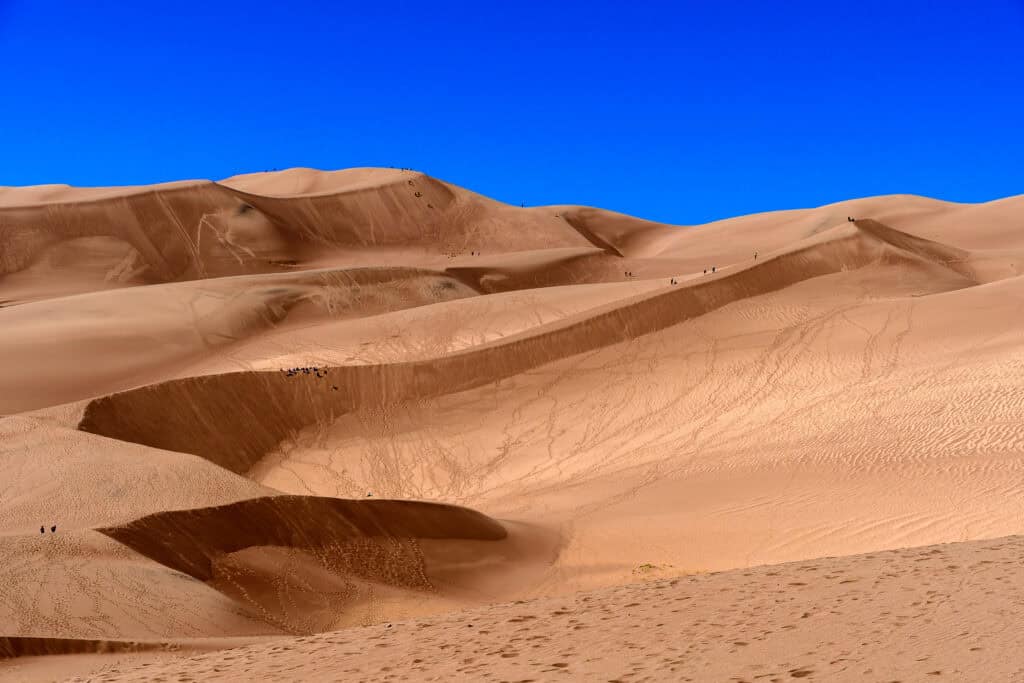
It’s time to put away the snowboard and skis and bring out the sandboard. What? Yes, it’s a thing. Colorado is home to the tallest sand dunes in North America (up to 750 feet tall!). Located near the town of Alamosa in southern Colorado, the Great Sand Dunes rise up against the backdrop of the Sangre de Cristo Mountains. The dunes span about 30 miles and offer a kind of freedom you don’t always get on a trail with no designated routes and just wide-open space to explore.
It’s believed the dunes began forming around 440,000 years ago, after a large lake in the area dried up. With the help of strong southwest winds, sand was pushed and piled into the massive dunes you see today. The present, ongoing flow of Medano and Sand Creeks continues to shape and maintain them, constantly shifting the landscape while keeping their status as the tallest in North America.
Like anywhere, the dunes also carry a more recent human history. The land has long been home to Native peoples, including the Navajo, Apache, and Ute Tribes, before later drawing European and American settlers and homesteaders. In 1932, President Herbert Hoover designated the area as a National Monument, and in 2004, it officially became a National Park.
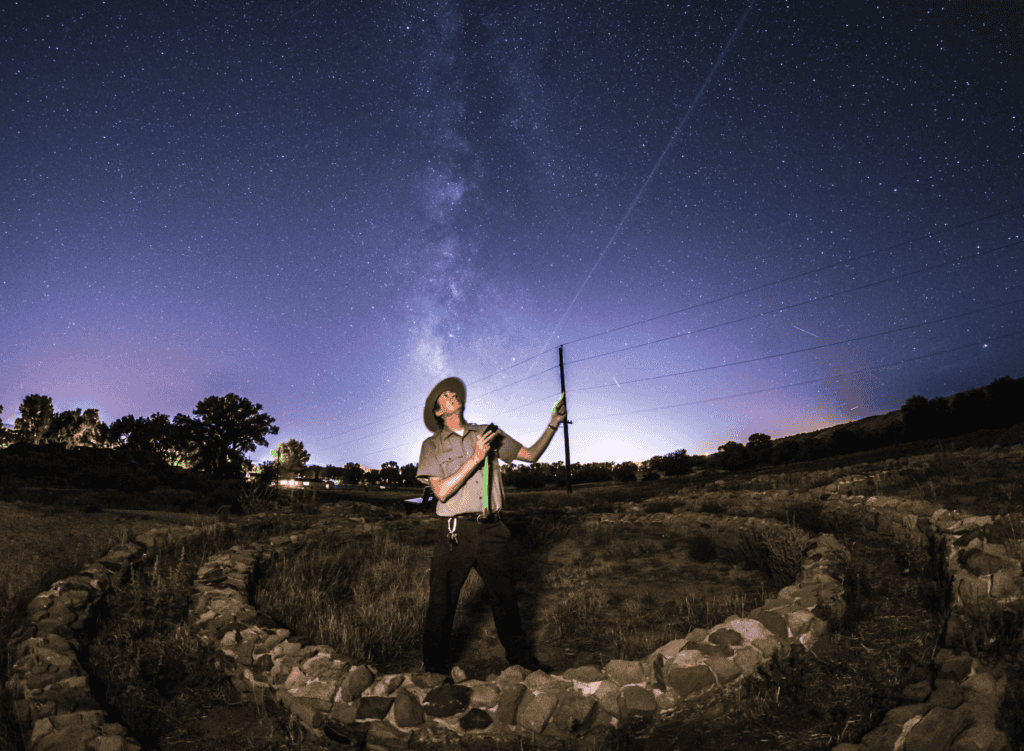
Today, Great Sand Dunes National Park is open 24/7 and offers plenty to do. As an International Dark Sky Park, it’s an incredible place to camp; you’ll get to see a night sky packed with more stars than you can imagine. During the day, you can hike, backpack, try sandboarding or sledding, splash around in Medano Creek, or stop by the visitor center to learn a bit more about the natural phenomenon.
5. The Maroon Bells
Similar to the Flatirons, you’ve almost certainly seen images of the Maroon Bells. While they’re often considered the most photographed mountains in Colorado, photos don’t even come close to doing these 14ers justice; you really do have to see them for yourself.
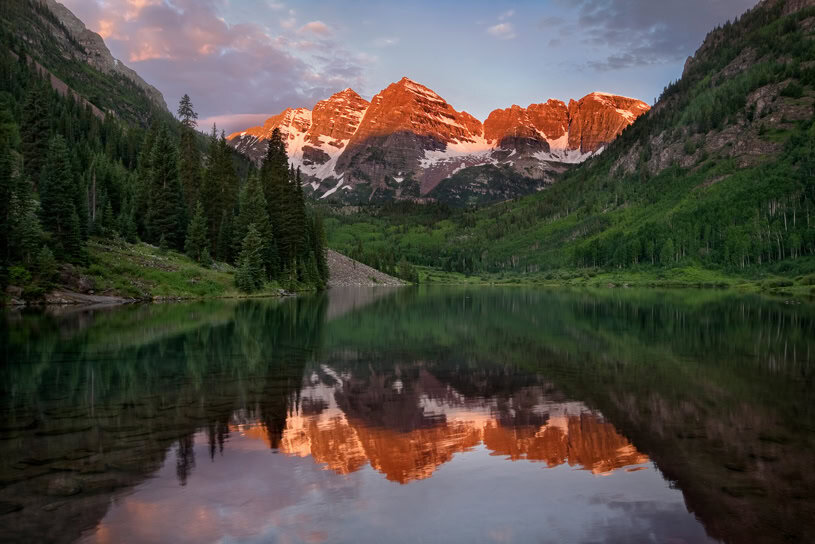
Located near Aspen, the Maroon Bells hold around 300 million years of geologic history. Formed through layers of sedimentation, followed by uplift and erosion from wind, water, and ice, these bell-shaped peaks are truly a sight to behold. Their distinct maroon color comes from the weathering (or rusting) of hematite, an iron-rich mineral.
At their base sits Maroon Lake, a reflective alpine lake carved out by Ice Age glaciers, making its beauty truly unmatched. Visiting the Maroon Bells takes a bit more planning than some of the other spots on this list. Unless you’re planning to cross-country ski, snowshoe, or snowmobile in, you’ll want to visit during the warmer months (May through October), as Maroon Creek Road is closed to most vehicles for much of the year. Because of the area’s popularity, reservations are required during peak season.
Once you’re there, there are plenty of ways to explore. If you’re up for a bigger adventure, backpacking or fastpacking the popular Four Pass Loop is a solid option (just know you’ll need separate permits for overnight trips). If you’re looking for something a little more lowkey, there are plenty of hikes ranging from easy to more challenging. You can also fish in the area, just be sure you have a valid Colorado fishing license.
Visiting the Maroon Bells might take a little extra effort, but honestly, that’s part of the draw, knowing that your visit won’t be overcrowded. I promise that once you’re standing (or hiking) there, all the planning will be more than worth it.
6. Black Canyon of the Gunnison
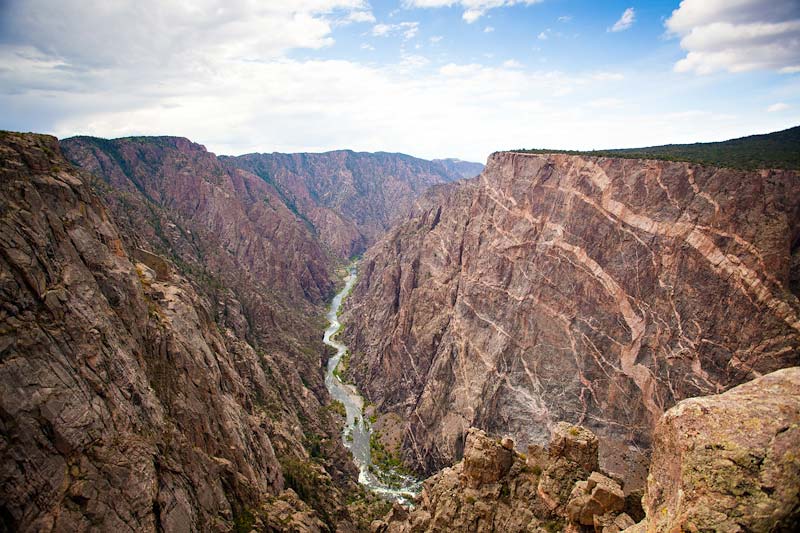
Grand Canyon, but make it Colorado. And there you have it—the Black Canyon of the Gunnison, Colorado’s very own version of the Grand Canyon. Located on the edge of the Colorado Plateau near Montrose, Gunnison, and Crawford, this natural wonder is known for stopping visitors in their tracks. The name “Black Canyon” comes from the way the steep canyon walls spend much of the day in shadow, appearing almost completely black.
While it may not be the biggest canyon in the West, it’s one of the most striking and one of the best places to see multiple layers of geologic history all in one place. Rocks from the Precambrian, Mesozoic, and Cenozoic eras all make up the canyon walls.
According to the National Park Service, the story starts with ancient metamorphic rock formed around 1.8 billion years ago, which was later uplifted. About 30 million years ago, volcanic activity covered parts of the landscape, and then roughly 2 million years ago, the Gunnison River began carving its way through it all. The combination of time, pressure, and a surprisingly powerful river created the steep, dramatic canyon you see today.
Today, the Black Canyon brings visitors from all over, and there’s no shortage of ways to experience it. You can stick to a scenic drive and peer over sheer drops of up to 2,000 feet, or get a little more hands-on with hiking, fishing, or even rock climbing (permits required). There are also plenty of spots to picnic or camp if you want to linger and relax for a little longer.
If you’re planning to hike, the inner canyon requires serious preparation. There are no maintained or marked trails, so it’s best left to experienced hikers who are prepared and have secured the required wilderness permit. If you’re looking for something less serious, there are still plenty of great options along the rim, like the Rim Rock Nature Trail, Warner Point Nature Trail, Exclamation Point, or the moderately challenging Oak Flat Loop Trail.
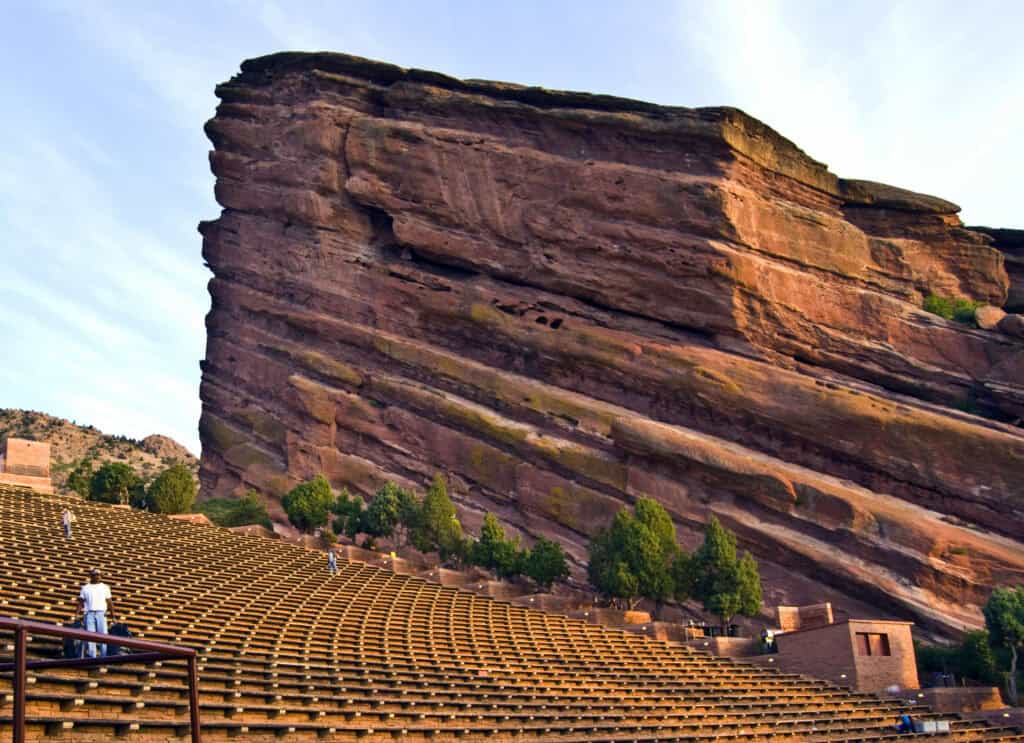
7. Red Rocks Amphitheater
A list of Colorado’s natural wonders wouldn’t be complete without the geological phenomenon that is Red Rocks Amphitheater. While it’s often thought of as just a beautiful place to catch a concert, it’s so much more than that. Its story actually dates back over 300 million years to the Pennsylvanian Period (completely unrelated to Pennsylvania). At that time, Colorado was surrounded by ancient seas that eventually left behind sandy deposits, which turned into the sandstone formations you see today.
Around that same time, an earlier version of the Rocky Mountains was rising, eroding, and sending layers of sediment eastward that built up the foothills and plains. Over millions of years, those original mountains wore away, and the “newer” Rockies formed around 65 million years ago, pushing and tilting the rock layers into what we see today. After some help from wind, water, and ice, the landscape shaped into the massive red formations that define Red Rocks and other natural wonders like the Flatirons and Garden of the Gods.
Today, Red Rocks draws visitors from all over and not just music fans. While catching a show here is obviously an incredible experience, there are plenty of other (and cheaper) ways to enjoy the park too. You can hike, bike, get in a workout on the stairs, roll out a yoga mat, catch a film, or just explore and visit the trading post. The park does close during concerts, but otherwise, it’s free and open for exploring.
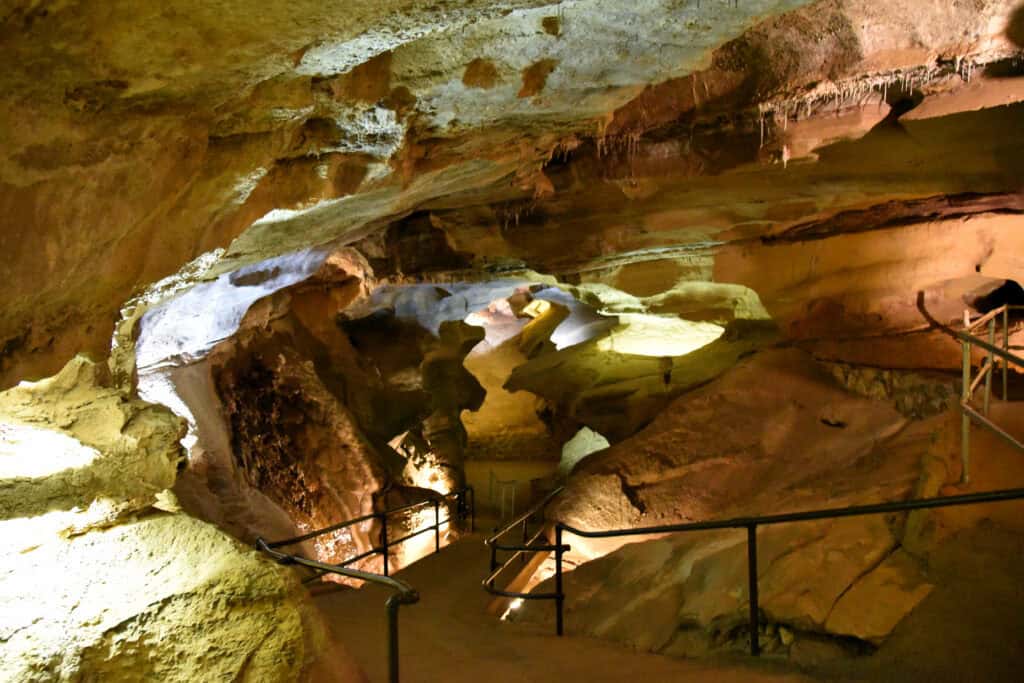
8. Cave of the Winds
We started this list in Colorado Springs, so it only feels right to end it there, too, with a visit to Cave of the Winds. This 500-million-year-old limestone cave was formed over millions of years as acidic rainwater seeped into cracks in the rock, slowly dissolving it and eventually creating the winding passageways and chambers you can explore today.
The name “Cave of the Winds” comes from an Apache legend that believed the cave was home to a Great Spirit. While it’s likely that both the Apache and Ute people knew of the cave long before, it wasn’t widely explored until 1880, when the Pickett brothers stumbled upon it. Just a year later, they began offering tours, making it one of Colorado’s earliest tourist attractions.
Today, you can still explore the cave, with several tour options depending on how adventurous you’re feeling. There’s the classic expedition tour, a haunted tour, and a more intense expedition-style tour that requires climbing, crawling, and squeezing your way through tighter spaces. Regardless of which tour (or tours) you choose, you’ll get to explore and learn a lot.