Where to dig for garnet, Herkimer diamonds, and fossils across New York—and what to know before you go.
Marilyn Monroe might have sung “diamonds are a girl’s best friend,” but rockhounds—avid gem and mineral enthusiasts more interested in excavating than browsing a jewelry case—know better.
The fascination with Mother Earth dates back to ancient Egypt: turquoise, carnelian, and lapis lazuli were found in the tomb of Princess Sithathoryunet (known as the Treasure of el-Lahun).
From opal in Australia to amethyst in Brazil, rockhounding has become an international phenomenon. But New Yorkers need not travel that far. A bit of preparation is key before setting off with your rock hammer, safety goggles (a must!), and gloves.
Here is a closer look at the ins and outs of rock hunting in New York, and where, if you’re lucky, a “rock” might be worth more than its weight.
Is rock hunting in New York legal?
With over 47,000 square miles of land encompassing private acreage, state parks, historic sites, and forest preserves, there is no single rule on rock hunting in New York. State-owned land and preserves are restricted.
There is also a “Leave No Trace” code of ethics among regular rockhounds. “As rockhounds, we have the privilege of exploring these natural wonders,” states Rockhounding.org’s guide, “but it’s our responsibility to ensure these stories continue to be told for generations to come.”
While there is no statewide rockhounding license, similar to what hunters or fishers might obtain, permission is required. So where does that leave the average rock enthusiast?
More often than not: pay-to-dig.
3 regions to rock hunt in New York and what you’ll find
Herkimer diamonds, Herkimer County
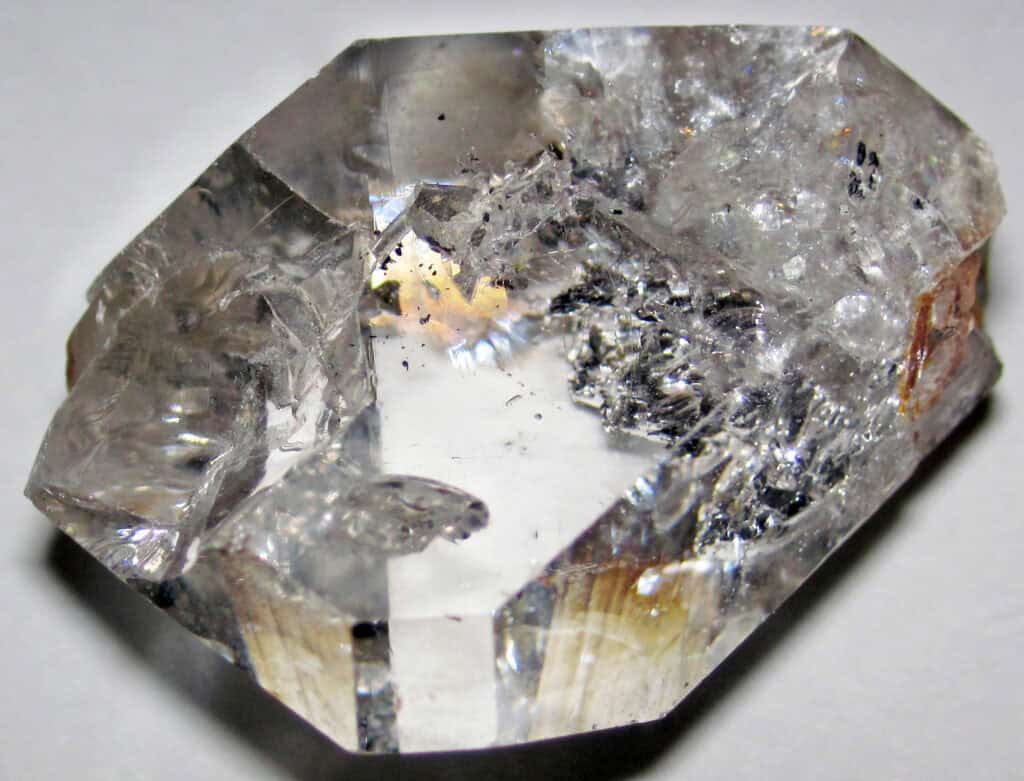
Where: County Rd. 114, Saint Johnsville, NY
Despite the name, a Herkimer diamond isn’t a diamond at all—it’s a double-terminated quartz crystal, pointed on both ends rather than the single facet typical of most quartz. Dating back 500 million years, the “diamonds” form in silica-rich water, which allows that rare double-pointed shape to develop.
For those ready to start excavating, Crystal Grove in Saint Johnsville offers campgrounds for tents or RV hookups, along with a limited number of cabins that sleep up to six guests. Campers and visitors alike can purchase a day pass and tool rental to try their hand at rockhounding.
If luck is on your side, you may stumble upon a crystal just by walking the grounds, but with some effort, matrix specimens (crystals attached to the host rock) can be found. The coveted double-terminated crystals are typically less than an inch long and may have a yellowish tint, which can be removed with an overnight soak in oxalic acid.
For a more ambitious haul, Dirty Diamond Diggers offers a supervised, private machine dig for $1,500 (two people maximum), with guaranteed findings and no limits on your haul.
Garnet, Warren County
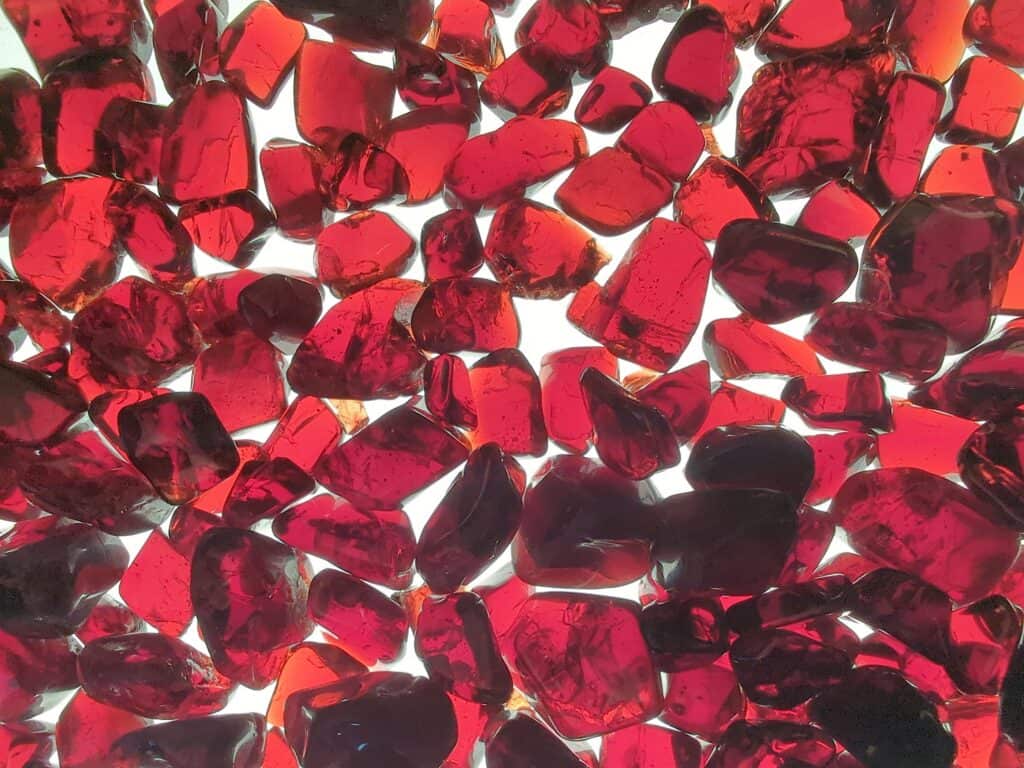
Where: Gore Mountain Gem & Mineral Shop, 1126 Barton Mines Rd., North Creek, NY
January’s birthstone, garnet, also happens to be New York’s official state gemstone. The name originates from the Latin granatus, which means pomegranate and references the deep red color. But not all garnets are red.
Garnets actually represent a group of minerals—pyrope, almandine, spessartine, grossular, and andradite—and can be found in a wide range of colors. The gemstones are softer than rubies, sapphires, and diamonds, which makes them more suitable for standalone pieces like earrings or a brooch than for a bracelet, where they are more susceptible to damage.
Bright green demantoids and tsavorites, which fall under the broader garnet classification, are mined throughout Africa. But for deep red almandine garnets, head to the Adirondacks.
English-born Henry Hudson Barton moved to the U.S. in 1846 to apprentice as a jeweler. He later married Josephine Baeder, whose father founded a sandpaper company. As luck would have it, garnet makes for a great abrasive. Barton learned of the large deposit at Gore Mountain, and eventually purchased the site in 1887 from New York State.
Now called Barton International, the company moved its Adirondacks operation in the early 80s to nearby Ruby Mountain, and Gore Mountain began attracting rockhounds.
Local jewelry maker Judy Brown has been crafting garnet jewelry for more than 50 years, having grown up nearby on Garnet Hill exploring the historic Hooper Mine. Her husband and business partner, Joe, started as a scaler at Barton before becoming its demonstration gem cutter, continuing a family line of pit foremen at the mine. Together, they opened Gore Mountain Gem & Mineral Shop to showcase the region’s gemstones and share its mining history. Son Jason now helps run the business, continuing the legacy.
A 90-minute mine tour with an expert guide reveals how almandine garnets are formed, along with a look back at historic mining equipment once used at the site. Tour rock is available for purchase at $2/lb.
Fossil hunting, Erie County
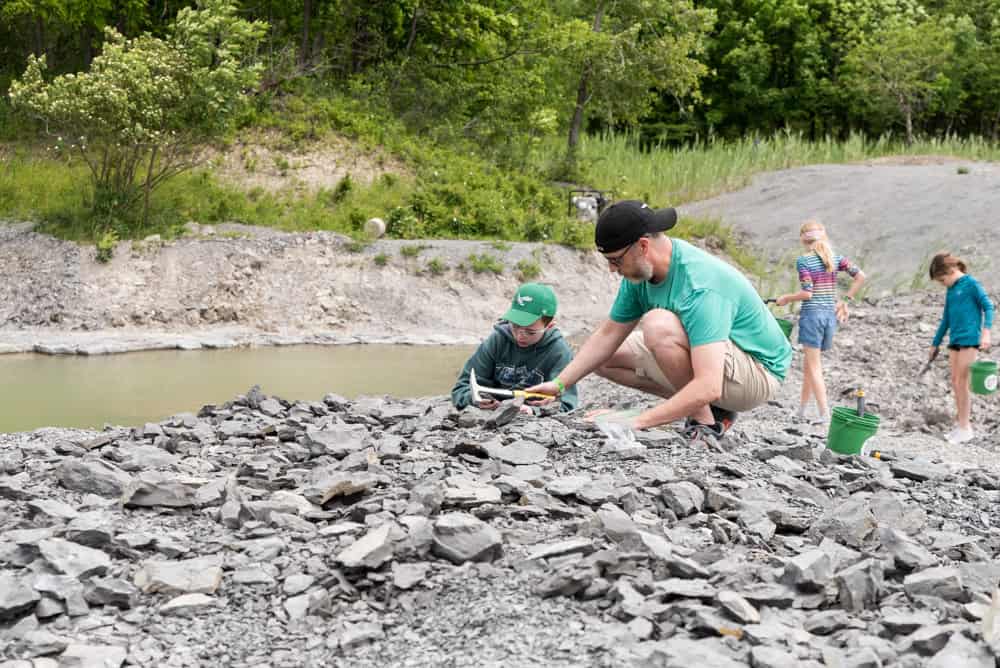
Where: 4050 North St., Blasdell, NY
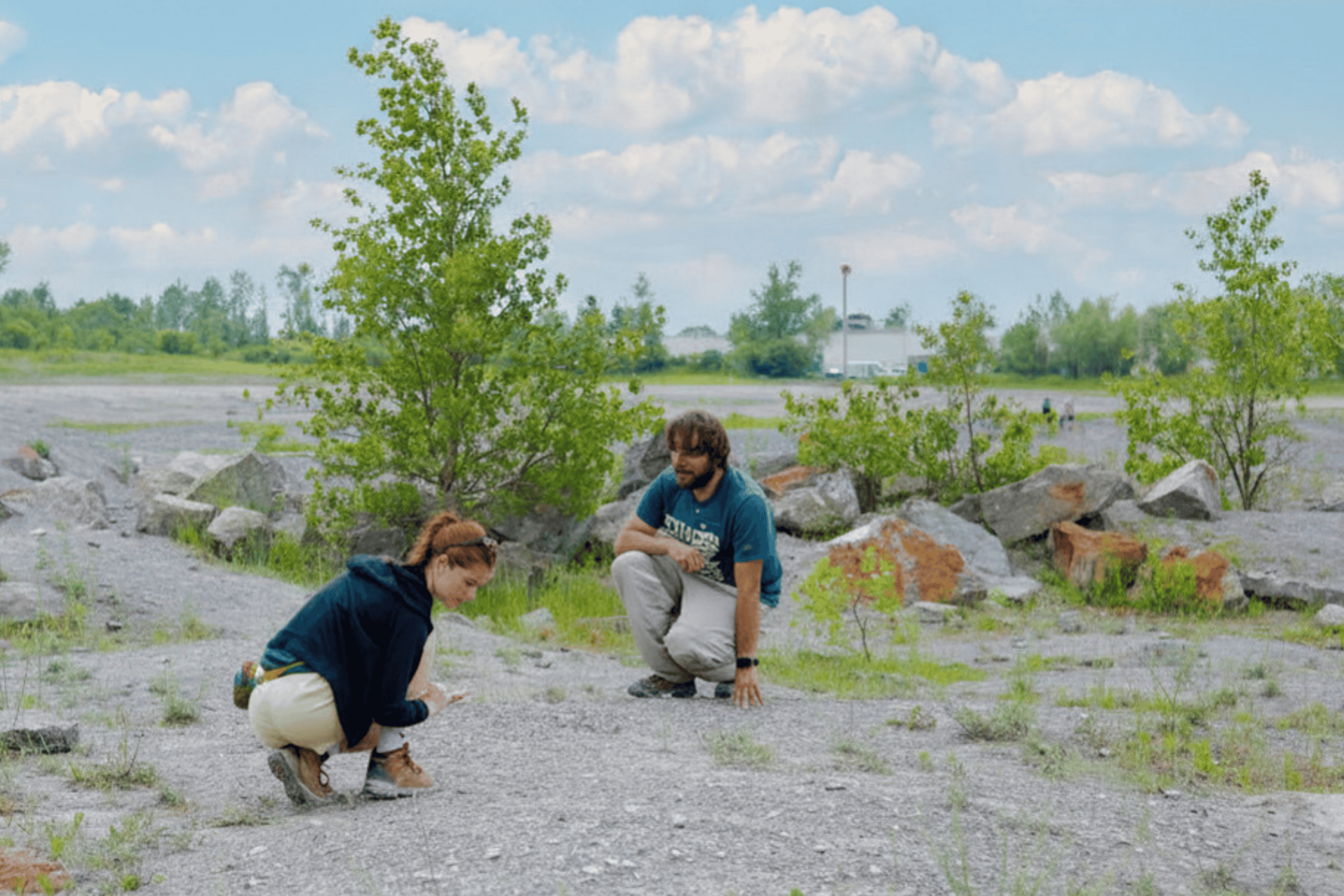
By expanding the scope of what you’re looking for, rock hunting in New York can take an unexpected geological turn. At Penn Dixie Fossil Park & Nature Reserve, a 54-acre former cement quarry, visitors can unearth trilobites, brachiopods, crinoids, and more.
The nonprofit has earned several notable accolades, including ranking as the #1 fossil park in the U.S. and a Guinness World Record title for the world’s largest fossil dig. Since its incorporation in 1993, some fascinating finds have emerged along with continuous facility upgrades and educational programming.
In 2023, off-duty members of Penn Dixie’s educational team uncovered a carpoid, a prehistoric marine invertebrate dating back approximately 382 million years—predating dinosaurs when the region was covered by water.
General admission ($17 to $25) includes a bucket and trowel. Still, unless you’re an avid paleontologist, you’ll want to consider renting a tool set, which includes a three-pound sledgehammer, geologist’s hammer, chisel, safety goggles, knee pads, and a bucket for your findings.
Private expeditions (up to 10 participants) offer the tips, tricks, and expertise to maximize your time on-site.
More options for rock hunting in New York
New York State Parks technically prohibits the removal of rocks, minerals, and other natural objects from state park land without permission, which is largely why most rockhounding in New York happens on private land or at designated pay-to-dig sites.
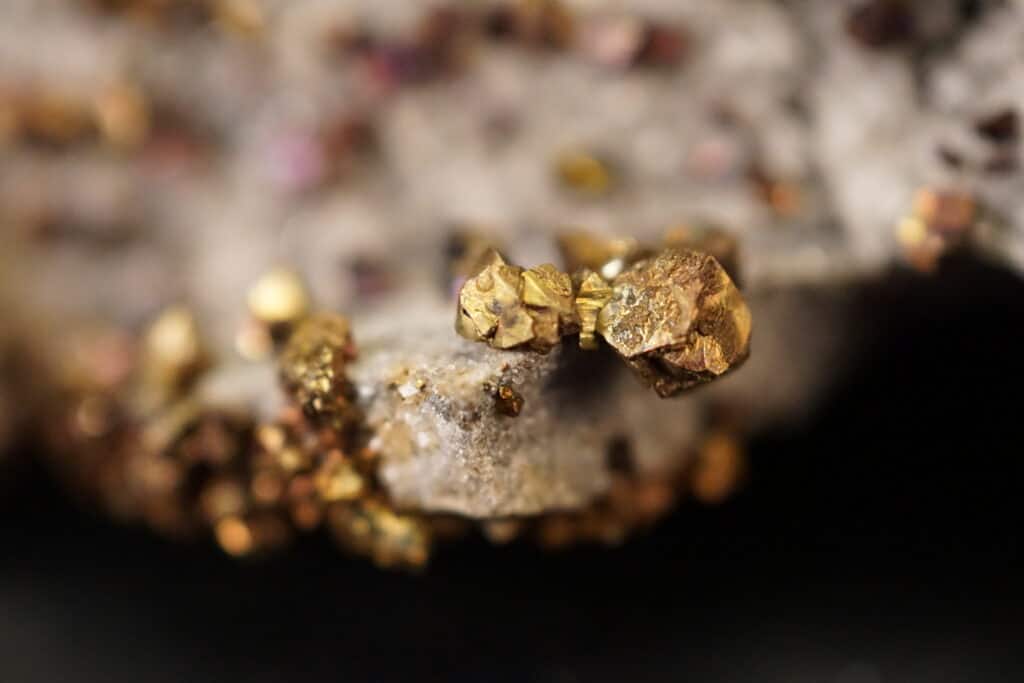
Still, several sites have emerged as prominent locations for gemstones and fossils, including Berme Road Park in Ellenville. Follow the path from the municipal park to a former quarry where you may unearth quartz along with chalcopyrite and pyrite, often referred to as “fool’s gold.”
Rules on rock and mineral collecting vary by land ownership, so it’s worth a quick call to the local parks office or county tourism bureau before you head out. Even better, request the answer in writing; that way you’ll have it on hand if a ranger asks.