Environmental concerns, health risks, and shady dealings are driving community movements against AI-focused data centers.
Data centers—giant warehouses that house the servers behind the cloud, streaming, and much of what we do on the internet—have proliferated across the country, with heavy investment in artificial intelligence accelerating the boom. Alongside the rise of data centers has been persistent, dedicated backlash from affected communities.
Today, the U.S. has more than 3,000 data centers, with many more under construction or planned, including at least 174 in various stages of development in Pennsylvania.
Data centers, including large cloud-focused facilities, have been around for years. But many of the ones you’ve read about in the news are different, as AI has driven the construction of massive data centers that consume vast amounts of power and resources.
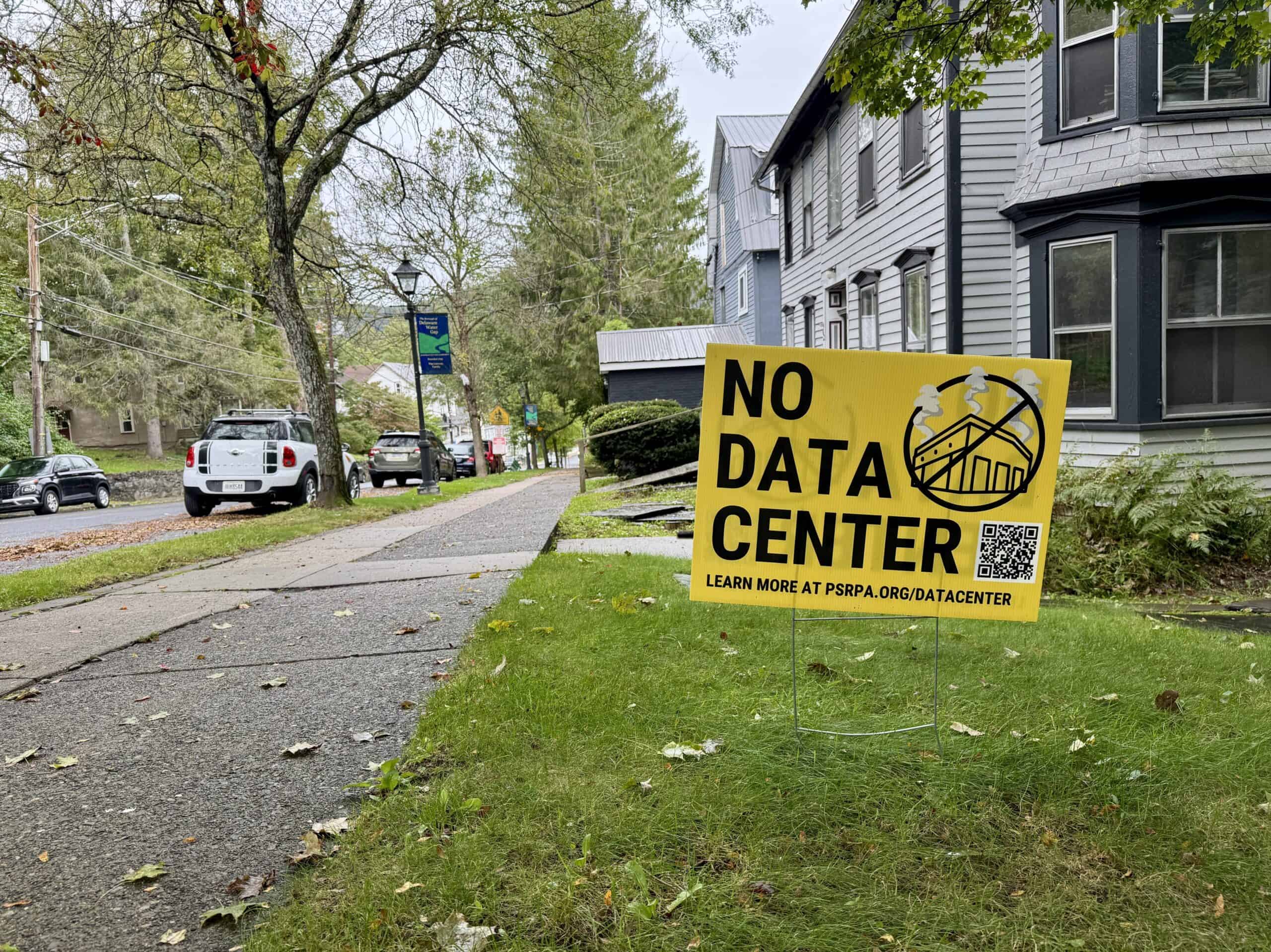
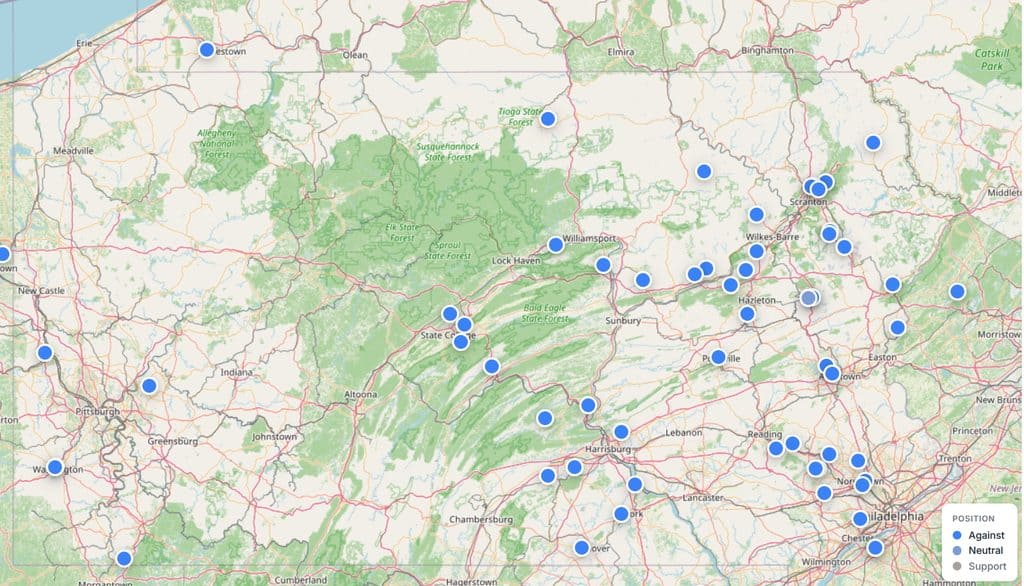
Across the commonwealth, dozens of communities have pushed back against AI data center development that they’ve had little say in and that they tie to higher energy bills and excessive use of natural resources. According to data from the Coalition for Responsible Data Center Development, at least three dozen community groups in Pennsylvania have rallied or are actively working against data center projects. Some have even won.
You might be wondering why so many Pennsylvanians are skeptical about data centers. After all, a Quinnipiac poll from earlier this month found that 64% of likely voters in Pennsylvania believe AI data centers will “do more harm than good.” Most pushback centers on environmental concerns, health risks, and the murky details of data center deals. But specific worries vary by community, depending on how projects may affect residents.
We’ve compiled a list of the most common concerns about data centers, highlighting some Pennsylvania-based community groups raising the alarm.
Data centers are contributing to rising electricity bills
Electricity prices are rising across the country, translating into higher bills, including in Pennsylvania.
Data center demand is widely cited as a major contributing factor: Because data centers require a great deal of energy, their electricity needs can drive up prices while putting pressure on utility companies to invest in new infrastructure to support big projects. And the resulting costs? They often pass them on to consumers.
“We are already paying in the neighborhood of a billion dollars more this year in generation costs as a result of [the] increase in capacity, which is directly attributed to the load growth from data centers,” Elizabeth Marx, executive director of the Pennsylvania Utility Law Project, told Philadelphia’s WHYY in May.
In June, electricity rates across Pennsylvania rose by as much as 19.8% for some customers, further increasing electricity bills after widespread rate hikes last year.
Pennsylvania House Democrats have advanced legislation to keep data center costs from being passed on to residents, but no proposal has become law yet.
Data centers pose environmental and health risks
In 2024, Indiana County’s Homer City Generating Station shut down after decades of burning coal and contributing to air pollution in the surrounding area. But just a year later, a new data center was announced to take its place, one powered by a new natural gas plant.
Not all data centers run on fossil fuels, but old natural gas facilities and coal plants are increasingly being repurposed to do so, raising concerns that such development may lead not only to climate-warming emissions but also to increased local air pollution.
In Homer City, members of Concerned Residents of Western PA have called attention to the data center campus’ expected emissions, which are associated with respiratory illnesses, cancer, and cardiovascular diseases. Because data center development is mostly occurring in rural areas, some affected communities may already be exposed to harmful industrial and agricultural pollutants.
“What are we willing to risk for a couple handfuls of jobs?” said a member of Concerned Residents of Western PA when I spoke with them for a May story in Dollars & Sense about the group’s advocacy work. Average employment at data centers ranges from 27 to 111 people.
Residents are worried about noise and quality of life
Air pollution isn’t the only health concern posed by community groups; even noise pollution from data centers can be unhealthy. Constant noise, even at low decibels, can increase stress, cause headaches, and disrupt sleep. Residents around Homer City report regular explosions at the new data center construction site. But even outside of construction noise, ordinary data center operation generates nonstop noise, from the whirring of industrial cooling fans to the clamor of backup generators.
In August, Montgomery County’s Upper Merion Township Board of Supervisors rejected a developer’s application to build five data centers in the area following strong community pushback, which included concerns about community health, noise pollution, effects on the environment, and property values. Resident homes would have been less than 1,000 feet from some of the centers, per a petition against the project that has roughly 18,000 signatures.
The developer is currently suing to get the developments approved, and an advocacy group that campaigned against the projects, Upper Merion Against Data Centers, is still active.
Massive water consumption can threaten local water supply
The servers that power data centers generate intense heat and thus require a great deal of water for cooling—the largest centers may consume as much as 5 million gallons per day, similar to the water use of a small city. Depending on the project, a data center can strain a municipal water supply.
“When you’re talking about something that could use 1.5 to 1.75 million gallons of water a day, in an area that already deals with drought conditions, that’s alarming,” Chrissie Dziembowski, a member of Prevent Limerick Data Center Development in Montgomery County, told Spring-Ford Press in April. The group launched in response to proposed data centers in Limerick Township. “[T]here are people here on well water who are genuinely worried about it running dry or becoming contaminated,” she said.
The local review of the Limerick project is ongoing.
Communities may not be included in dealmaking
Many community groups against data centers are upset that residents who may be most affected haven’t been involved in decision-making. The good news is that Governor Josh Shapiro signed an executive order in August removing data centers from a “fast track” program meant to speed up state permitting. Now, data centers must secure local approval and meet stronger environmental protection and community engagement standards.
Still, some data center developers have asked public officials to sign nondisclosure agreements, according to reporting by Spotlight PA. NDAs can keep key project details from the public, allowing data center development to gain momentum before community members learn what’s actually going on.
“We have a lot of concerns, a lot of questions, and a lot of things that haven’t been answered over the last year,” a Sugarloaf Township resident told FOX56 at a July rally against an Amazon data center in Kline Township. According to Spotlight PA, three Schuylkill County commissioners signed NDAs related to the Kline Township project before it was made public.
Kline Township supervisors approved the Amazon data center project in late September.
Meanwhile, data centers receive a sizable tax subsidy by avoiding sales tax on many equipment purchases, a policy that could cost the state an estimated $2 billion in tax revenue by 2031. But because data centers aren’t required to report their purchases, we can’t know the subsidy’s true cost.