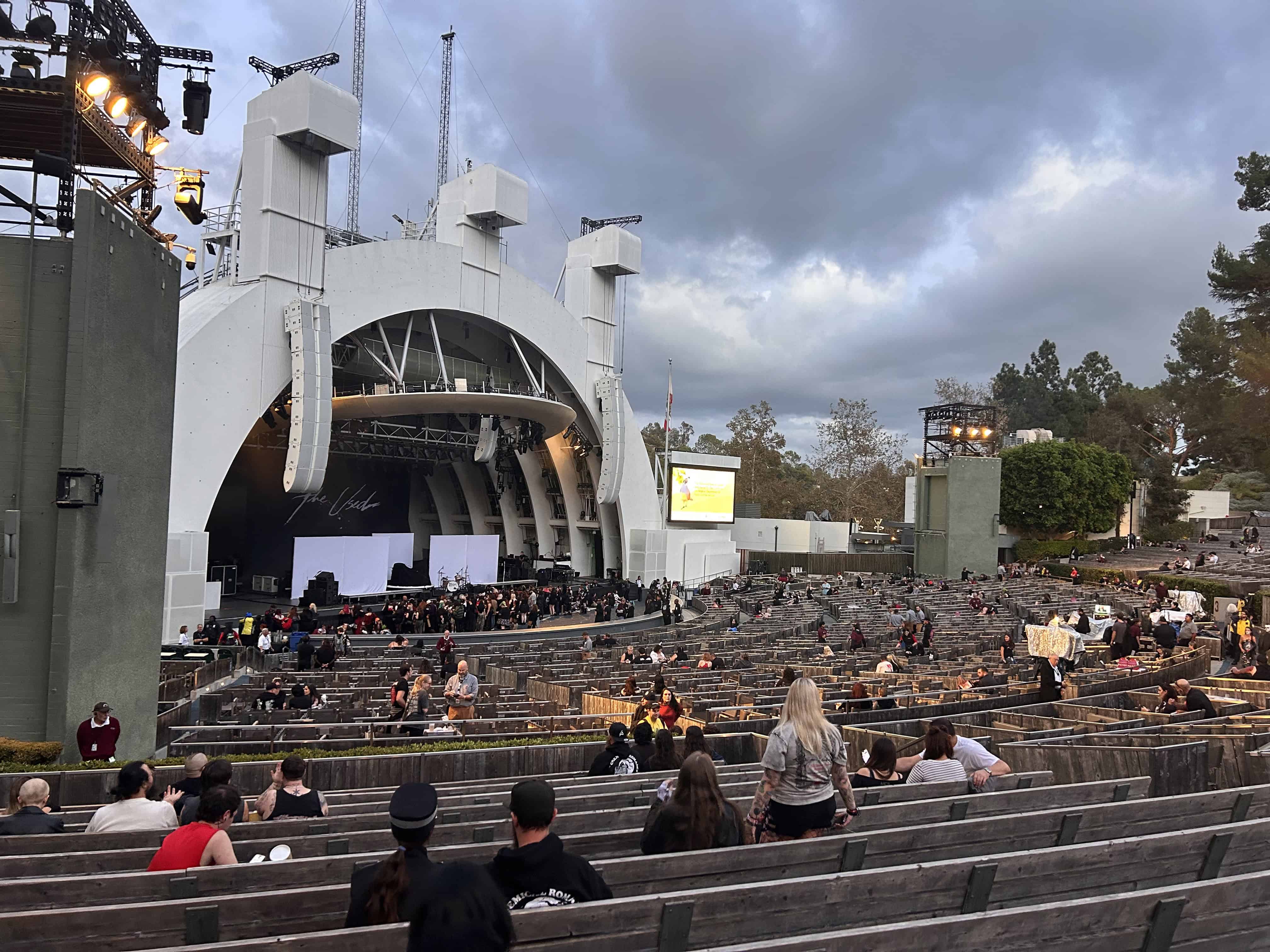
From transportation to the best eats at the famed venue, here’s all you need to know for your first time at the Hollywood Bowl
When I opened my birthday present from my brother and saw that he had bought us tickets to see My Chemical Romance at the Hollywood Bowl, I was almost as excited to see the historic amphitheater as I was to see my all-time favorite band. But I have to admit I was a little intimidated, too.
As an Illinoisan, I’d never been to the famed music venue before, and I would be flying in from Chicago to see the show. I wasn’t sure whether to drive or take public transportation. I didn’t know whether to get food at the venue or somewhere else beforehand. After doing some research beforehand, we made it to the concert without a hitch, and my brother and I had one of the best live music experiences of our lives.
Here’s a guide with information on transportation options, food, a bit of the famed venue’s history, and more than fellow first-timers should know before going to the Hollywood Bowl, so you can have as much fun as we did on our first visit.
Hollywood Bowl location
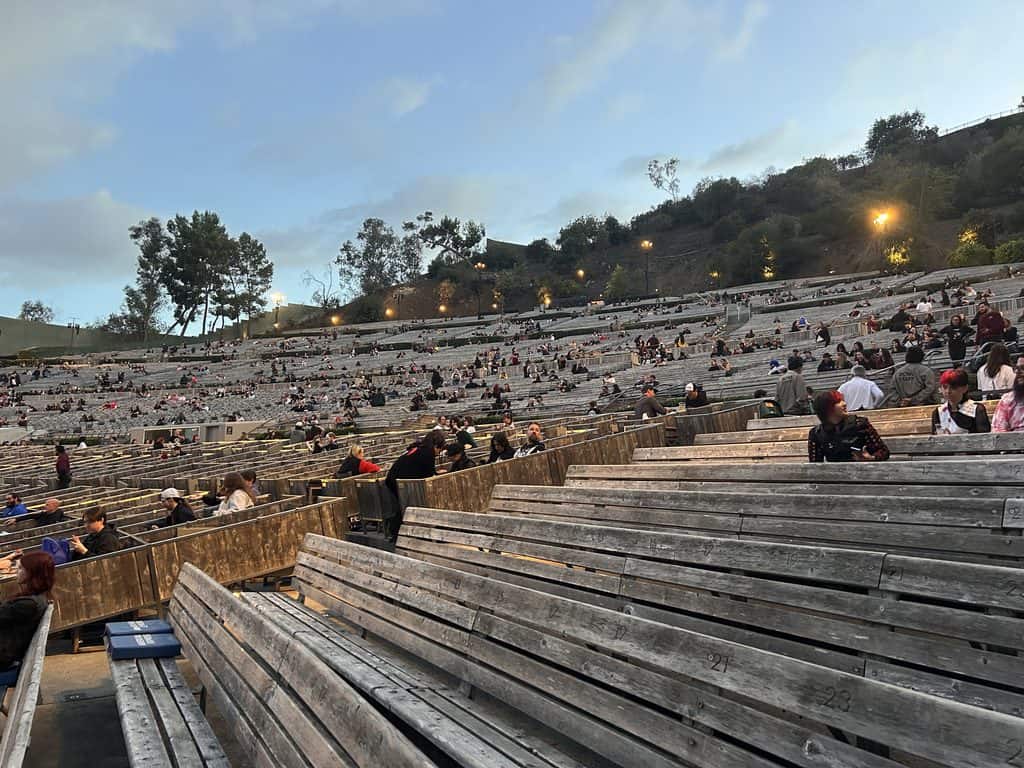
As its name suggests, the Hollywood Bowl is located in close proximity to Hollywood, along Highland Avenue in the Hollywood Hills neighborhood. The famed amphitheater is one mile north of the Hollywood/Highland Metro Rail Station, and sits in a bowl-shaped part of the Hollywood Hills that used to be known as the Daisy Dell. The bowl-shaped location was partly chosen for its natural acoustics due to its shape.
Hollywood Bowl history
Open and hosting concerts and other events for more than a century, the Hollywood Bowl is one of the most iconic live music venues in the world and an extremely important cultural location in Los Angeles. The site where the amphitheater is located, in the Hollywood Hills, was chosen for the bowl’s location in 1919. The venue’s first performances were held in 1921, although its first stage wasn’t built until a year later. Seating was added to the Hollywood Bowl in 1923, and a stage backdrop was built in 1924.
Throughout the venue’s century of history, it’s been home to numerous legendary performances, including The Beatles in 1964 and 1965, which were recorded and turned into the live album “The Beatles at the Hollywood Bowl.” The Doors and Jimi Hendrix also performed at the venue throughout the 60s, and those performances were also turned into live albums.
In 1971, The Jackson Five performed at the Hollywood Bowl as part of one of the group’s earliest tours; Tom Petty and the Heartbreakers performed their final shows before Petty’s 2017 death at the Bowl; and in 2021, Billie Eilish performed a concert at the amphitheater without an audience and released the performance as a concert film, “Happier than Ever: A Love Letter to Los Angeles.”
The Hollywood Bowl was named one of the 10 best live music venues by Rolling Stone in 2018, and in 2023 the amphitheater was listed on the National Register of Historic Places.
Types of events at the Hollywood Bowl
Every year, the Hollywood Bowl hosts numerous events throughout its months-long season. Typically, the venue hosts lease events (concerts or shows produced by outside promoters) from April through October, while the amphitheater’s summer season of internally produced events by the Los Angeles Philharmonic runs from June through September.
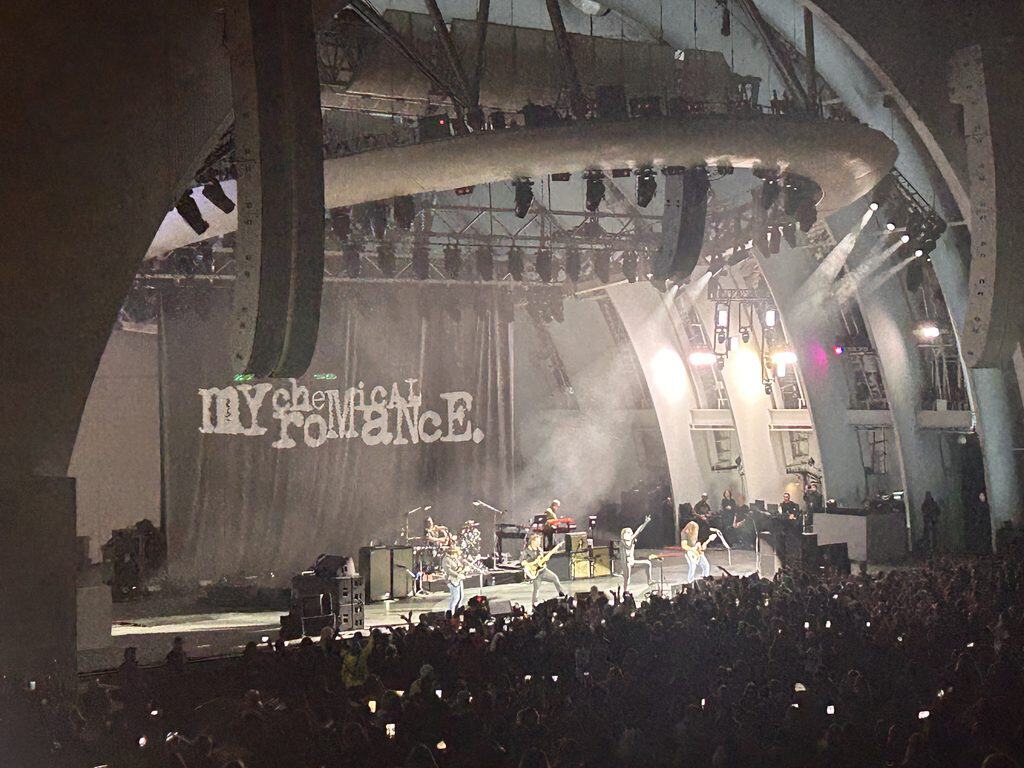
In addition to the lease events, like the My Chemical Romance concert I attended, the Hollywood Bowl serves as the Los Angeles Philharmonic’s summer home. The orchestra plays nearly 300 concerts per year, including about 100 at the Hollywood Bowl, where it performs classical masterworks, film scores, and sometimes even collaborations with pop artists.
Tickets
Tickets to individual shows can be purchased in person at the Hollywood Bowl’s box office, or on the venue’s website or through Ticketmaster. The Hollywood Bowl also offers subscription packages, where purchasers can create their own bundle of tickets to three or more concerts, or purchase a curated bundle for three to five concerts.
Transportation
One of the most important decisions that any first-timer to the Hollywood Bowl can make is how they’re going to get there. There are four main transportation options for getting to the Hollywood Bowl: taking public transportation, using the venue’s shuttles, taking a park-and-ride, or driving yourself and parking at the venue.
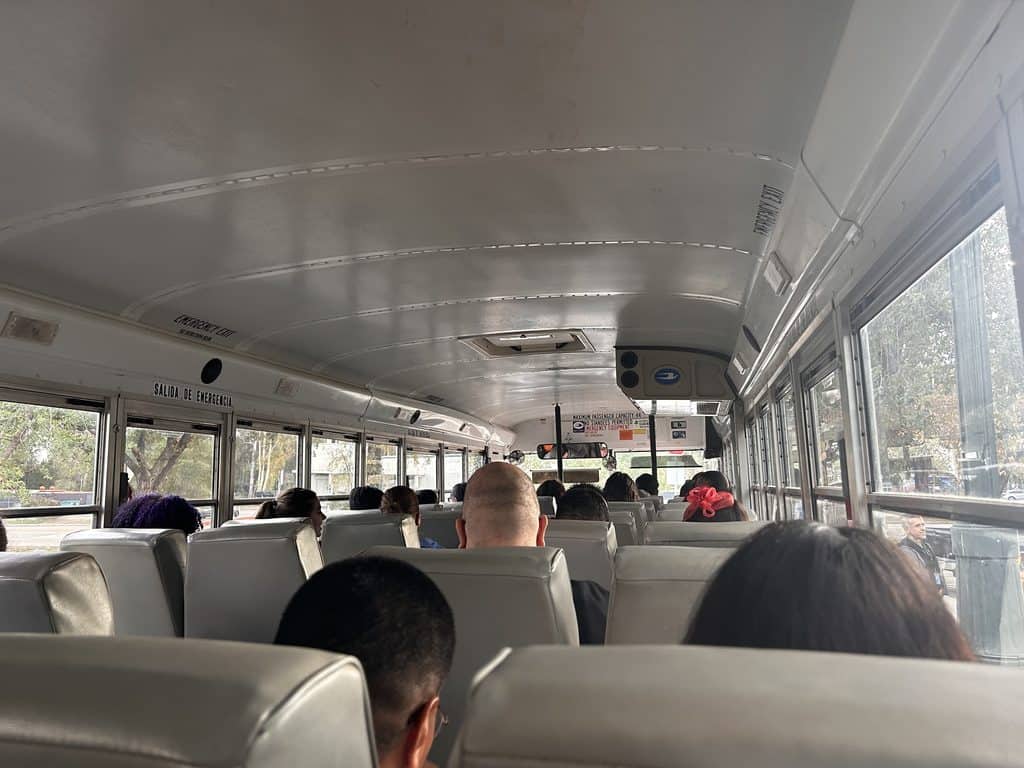
My brother and I opted to take the shuttle from the LA Zoo because it was accessible from where we were staying and meant we wouldn’t have to struggle to leave the parking lot after the concert. It was an extremely easy process, costing approximately $12 per person, and allowing us to park at the zoo for free.
Public transportation
While Los Angeles isn’t known for its abundance of public transportation, there are several public transportation options to get to the Hollywood Bowl. One of the most convenient ways to get to the venue by public transportation is taking the Metro B Line, formerly known as the Red Line until earlier this year, to the Hollywood/Highland Station. From the station, concertgoers can walk about one mile to the Hollywood Bowl or take a free shuttle from Ovation Hollywood, a mall near the station.
Another option is taking the bus, as there are two bus lines that stop around the concert venue, including Line 222, which stops at the Hollywood Bowl, or Line 212, which stops at the intersection of Hollywood Boulevard and Highland Avenue, where visitors can either walk to the venue or take the free shuttle from Ovation Hollywood.
A single one-way ride on the LA Metro system, which includes the subway and the bus, costs $1.75, or up to $5 per day if you take more than three rides.
Shuttles and park-and-rides
When looking over options for how to get to the venue, it seemed like taking a shuttle or using one of the Hollywood Bowl’s park-and-ride options seemed to be the easiest option. It also gave us plenty of options for where to leave from, and at what time.
The Hollywood Bowl shuttles leave from four locations, including the LA Zoo, Ventura Boulevard in Studio City, the Burbank Metrolink station, and Ovation Hollywood. Parking is free at every shuttle location, except for Ovation Hollywood. Shuttle tickets can be purchased in advance and cost between $9 and $12.45 for a round-trip ticket. Shuttles start 2.5 hours before each concert and run continuously. Return service starts 20 minutes after the concert’s end.
The difference with the park-and-ride option is that these buses run on a set schedule, rather than continuously throughout the night. There are also more park-and-ride locations, with 15 throughout Los Angeles County, including Torrance, Santa Monica, Sherman Oaks, Pasadena, and Arcadia, among several others. Park-and-ride costs between $10 and $15, depending on what sort of event is happening at the venue and when the park-and-ride ticket was purchased.
The shuttle ride from the LA Zoo took about 30 minutes and was even quicker on the way back after the concert, when we weren’t battling rush-hour traffic.
Parking
Of course, Hollywood Bowl attendees can also choose to drive and park their own cars. The venue has three parking lots, plus one for rideshare pickups and drop-offs. Parking can be purchased online ahead of each event at the amphitheater, and prices for parking vary depending on which lot is selected ($90 for valet parking in Lot A, $55 for stacked parking in Lot A, $55 for accessible parking in Lot B, $45 for LA Philharmonic events in Lot D, $55 for non-LA Philharmonic events in Lot D, $10 for motorcycle parking in Lots B and D).
At the Hollywood Bowl, cars are parked using a stacked parking method to create more space in the venue’s parking lots. But this method, which means that cars are parked as tightly as they can be in rows, blocking any movement and the potential to exit early, results in long waiting times to leave the parking lot after concerts. Parking lots at the Hollywood Bowl have limited spots and might sell out in advance of concerts, opening three hours before each event.
Food and drinks
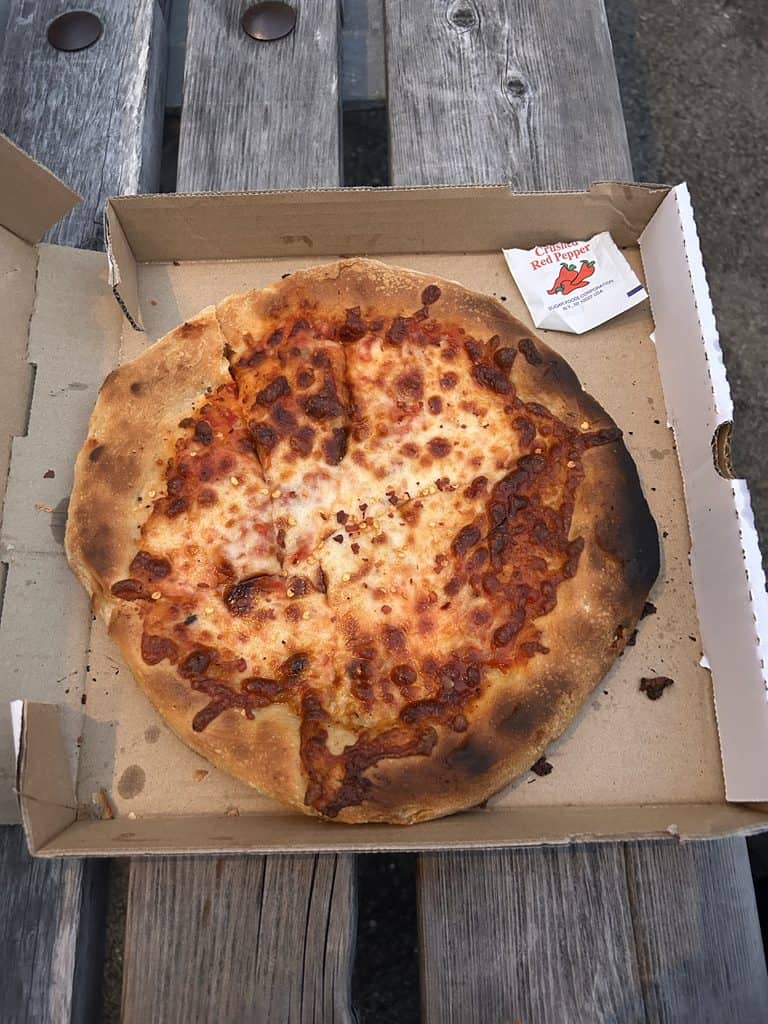
One of the most unique features of the Hollywood Bowl is that the popular venue allows outside food and drink. On nights when the LA Philharmonic is playing, attendees can even bring in their own wine and beer (but don’t even try it on nights at least events, like the My Chemical Romance concert).
Because outside food is allowed, picnicking is a popular activity at the Hollywood Bowl, and picnic tables are located throughout the park. One of the best spots for picnicking at the Hollywood Bowl is at Highland Camrose Park, a 2.1-acre park located inside the venue.
If you don’t want to bring your own food, or didn’t have time to grab any nearby takeout options, there is plenty of food for purchase at the Hollywood Bowl. The venue has several stands selling pizza, burritos, hot dogs, fried chicken, burgers, barbecue, popcorn, and dessert options. Or, if you’re feeling a bit fancy and bought a ticket in the box seats, you can also order a three-course meal from the venue and have it served to your seat.
With our stomachs rumbling as we waited in line to get in, my brother and I made finding food at the Hollywood Bowl our top priority, and ultimately settled on pizza. Our expectations weren’t high when we ordered at the amphitheater, but we were pleasantly shocked at the quality of the pizza. The food at Hollywood Bowl is about as pricey as you’d find at other Los Angeles stadiums, but, at least in the case of its pizza, it is higher-quality fare than what other stadiums and amphitheaters that we’ve been to have sold.
If you’re still hungry after the show, there is a good chance that a bacon-wrapped hot dog will be available on the way out, as there were more than a dozen vendors located along Highland Avenue selling them.
Seats
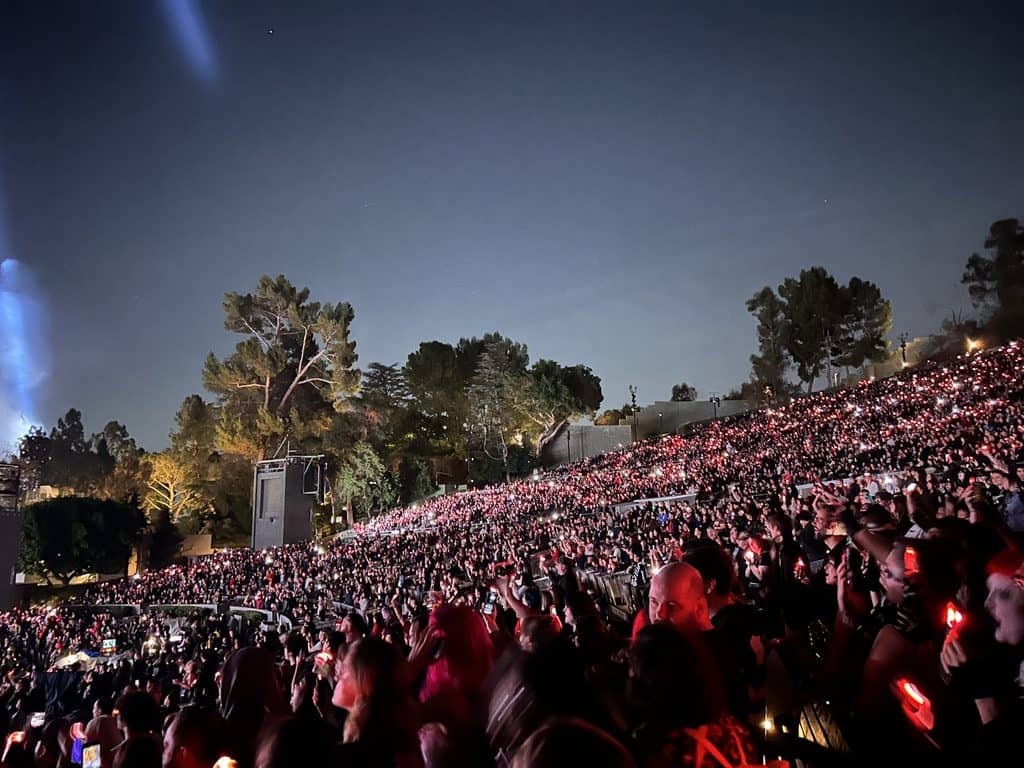
If you’re not in a rush to buy whatever seat you possibly can before the show sells out, like we were for the My Chemical Romance concert, and have some time to consider where in the amphitheater you’d like to sit, there are four different options to run through.
For certain concerts, the pit in front of the stage is standing-room-only general admission and is the closest area to the stage.
Some options for getting close to the stage include purchasing box seats, which are like sitting in a cubicle, just with lower walls. Box seats are groups of four or six canvas-covered, collapsible chairs separated from other boxes and nearby seats by wooden partitions.
The venue also has super seats, which are located near the middle of the venue. While they’re not as close to the stage, they offer a direct view of the center of the stage and are stadium-style seats with built-in cup holders.
We sat in the venue’s bench seats: long rows of wooden benches that start not too far from the stage and go all the way up to the top of the bowl. My only complaint about our Hollywood Bowl experience is that with the bench-style seats, there are no specific seats, just an area of the bench that has your seat number on it. At a sold-out show, as each row becomes jam-packed, you’re squeezed in extremely tight with everyone else in your row. It’s a nightmare for anyone with claustrophobia.
If you find your actual seat uncomfortable, rather than just the experience of touching arms with a stranger for hours, seat cushions are available to rent for $1 from the venue.
Hollywood Bowl Museum
For anyone who leaves the Hollywood Bowl and wants to know more about the impressive amphitheater, they can visit the Hollywood Bowl Museum. The museum is located near the entrance of the Hollywood Bowl and is free to enter all year long. During the summer, the Hollywood Bowl Museum is open from 10 a.m. until showtime from Tuesday through Friday, and starting four hours before showtime on Saturdays through Mondays. In the offseason, the museum is open from 10 a.m. until 5 p.m. Tuesday through Friday.
The museum is home to a permanent exhibition, “Hollywood Bowl: Soul of a City,” which showcases the people, community spirit, architecture, and landscape that have helped to shape the historic venue. It also features rotating exhibits, including the current one, “Building the Bowl: From Dream to Destination,” about the plans and construction of the Hollywood Bowl in the early 20th century.
Rules
Like any venue, there are certain rules that concertgoers have to abide by. Hollywood Bowl is less strict than most other amphitheaters about what can be brought in, including outside food and bags, as long as bags are smaller than 15 inches by 15 inches by 22 inches.
Items that can not be brought in include cameras with detachable lenses, signs, drones, selfie sticks, tripods, your own chairs, umbrellas, and, obviously, weapons.
For the most part, children under 2 can enter the venue for free, but be sure to check with the venue beforehand about specific show rules.
Takeaways
I feel very lucky that I was able to see my favorite band in such a unique setting. The venue had great food, was easy to access with the shuttle, and was in an impressive setting that had my jaw practically on the floor as soon as we walked into the bowl area.
Not only was the experience of being at the venue fantastic, but they really know how to put on a show. The sound never faltered, and while there are screens so anyone from any point in the bowl can see what’s happening on stage, they aren’t so large or distracting that they take away from the actual show.
My fingers are crossed that more artists I love play here in the future, so I can be an audience member again and again.