The autumn monarch butterfly migration is one of the most impressive natural occurrences each year. Here’s how you can see it in Texas this fall.
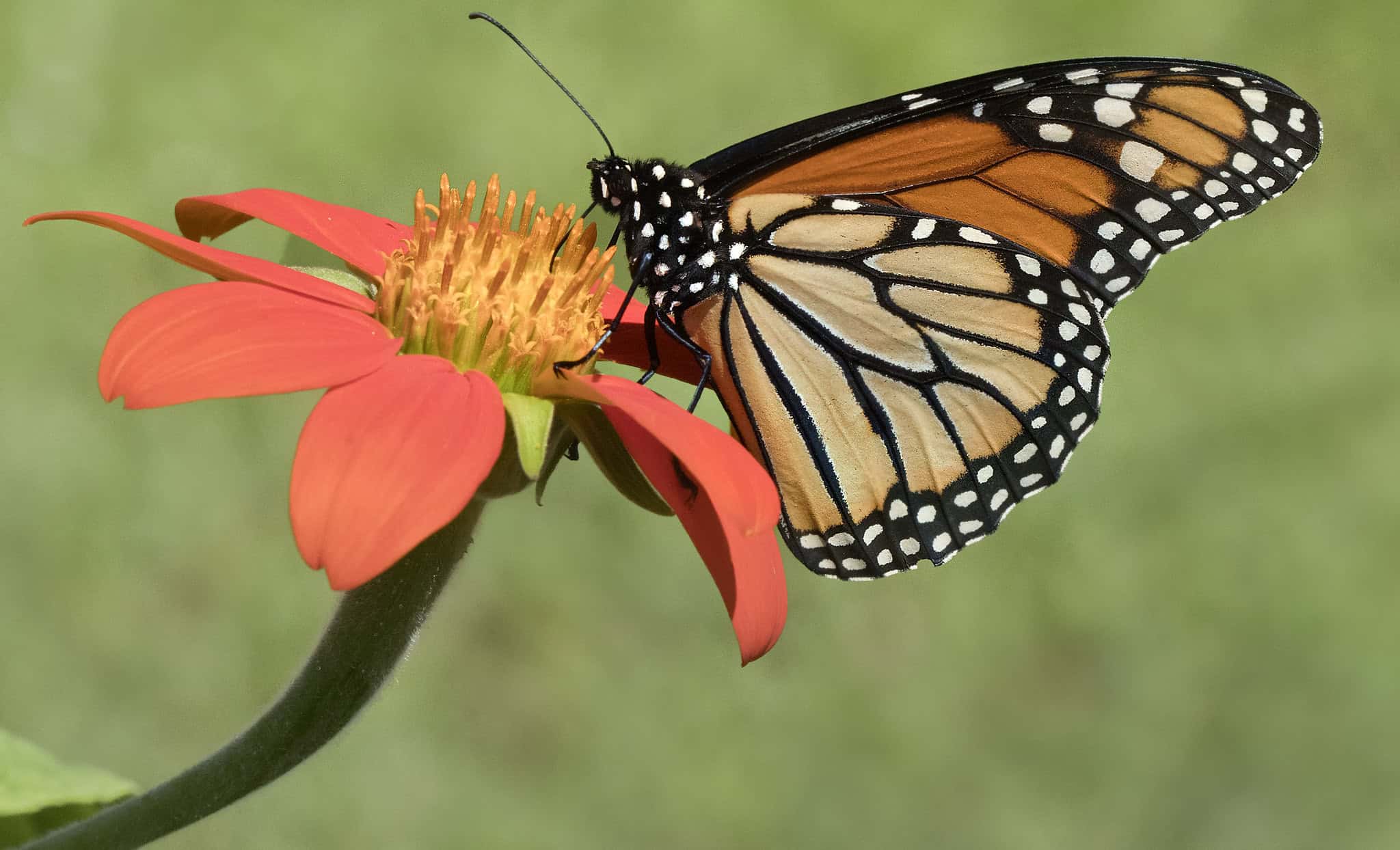
We’re in the midst of one of the coolest annual events in nature: the migration of the monarch butterfly, or Danaus plexippus, if you prefer the scientific name. This “super generation” of monarchs flies south from southern Canada and the northern United States, their breeding home. The majority head toward central Mexico and a welcoming home at the Monarch Butterfly Biosphere Reserve, where they remain during the winter in a process known as overwintering. As the winter ends, the butterflies head 600 miles north to lay eggs on milkweed plants in the U.S. The entire cycle lasts about eight months.
Since counting every individual butterfly would be a futile task, World Wildlife Fund-Mexico has teamed up with local communities to estimate the forest area occupied by the monarchs. During the 1995-96 winter, monarchs occupied close to 45 acres of forest. That number has fallen quite a bit over the prior three decades, dropping all the way down to 2.22 acres during the 2024-25 season.
Some good news, though: Last year almost doubled that population, with wintering monarchs found in 4.42 acres. Despite the uptick, there’s still a long way to go to rehabilitate the population. Here’s more about the autumn monarchs, how you can see this impressive phenomenon in Texas, and what you can do to help them survive.
Why do monarch butterflies migrate?
Many insects in temperate climates can survive the winter; monarchs are not among them. They seek warmer climates, with the temperature and length of day dictating their movement.
No other butterfly migrates like the monarchs do. They’re the only butterflies to make such a long, round-trip migration every year. And because they need very specific habitats during the winter, they fly toward certain southern areas, with the majority passing through Texas.
How do monarch butterflies migrate?
Monarchs west of the Rocky Mountains head toward the California coastlines, while those east of the Rockies aim for forests in the Transvolcanic Mountains of Mexico. This Trans-Mexican Volcanic Belt includes the Monarch Butterfly Biosphere Reserve, which can be a trek of up to 3,000 miles for some monarchs.
These butterflies are also unique because future generations will return to the same areas each year, and sometimes even to the same trees, even though it’s a different generation of butterflies making the journey. They’re looking for four things for their overwintering process:
- Trees: Monarch butterflies head in droves to central Mexico because that’s one of the rare areas with oyamel fir forests, which offer optimal conditions for butterflies. They face southwest and sit nearly 10,000 feet above sea level, and they’re lined with plenty of trees. The monarchs will cluster together on trees, clinging to fir and pine needles. They pack in so tightly that they’ll often cover entire trunks and branches.
- Protection: Snow, hail, and harsh winds can damage butterflies, so they need a strong barrier of other trees and shrubs to keep them safe. If they fall out of the tree and it’s too cold to fly back to higher branches of the trees, they can crawl to lower bushes to resume wintering until the sun comes back out.
- Cool air: Butterflies use up more energy in hot environments, so they need a cooler setting to be able to metabolize energy during the winter. They’ll often opt for places that are close to freezing, but not quite that cold.
- Water: Monarchs, like other butterflies, get a lot of their moisture from flower nectar. However, they still need water for hydration, regulation of body temperature, and essential minerals. On sunnier days, the monarchs will fly to sip water before heading back to their overwintering sites. It’s another great opportunity to spot them.
What makes autumn monarchs different from summer ones?
Autumn monarchs head south during the winter, while summer (and spring) monarchs are flying back north. In the spring, monarchs begin mating and leave their roosts during the second week of March, looking for milkweed plants. That’s the ideal spot to lay eggs, but the monarchs must be careful not to leave too quickly before milkweed has arrived, or else they’ll have nowhere to lay their eggs, and the next generation will dwindle.
Overwintering monarch butterflies also have a much longer lifespan. Including their winter roosting, they live about eight to nine months. Summer monarch adults only last for around three to five weeks. In fact, three or four generations of monarchs are born each summer, increasing the population during the warmer months.
Per the U.S. Fish and Wildlife Service, monarch butterflies travel about 70 to 75 miles per day, though weather conditions sometimes decrease or increase that distance.
Perhaps the most spectacular part of all is that each monarch butterfly is making its journey for the first time. They use their antennae and biological clocks, along with the Sun’s changing position, to know where to go, and occasionally rely on the Earth’s magnetic field to navigate. Other than that, they’re using their instincts to make the journey to their overwintering destination.
When can I see the autumn monarch butterfly migration in Texas?
Since it’s situated directly north of Mexico, Texas is in a sweet spot for watching monarch butterfly migrations. And it happens to be among the best free things to do in the state!
Researchers at Texas A&M University have been studying monarch butterflies and their flight patterns to better help keep migration routes viable and allow the population to rebuild. The butterflies fly in massive clouds shaped like cones and tend to travel in two main flyways.
One corridor stretches from Wichita Falls to around Del Rio or Eagle Pass, both of which serve as entry points into Mexico for the butterflies. This flight typically happens toward the end of September. The second path moves along the Texas Gulf Coast. This period is a bit longer, with monarchs traveling the route between mid-October and early or mid-November.
The best time of day to see monarch butterflies as they’re traveling is on sunny fall days from late morning to mid-afternoon. Monarchs typically get a move on around 10 or 11 a.m. and fly until about 3 p.m. At other times, you might be able to see clusters of monarch butterflies clinging to trees, particularly on chillier, cloudy days.
To make your viewing experience easier, several Texas cities have also developed monarch butterfly sanctuaries or viewing sites. Check out spots like the Monarch Sanctuary Project in Leander, the Balcones Canyonlands National Wildlife Refuge in Marble Falls, and Frisco’s Monarch View Park.
If you’re not near a sanctuary or designated viewing area, you can stay near flowers that offer fall nectar. For example, goldenrod, zinnias, sunflowers, cosmos, and New England asters are all potential pit stops for monarch butterflies to feed at or rest upon. You can even try planting some in your home garden, and you just might find a few new visitors in the yard.
How can I help the monarch butterfly migration?
The autumn monarch butterfly migration really is something special to behold. If you’d like to get involved beyond admiring these winged creatures soaring through the sky, there are a handful of ways to help.
Monarch Watch offers several conservation resources, including how to contribute to its Monarch Waystation Program and how to gather free milkweed to plant for monarchs to lay eggs on their return flights in the spring.
Nurseries and butterfly houses, such as the Texas Discovery Gardens at Fair Park in Dallas, have plants for purchase. Look for host plants that hungry caterpillars can feed on, such as fennel, milkweed, hackberry, and hop ash, as well as nectar and pollinator plants for adult monarchs. The types of plants include lantana, autumn sage, buttonbush, and Mexican sunflower.
There’s nothing quite like the autumn monarch butterfly migration. And if you catch the right time in the right location in Texas, you’ll get to witness something magical (like Anderson Cooper in this video for “60 Minutes”).