No matter what part of the state you’re in, you’ll find the perfect spot to take in autumn colors with our 2026 guide to leaf-peeping in North Carolina.
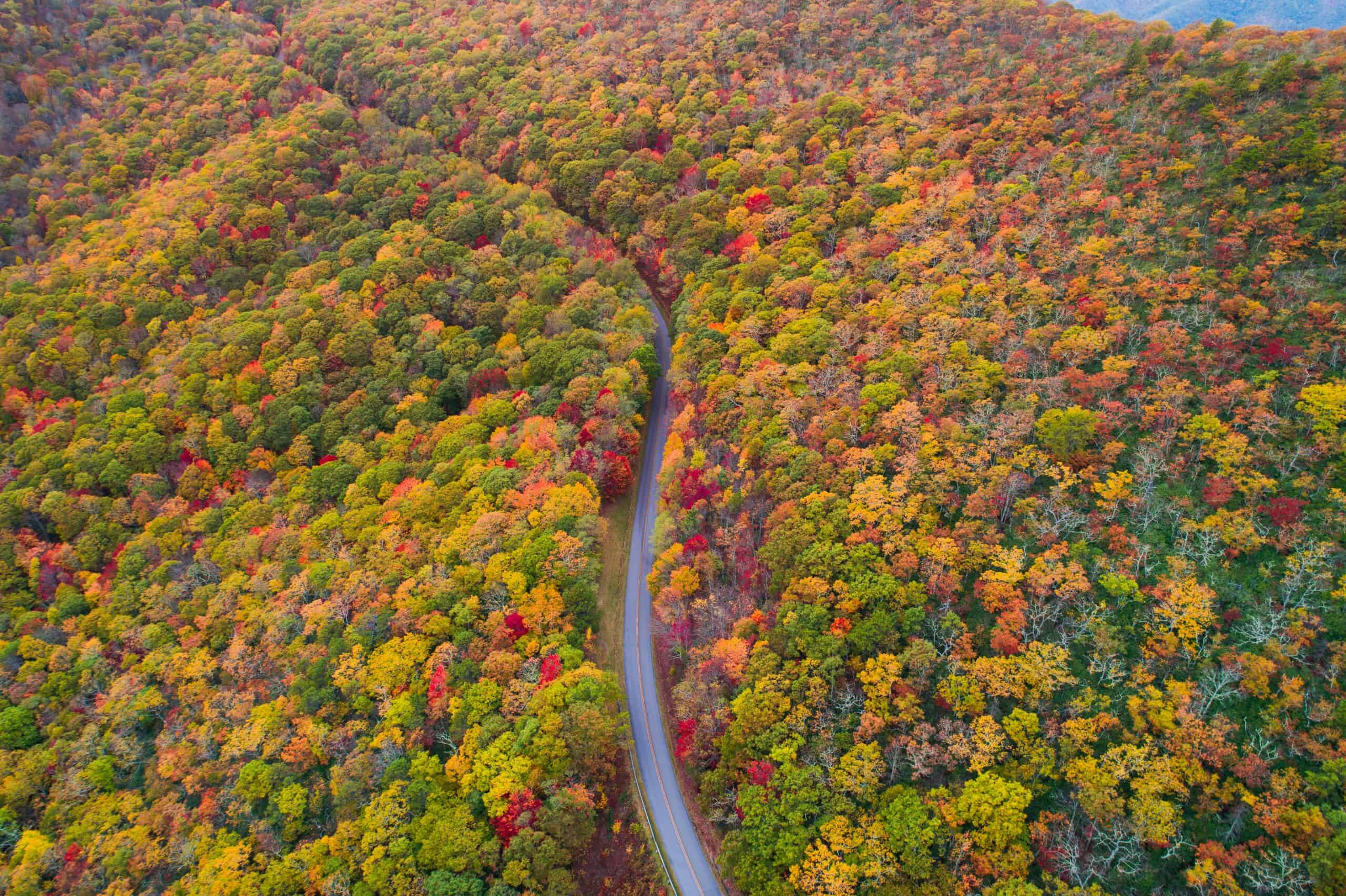
Each fall, nature puts on a brilliant art show in North Carolina as trees’ seemingly ubiquitous green leaves begin changing into bold hues of red, orange, and yellow. This gives rise to the reliably fun and popular pastime of leaf-peeping, especially in the majestic mountains of the western part of the state. It’s so popular, in fact, that the month of October draws millions of annual visitors to the WNC mountains, making it the busiest tourism month of the year.
Want to indulge in this time-honored tradition? While leaves are undeniably the most striking and abundant in the mountains, this pleasing phenomenon occurs throughout the state. Whether you want an invigorating hike or a scenic drive, you’ll find it in our 2026 guide to leaf-peeping in North Carolina.
How are predictions made?
Each year, professional and amateur experts make predictions about how and when deciduous leaves will change colors during the fall, which begins September 22 in the Northern Hemisphere.
They do this, in part, based on the general understanding that leaf changes begin in higher elevations and then gradually move down into the lower elevations—but because other environmental factors like weather and daylight conditions are also at play, predicting exact dates can be a challenge.
Fall brings cooler temperatures and shorter days, both of which affect trees’ leaves. Leaves stay green throughout summer largely because of the verdant-colored chlorophyll they use to absorb energy from sunlight during photosynthesis, the process that helps plants turn sunlight into energy.
Less sunlight means less chlorophyll, which causes the chlorophyll in the leaves to break down, revealing the orange and yellow pigments that are already present.
According to Robert Bardon, a professor in the Department of Forestry and Environmental Resources at North Carolina State University, each year’s timetable for leaf changing is unique, and 2026 is no different on account of issues like drought, extreme rainfall, and warmer-than-average temperatures. Here are the broad meteorological strokes, followed by when peak colors are expected.
Western North Carolina
WNC already has a built-in advantage: It sits in the heart of the Blue Ridge Mountains, surrounded by colorful peaks and ridges. But this year, the region is poised to see even more vibrant autumnal colors than usual, thanks to conditions across the state.
While most regions are experiencing warmer-than-typical temperatures, WNC temps have an equal chance of being higher or lower than usual, Bardon says. Fun fact: Warm temperatures can delay peak color by up to two weeks.
More important than temperature, Bardon says, are drought conditions. The Asheville area is unique because it has largely avoided drought, unlike the surrounding regions. The result is better leaf-peeping conditions than other parts of the mountains, especially if the land continues to stay hydrated.
Piedmont
The Piedmont region will likely see more muted fall colors in 2026 because of the ongoing warm temperatures. These temps could also delay the onset of changing colors, causing the season to be cut short.
Another factor? Drought conditions, which can not only cause leaves to prematurely drop off but also cause duller colors. Ongoing drought conditions throughout the Piedmont region will likely result in more subdued colors, but only time will tell.
Coastal Plain
Much like the Piedmont, the Coastal Plain region has experienced above-average temperatures this year. It’s also seen less rainfall, resulting in drought-like conditions. As such, the region can likely expect a more subdued display of fall colors, but again, that won’t be certain until the time comes.
When to expect peak color
Peak color is surprisingly brief, only lasting about a week. That small window of brilliant fall colors makes planning paramount. Here are the times experts predict colors will peak in North Carolina.
As with the rest of the country, fall color in NC begins at the highest elevations—especially above 5,000 feet—in late September. This is when folks can expect to begin seeing colors popping up in the mountains in places like Waterrock Knob, Richland Balsam, and Graveyard Fields.
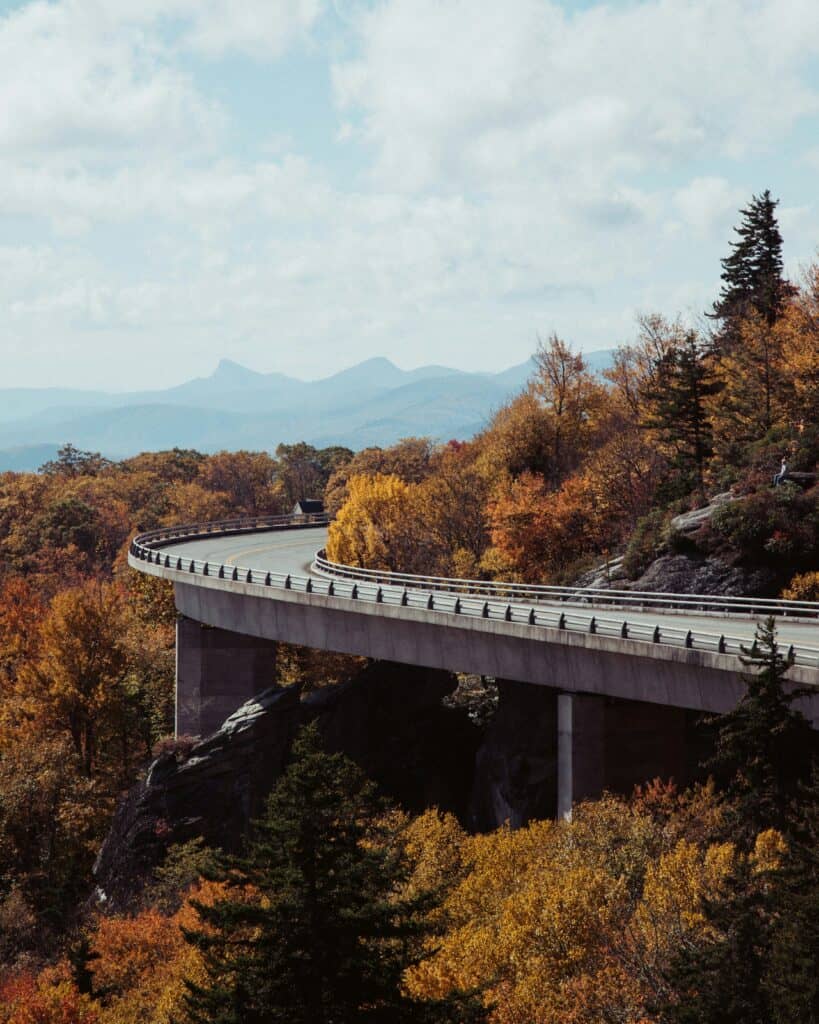
As the season progresses, early to mid-October will see autumnal leaves become more widespread and apparent as they progress down to elevations above 4,000 feet, which includes spots along the Blue Ridge Parkway. Iconic leaf-peeping locations at this elevation include Chestoa View Parking Area & Viewpoint, Linn Cove Viaduct, and Max Patch.
Mountain elevations between 4,000 and 5,000 feet, like Green Mountain Overlook, Pounding Mill Overlook, and Flat Laurel Gap, will see peak color occur in and around mid-October.
As October ends and November begins, blazing hues will begin appearing in the foothills and the Piedmont, in places like Wilkesboro, Pilot Mountain, and Old Fort.
Moving into early and mid-November, spots in the Coastal Plain region like Fort Fisher State Recreation Area, Carolina Beach State Park, and Croatan National Forest will finally get a glimpse of the changing leaves.
Best places to view fall colors
Western North Carolina
Blue Ridge Parkway
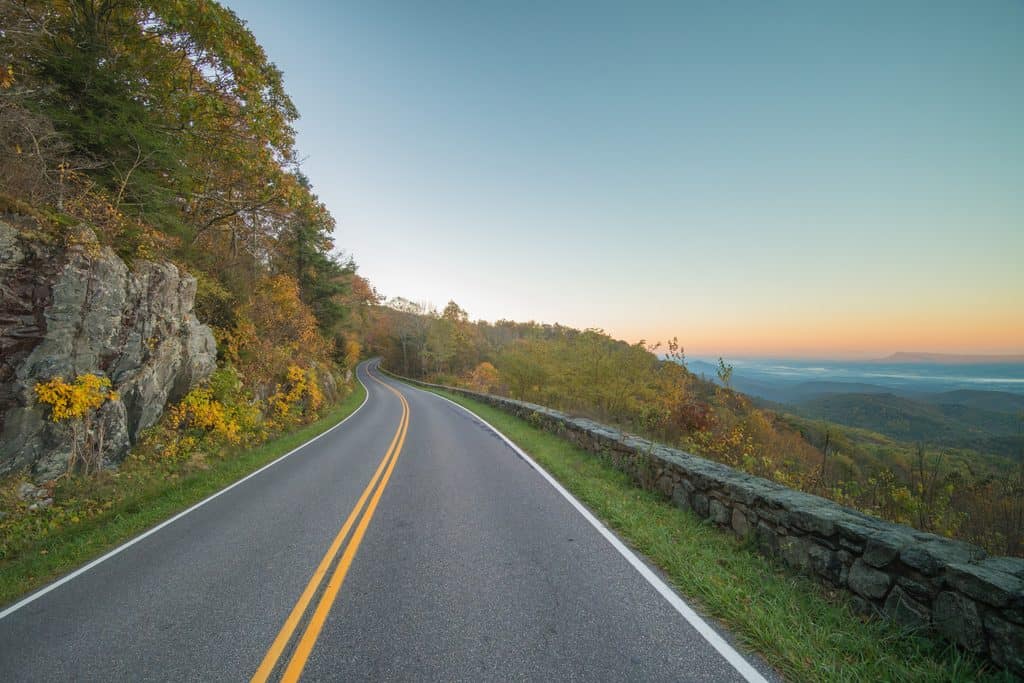
Maybe the easiest, breeziest place to head for leaf peeping? The iconic Blue Ridge Parkway. Aptly known as “America’s Favorite Drive,” it’s physically impossible not to catch sight of effortless and endless vistas along its 469 miles of road.
Elk Knob State Park
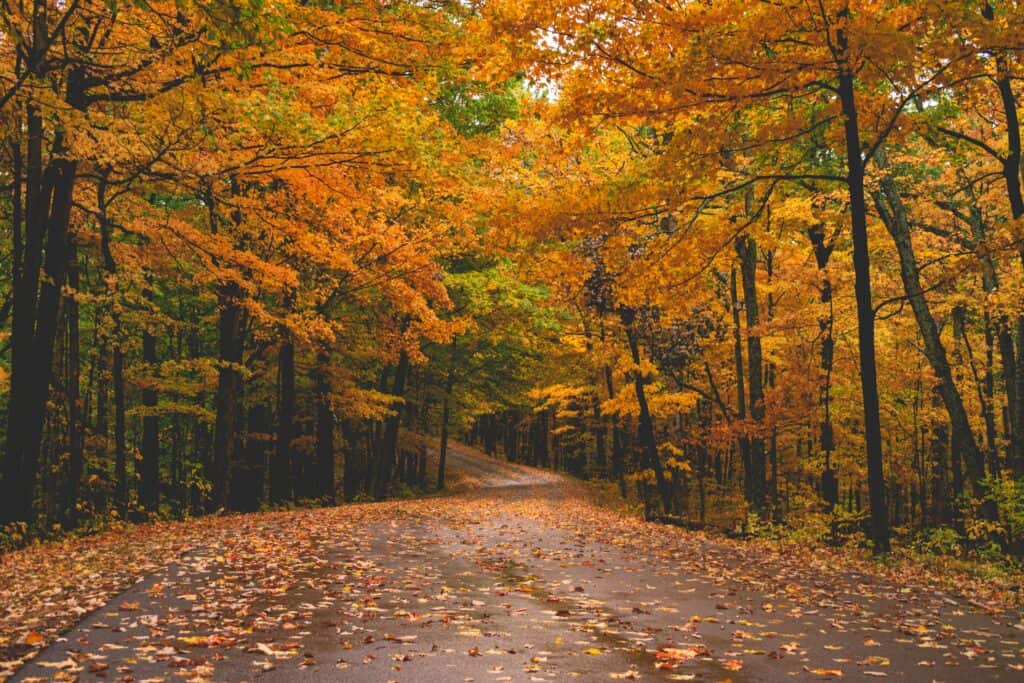
Located near the Tennessee border in Watauga County, Elk Knob State Park is one of WNC’s tallest points and offers exceptional leaf viewing. And because it’s full of a variety of deciduous trees—including sugar maples, yellow birch, and northern red oak—its fall leaves are a majestic melange of autumnal hues and silhouettes.
Hawksbill Mountain Trail
A moderately challenging, short hike with panoramic, 360-degree views at the summit (including Linville Gorge and Table Rock), the Hawksbill Mountain Trail offers a big payoff for very little work.
Joyce Kilmer Memorial Forest
Named in honor of the late poet, the Joyce Kilmer Memorial Forest is a 3,800-acre old-growth forest featuring towering, ancient trees (including some that are 400 years old). As a result, it offers a unique and robust blend of fall colors.
Piedmont
Uwharrie National Forest
Located roughly an hour east of Charlotte, the rolling hills at Uwharrie National Forest are part of an ancient mountain created by prehistoric volcanoes. Its 100+ miles of trails (suitable for hikers, horseback riders, and all-terrain vehicles) make it an outstanding spot to explore and take in fabulous fall colors.
Moore’s Knob Trail
The tallest mountain in the Sauratown Mountains, Moore’s Knob Trail, located within Hanging Rock State Park, is about four and a half miles long and moderately strenuous. While every step is beautiful, the crown jewel is the historic observation tower, which offers 360-degree views of the surrounding area. Pro tip: The roughly 80-mile Sauratown Mountains Scenic Byway is a lovely and leisurely way to take in the scenery.
Cane Creek Mountains Natural Area
Open since 2020, the nearly 1000-acre Cane Creek Mountains Natural Area is a relative newcomer to the scene. Featuring the highest peak east of Greensboro, it’s home to a plethora of creeks and streams, as well as a diverse array of flora and fauna, including at least eight different species of ferns. Most exciting for leaf peepers? The panoramic views from its newly opened Monadnock Lookout Tower.
Coastal Plain
Croatan National Forest
It’s fitting that autumn’s magical leaf transformation would end in such a lovely place. The vast, otherworldly Croatan National Forest boasts oaks, maples, and sweetgums alongside evergreen shrubs, iconic pines, saltwater estuaries, and rivers for a wholly unique environment. Bordered on three sides by water, this 160,000-acre coastal forest is a sublime spot to see elegantly subdued fall colors.