Fall colors come and go quickly, so make the most of the scenery by leaf-peeping in Wisconsin this autumn.
Sure, summer in Wisconsin is great, but there is nothing like fall in the Badger State. The season is filled with college football and Green Bay Packers games, visits to Wisconsin’s many, many apple orchards, and, of course, admiring just how scenic the state can be by leaf-peeping all throughout Wisconsin.
Leaf-peepers seek out the most scenic fall colors every year, and with so much beautiful foliage, Wisconsin is a premier place for the activity. One of the most important considerations for serious leaf-peepers is timing, as leaf-peeping peaks at different times across the state from late September through early November.
Peak leaf color tends to travel from north to south, especially in Wisconsin. For anyone planning a road trip, it’s best to visit northern areas, like the Apostle Islands and Bayfield, or Menomonie in the final week of September, and observe as peak colors continue to move south throughout October.
From the most scenic drives and hikes that you can take, to the best timing for a weekend getaway, to the colors that they can expect to see, here is your guide to leaf-peeping in Wisconsin this year.
What is leaf-peeping?
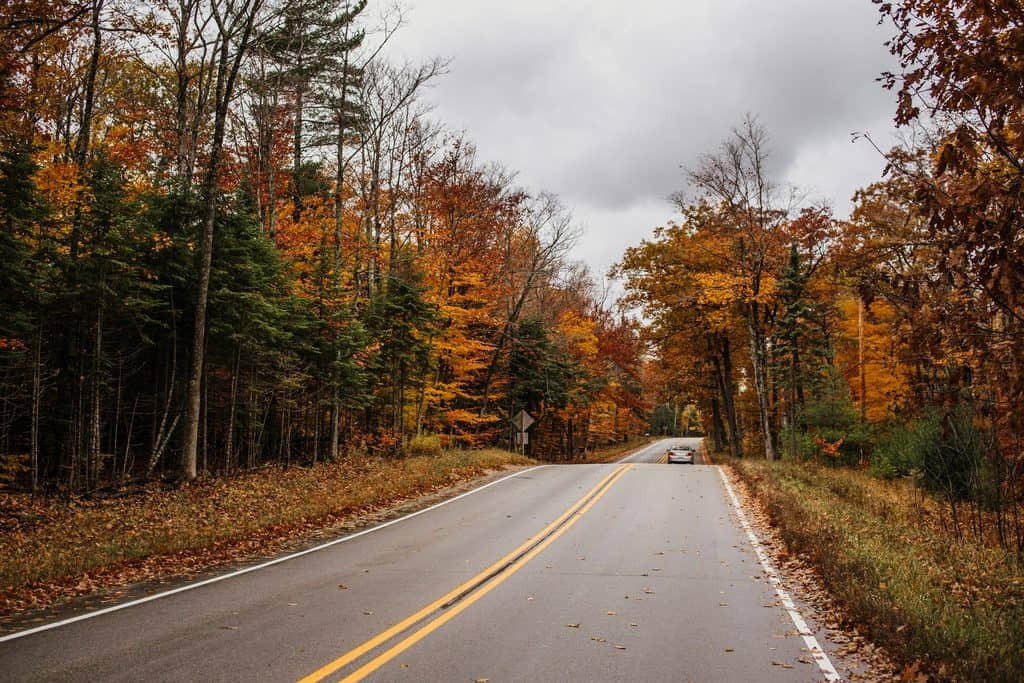
During the fall, it’s hard to not notice the trees changing colors throughout the season, especially in a place like Wisconsin. But there is a difference between just noticing the scenic change and specifically seeking it out. Leaf-peeping is the act of deliberately seeking out the changing colors of autumnal foliage, and oftentimes traveling to see the peak colors.
In the US, leaf-peeping is most popular in places like New England, New York, and luckily for Wisconsinites, the Upper Midwest, where the leaf color changes most dramatically.
How and why do the leaves change color?
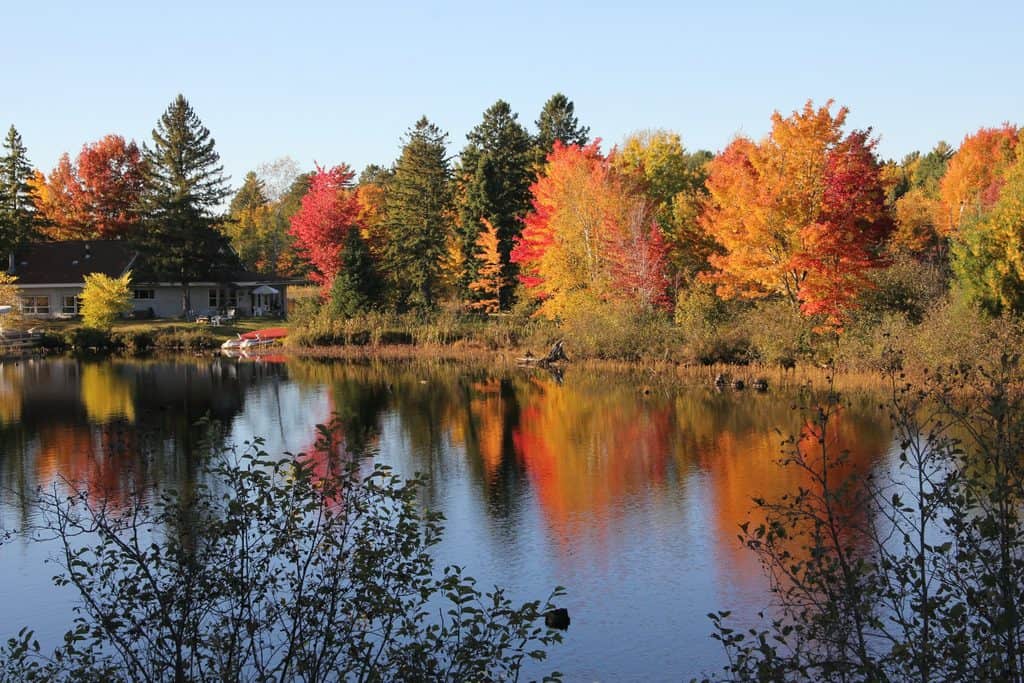
The colorful leaves that pop up on trees throughout Wisconsin during the fall are beautiful to look at—but they have a far more important role to play than just providing a picturesque view. Throughout the spring and summer, deciduous trees, or trees that grow large leaves that fall in the autumn and winter, have green leaves, but as the weather gets colder, their leaves change to vibrant shades of red, orange, and yellow.
The autumnal hues that leaves take on are due to the loss of chlorophyll, a green pigment in plants that absorbs sunlight. As temperatures drop in the fall, chlorophyll breaks down, leaving behind yellow and orange pigments. A chemical change in the trees, when sugars that are trapped in the leaves create new pigments, leads to red leaves.
After going through the color-changing process and providing leaf-peeping aficionados with several weeks of joy, the leaves fall, helping the trees survive the winter by conserving energy and water they would otherwise use to keep the leaves alive.
What kind of trees grow in Wisconsin?
One of the cool things about leaf-peeping in Wisconsin is that the state is home to so many different types of deciduous trees (as well as coniferous trees, or conifers, which have needle-like leaves that don’t change color), making each leaf-peeping adventure feel brand new. Wisconsin’s state tree is the sugar maple, which was selected by schoolchildren in a statewide vote in the late 19th century. The tree, which has leaves that transform into shades of yellow, orange, and red throughout the fall, can be found all over the state, along with other picturesque trees, like the northern red oak, white oak, and the hackberry.
When is leaf-peeping season in Wisconsin?
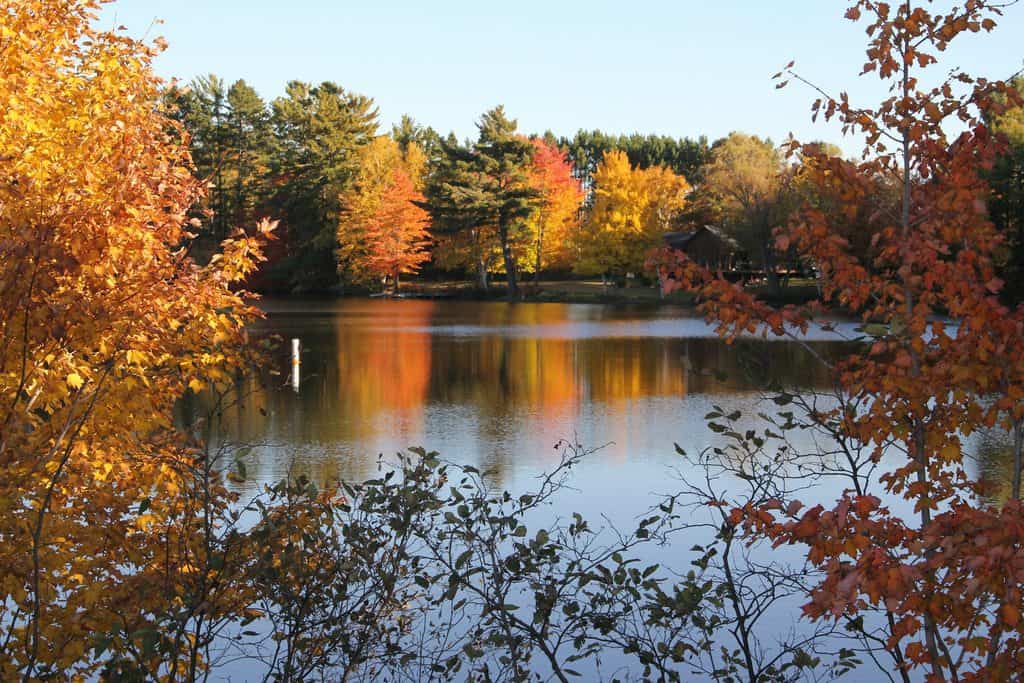
The exact dates and times that leaves are at their peak color change every year, but leaf-peeping season is always during the first half of fall, from the last weeks of September in northern Wisconsin to the first week or two of November in more southern parts of the state.
What are the best dates to see the foliage?
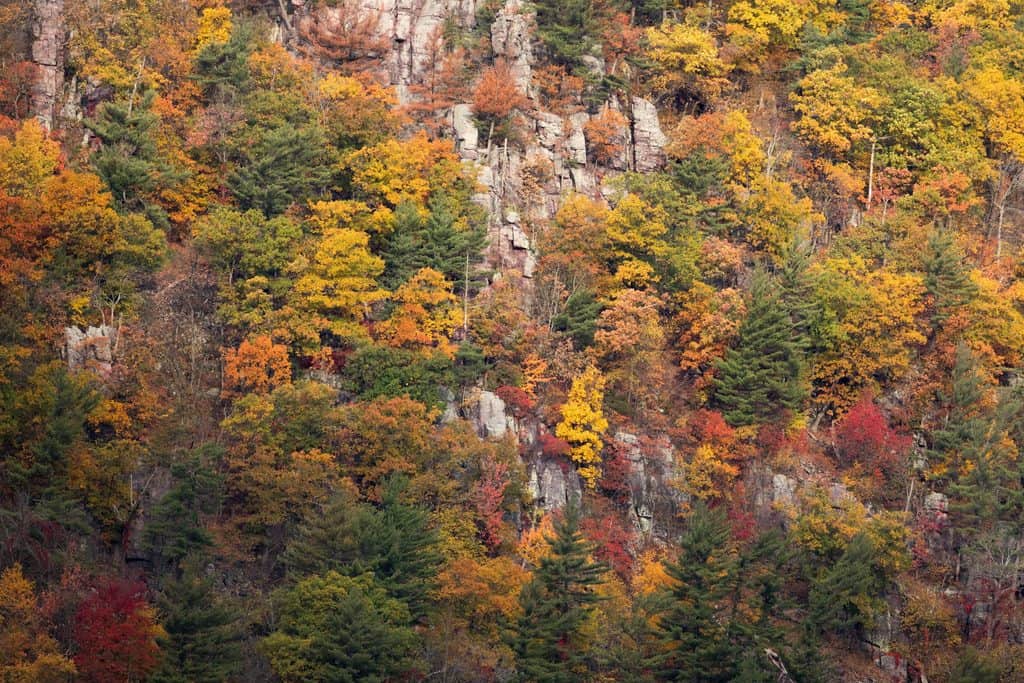
The leaves in Wisconsin stay pretty beautiful all throughout autumn, but there are peak times to see the most vibrant fall foliage, and that all depends on where you are. For the most part, most areas in Wisconsin reach peak foliage in October, but each county might have a different week in the month when its leaves are at their most scenic.
According to the 2026 Fall Color Map, Door County, a popular site for leaf-peeping, will have its peak colors during the third week of October, while places in northern Wisconsin, like Rhinelander, will have their colorful leaves emerge earlier in the month. Some places, like Madison, don’t see their peak colors until the first week of November.
To get up-to-date information on the peak times for leaf-peeping, check out the 2026 Fall Color Map online.
What are the best drives for leaf-peeping?
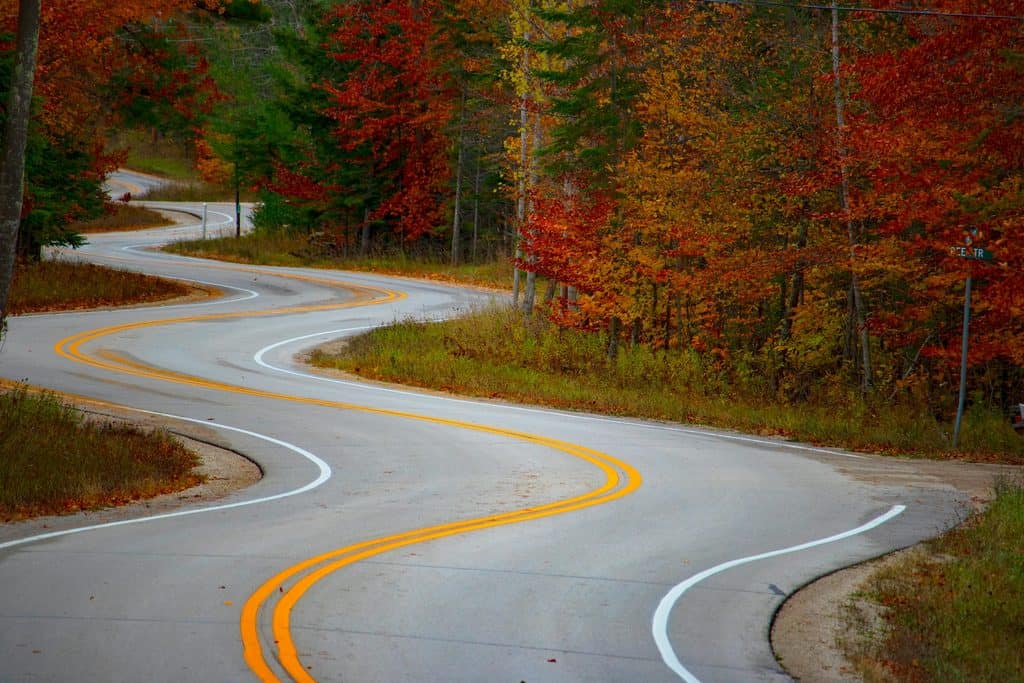
One of the best ways to get a great view of Wisconsin’s leaves changing color is by taking a drive along some of the state’s most scenic roads. While just about any drive in Wisconsin will showcase some beautiful trees during September and October, there are some drives in the state that are highly regarded for leaf-peeping for good reason.
Door County
Door County is probably the first place that people think of when it comes to leaf-peeping in Wisconsin, and that’s for a good reason. While most drives throughout the county will offer great views of the leaves changing, one of its premier routes for leaf-peepers is the Door County Coastal Byway, a 66-mile-long loop that shows off some of the picturesque county’s best foliage.
Enjoy leaf-peeping along the route, and stop off at the views from the Niagara Escarpment bluffs. Or, enjoy taking pictures of the foliage surrounding Highway 42 near the Washington Island ferry dock—a famous stretch of curved road that makes for impressively scenic photos.
Hayward Area Color Tour
The area around Hayward, a city in Sawyer County, is mostly known for its many lakes and fishing opportunities—the city is the home of the Fresh Water Fishing Hall of Fame, after all. But the area is also trying to become known as an ideal spot for leaf-peeping, as the Hayward Lakes Visitors and Convention Bureau offers maps for several self-guided Color Tours that leaf-peepers can take throughout Sawyer County. The Hayward Area 73-mile Loop tour starts in Hayward and passes through the Chequamegon-Nicolet National Forest for optimal foliage viewing.
Great River Road
The Great River Road, which runs along the Mississippi River and Wisconsin’s western border, is already one of the state’s most scenic drives. But during leaf-peeping season, the 234-mile-long road is an autumnal picturesque paradise. The road, which runs from Prescott to Kieler, has several stops along the way that offer great views of the foliage, including Grandad Bluff in La Crosse and Buena Vista Park in Alma, which offers unparalleled views of the Mississippi River surrounded by autumnal colors.
Wisconsin Lake Superior Scenic Byway
The Wisconsin Lake Superior Scenic Byway isn’t called a scenic byway for no reason. The route, which stretches for approximately 70 miles along Wisconsin’s northern coastline, is well-known for its stunning views of Lake Superior. However, it also passes through numerous miles of forests, which are ideal for anyone who wants to go leaf-peeping.
What are the best hikes for leaf-peeping?
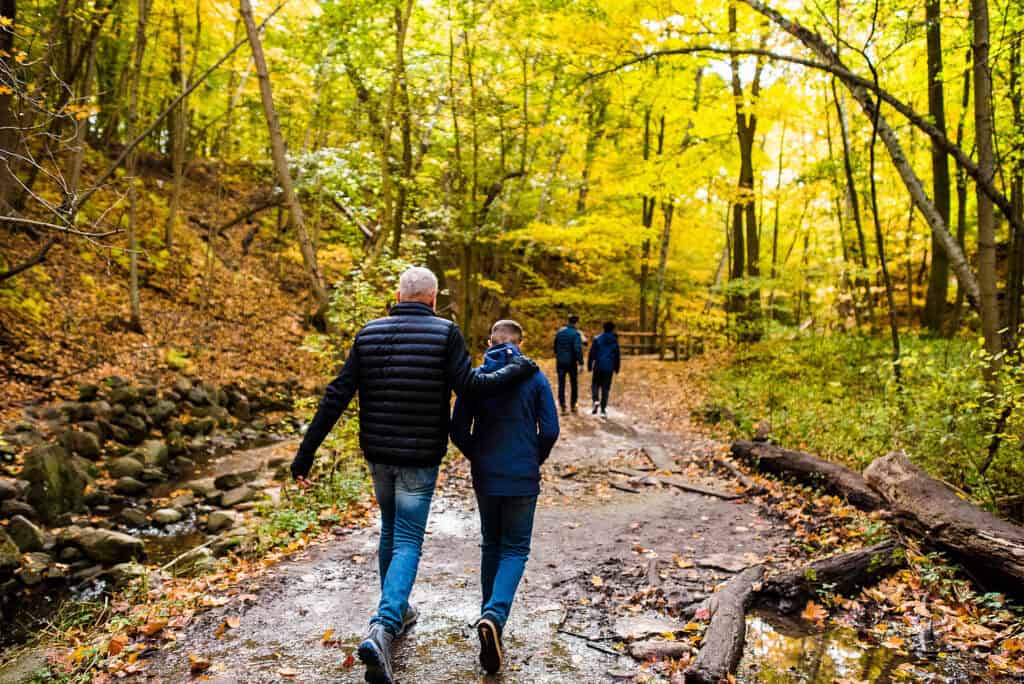
For leaf-peepers who want a close-up view of the changing colors and a nice day spent outside before the cold of winter hits, taking a hike is an ideal way to get some of the best views of the fall foliage. Wisconsin has 50 state parks, plus many county and city parks, with trails offering unbeatable views of the colorful leaves.
Rib Mountain State Park
Location: 149801 State Park Road, Wausau
It’s great to get a good look at the autumnal colors while walking through Rib Mountain State Park, but the reason that this park rises above many others is because of its 60-foot-tall observation tower, which provides an impressive view of the park’s foliage from the top. Rib Mountain State Park also has 13 miles of hiking trails, including the Red Trail, which travels through mixed northern forest, as well as several other diverse forest areas.
Seven Bridges Trail
Location: South Lake Drive and Park Ave., South Milwaukee
Even though it’s surrounded by South Milwaukee (and its even larger neighbor, Milwaukee), Grant Park is a serene and peaceful bit of green space near Wisconsin’s largest urban area. It’s also one of the best spots in southern Wisconsin to go leaf-peeping. The Seven Bridges Trail is arguably the most famous trail throughout the nearly 400-acre park. Despite being named the Seven Bridges Trail, the approximately two-mile-long trail passes through a tree-filled park and over 10 different bridges, ultimately leading out to viewpoints of Lake Michigan.
Gibraltar Rock State Natural Area
Location: Gibraltar Rock Road, Lodi
Sure, the Gibraltar Rock in Wisconsin may not be as massive as the one in Europe, and it may not have the monkeys that the other one has. But what Gibraltar Rock State Natural Area lacks in monkeys, it makes up for in scenic autumnal views. The Ice Age Trail leads to the top of Gibraltar Rock, a 200-foot butte, and the summit offers tremendous views of Lake Wisconsin, the Wisconsin River Valley, and all the fall foliage surrounding the area.
Big Bay State Park
Location: 2402 Hagen Road, La Pointe
Let’s be honest, Madeline Island, one of the Apostle Islands located in Lake Superior, is beautiful in any season. From the nearby sea caves during winter to the fun of island life in summer, fall definitely provides another reason to fall in love with the island, especially for leaf-peeping aficionados who spend a day hiking at Big Bay State Park. The park’s Bay View Trail runs along the Lake Superior shoreline for 1.3 miles and offers fantastic views of the changing leaf colors.
Are there any other ways to see colorful foliage in Wisconsin?
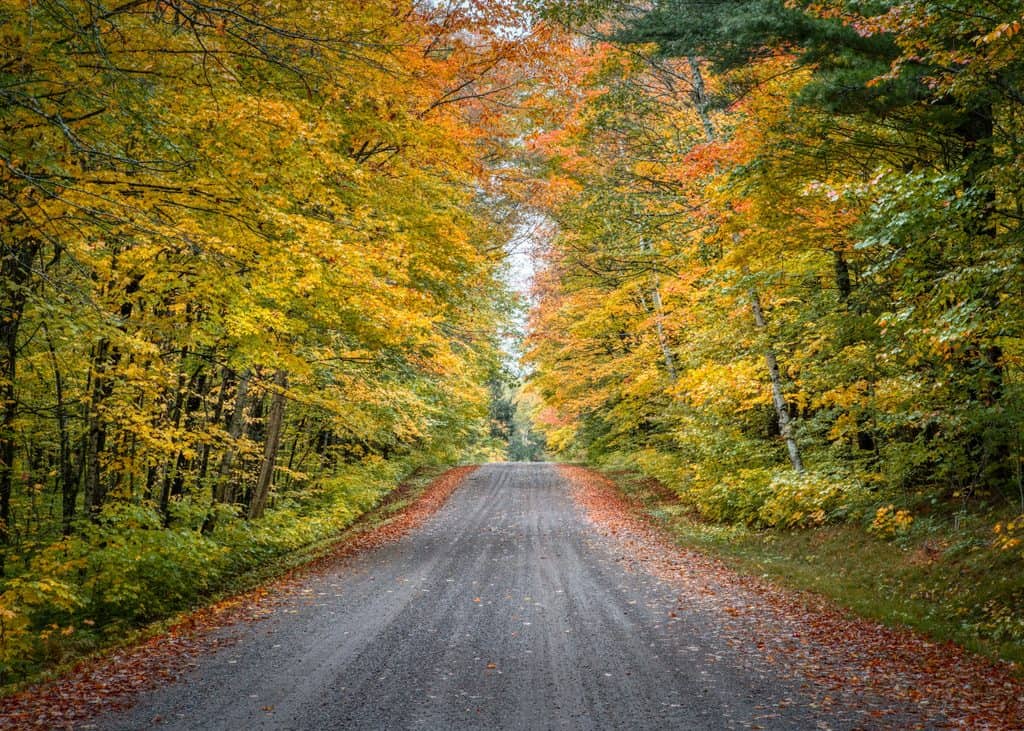
Sure, you can drive along a scenic route, or go for a hike in any of the state’s numerous state, county, or city parks to admire Wisconsin’s fall foliage—but those aren’t the only ways to be a leaf-peeper in the Badger State. Wisconsin also has several scenic trains that offer beautiful autumnal views of the changing leaves.
With scenic views of the St. Croix River Valley, the Minnesota Transportation Museum offers the Fall Colors Train, a round-trip train tour that leaves from Osceola, Wisc., and offers panoramic views of the riverside foliage. The tour, which takes place on a restored vintage train, costs $42.80 for adults, $39.59 for seniors, active military, and veterans, $26.75 for children between the ages of 6 and 15, and $17.12 for toddlers.
Some visitors to the Wisconsin Dells haven’t seen much of the city beyond its water parks and theme parks, but the Riverside & Great Northern Railway offers a chance to see the natural beauty that the Wisconsin Dells has to offer, especially in autumn, with a scenic train ride. The train company, which first started operating in the area in the 1950s, has train rides on weekends, except on days when there is bad weather. The scenic round-trip train ride runs through the woodlands that surround the Wisconsin River and costs $14 for adults, $13 for seniors, and $12 for children ages 3 to 12.