A state in the heart of the Midwest, Nebraska is overflowing with natural beauty and wonder, such as ancient cave petroglyphs and perfectly preserved fossil parks.
Nebraska’s official tourism slogan promotes the state as “all heart,” and the term really makes sense for the Great Plains state, as it is also firmly in the heart of the Midwest. The expansive state encompasses great stretches of prairie plains to the west (you can almost feel the history of indigenous people and settlers who crossed the land) and more rolling hills to the east, so you get a little bit of everything, from experiences to terrain to even climate.
As a geriatric millennial, I am deeply impressed by Nebraska’s claim to fame as the origin of Kool-Aid, but that’s not all that’s impressive about the state. It’s also home to some of the coolest natural wonders, such as Chimney Rock, a landmark for ancient humans and Old West settlers, sandstone bluffs that dot the landscape, and even ancient caves full of Native American petroglyphs. Here’s what to know about Nebraska’s natural wonders and how to visit them.
1. Toadstool Geologic Park
Location: Crawford
Admission: Open year-round, $3/vehicle entrance fee for day use
With a name like Toadstool, you know it’s going to be good. Toadstool Geologic Park in Crawford, Nebraska, is a rich geological wonder known not only for its unique toadstool-appearing rock formations but also for its abundance of fossils. The park developed from the ancient land covered with erupting volcanoes, vast forests, roaring rivers, and a prehistoric sea 75 million years ago. The United States Department of Agriculture (USDA) explains that 35 million years ago, ancient Nebraska looked more like the climate and terrain of modern-day Africa.
Eventually, environmental events like volcanic ash and shifting glaciers led to the area’s many layers of fossils that can still be seen today. The park has a kiosk that walks visitors through information about the fossils and formations, but while viewing and learning are both encouraged, taking any fossils from the park is strictly prohibited.
Instead, you can get your fill by hiking, visiting the sod house that is a nod to what Nebraska homesteaders would have dwelled in back in the day, or enjoy lunch at the many picnic tables where you can sit and take in the view of the rocky cascades. Limited camp sites are also available, but there is no water at the sites.
2. The Sandhills
Location: Grant County
Admission: Varies
You might associate sand dunes with beach towns, but the landlocked state of Nebraska is actually home to the Western Hemisphere’s largest area of sand dunes. Who knew, am I right? The Sandhills of Nebraska in Grant County comprise 20,000 acres of natural wonder that welcomes visitors for everything from hiking to fishing to camping to stargazing.
The Sandhills aren’t a single place you can visit; instead, they comprise 10 different cities in Nebraska, each with different natural attractions. Some of the most popular spots to visit in the Sandhills area include the Niobrara National Scenic River area, where you can see over 200 waterfalls and countless fossils embedded in sandstone cliffs, or Valentine, where you can walk, hike, bike (or fly over!) the famous Cowboy Bridge, on an abandoned railway trail from Chicago that spans almost 200 miles.
3. Smith Falls
Location: 90159 Smith Falls Rd., Valentine
Admission: Free with a state park pass
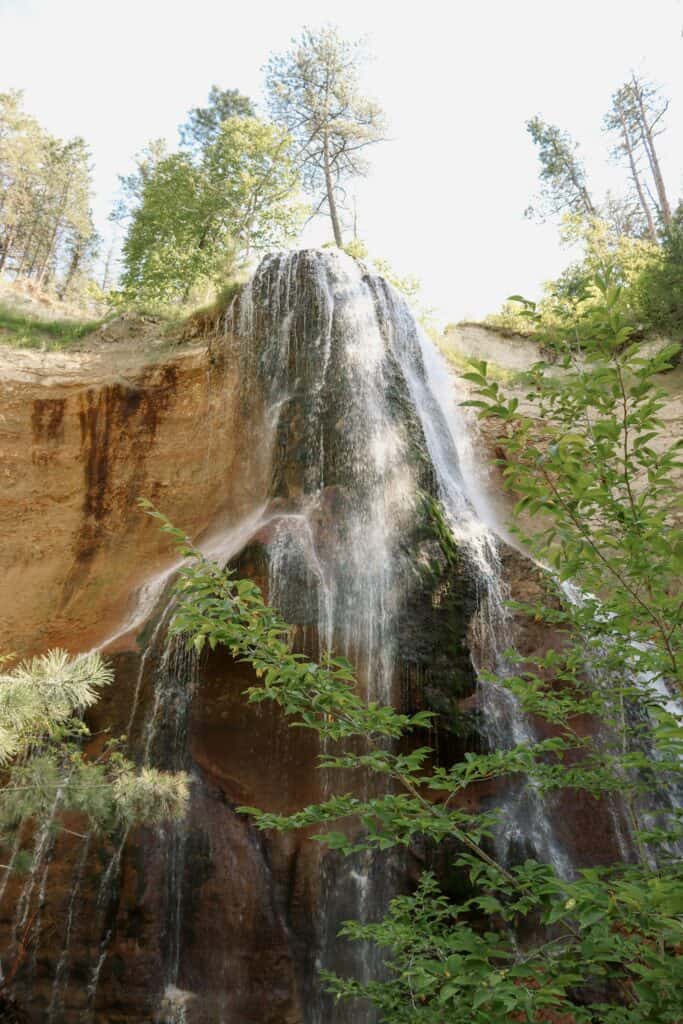
Speaking of waterfalls, let’s talk about Smith Falls, Nebraska’s tallest waterfall, standing over 60 feet tall. The waterfall is located in Scenic Smith Falls State Park, where visitors can camp, hike, kayak, canoe, or tube. There is an accessible trail and boardwalk to the falls, and, due to erosion risk, visitors are asked to stay on the designated trails.
You can also access the area around Smith Falls by kayak or canoe, enjoying the 76 miles of river you can float or paddle down. (Rentals are available if you don’t have your own.) When you get hungry, there are several picnic-friendly tables and areas near the falls for kayakers to stop and enjoy their lunch.
4. Chimney Rock
Location: Chimney Rock Road, Bayard
Admission: Free
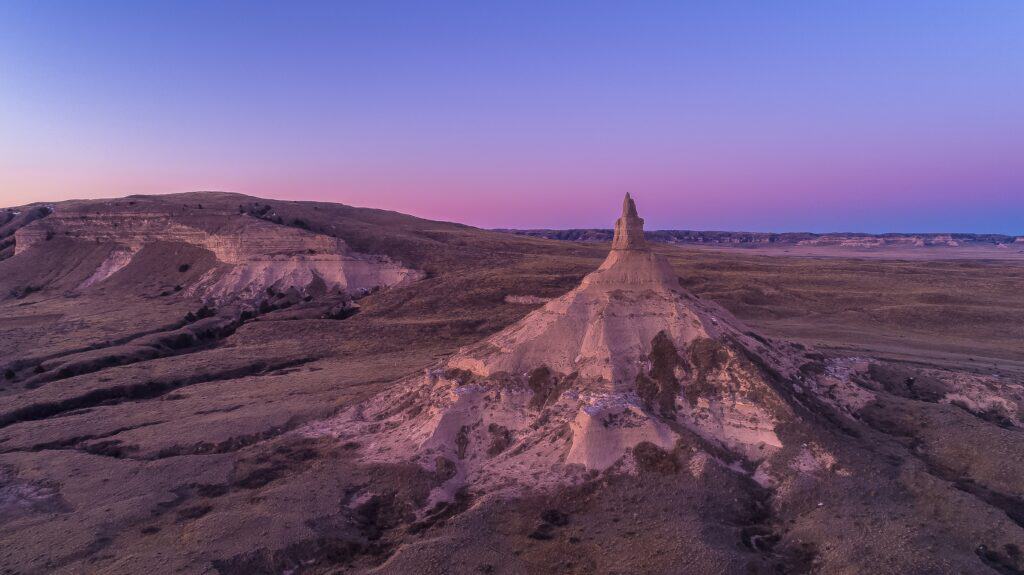
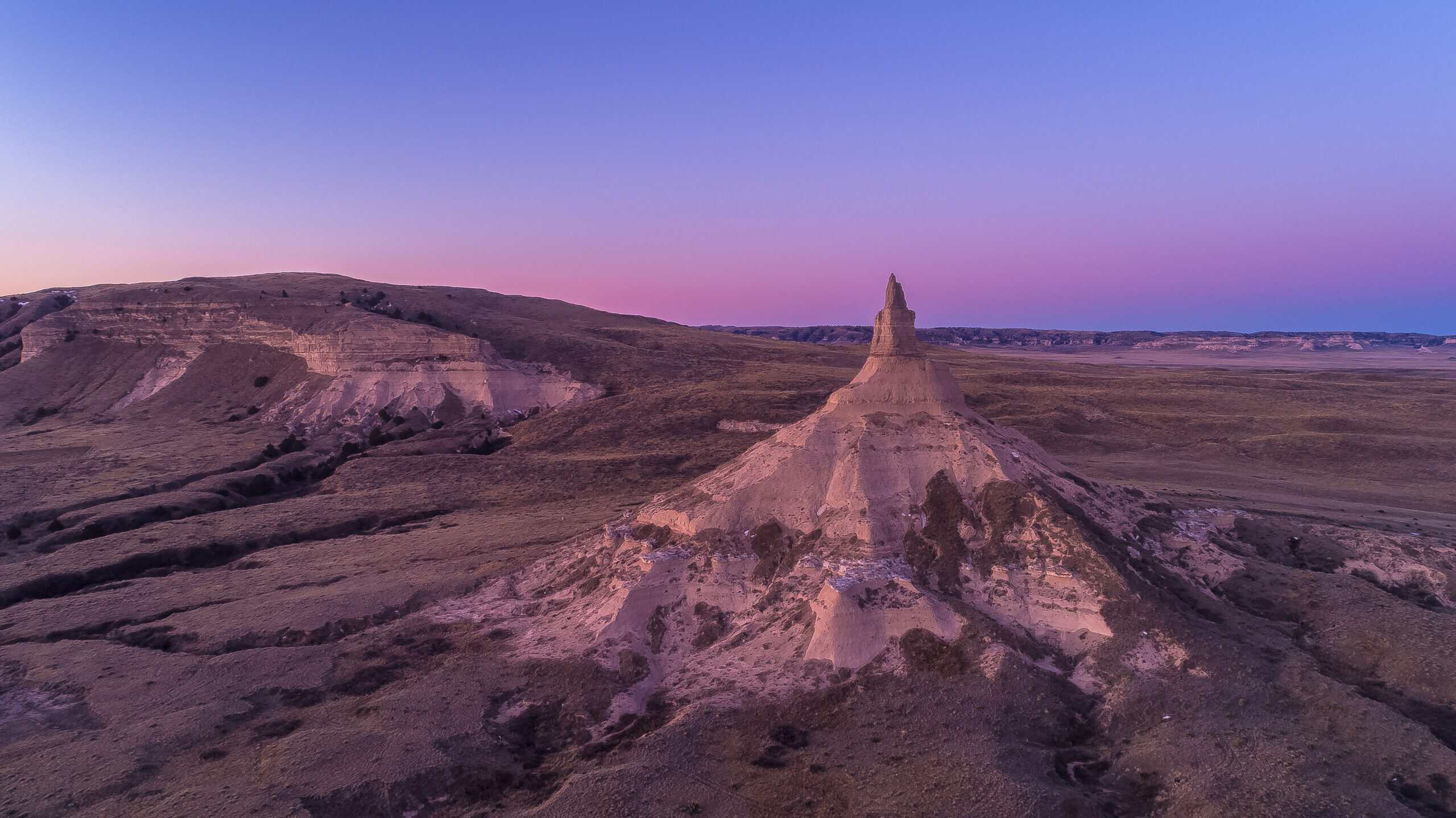
If you’ve heard of The Oregon Trail, you need to know about Chimney Rock, because it’s one of the most frequently mentioned pieces of natural landscape mentioned by travelers on the trail. Aspiring settlers excitedly climbed out of their covered wagons and marked the rock down in their travel journals as the point where the mountain ranges became a reality. The 38-million-year-old feature is made of volcanic ash, clay, and sandstone that converged to form the natural coiled base and spire. It was also designated as a National Historic Site in 1956.
There is no official admission fee or entrance point to see Chimney Rock, as it can be viewed from many angles and nearby locations, but there is a newer Chimney Rock State Historic Visitor Center with paid admission. The visitor center offers plenty of hands-on learning and fun for the entire family.
5. Scotts Bluff National Monument
Location: 190276 Old Oregon Trail, Gering
Admission: Free
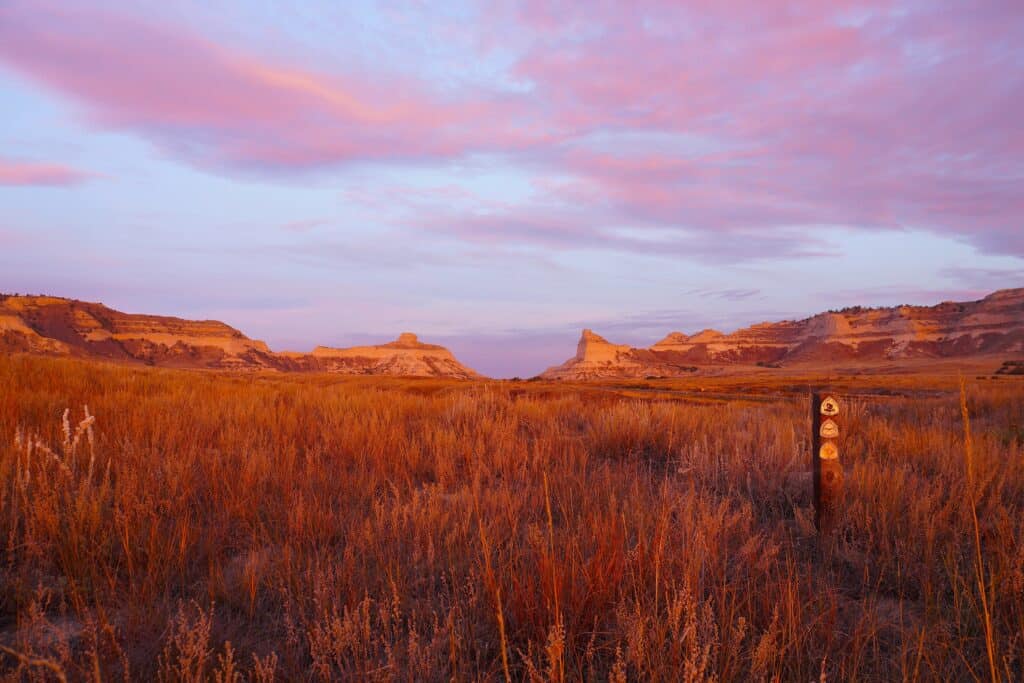
Another national landmark with a long and significant history for settlers and indigenous peoples, Scotts Bluff National Monument is 3,000 acres of natural wonder. The actual “monument” is over 800 feet tall and consists of sandstone bluffs, but the surrounding area is full of history just waiting to be explored.
You can hike the four miles of trails, stop by the visitor center for maps and educational exhibits, or plan an outdoor excursion like a tour or picnic. There’s also a fun passport and junior park explorer program for the kids in your group.
6. Ashfall Fossil Beds
Location: 86930 517th Ave., Royal
Admission: Game and Parks vehicle park entry permit required
Known as the Pompeii of prehistoric animals, Ashfall Fossil Beds is a 360-acre park formed when an ancient volcano erupted 12 million years ago, encasing the area around a watering hole. Today, the area has been purchased and is utilized by the Game and Parks Commission and the University of Nebraska State Museum as an active fossil site and educational center.
Visitors can observe as paleontologists dig up and prep fossils in real time, check out the exhibits and educational events at the visitor center, and explore the rhino barn. One of the most impressive features in the park is a perfectly preserved rhino fossil carefully exposed for visitors to see. You can also walk the one-mile interpretive hiking trail, take a tour, or pack a picnic lunch to enjoy on–site.
7. Indian Cave State Park
Location: 65296 720 Rd., Shubert
Admission: Park entry permit
Indian Cave, a large prehistoric sandstone cave, is the main attraction of the Indian Cave State Park, which spans over 3,000 acres alongside the Missouri River. The cave features prehistoric Native American petroglyphs that historians have not been able to date, adding to their mystery and allure.
Visitors can see the petroglyphs from an accessible boardwalk and viewing deck, which also includes plenty of seating for weary hikers. In addition to seeing the petroglyphs, the state park has 22 hiking and biking trails and 16 miles of equestrian trails. Other park draws include a restored schoolhouse with “living history” presenters, camping, public river access, seasonal events, and disc golf and archery.
8. Panorama Point
Location: Kimball
Admission: $3 donation/person
Although it’s privately owned, Pamora Point—the highest point in Nebraska, as measured by a WWI altimeter—is open to visitors. Travelers can follow a trail to the “peak” at 5,424 feet above sea level to take in the scenic views and landscapes. On clear days, you can even see straight to the Rocky Mountains.
Because the property is privately owned and described as “rustic,” visitors are asked to drive very carefully and not disturb or approach grazing buffalo. While you’re in the area, you can also visit the nearby Plains Historical Society Museum, The Flumes, a preserved 20th-century aqueduct, or the nearby Oliver Reservoir.
9. Fort Robinson State Park
Location: Soldier Creek Road and US Highway 20, Crawford
Admission: Park entry permit
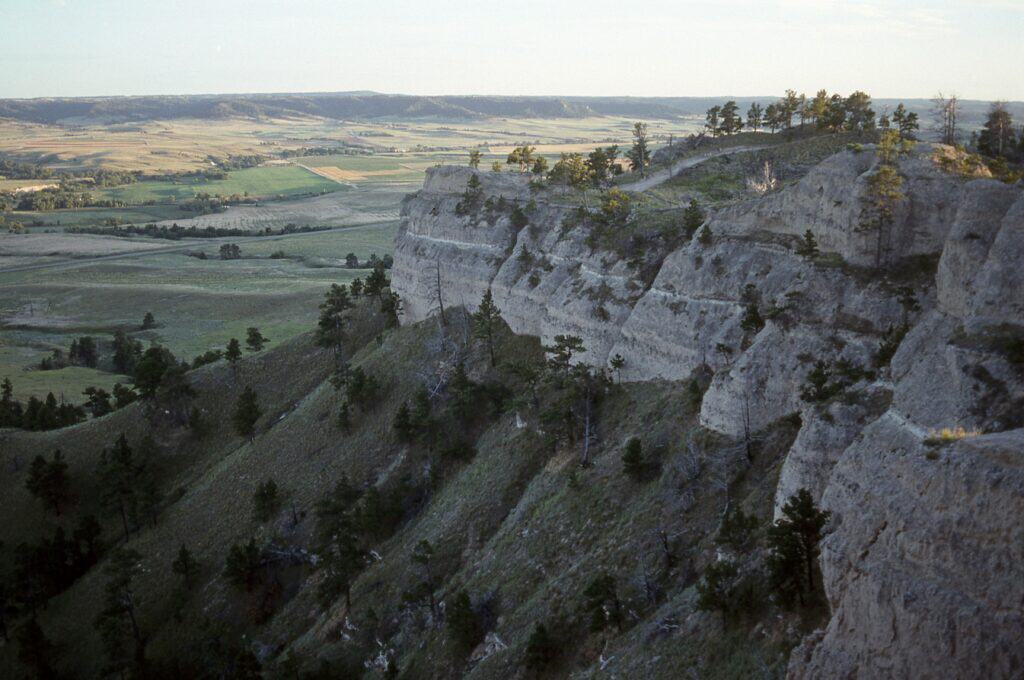
It’s hard to narrow Fort Robinson State Park into one category, because the area has a rich history as a site of importance for the Old West, battles, and even a beef research station. The park served as a fort until the end of WWII and is also where the famous Sioux Chief Crazy Horse saw his life come to an end.
Today, visitors to the state park can enjoy an entire host of outdoor activities, such as hiking, boating, camping, horseback riding, swimming, hunting, fishing, and picnicking. There’s also a playground and a museum for the educationally inclined. And unlike the other natural wonders of Nebraska on our list, Fort Robinson does have one modern, non-natural feature we love: an on-site restaurant.
10. Fontenelle Forest
Location: 1111 Bellevue Blvd., Bellevue
Admission: $15 for adults/$9 for children
Technically speaking, Fontenelle Forest is privately managed by the non-profit conservation organization of the same name, encompassing both the Bellevue Forest and the Neale Woods in Omaha. But on a practical level, the Forest is a National Natural Landmark that also appears on the National Register of Historic Sites, with both properties making up 2,100 acres of natural wonders in forest, prairies, and wetlands.
The Forest is famous as a known stop along the Lewis and Clark expedition in 1804. 280 million years ago, the Heartland area would have been underwater, teaming with ancient sharks as a salty sea, but today, the area is rich with history, wildlife, and growth. The conversation has focused on replenishing the oak savanna landscape that was demolished during the logging industry and adding modern touches, like a nature center, a riverview boardwalk, a playscape, and a raptor refuge for birds.