After reading this list, we’re thoroughly convinced that New Mexico is the most awe-inspiring state of them all.
For anyone who hasn’t visited New Mexico, it’s hard to capture the sweeping natural beauties that abound in this state. New Mexico truly has it all: white sand dunes that stretch for miles, actual volcanoes, vast underground cave systems to explore, hidden desert swimming holes, and perhaps the most impressive feature of all, a sky like you’ve never seen before.
Some people call New Mexico the “Land of Enchantment,” and it’s easy to see why. There’s low-cost living, beauty everywhere you look, and the food? You had me at cheese-stuffed chili pepper. Whether you’re visiting or, as I now am, dreaming of living there permanently, you need to add these natural wonders in New Mexico to your bucket list. And as a fair warning: there are nearly endless natural wonders in New Mexico, so our list simply couldn’t contain them all. Still, we hope you’ll use our guide as a starting point for further exploration.
1. White Sands National Park
Location: 19955 Highway 70 West, Alamogordo
Admission: Entrance pass, $15 to $45
Highlights: White dunes that stay cool
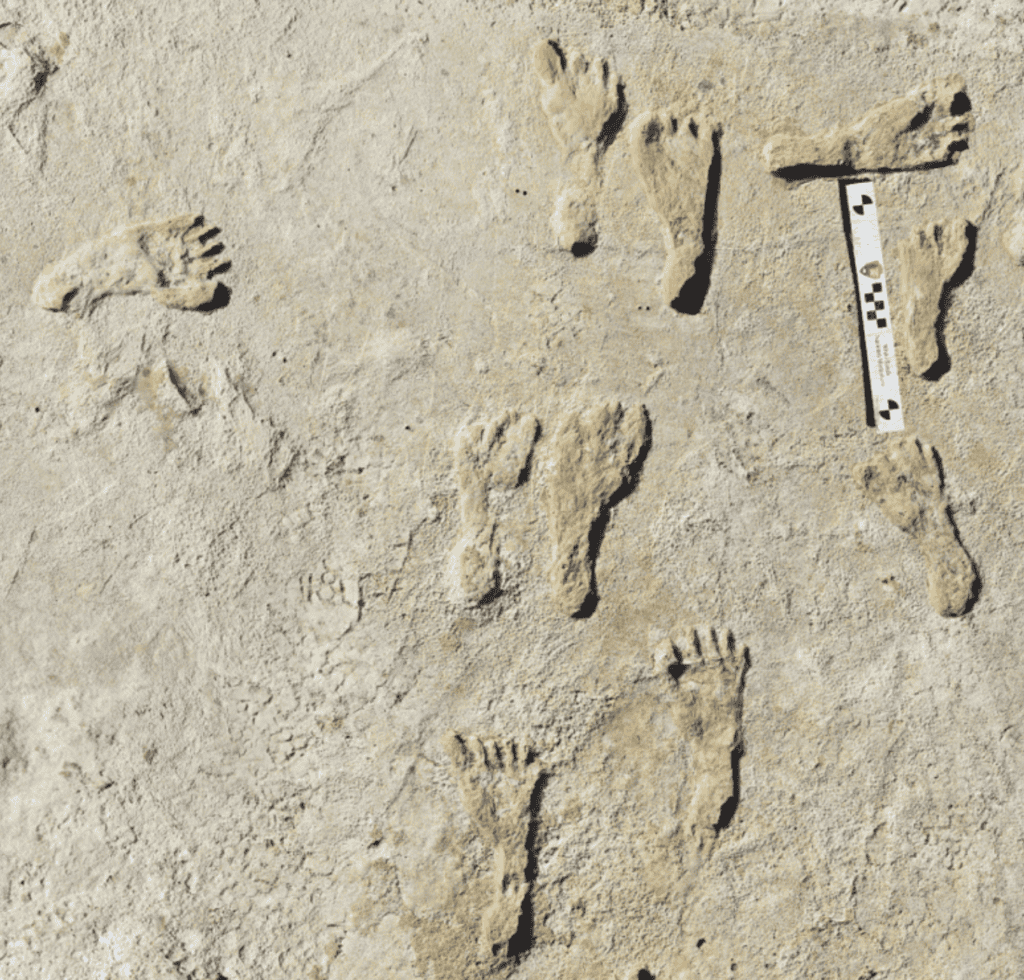
White Sands National Park is not just a New Mexico natural wonder; it’s considered a global one because of its stunning landscape and beauty. The park includes dunes within the Chihuahuan Desert (North America’s largest!) that stretch and glisten like waves under the New Mexico sun. Because dunes are made of gypsum (the same mineral that makes up drywall!), they appear white and don’t absorb heat effectively. That means the dunes are relatively cool to the touch, making them open for all types of outdoor activities, such as hiking, sledding, or watching the gorgeous sunsets that reflect off the white sand.
The National Park Service (NPS) calls White Sands National Park “like no place else on earth,” and you might have to visit it to appreciate how accurate that statement really is. The park encompasses a large majority of the 275 miles of desert dunes and welcomes visitors year-round with shifting hours, as well as occasional closures for military missile testing. (I mean, all that sand is just too convenient, I suppose…)
Some of the things to do at White Sands National Park include hiking, biking, camping (keep in mind: it’s rustic!), horseback riding, admiring the local wildlife and plants, exploring ancient fossilized human footprints, and my personal favorite, year-round sledding in the sand. When planning a visit to White Sands, the NPS encourages all visitors to pack plenty of water and sun protection, including hats, long-sleeved shirts, and sunscreen. The white gypsum reflects the sun, making burns and injuries a very real threat, and there are no water stations outside the visitor’s center.
2. Carlsbad Caverns National Park
Location: 727 Carlsbad Caverns Highway, Carlsbad
Admission: $15/person; Ticket fee: $1/person
Highlights: Underground caverns
What pairs well with acres and acres of a white sand desert? Underground caverns, of course. The Carlsbad Caverns are ancient fossil reefs beneath the Chihuahuan Desert, formed when sulfuric acid bubbled up from the ground, eating away at the limestone above. The U.S. Geological Society explains that the caverns are geologically unique because most caves occur when water mixes with carbon dioxide, forming an acidic combination that seeps downward, carving out caves over time.
The Carlsbad Caverns, however, are located near the Permian Basin at the border of New Mexico, which is full of oil fields. The oil in the ground contained sulfide and hydrogen, which then mixed with water to form sulfuric acid that bubbled up, not down, to form the caverns.
That action went down as long as 12 million years ago, but some of the sulfuric acid byproducts can still be found on the ground. The end result is 119 sulfuric-acid-formed caves full of stalagmites and stalactites that visitors can explore today. Because the caverns are so cool (and so popular!), they have ticketed, timed entrances that you can book online. Tickets are booked from 9:30 a.m. to 2:30 p.m., with the last ticket sold at 2:15 p.m. Tickets are only $1, and there are two hike options: a steeper one-mile hike or a quarter-mile paved route.
3. Kasha Katuwe Tent Rocks National Monument
Location: 100 Sun Avenue NE, Pan American Bldg., Ste 330, Albuquerque
Admission: Tribal pass: $20/person
Highlights: Giant cone-shaped rock formations and hiking
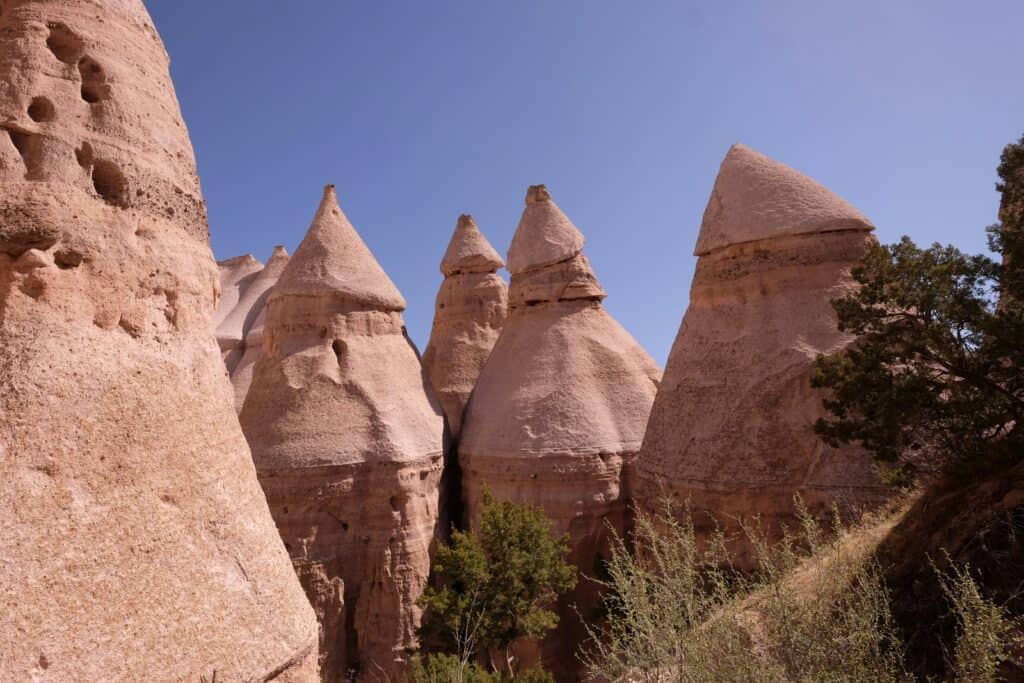
Kasha Katuwe Tent Rocks National Monument consists of large, cone-shaped rocks that were formed by volcanic eruptions 6 to 7 million years ago. When the volcanoes erupted, they built up into large deposits of pumice, ash, and tuff that, over time, with erosion and wind, formed the now-signature peaks.
The monument is surrounded by large expanses of Tribal property, so entry is by reservation only, Monday through Thursday, from 8 a.m. until 1 p.m., with many closure dates throughout the year for federal holidays and dates of cultural importance to the Pueblo. Visitors to the monument can enjoy hiking through the area, observing wildlife and geology, and taking photos. There is a 1.2-mile gravel trail rated easy to hike, though pushing a wheelchair over the gravel could pose challenges.
4. Valles Caldera National Park
Location: 090 Villa Louis Martin Dr. Jemez Springs
Admission: Annual $45 pass or $25/vehicle; $15/person
Highlights: Volcanic crater hiking
If you’ve ever dreamed of hiking through a volcanic crater (and honestly, who hasn’t?), you’re in luck, because the Valles Caldera National Park offers the opportunity to do just that. The 88,900-acre park houses the site of the 13.7-mile-wide caldera (caldera is just a fancy word for a ground depression or hollow) formed when a volcano erupted around 1.2 million years ago.
I’m absolutely fascinated by the caldera, as the NPS explains that it still has signs of volcanic life, including boiling sulphuric acid fumaroles and hot springs, despite the volcano being dormant. The park itself is a lesson in the dichotomy of nature, with both grassy meadows and the now tree-covered volcanic domes that mark the land. You get both the highs of the peaks and the lows of the caldera, providing a mix of diverse wildlife and plant life. The Caldera is also culturally significant to American Indigenous tribes, who have used the area for nourishment, obsidian toolmaking, and ceremonial purposes.
5. Bisti/De-Na-Zin Wilderness Area
Location: County Road 7297, Bloomfield
Admission: Free
Highlights: Unmarked hiking and camping
The technical term for much of the land within the Bisti De-Na-Zin Wilderness Area is “badlands,” which we think is just bad-to-the-bone in a super cool way. Badlands consist of dry and often crumbling terrain and get their name from the word that loosely translates to “bad for the traveler,” if that tells you anything about them.
Still, hikers up for the challenge of the badlands who are looking for a rugged, uncharted adventure will want to add the Bisti De-Na-Zin Wilderness Area to their itineraries. The area’s landscape offers 45,000 acres of unmarked clay hills and sandstone outcrops to explore to their hearts’ content. Thanks to the area’s history as an ancient swamp, it also includes an abundance of petrified wood and vertebrate fossils.
There are marked trails in the Bisti De-Na-Zin, but off-trail exploring is also permitted. If you do decide to hike off-trail, the Bureau of Land Management encourages all hikers to take a map and “orienting device” because it’s very easy to get lost in the wilderness. Along with hiking, camping, wildlife viewing, horseback riding, and stargazing are all park activities you can enjoy.
6. Shiprock Formation
Location: 91 Highway 491 S, Shiprock
Admission: N/A
Highlights: Sacred Navajo rock formation
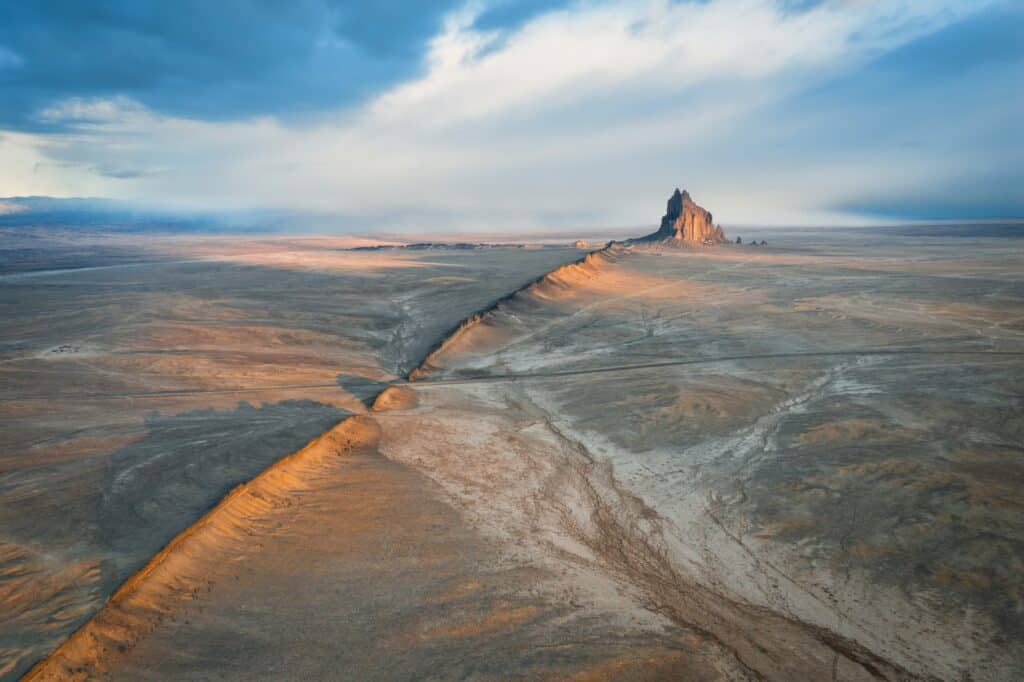
Shiprock, or Tse’ bi t’ai, is both a Sacred Navajo landmark and home to the largest Navajo community in the Navajo Nation. The Ship Rock land formation, like many other natural wonders in New Mexico, was formed by a volcanic eruption approximately 30 million years ago. The landform stretches 500 meters in diameter and 1,700 feet high and was formed by lava that melted the Earth’s mantle. Cool, right? Today, Ship Rock appears more prominent due to erosion of the rocks surrounding it.
The Navajo called the formation the “winged rock,” and one legend the Navajo people told about the rock structure is that it was a phantom ship that brought them to safety, providing them a place to settle. Although the Ship Rock formation is a staple of the land, its sacredness and significance to the Navajo people mean that no one is actually allowed to hike on it. However, you can view and photograph it from the paved road, Indian Route 13.
7. Rio Grande Gorge
Location: US Highway 64 West, Taos
Admission: Free
Highlights: Driving bridge or walking trail over the gorge
Anyone afraid of heights, beware, because the Rio Grande Gorge is home to the fifth-highest bridge in the United States. The bridge overlooks the 800-foot gorge full of plunging cliffs and a rolling river at the bottom you would not want to lose a penny in. When the bridge’s construction was originally started in the 1960s, funding ran out, so it was sometimes referred to as the “Bridge to Nowhere.”
You can drive over the bridge to look at the gorge, but you can also walk the trail along the rim (park on the west side of the bridge). You may recognize the sights and the bridge once you’re there, as it’s appeared in a lot of movies, including “Terminator Salvation” and “Wild Hogs.”
8. Valley of Fires
Location: 6158 US-380, Carrizozo
Admission: $5/vehicle
Highlights: Lava formation and hiking
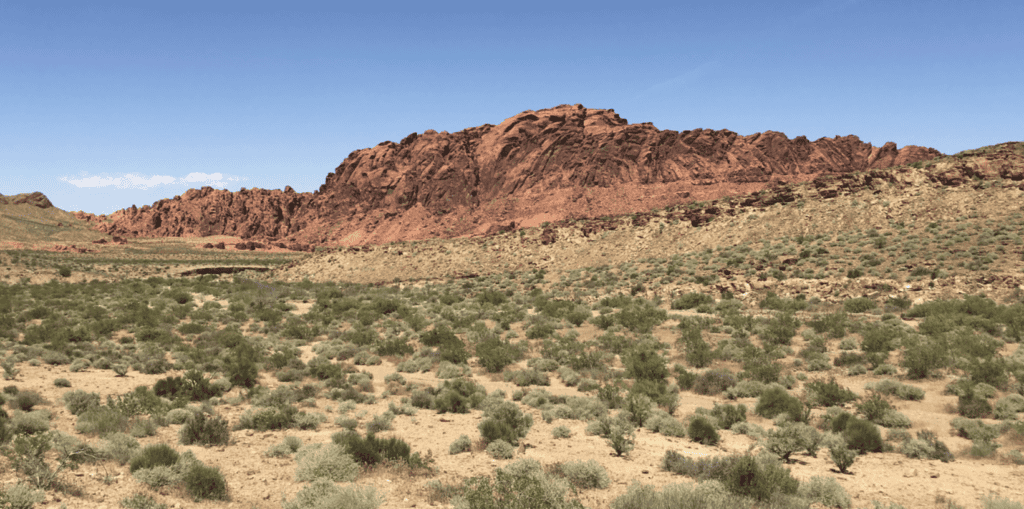
The Valley of Fires is a formation of around 125 square miles of molten rock from the Little Black Peak volcanic eruption around 5,000 years ago that filled the Tularosa Basin. As the site of the youngest volcanic lava flows in the continental U.S., the Valley of Fires is teeming with life. A nature trail walk reveals abundant plant life, wildlife, and birds inhabiting the area.
Hiking the Valley of Fires means you can actually walk on the (obviously, now cooled!) molten lava. You can take the paved and accessible Malpais Nature trail or the Kipuka Trail, which is a longer 2.25-mile trail that will take you directly into the Chihuahuan Desert. Be sure to bring plenty of water and watch for rattlesnakes! Full-service and primitive campsites are also available and can be reserved online.
9. Blue Hole
Location: 1085 Blue Hole Rd, Santa Rosa
Admission: Free
Highlights: Desert oasis swimming in springwater hotel
Okay, we’ve talked a lot about hiking through dusty deserts, molten lava, and rocky formations, so let’s switch it up to the exact opposite and introduce you to the Blue Hole, a literal peaceful oasis of clear blue water. The natural swimming hole is, technically, a sinkhole, the result of a collapsed cave system worn down by groundwater. The location means Blue Hole is continually fed springwater that keeps it at an even 62 degrees Fahrenheit and a beautiful cobalt blue color. Every six hours, the water is so powerful and abundant that it replenishes itself.
The Blue Hole has served as a respite for everyone from cowboys traveling west to nomadic tribes searching for food across the desert. Today, it’s open to swimmers, visitors, and scuba divers, thanks to its clear waters offering 100 feet of visibility and a shocking 130 feet of depth in the middle. It’s free to visit and swim in the Blue Hole, but scuba divers may need to pay and reserve a time or class.
10. City of Rocks State Park
Location: 327 NM-61, Faywood
Admission: $5/vehicle
Highlights: Ancient rock formations from volcanic eruptions
It’s a city! It’s a bunch of rocks! Well, it’s actually the City of Rocks State Park. Aptly named, the City of Rocks State Park is a natural formation made up of rock columns that look like someone artfully arranged them to form a maze of well-planned city streets. (Are we hearing you think of a conspiracy theory? New Mexico is also home to Roswell, so there’s no shortage of those!) The rocks are, like some of New Mexico’s other natural wonders, formed from leftover volcanic eruption debris and formations from 34.9 million years ago.
You won’t find a Starbucks in these “city” streets, but you will find camping, hiking, mountain biking, nature-gazing, including wildlife viewing, and even a botanical garden right in the middle of the desert. There’s also a Visitor’s Center that offers the ultimate “city” perk: hot showers.
11. Aztec Ruins National Monument
Location: Downtown Aztec
Admission: Free
Highlights: Ancient Puebloan center and structures
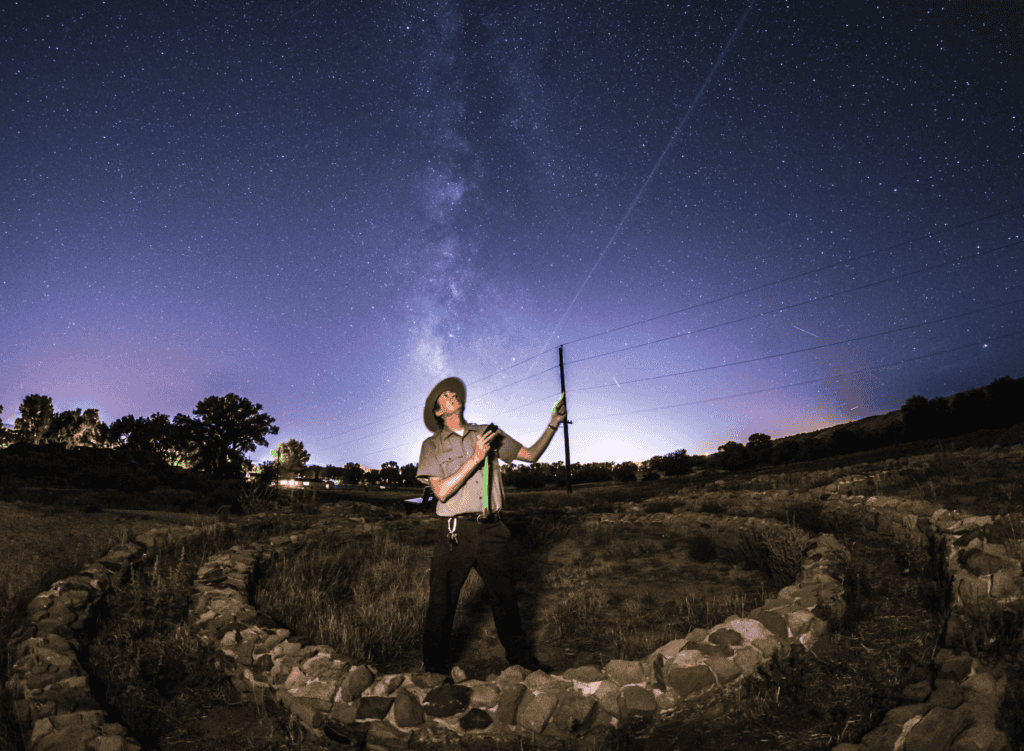
Technically speaking, the Aztec Ruins National Monument is not an earth-made wonder, but it’s still one full of wonder. The Ruins stand in what was once a Pueblo hub for economic and cultural activities for their people. When visiting, you explore ancient sites such as the ancestral Pueblo “great house” and the center of the city Chaco, as well as the ceremonial Great Kiva, an extra-large circular building built into the earth that could hold large groups of Pueblo peoples and was used for special events.
All of the sites can be toured via a self-guided trail, and you can also walk along the Old Spanish National Historic Trail, which connects the historic Aztec downtown to the Aztec Ruins National Monument. Anyone visiting the ruins is asked to respect the land and area, as it still holds sacred value to many Indigenous peoples.
12. Capulin Volcano
Location: Union County
Admission: $20/vehicle
Highlights: Walk an extinct volcano
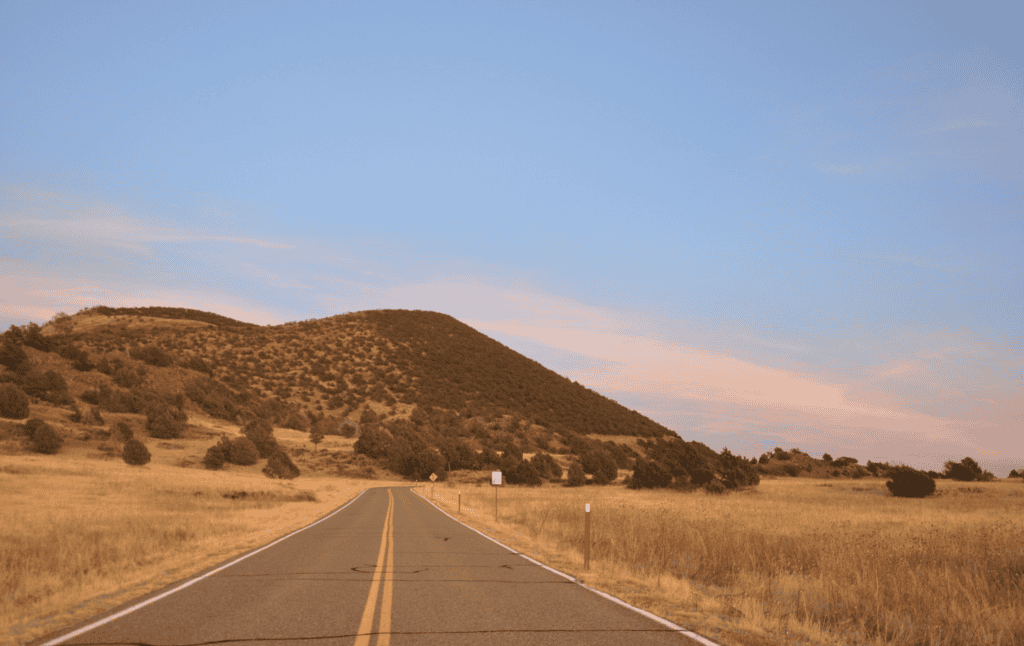
After all this New Mexico talk of formations that resulted from volcanic eruptions, it only makes sense that we would then need to talk about the fact that you can visit an actual volcano, right? The Capulin Volcano is an extinct (don’t worry!) cinder cone volcano that had its one and only eruption somewhere between 56,000 and 62,000 years ago. (Is it just me, or does that suddenly seem like not even that long ago? What a wild world we live in, where volcanoes can just erupt and spew molten lava for miles, am I right?)
New Mexico was largely shaped by volcanoes, but what’s extra fascinating is that the NPS explains that no one truly understands why there’s so much volcanic activity in the area. Volcanoes typically occur at Earth’s plate boundaries, which are not present in New Mexico. The most widely accepted theory is that because New Mexico is near the Rio Grande Rift, the continental plate below is stretched, allowing for volcanic activity. There is still potential for eruptions within the Raton-Clayton Volcanic Field (RCVF), where Capulin is located, but because Capulin itself is safe from future volcanic activity, you can hike, explore, and photograph this New Mexico natural wonder.
13. Roswell
Location: Roswell
Admission: Varies
Highlights: Swimming, sand dunes, and the “site”
Okay, sure, we couldn’t write a guide about the coolest wonders in New Mexico without mentioning Roswell, but let’s be clear: the Roswell you’re probably thinking of is actually pretty boring, and there’s not much to see there.
But the town of Roswell, New Mexico, is full of natural sites to visit, like Bottomless Lakes State Park for swimming, boating, fishing, and even scuba diving, or the Mescalero Sands North Dunes located east of Roswell for off-roading and hiking. And if you really must visit the site of the alleged 1947 UFO crash, you certainly can. The Bureau of Land Management provides specific directions on how to reach it (it involves hiking through the desert), and as of right now, the site is not marked, although it notes that plans are in place to add a sign and an official trail.