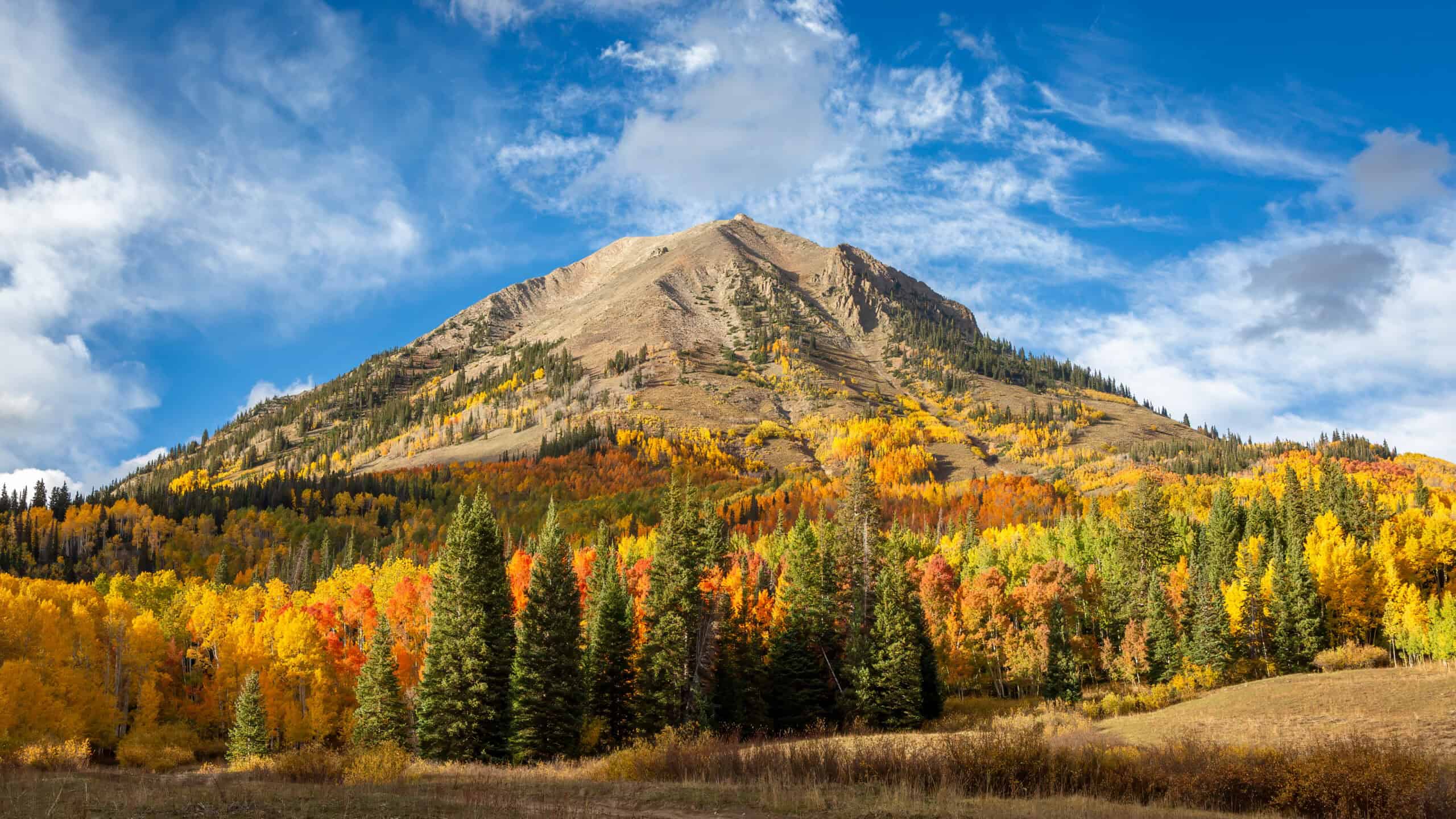
Forget crowded campgrounds, permits, and reservations. These six dispersed camping spots in Colorado offer freedom, solitude, and some of the state’s most scenic views.
Camping stops feeling “wild and free” when you have to apply for a permit and secure a reservation months in advance. The spontaneity goes out the window, and suddenly it feels like you’re planning any other vacation.
Don’t get me wrong, I love a good campsite. I like having bathrooms nearby, running water, and the security of knowing there’s a campsite waiting for me when I arrive. But sometimes you decide you want to go camping at the last minute, only to realize that every campsite nearby has been booked for months.
So what if you could skip the reservations and just focus on being outside? What if you could wake up surrounded by nature, without a packed campground full of noisy neighbors? Enter dispersed camping.
What is dispersed camping?
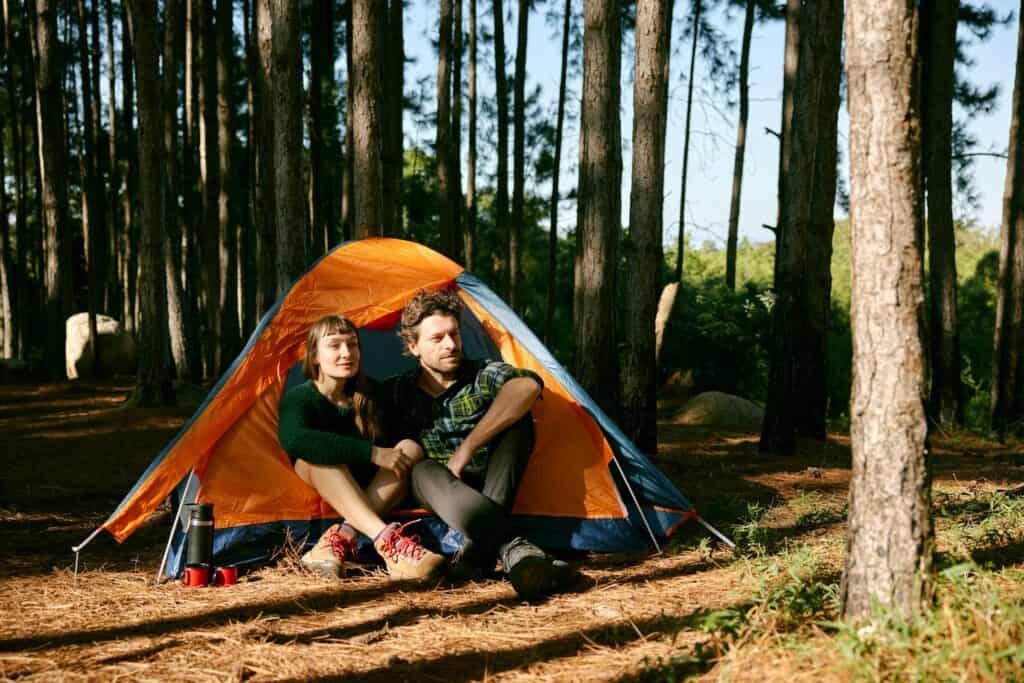
Unlike established campgrounds, dispersed camping means forgoing amenities like bathrooms, trash cans, running water, and designated campsites. While it requires a little more preparation and experience, it’s a great way to get away from the crowds and summer tourists and reconnect with nature, yourself, and the beauty of Colorado.
As a general rule of thumb, you won’t find dispersed camping in national parks. Instead, the best places to look are on Bureau of Land Management (BLM) land and in national forests.
Here are six of the most scenic dispersed camping spots in Colorado, along with tips for how to camp there.
What do I need to bring?
Dispersed camping means there are no amenities, so you’ll want to be fully self-sufficient. Everyone has a different comfort level when it comes to camping, but here are the bare essentials you’ll need to stay safe and comfortable. Chances are, you’ll want to pack a few extra items for comfort, entertainment, and leisure, too.
Before you head out, make sure you have a full tank of gas, a spare tire, offline maps, and have checked local fire regulations.
And always remember to pack out what you pack in by following Leave No Trace principles.
Shelter and sleep
- Tent (if you’re not sleeping in a vehicle)
- Sleeping bag and pad
- Pillow
Cooking and food
- Camp stove and fuel
- Lighter
- Pot or pan
- Utensils, plates, bowls, mugs
- Food (meals and snacks)
- Water
Safety
- First aid kit
- Headlamp
- Compass
- Map or downloaded offline maps
- Multi-tool
- Flashlight
- Bear canister
Misc
- Toothbrush & toothpaste
- Toilet paper (pack out!)
- Extra pair of socks (my feet always get cold when camping!)
- Trowel (if required)
- Hand sanitizer
- Sunscreen
- Bug spray
- Camp chair
- Trash bag
Where are the best spots to disperse camp in Colorado?
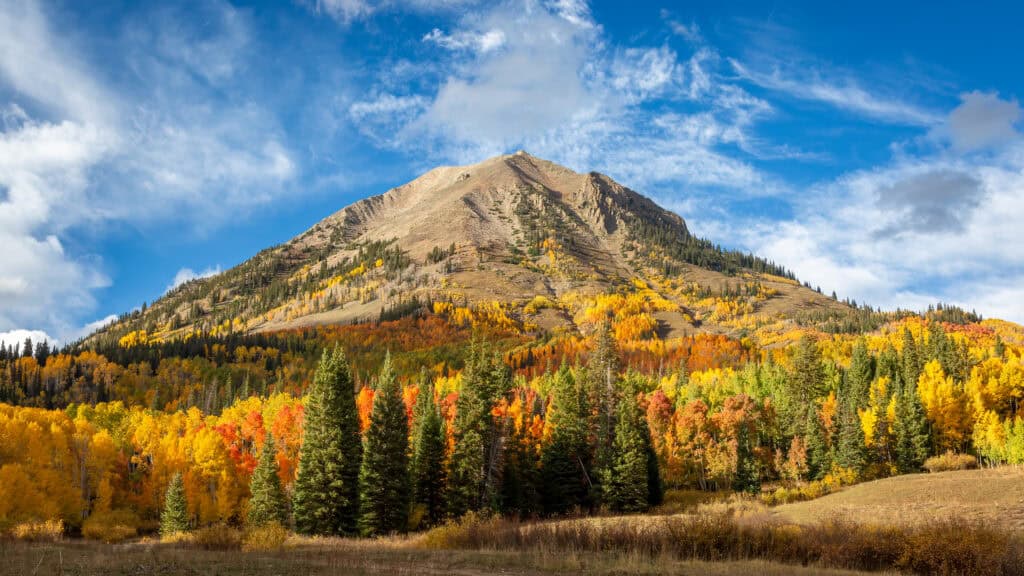
Lost Lake Campground
Getting there: In Paonia, at the intersection of State Highways 133 and 187, take Highway 133 east for 14.9 miles to the Crested Butte sign for County Road 12. Turn right onto County Road 12 (toward Kebler Pass) and continue for 17.8 miles to the campground sign for Forest Road 706. Turn right onto Forest Road 706 and drive another 2.4 miles to the campground.
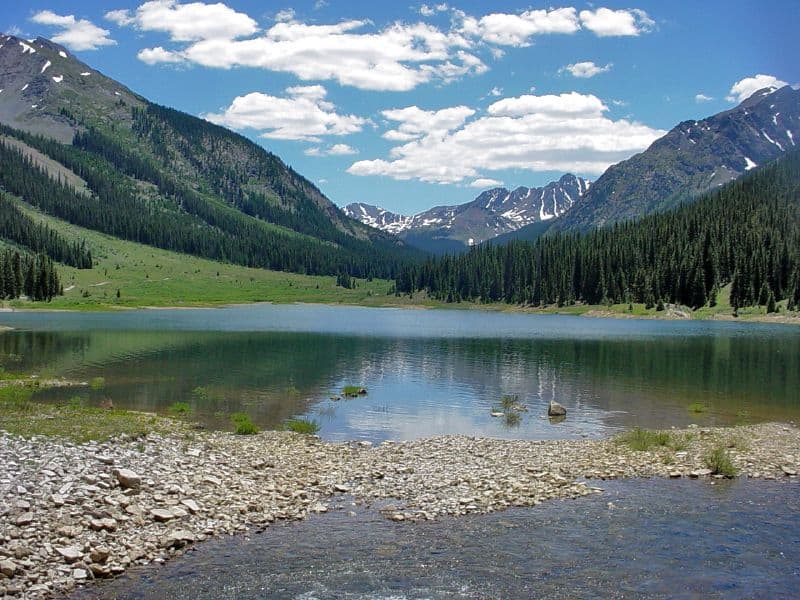
Wildflowers, a bubbling creek, and a beautiful alpine lake? Yes, please. Those are just a few of the reasons Lost Lake, outside of Crested Butte, is such a popular camping destination. While Lost Lake Campground itself is an established campground that fills up quickly, you’ll find dispersed campsites all along the access road. Even though these sites do not have the amenities, they offer the same scenery as Lost Lake with a little more solitude than the established campgrounds.
The campground and dispersed camping spots are accessed by a narrow road with lots of tight turns. Because of this, it’s not the best option for large RVs. This site is better for those who are car/van camping or tent camping. You’ll also lose cell service about an hour before reaching camp, so be sure to download offline maps ahead of time so you don’t get lost.
Once you arrive, you’ll understand why this camping area is so loved. You’re greeted and surrounded by gorgeous alpine views, a peaceful lake, a creek, and tons of wildflowers in bloom. In addition to the scenic views and peaceful grounds, there’s great fishing and hiking available too.
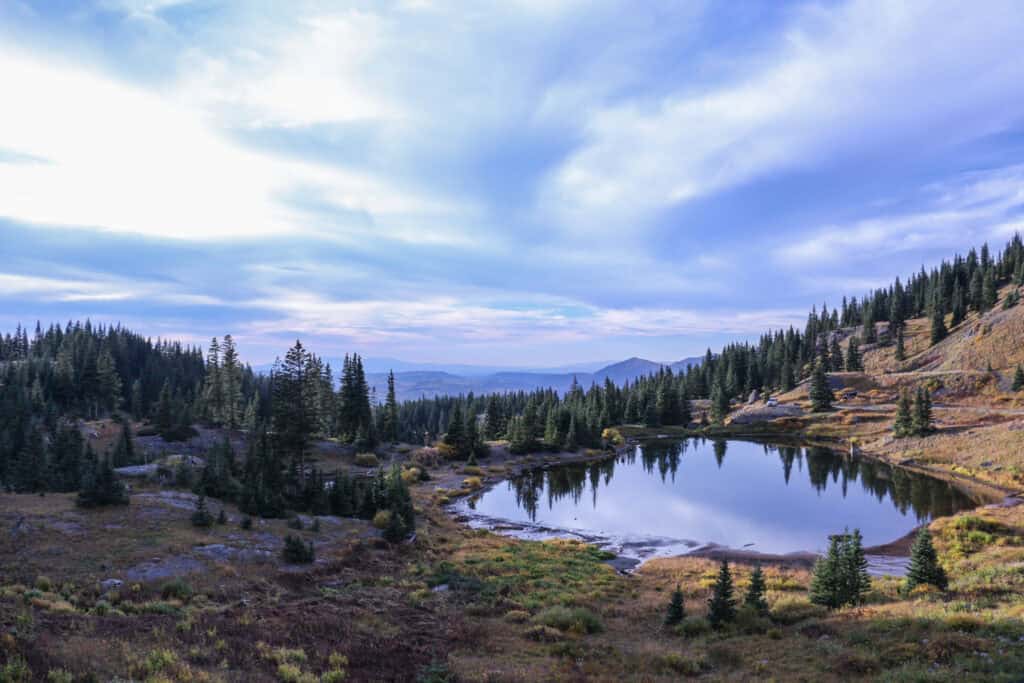
Alta Lakes
Getting there: Travel approximately 5 miles south of Telluride, CO on State Highway 145. Turn east on Forest Road #632 (Alta Road) and climb about 4.3 miles, passing the Alta townsite.
Adrenaline junkies, this one’s for you. Alta Lakes sits at 11,100 feet in the Uncompahgre National Forest, just outside of Telluride. Getting there is no easy task and requires a high-clearance 4WD vehicle. You’ll navigate boulders, sharp turns, steep drop-offs, switchbacks, and even an abandoned mining town, all along a narrow mountain road. If you don’t have a 4WD, this one definitely isn’t for you. If you do, make sure you’re comfortable driving rough roads and have a spare tire and other vehicle essentials before heading out.
The nerve-racking drive is well worth it. Once you arrive, you can finally exhale and inhale the mountain air as you take in the views of three beautiful alpine lakes, a dense conifer forest, and the rugged San Juan Mountains in the distance. There are roughly 20 undeveloped campsites, and many even have picnic tables and fire pits (just be sure to check current fire regulations before lighting one).
And with three crystal-clear lakes, there’s plenty of trout fishing, and the surrounding area offers lots of hiking to explore.
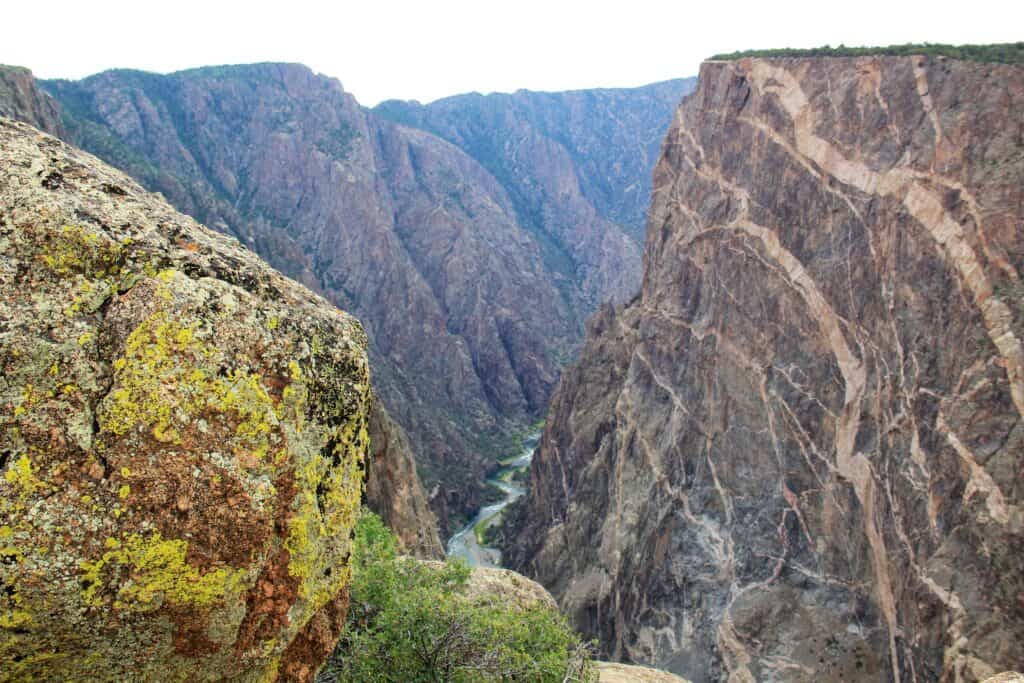
Black Canyon
Getting there: From the intersection of the U.S. Highway 50 and Colorado Highway 347 east of Montrose, head north on Highway 347 toward Black Canyon of the Gunnison National Park. Continue for approximately 6 miles. Just before reaching the park entrance station, turn left onto the signed BLM access road. Follow the dirt road to find dispersed campsites branching off along the way.
With towering cliffs, dramatic canyon walls, and the Gunnison River winding through the dark rock, Black Canyon of the Gunnison National Park is one of Colorado’s most awe-inspiring landscapes. It’s no surprise that the park’s campgrounds on the North, South, and East Rims fill up quickly, especially during the summer. Luckily, for experienced campers or those who are willing to rough it a little bit, there are plenty of dispersed camping options just a mile outside the park.
The main road branches off into several camping areas tucked among oak and juniper trees. Most sites have small fire rings and enough space for tents, vans, small RVs, or cars. Since the area is surrounded by forest, you’ll also enjoy plenty of privacy from other campers.
In addition to the panoramic views and peaceful atmosphere, staying right outside the park lets you beat the crowds and spend more time exploring one of the deepest canyons in North America.
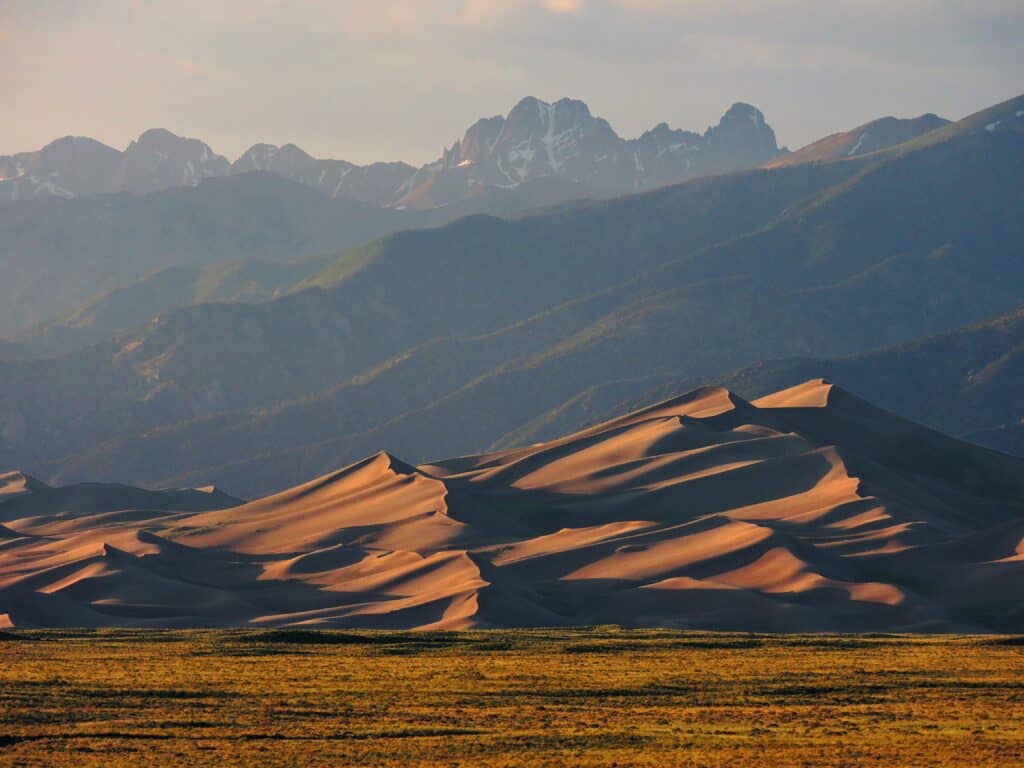
Sacred White Shell Mountain
Getting there: From the intersection of U.S. Highway 160 and Colorado Highway 150 in Mosca, head south on Highway 150 toward Great Sand Dunes National Park for approximately 13 miles. Turn left onto Lake Como Road (County Road 572) and continue about 2 miles. Dispersed campsites begin along the road and continue for several miles, with additional sites farther up the route.
If you’re hoping to check another national park off your list while dispersed camping, Sacred White Shell Mountain should be next on your list. Located about 15 minutes from the entrance to Great Sand Dunes National Park, this free dispersed camping area offers beautiful views and easy access to the park. While the national park has established campgrounds, the Sacred White Shell Mountain area has plenty of free campsites that offer just as beautiful views, including unobstructed views of the Milky Way at night and views of Blanca Peak during the day.
One of the biggest challenges of camping here is the wind. With few natural windbreaks, the wind gusts can reach up to 70 mph and create sandstorm-like conditions. If you’re camping in an RV or van, this is less of an issue. Tent campers, however, should come prepared with sturdy stakes and extra guylines. Springtime, specifically March and April, tends to be the windiest months of the year, and the wind tends to peak in the afternoon.
You’ll find the campsites along Lake Como Road, with flatter sites near the entrance and more secluded spots tucked among the bushes farther up the road. And while there are plenty of places to camp, the area fills up quickly on weekends and holidays, so it’s best to arrive on a Thursday or early in the day if you’re visiting over the weekend.
Lincoln Creek Dispersed
Getting there: From Aspen, head east on Colorado Highway 82 toward Independence Pass for approximately 10 miles. Turn left onto Lincoln Creek Road and continue along the dirt road. Dispersed campsites begin shortly after the turn and continue for several miles, with additional sites farther up the road.
Finding a place to camp near Aspen is difficult. While there are lots of campsites and places to camp, most require reservations, and those reservations fill up fast. But don’t give up just yet. Check out Lincoln Creek Dispersed, about 10 miles outside of Aspen in the White River National Forest.
This dispersed camping area has around 22 sites spread along the road toward Grizzly Reservoir. Once you turn off Independence Pass onto the dirt road, the driving conditions change significantly. The road becomes narrow, bumpy, and steep. If you have a 4WD vehicle, you can continue farther down the road. However, if you don’t, it’s best to find a site closer to the entrance before the road conditions deteriorate further. There is no cell service in the area, so it’s a good idea to download offline maps before you arrive.
Once you arrive, you’ll be greeted by large, spacious campsites that are spread out enough to offer plenty of privacy and peace. Lincoln Creek runs alongside camp, aspens surround the area, and there’s lots of wildlife, including black. While many sites have bear boxes, it’s still a good idea to bring your own bear canister and brush up on bear safety before your trip.
There’s plenty of fishing in the creek, and the nearby Tabor Creek Trailhead is a great option if you’re looking for a daytime adventure.

Mesa Verde
Getting there: From Cortez, head east on U.S. Highway 160 for approximately 8 miles. Turn right onto County Road G and continue for about 1 mile. The signed BLM dispersed camping area, known as “Chutes and Ladders,” is located just outside the entrance to Mesa Verde National Park.
Last but not least, I’ve got a third national park to check off your list: Mesa Verde National Park. Just outside the park, you’ll find BLM land known as “Chutes and Ladders,” home to 15 numbered dispersed campsites. Located roughly five minutes from the entrance, it offers the best of both worlds: free camping and beautiful views of the surrounding mountains, with Mesa Verde’s iconic mesas and cliff-lined landscape in the distance.
The campsites are spread out enough to offer plenty of privacy and peace. It’s the perfect place to unwind after a day of exploring the park or to relax and plan before heading into Mesa Verde the next morning. This area can get very dry and dusty, so be sure to bring plenty of water. It’s also known for being fairly buggy, so don’t forget the bug spray.