These scenic sites for dispersed camping in Pennsylvania bring you closer to the wildest parts of the commonwealth.
If you’ve been camping before, there’s a good chance it was at an established campground with designated campsites. Your campsite might be one of dozens, each featuring a driveway, tent pad, fire pit, and picnic table. Campgrounds also typically offer amenities—with varying levels of comfort—like bathhouses, toilets, and water stations. Some even have campground hosts to welcome you or answer questions. As such, there’s usually a fee to reserve a site at a campground.
Dispersed camping, on the other hand, removes most of those expectations of drinkable water, comfort, and on-site guidance. If you’re dispersed camping, you’re camping outside a developed campground, usually on public land. In Pennsylvania, that might mean staying at an undeveloped campsite along a state forest road, or it may mean carrying your gear into the backcountry and choosing a (legal) place to camp.
You’re not just pitching your tent wherever—but exactly where you pitch it depends on the area, as some require dispersed campers to use numbered or designated sites, while others allow backpackers to choose their own sites.
Either way, you’re bringing (or treating) all of your own water, and packing in—and out—everything else you need. Some locations might have basic, non-flush toilets nearby…but many don’t.
But what you can get in return for camping outside of a developed campground is greater solitude and deeper immersion in nature. We’ve put together this guide to dispersed camping sites in Pennsylvania, perfect for beginners looking to make their first dispersed camping trip as well as seasoned campers interested in new scenery.
Where to find dispersed camping in Pennsylvania
There are two main options for dispersed camping in Pennsylvania: designated roadside camping and more primitive backpack camping. Dispersed camping along the road means that you can access your site (or a short trail leading to your site) with your vehicle, while backpack camping is for those who want to carry their equipment by backpack into the forest.
This guide will focus primarily on dispersed sites that you can reach by vehicle, since backpacking requires different preparation and planning. You can find these dispersed camping sites within Pennsylvania State Forests and the federally managed Allegheny National Forest.
Note that there is no dispersed camping in Pennsylvania State Parks. To stay overnight at a state park, you’ll either need to reserve a site in a traditional, developed campground, or get a permit to backpack within the handful of state parks that allow backcountry camping at designated, trailside sites.
The most scenic dispersed camping in Pennsylvania
Roadside dispersed camping within Pennsylvania State Forests
Pennsylvania has 2.2 million acres of state forest land, divided among 20 state forest districts.
There are many areas set aside for dispersed camping along a roadside within state forests. Here, you can camp closer to nature and bring your car! Pennsylvania State Forests refer to these sites as “motorized roadside camping” areas; they’re ideal for those who want to camp at a dispersed camping site but still want the convenience of car camping (since your car can act as a giant storage unit during your camping trip). Small RVs may even be able to use some state forest sites.
Many sites allow you to camp right next to your vehicle, while others have you take a short hike from your car to a more secluded site. Most sites have no water or modern facilities.
Reservations are required, which you book in advance, for dispersed camping in state forests. Nightly fees are $10 for Pennsylvania residents, and stays are limited to seven nights.
Moshannon State Forest: Cameron, Centre, Clearfield, Clinton, and Elk Counties
Central Pennsylvania’s Moshannon State Forest stretches through north-central Pennsylvania, making up nearly 200,000 acres of remote forest in the Pennsylvania Wilds region. You can stay overnight at roadside campsites such as those in the Medix Run Camping Area and the Shaggers Inn Camping Area.
Medix Run—which is close to some of the best Pennsylvania elk viewing in the state—is home to 10 dispersed campsites, all near their namesake stream.
Shaggers Inn has three dispersed campsites, all near Shaggers Inn Pond, which is well-regarded for birdwatching and wildlife viewing.
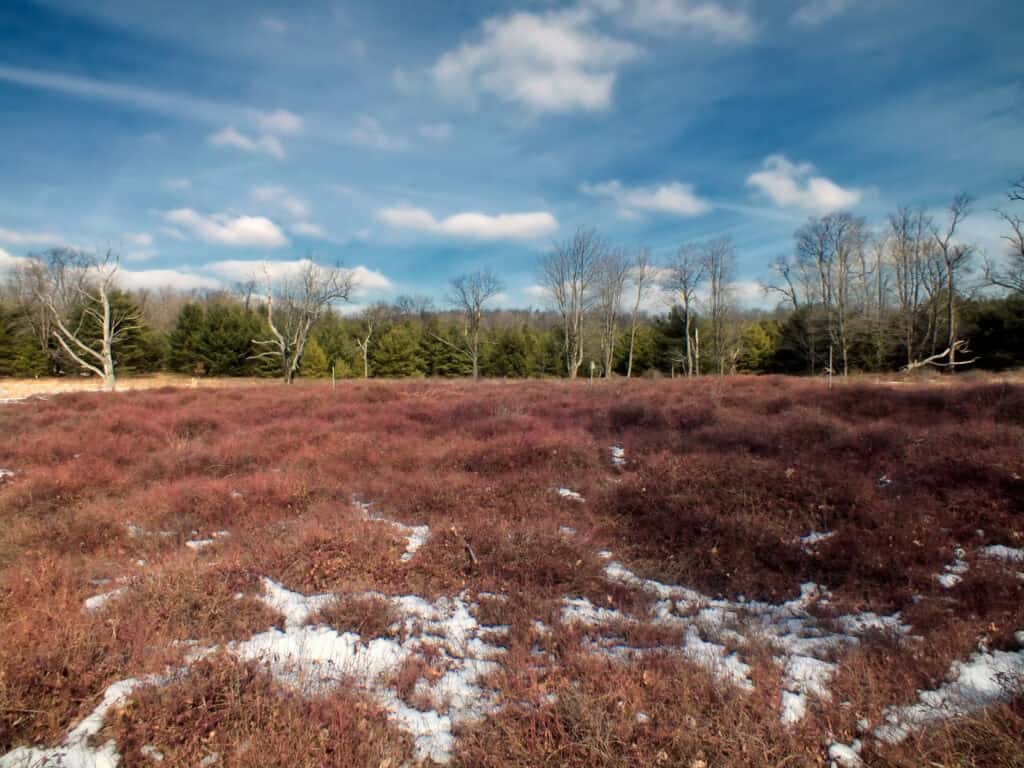
Bald Eagle State Forest: Centre, Clinton, Mifflin, Snyder, and Union Counties
The ridges and valleys of Bald Eagle State Forest in Central Pennsylvania provide numerous opportunities for hiking, scenic views, and remote, roadside dispersed camping. The state forest is home to 45 campsites, which are particularly well suited for admiring the dark skies of the rural forest.
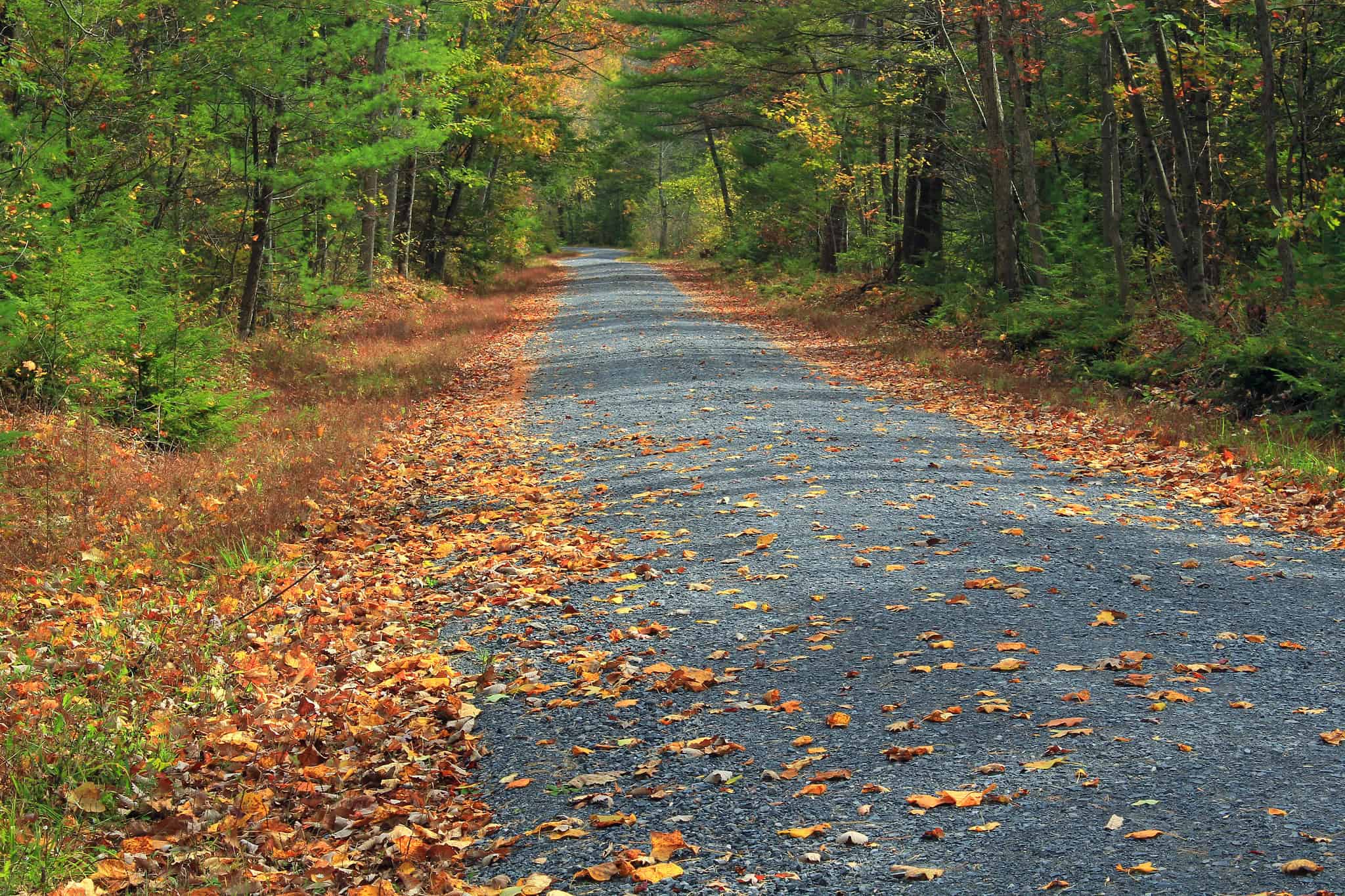
A handful of campsites can be found along White Deer Creek Road, a gravel route that follows White Deer Creek. The rustic sites are ideal for anyone looking for solitude, and may be particularly attractive to anglers who want to explore the nearby trout stream.
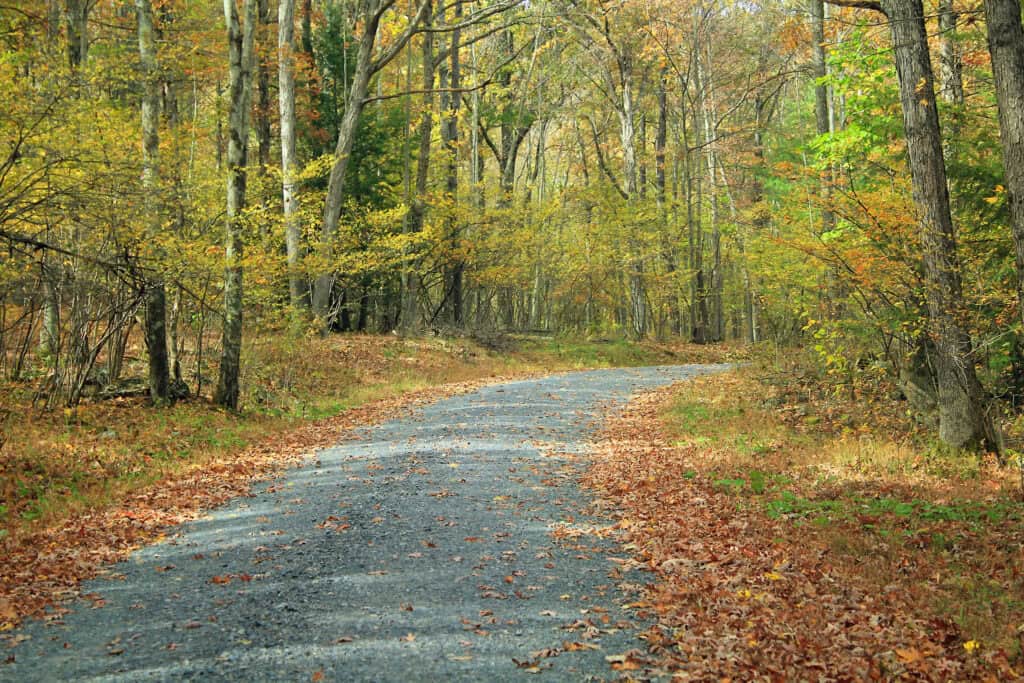
Delaware State Forest: Carbon, Monroe, Northampton, and Pike Counties
Located deep within the Pocono Mountains of northeastern Pennsylvania, Delaware State Forest is rich with lakes, ponds, and rolling forests. It also has 29 roadside campsites spread between three camping areas: Edgemere, Owego, and Snow Hill. The sites have no campground facilities, but each has a fire ring as well as a picnic table. Sites, even in the same camping area, are separated from each other to allow true seclusion in nature.
The Edgemere area has 10 roadside camping sites, including one accessible with a short hike, that can act as the perfect base for exploring the scenery of the state forest. For example, nearby Pecks Pond is popular among paddlers and anglers and also offers wildlife viewing opportunities.
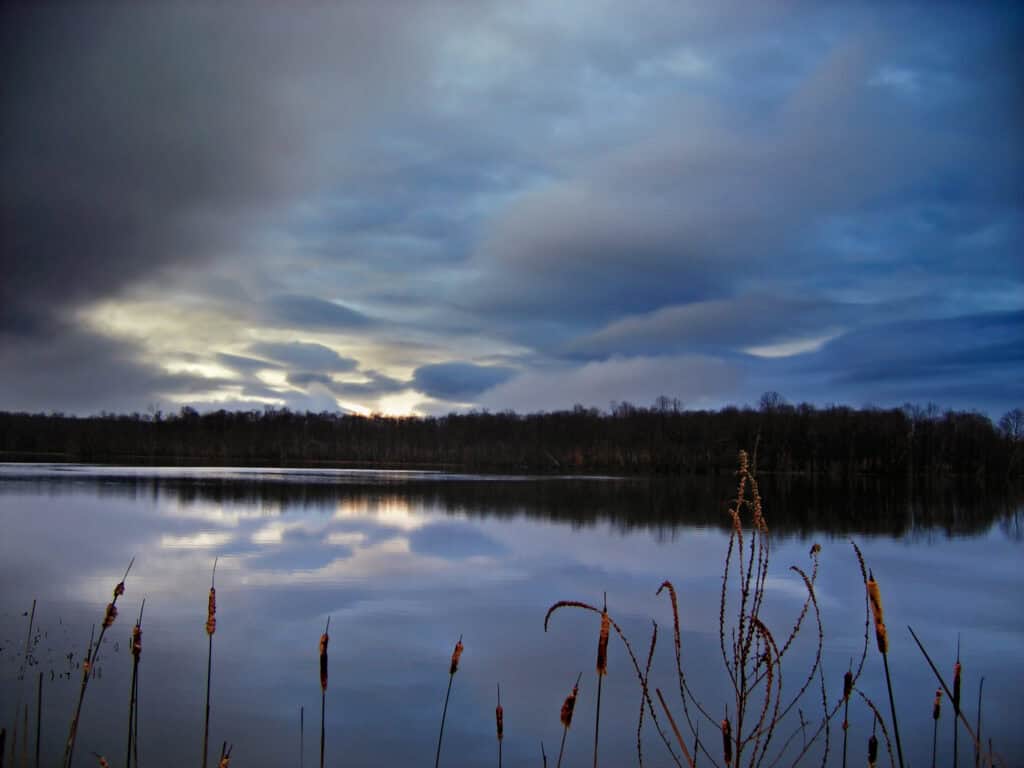
Dispersed camping in Allegheny National Forest – Elk, Forest, McKean, and Warren Counties
Allegheny National Forest, located in the rural wilds of northwestern Pennsylvania, is the only national forest in the state, and dispersed camping is allowed throughout much of its federally owned land. The rules for dispersed camping in national forests are quite different from those of Pennsylvania’s state forests.
You generally do not need a permit for dispersed camping within Allegheny National Forest. Instead, campers can typically set up a tent (or hammock) at a legal, undeveloped site unless there’s a restriction against camping there (which you can confirm by checking with a ranger).
The forest also has designated dispersed campsites and camping areas, which are free to use on a first-come, first-served basis, rather than requiring a reservation. Depending on the location, these sites may have amenities like parking pads, fire rings, and nearby vault toilets. In some areas, campers are required to use designated sites rather than choosing their own spot.
Campers are allowed to stay at any site for 14 days in a 30-day period, after which point you must leave the forest for the rest of the 30 days.
Check out these scenic areas for dispersed camping within the national forest. Beyond our recommendations, you might also talk to a ranger, share your interests, and ask for suggestions on where to set up camp.
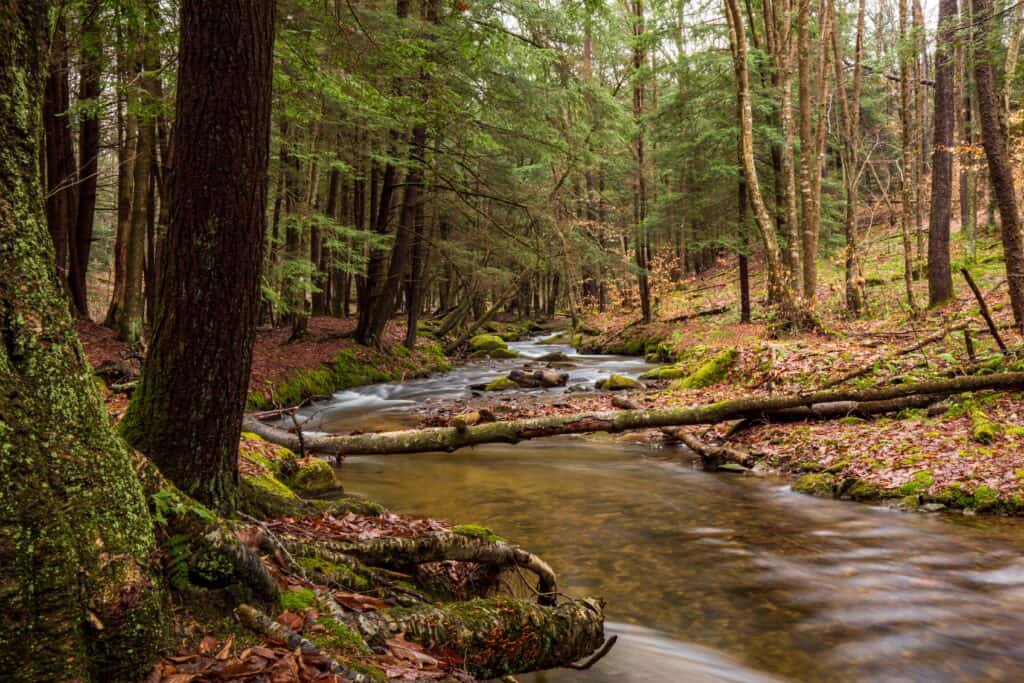
Clarion River Campsites
Allegheny National Forest’s Clarion River Campsites are 27 primitive dispersed campsites found along the Clarion River as well as Millstone Creek. Each has a parking spot for your vehicle as well as a fire ring made of rocks. Seasonal vault toilets at Irwin Run, Robin Island, and Millstone Creek Canoe Launches are not far away. Camping is only permitted at numbered sites: There are 18 sites along the river and nine on the creek.
The sites are all free to use, and each is available first-come, first-served. Note that potable water is not available and all trash must be packed out.
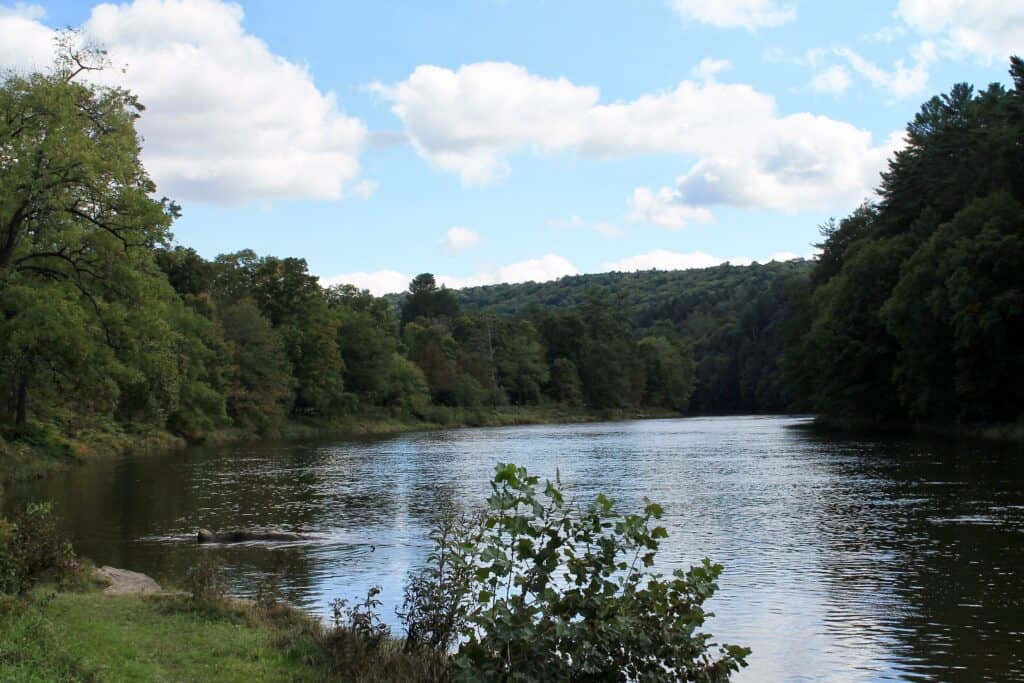
Salmon Creek
The Salmon Creek area of Allegheny National Forest is home to several designated dispersed campsites right along picturesque Salmon Creek, off of Salmon Creek Road (Forest Road 145) near Marienville. Campers must use the numbered sites, which are nestled under a hemlock canopy and marked with brown posts. Amenities are limited here, making for a truly rustic camping experience!
The Forest Service established the designated dispersed sites after overuse in the Salmon Creek area caused vegetation loss and soil erosion, so camping in the designated sites gives other parts of the Salmon Creek area—and its fragile ecosystems—space to recover. You can expect relative solitude, though you might see anglers in the creek.
What about dispersed camping while backpacking?
The 2.2 million acres of state forest land in Pennsylvania are an ideal place to backpack. Pennsylvania State Forests refer to backpack camping as “primitive camping,” and note that this type of camping always means packing in your gear—you are too far from your vehicle to use it as a giant, accessible storage unit.
Most backpacking takes place along hiking trails, traveling from campsite to campsite.
Backpackers can choose their campsites, with some restrictions. You can’t set up in designated Natural Areas, within 200 feet of a forest road, within 25 feet of a trail, or within 100 feet of a stream or other open water.
Backpack camping within state forests is usually free, and you typically only need a permit if you’re staying more than one night in the same location.
What to know before dispersed camping in Pennsylvania
Leave no trace
The first rule of dispersed camping is “leave no trace.” Help protect the natural landscape by following local rules for disposing of human waste and bringing all of your trash with you when you leave.
Be bear aware
You’ll share remote areas of Pennsylvania with black bears, so be sure to put your food and anything with strong scents (like toothpaste) inside your vehicle or in bear-safe containers at least 100 feet away from where you sleep.
Pack in enough water—or safely treat it
Dispersed camping sites are rustic, so most don’t have drinkable water readily available. You’ll need to bring enough water for your stay or carry a safe way to treat water from natural sources.
Go prepared
Before you leave on your camping trip, download offline maps in case you lose cell service, and make sure your campsite is accessible with the vehicle you’re driving (some sites may be best reached with four-wheel drive). You’ll also want to check weather conditions, road conditions, closures, and current campfire restrictions in case fire danger is high.