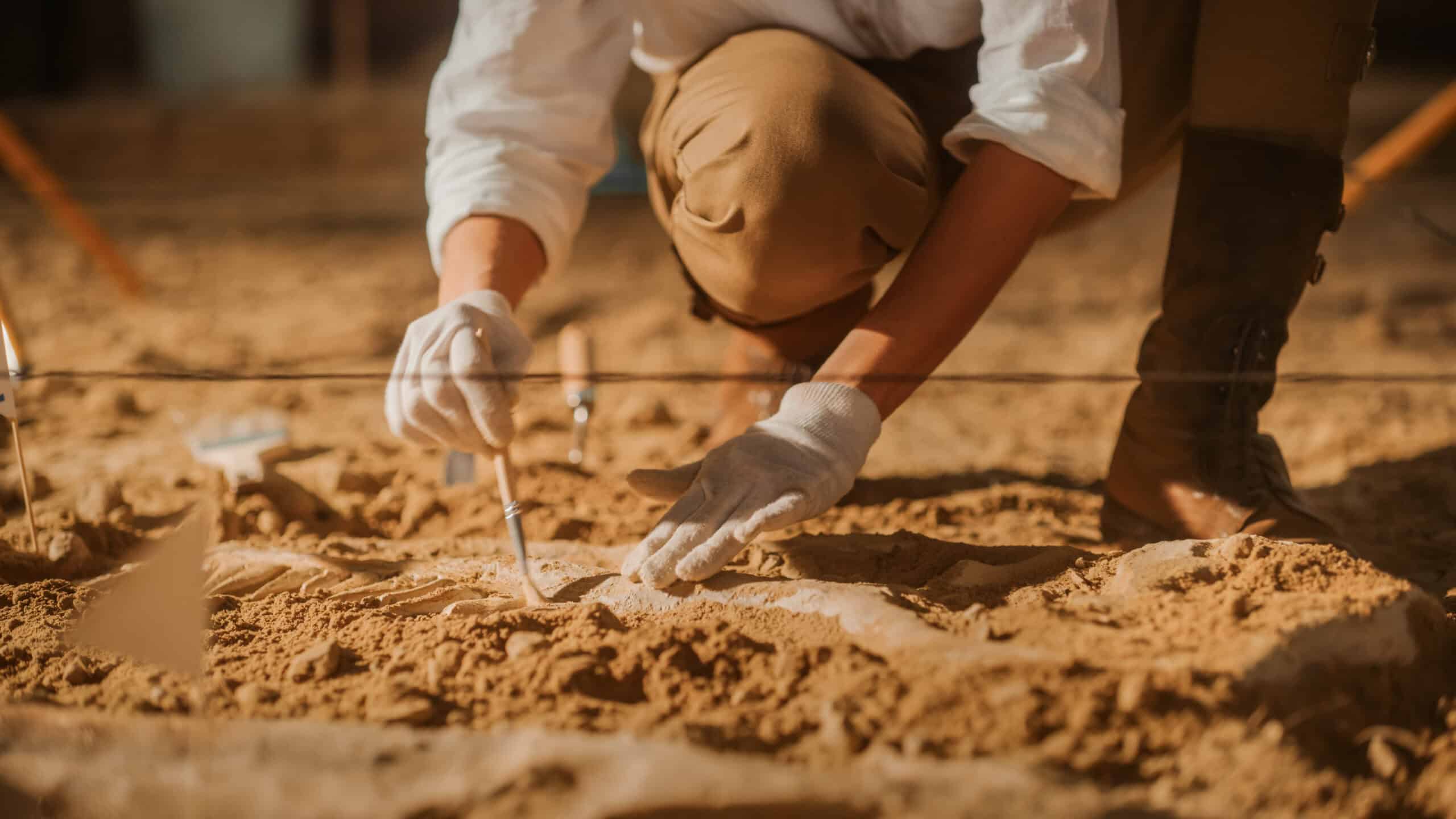
In 2010, a historic site was uncovered in Des Moines. Here’s everything you need to know about the Palace Site.
Sometimes, uncovering the secrets of our past happens accidentally. Maybe someone is searching an area with a metal detector and comes across a historic item that has long since been forgotten. Or maybe a construction crew is breaking ground on a new project and realizes they’ve stumbled across an archaeological site that’s thousands of years old. It might seem like something that would only happen in a movie, or to people in far-flung regions of the world, but the latter of those tales actually unfolded right here in Iowa—in Des Moines, to be specific.
That previously undiscovered area is now known as the Palace Site. The artifacts and evidence found buried there date back over 7,000 years, and they provide a brief snapshot of what life might have been like back then—of how the villagers ate, grew crops, and wielded tools. After extensive research, archaeologists from the University of Iowa pieced together scattered clues to form a clearer (though incomplete) picture of how this ancient society may have operated. In doing so, they learned valuable lessons about the people themselves, and about how the Iowa landscape helped preserve this site through the millennia.
How the Palace Site was discovered
In December 2010, a construction crew was working north of the Des Moines River on a wastewater treatment facility. As they were moving dirt one day, they noticed burned earth and charcoal hidden by the soil. Since the project site was under the Des Moines Metropolitan Wastewater Reclamation Authority’s management, the crew knew that certain findings would need to be reported. And these unexpected anomalies were definitely the kind of thing that would need to be inspected before construction could continue. John Doershuk, who worked at the Office of the State Archaeologist (OSA), was contacted soon after. “They realized, essentially, there was much more there than previously had been thought,” he recalled to The Gazette in 2011.
Doershuk and a team of archaeologists from OSA and the University of Iowa (UI) arrived on scene and ended up staying through May 2011. They studied the site and collected as many items as they could before construction had to resume on the wastewater treatment facility. Bill Whittaker, who served as co-director on the digging project, said, “It became clear very quickly that the site was something spectacular—something none of us had seen before or probably will ever again, as well-preserved house deposits of this age are extremely rare west of the Mississippi River Valley.” They uncovered remnants of what they assumed were once houses, along with a grimmer discovery: a burial pit.
Human bone was found a few feet underground in what appeared to be a massive grave. As Doershuk noted to The Gazette, certain burial-protection laws go into effect when such discoveries are made, so he and his team handled everything with the utmost care. “We were looking for more village-types of deposits, hearths and storage pits. Fortunately the crew working that day had enough experience with what human bone looks like that they recognized it right off,” he said. In addition to the bone, they found more human remains, a spear point, and a breadth of other items.
What was uncovered at the Palace Site & why it was significant
In the Palace Site burial pit, the OSA and UI team found the remains of an infant and a woman, which are believed to be the oldest human bones recovered in Iowa. They, along with upwards of 6,000 artifacts, were painstakingly unearthed. With every new artifact they pulled from the soil, archaeologists were able to roughly sketch out what life in the state may have looked like for these people thousands of years ago. This ancient civilization likely ate deer and whatever assorted resources they could gather along the Des Moines River. There were numerous ground stone tools and house basins that indicated repeated usage throughout the seasons.
Melody Pope, the OSA General Contracts Program Director who served as co-director of the dig alongside Bill Whittaker, spoke about why this was so significant. “We don’t get many opportunities to see deeply buried, well-preserved sites of this size. This discovery will provide important clues about what the living environment was like 7,000 years ago. It’s truly a treasure that will help us understand how the early people of Iowa made a living, what they ate, which technologies they had developed, and how they interacted as a community, especially their use of space and village organization.”
Not only was the Palace Site significant because of what it taught researchers and historians about past versions of Iowa society, but it also shed light on how the landscape can help preserve history through the passage of time. “It’s always fun to find the oldest of something—but the real significance lies in how well-preserved it is. This site is important because it was intensively occupied and very quickly river floods sealed the deposits and very quickly preserved items that otherwise could have been lost. It’s all about preservation context, and that’s what this site really has in abundance that other sites don’t,” John Doershuk said.
Fourteen years ago, UI released a brief YouTube video documenting the team’s work and their discoveries, which you can watch here. It shows the site’s extensive reach and what was required of the archaeologists to safely and respectfully remove thousands of artifacts delicately preserved by the rich soil. The story still sounds like something you’d expect to see on the big screen, but it’s made more amazing by the fact that it really happened, right here in our backyard.