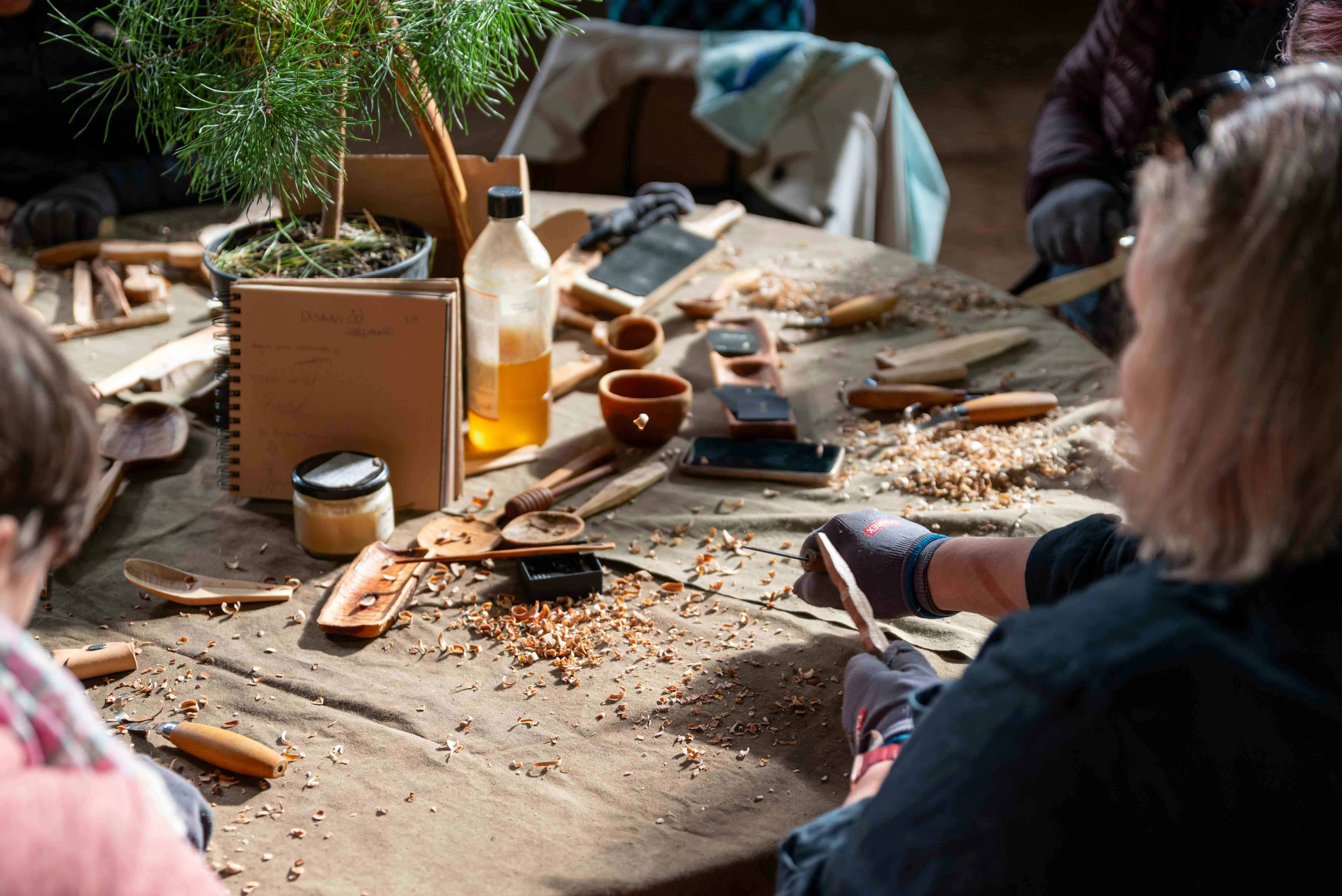
Learn about Michigan’s early logging days and discover how traditional woodworking has carved its way into the hearts of modern-day craftspeople.
If you’ve wandered through a craft fair or farmers market in Michigan recently, you’ve likely stopped to appreciate the wares of local artists and creatives. Artisans throughout the state of Michigan create everything from Petoskey stone jewelry to hand-poured candles inspired by the Great Lakes State—and we’re always charmed by homegrown projects with Michigan roots.
At the heart of Michigan’s artisan community is a time-honored tradition that dates back to the mid-19th century: woodworking. Lumber and its many applications have influenced Michiganders financially and creatively for generations, giving way to a rich, enduring tradition of creating wares from wood. Today, though mass production is ubiquitous, woodworkers continue to teach and practice their skilled trade throughout the Mitten.

A ‘white pine boom’ in Michigan
To understand the roots of Michigan’s relationship to lumber, we have to return to the logging era of old. As American cities expanded during the 1840s and 1850s, traditional lumber sources grew more sparse, leading builders and lumber barons to seek out untapped forests. When they learned about the pine trees of Michigan, new operations quickly followed.
Michigan’s white pine trees were particularly sought-after during the early logging era, as they lent themselves well to woodworking projects and were ample. With billions of square feet of lumber ripe for harvesting, the white pine forests of Michigan offered light, malleable wood that was easy to transform into furniture and other products.
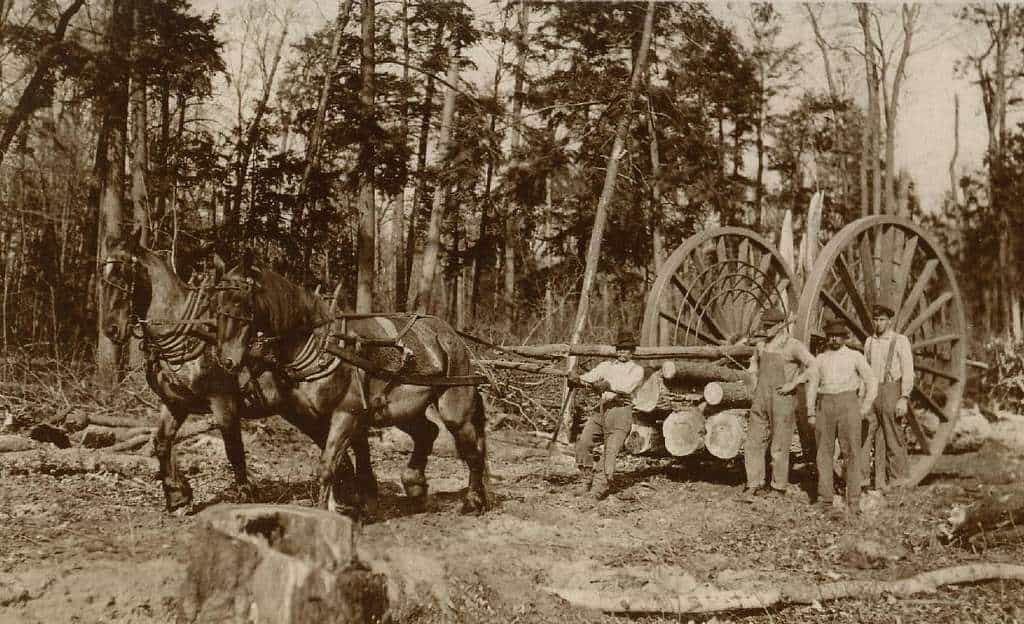
Cities like Muskegon, Saginaw, the Mackinac region, and Mansitee—which came complete with its own “Millionaire Row” for highly successful lumber industry leaders—grew into regional hubs for the trade. Logs and processed lumber made their way down Michigan’s waterways to provide material for buildings, while firmer wood varieties like maple and birch gradually grew in popularity. The rush was officially underway, and woodworkers of varying backgrounds were determined to enjoy the fruits of Michigan’s labor.
With its rich lumber history, it’s no surprise that Michigan was also central to the popularization of several handheld woodworking tools during this time, including the Michigan pattern double-bit axe, which was meant to cleanly cut into soft pine without getting stuck. Another popular tool of the time was a drawknife, which was widely used to carve wood. Michiganders added adjustable handles that provided more flexibility and ease of use.

Preserving woodworking heritage statewide
Though the logging industry declined significantly after the turn of the 20th century, woodworking practices from the bygone early lumber era have enjoyed a resurgence in modern times. Opportunities to learn the trade, embrace the practice of using hand tools, or simply purchase expertly crafted products have emerged throughout the state.
You don’t have to be a woodworking expert—or, really, have any experience—to try your hand at the skill.
In the college town of Adrian, you’ll find the Sam Beauford Woodworking Institute, a trade school where students train in carpentry and woodworking. But its services extend beyond formal certification: everyday Michiganders can participate in classes here, too. Whether you’re interested in chair-making, wood preservation, or something truly beginner-friendly, there’s an option to suit your skill level.
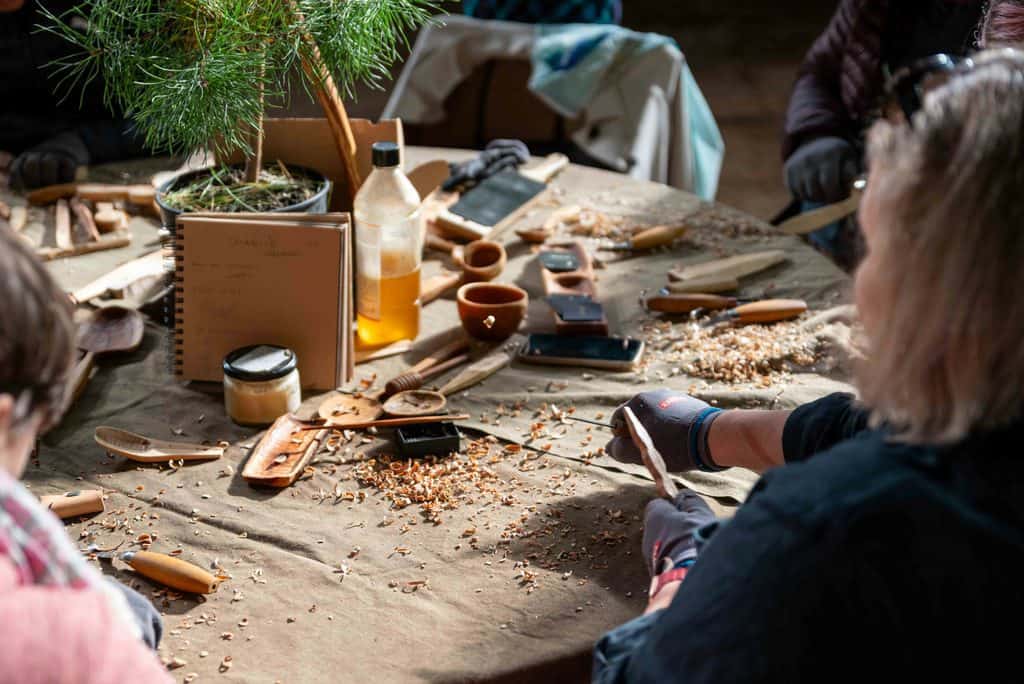
In the facility’s teen classes, young students work with both traditional hand tools and more advanced table saws to craft their own pieces. Adult classes are varied and highly creative, offering instruction in creating wooden ornaments, farmhouse tables, and custom wood picture framing, just to name a few. Prices vary, but you can check out a full course catalog at the Sam Beauford website.
Workmanship and education endure
Adrian isn’t the only corner of Michigan where you can engage with simple yet fascinating tools tied to the state’s woodworking past. Across the Great Lakes State, experienced woodworkers keep traditions healthy by offering consultations for bespoke wood projects and selling unique pre-made products.
Carpenter Chris Schoenberg of Third Coast Craftsman shares his passion for woodworking on social media, showcasing unique projects like a handmade wooden fly-fishing boat, mailbox frames, and even restoration of antique woodworking machines. On his website, Schoenberg says he “fell in love with hand tools and traditional techniques” after learning the craft from his grandfather, a master woodworker.
And if you find yourself in Grayling, take a walk through history at the Hartwick Pines Logging Museum, which offers free entry (though a Recreation Passport or day pass is required to enter Hartwick Pines State Park). Here, you’ll appreciate Michigan’s lumber era with a close-up look at historical equipment, logging camp artifacts, and a sawmill. It’s fascinating—and almost unbelievable at times—to imagine the early days of the white pine “boom,” when manpower and hand tools took center stage.
Whether you’re a history buff, an aspiring carpenter, or simply a Michigander who’s eager to preserve time-honored crafts in an age when technology feels inescapable, a look at our state’s woodworking heritage is both fun and fascinating.