Find out what baseball, long beards, and Christ-given immortality have in common as we explore Michigan’s House of David commune.
When you think “cult,” a few buzzwords likely come to mind: scandal, secrecy, and… baseball? If you’re describing the Michigan-based House of David commune, “baseball” isn’t a typo. The all-American game was central to the group, as were long hair, celibacy, music, and an unshakeable belief in immortality. You might not be familiar with the House of David, but they’re from right here in our own backyard—and remnants of their influence remain today.
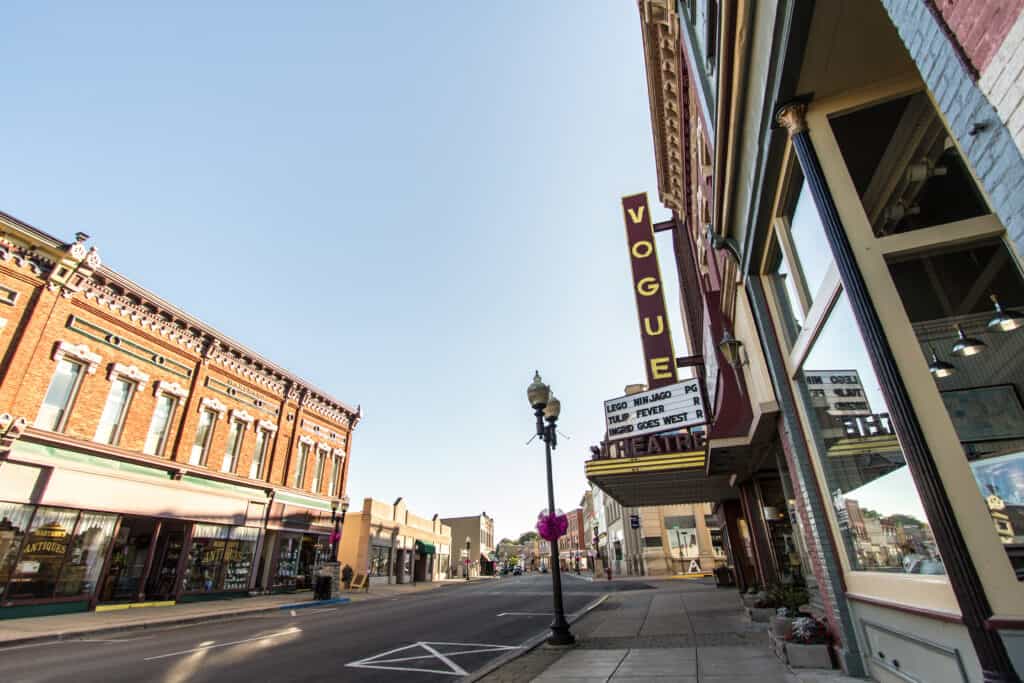
Tucked away in Berrien County is the town of Benton Harbor, an unassuming community whose population fell just short of 10,000 residents as of the 2020 census. Benton Harbor is a manufacturing and fruit production hub (more on the House of David’s influence on that later), but it also offers quick access to natural beauty: It’s only a stone’s throw from Lake Michigan and a short jaunt from the more well-known beachfront towns of St. Joseph and South Haven.
For fans of off-the-beaten-path history, though, Benton Harbor also boasts another important title: the founding place of a commune known as the House of David. Formally referred to as the Israelite House of David, this group was established near the turn of the 20th century and enjoyed decades of success before legal troubles and other roadblocks created barriers and schisms within the organization.
What did members of the House of David believe?
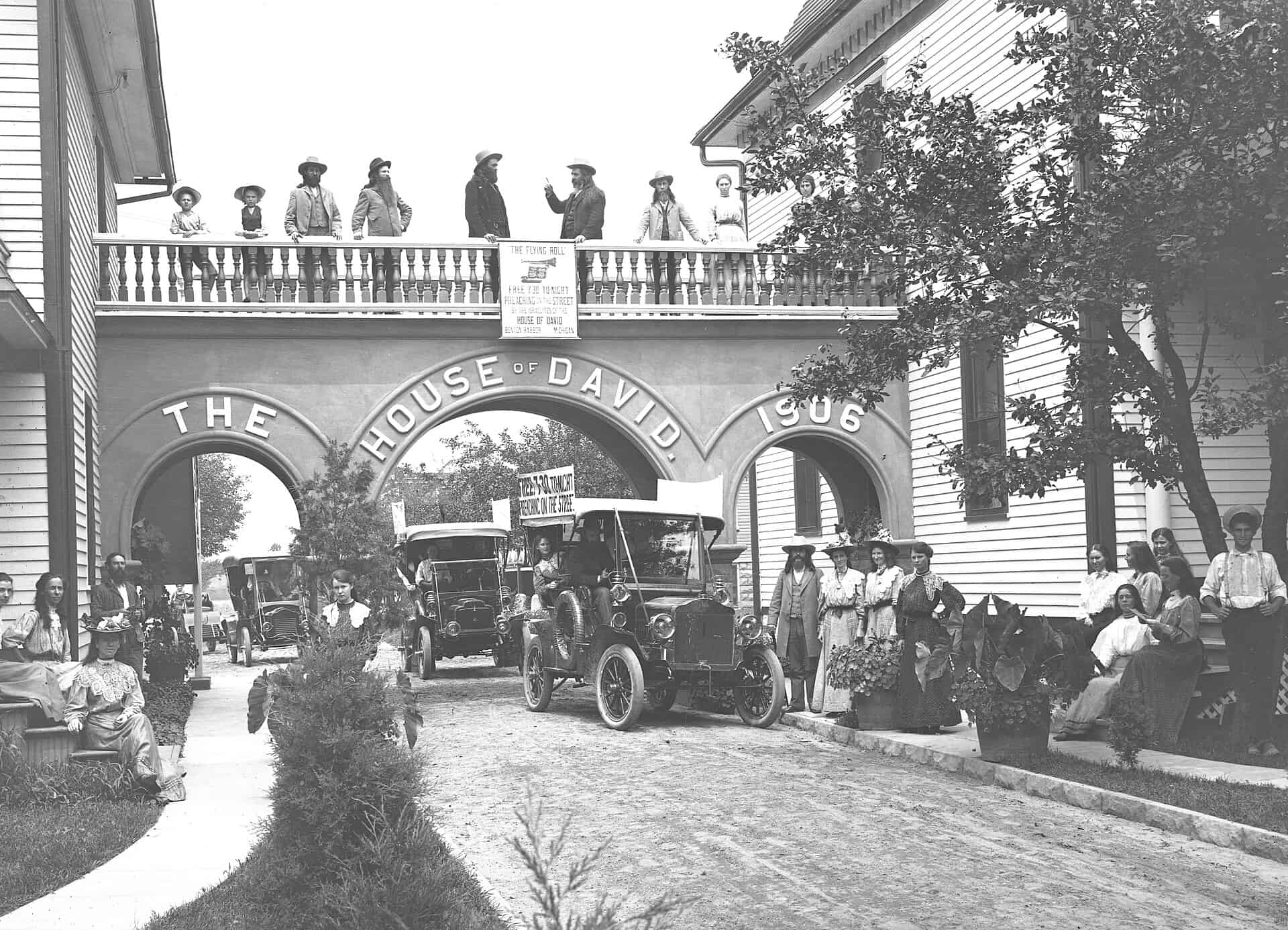
Married couple Mary and Benjamin Purnell founded the House of David in 1903. They weren’t the originators of its belief system: Instead, they claimed to be continuing the legacy and teachings of English “prophetess” Joanna Southcott, who had died nearly a century earlier. The Purnells chose Benton Harbor to house their new community after a move from Ohio, ultimately cultivating hundreds of acres of farmland and attracting members from as far away as Australia.

Together, residents of the commune took on projects like fruit growth and canning, carpentry, and even a tailor shop. Most fascinatingly, the group operated their own electric plant, so power for their various business endeavors was self-contained.
But what set the House of David apart from other religious groups? Aside from the whole “living together on a commune” thing, their beliefs were best described as fringe, especially by modern standards. The Purnells promoted Christian Israelite beliefs, including the claim that they were the joint so-called “seventh messenger” mentioned in the Book of Revelation.
In essence, Mary and Benjamin said they were helping gather 144,000 Israelites—who they believed to be descendants of the “Ten Lost Tribes” of Israel, a common mythical trope—in preparation for Jesus Christ’s return. When Christ returned, the Purnells believed, he would reward the 144,000 gathered followers with immortality.
To achieve the demands of their belief system, members of the House of David strictly followed rules. Chief among them was the belief in celibacy—a roadblock to creating a long-term sustainable commune, to be sure. Members believed they were part of a finite number of Israelites, so their avoidance of procreation might be better understood in that context.
The Purnells also forbade the ownership of private property, asked members to strictly renounce violence in any form, required them to abstain from meat and alcohol, and banned them from cutting their hair. The latter resulted in the House of David’s recognizable aesthetic, complete with long, flowing locks for men and women.
Baseball, music, and business
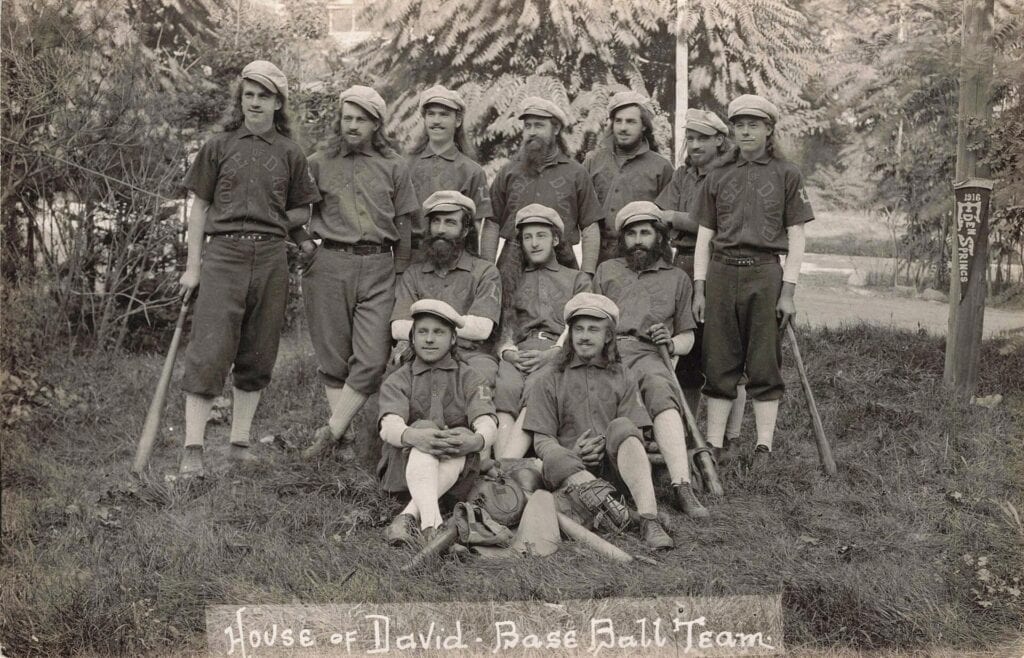
You might be wondering where baseball comes in. The answer is simple: House of David members were pretty darn good at playing baseball. What started as a co-ed recreational activity for residents of the commune grew into a more serious pursuit, ultimately resulting in a semi-professional team that traveled throughout the country starting around 1920.
Of course, the team was instantly recognizable for its unique physical look, which undoubtedly attracted just as much interest as the baseball prowess itself.
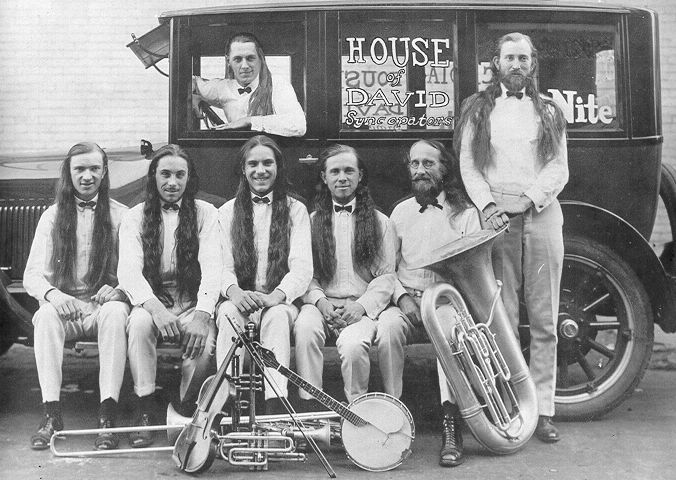
Music was another point of pride for group members, who encouraged universal involvement in bands, string quartets, jazz groups, and orchestras. The House of David operated its own marching band, which was converted into a touring jazz band as musical trends evolved. In the commune and at Benton Harbor’s House of David Park, instruments could often be heard.
A house (of David) divided
When the 1920s arrived, the commune reached its peak membership of around 1,000 followers. Of course, there were no new babies joining the group, so this number was substantial. But the ‘20s were also a time of scandal and struggle for the House of David.
As the ‘20s roared on, former members brought lawsuits against the group for lost wages (members were required to essentially provide free labor for the benefit of the group itself), and there were dozens of accusations against founder Benjamin Purnell for sexual misconduct, including abusing underage girls under the pretense of purification rites.
He was arrested in 1926 and faced a widely publicized trial, which resulted in the House of David being legally labeled “fraudulent.” Benjamin Purnell was remanded to a receivership, but he didn’t live long enough to see any serious long-term consequences play out, as he died only a month after the trial was complete.
What followed was a series of bitter disagreements within the remaining House of David membership, ultimately resulting in split factions. One of these newly formed groups was led by a successor Benjamin chose before his death, while another fell under the leadership of his widow, Mary Purnell. Even after the group split, its baseball pursuits were uninterrupted—instead, each faction simply created its own team.
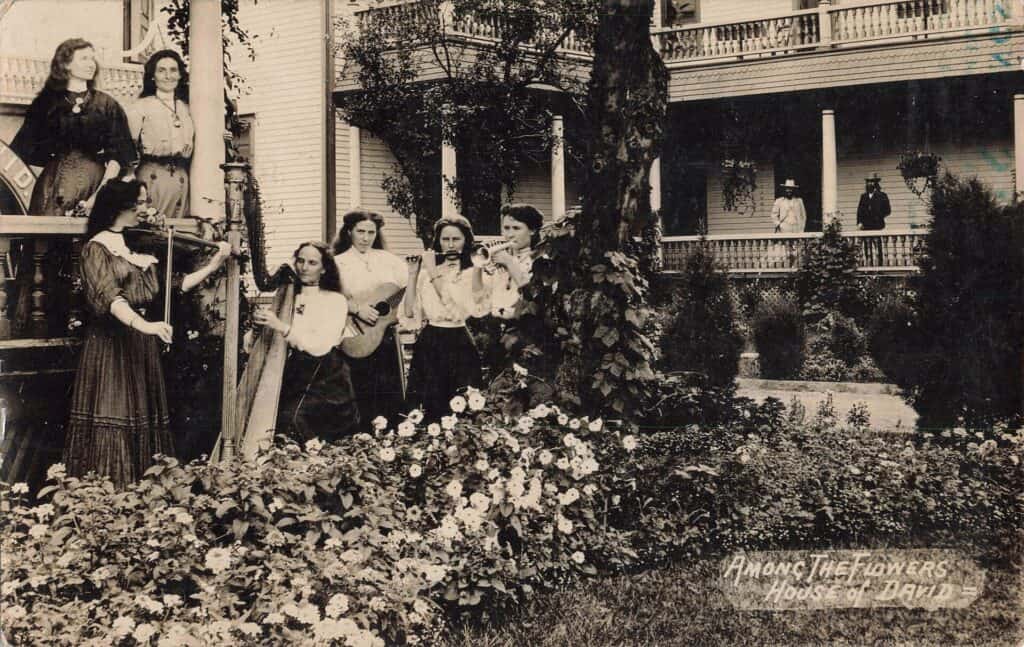
Surviving members pushed forward into the 1930s, which led to business success as they continued to partake in fruit production while operating motels, car dealerships, and even a hotel and vacation resort for visitors to the Benton Harbor area. Restaurants named for Mary Purnell also opened in town, along with a bakery.
As is the case with many religious communes, the “glory” days can’t last forever—and that’s particularly true when followers naturally age while promoting celibacy. Mary died in the early 1950s, and many other members also passed away in the ensuing years. Their businesses struggled to stay afloat. By 1990, only about 20 members of the House of David remained.
Today, the House of David remains active on a much smaller scale. Only one member still resides at the colony, while others serve on a board of trustees that oversees everything from historical records to artifacts. Remaining members have a long-term goal of creating a museum on the original grounds.
If you find yourself in Southwest Michigan, carve out time to learn more about the House of David. It’s no longer a bustling organization with a superstar baseball team and a gaggle of troubling scandals, but its influence on the region is undeniable—for better or for worse.