Read about Detroit’s fascinating role in Prohibition and how federal agents tried to dampen bootleggers’ spirits with a manmade liquor flood.
Today, it’s commonplace to meander the streets of Detroit and witness folks enjoying pints of beer on sun-kissed patios or glasses of wine at downtown bistros. Alcohol plays an (optional but popular) role in social events, sports games, concerts, and nearly every other element of leisure activities for the 21+ crowd in the Motor City.
But there was a time—just about a century back, in fact—when booze was a point of intense contention in Detroit and beyond. Here’s the story of Detroit’s role in Prohibition and the infamous raid that led to a “flood” of alcohol in the streets.
“Rum runners” and river transport
If you’ve got a basic grasp on US history, you’re likely familiar with the Prohibition Era. From 1920 to 1933, alcoholic beverages were broadly banned. It became illegal to produce, transport, import, or consume alcohol across the nation, and Michigan was no exception.
However, the legality of alcohol consumption didn’t exactly stop people from getting their hands on drinks. Where there was a will, there was certainly a way, and Detroit was uniquely geographically positioned for smuggling unauthorized beverages into the country.
The Detroit River creates a relatively short water barrier between the US and Canada, and alcohol bootleggers of the 1920s used this proximity to their advantage. As the years dragged on, Detroit gained notoriety for its illegal smuggling operations, which often consisted of so-called “rum runners” making their way to and from Ontario across the Detroit River via what was called the Windsor-Detroit Funnel.
Smuggling operations, most of which were organized and monitored by the infamous Purple Gang, varied based on season. When weather was warm, smugglers would use boats to covertly bring alcohol from Canada into the Motor City, where it would be distributed across local speakeasies or other “underground” destinations.
When the river froze over every winter, the smuggling didn’t stop—instead, organizers found unique (and decidedly dangerous) ways to traverse the ice, using everything from very lightweight cars to sleds and ice skates as tools for transporting alcohol across national boundaries.
By the end of the 1920s, the Purple Gang had something of a monopoly on the city’s smuggling operations—and their business endeavors didn’t end in Michigan. Alcohol brought in through Canada was ultimately sold to other gangsters across the region, including groups in Indiana, Ohio, and Chicago (yes, even Al Capone himself!).
According to reporting from the Detroit News, illegal alcohol operations were the second largest industry in the city, outpaced only by the auto industry itself.
The day it rained booze
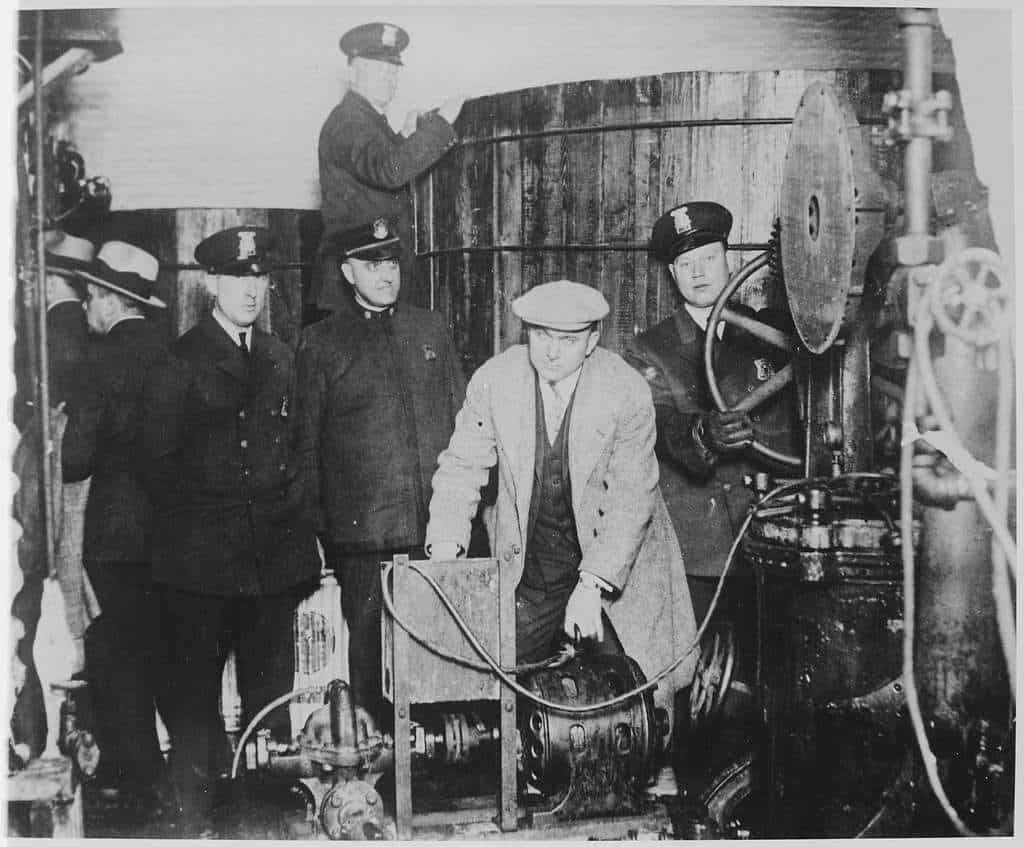
In 1929, federal agents decided to “prove a point” with what many said was a heavily staged and orchestrated raid on Detroit’s illegal liquor industry. On a Tuesday in December, officers showed up at an illegal distillery in the heart of the city. Upon unearthing thousands of gallons of alcohol, agents sought full visual effect and press attention as they confiscated the supply.
But they didn’t just grab barrels and hit the road—they destroyed the alcohol on site, ultimately dumping barrel upon barrel of booze from third-story windows. What resulted from this instance and other raids were dramatic photographs that agents hoped would “warn” bootleggers of what a raid might look like, along with something of a flood in the streets of Detroit.
While it’s unclear whether the December 1929 raid had the same effect, these dramatic “booze floods” often backfired. Locals were known to run toward raids with cups and other containers in hopes of catching some of the free-flowing discarded liquor.
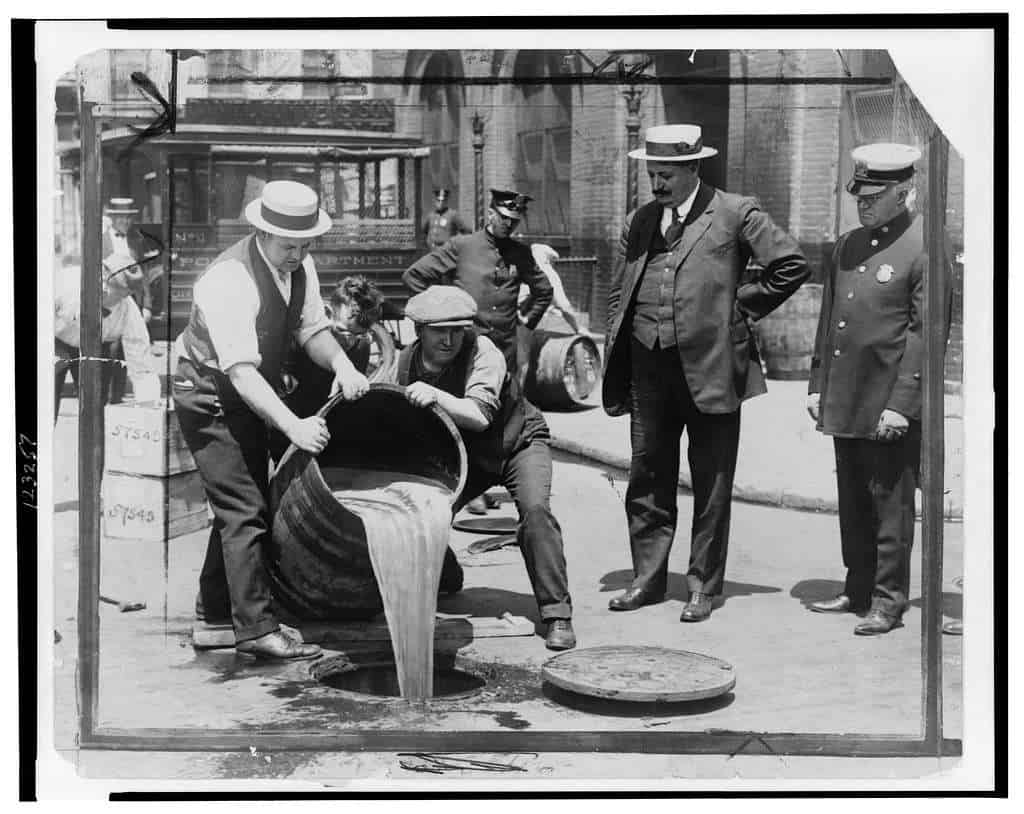
As laws against alcohol remained widely unpopular, federal agents certainly weren’t striking fear into the hearts of Detroiters when they disposed of gallon after gallon—plus, smuggling operations continued in the wake of raids, meaning that supply was quickly replenished.
Of course, most of us know that Prohibition ultimately ended in 1933 with the ratification of the 21st Amendment. Control of alcohol legislation was handed back to the states, and Michiganders celebrated the return of legal bars—no longer entirely controlled by organized crime and free from the risk of dangerous “rum runs.”
Liquor certainly comes with more than its fair share of troubling side effects, but there’s unlikely to be a time when alcohol isn’t in high demand. The ultimate failure of Prohibition proved that it’s tough to keep adults from enjoying their favorite drinks—even when they’re literally poured out into the streets of the Motor City.