Hundreds of neighborhoods across the state aren’t within easy reach of a grocery store, complicating many Pennsylvanians’ access to fresh food.
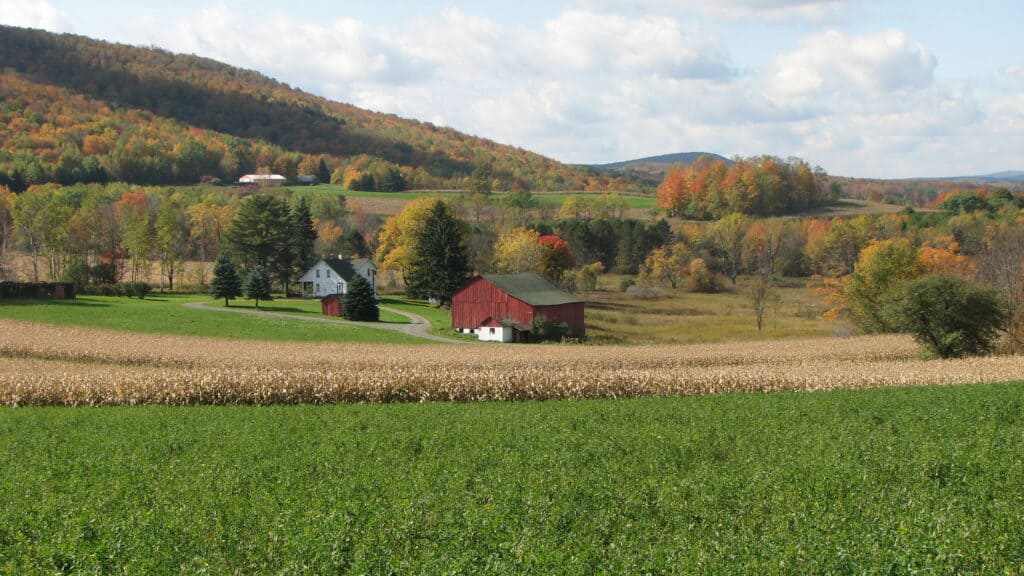
From apples and mushrooms to dairy milk and corn, Pennsylvania farms produce a bevy of food products—in fact, the state ranks fourth in the nation in agricultural production. Yet despite this abundance, many people in both urban and rural Pennsylvania must travel miles to reach the nearest grocery store. Hundreds of communities across the state have limited access to fresh, affordable food, from neighborhoods in and around Pittsburgh and Philadelphia to smaller cities and rural counties throughout the commonwealth.
These areas are often called “food deserts”—though because deserts are natural phenomena, many advocates and researchers prefer other terms, such as “food apartheid,” which better conveys that policy decisions and long-standing inequalities have shaped where fresh food is and isn’t available.
Read on to learn more about food access in Pennsylvania and efforts in the state to ensure that everyone can enjoy fresh, nutritious food.
What is a “food desert”?
In short, a “food desert”—or a place experiencing “food apartheid” or a “grocery gap”—is a neighborhood with limited access to food that is both affordable and nutritious. That might mean a community with convenience stores and fast food restaurants, but few—if any—supermarkets or stores selling fresh foods like produce or whole grains.
Residents often must travel farther than average to buy these foods, which can be especially difficult for low-income people without reliable transportation. Limited food access can lead to health issues from reliance on convenience foods and is also associated with increased rates of food insecurity.
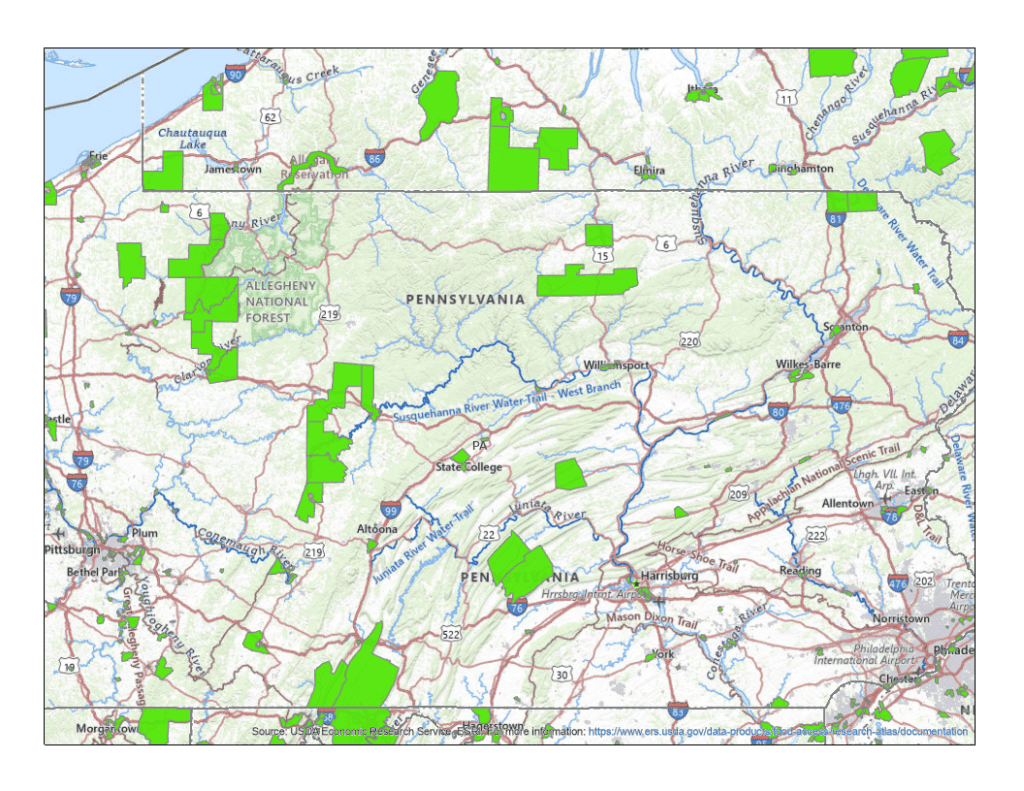
The U.S. Department of Agriculture has mapped areas with limited food access, by census tract, all across the country. The map is interactive, so you can search your zip code to explore areas with limited food access around you.
Low-income areas where many residents live far from a grocery store are scattered across Pennsylvania.
Beyond distance
The USDA map provides a broad overview of areas in Pennsylvania that could benefit from better food access. But food access involves more than just distance.
Transportation barriers, like unreliable transit or lack of a personal vehicle, can make getting to a grocery store difficult, even if it’s relatively close. (The USDA’s food access map includes another measure that incorporates vehicle ownership.)
Disabilities, inflexible work schedules, caregiving responsibilities, food prices, and a store’s food quality also play a role in whether people can consistently access nutritious food.
Where are Pennsylvania’s “food deserts”?
Food access issues don’t just affect a handful of isolated urban neighborhoods—rather, areas with limited access to affordable, nutritious food exist all across Pennsylvania in both dense urban neighborhoods and rural communities. And thanks to decades of discriminatory planning and economic disinvestment, these areas are more likely to be found in communities of color.
Philadelphia
In Philadelphia, most residents have easy access to processed, convenience foods, but limited access to supermarkets. Indeed, a 2019 city report found that 81% of Philadelphia food retailers are corner stores, convenience stores, gas stations, and the like, which typically sell little fresh and nutritious food.
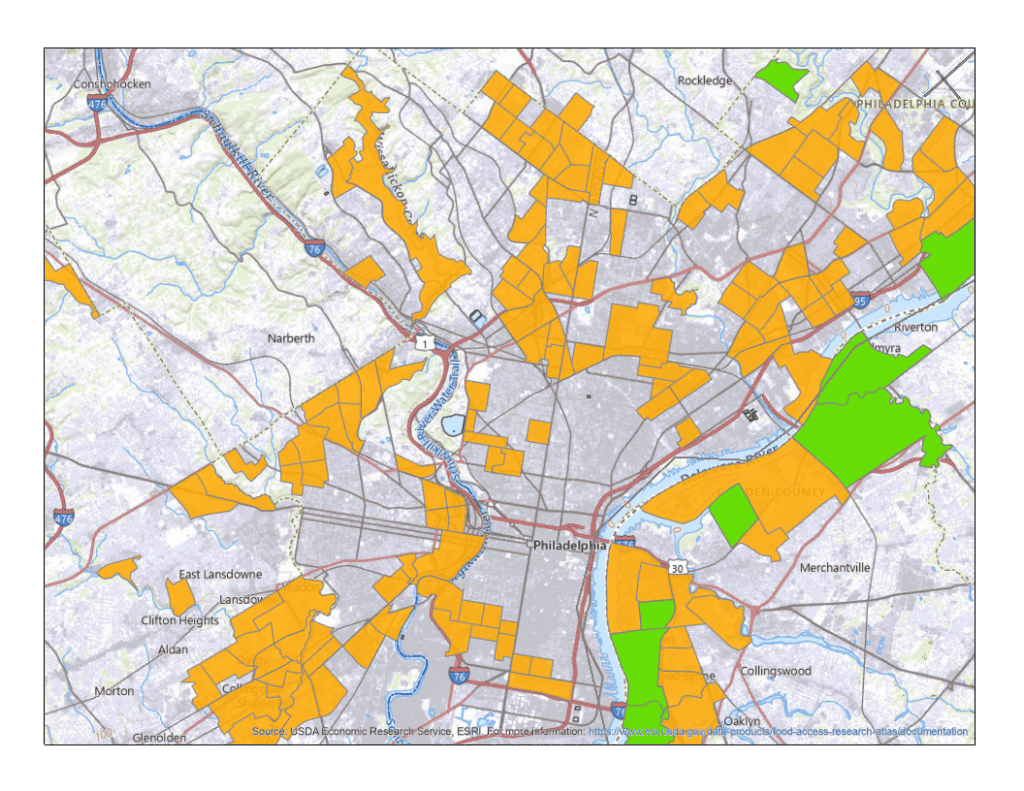
Neighborhoods with grocery gaps tend to overlap with areas of relatively high poverty and include parts of North, Southwest, and West Philadelphia.
The USDA food access map of Philadelphia includes low-income, low-access census tracts where many residents live more than one mile from a grocery store (shaded in green). It also includes low-income census tracts where many residents live more than half a mile from a grocery store (shaded in orange), a measure that better reflects food access barriers in dense urban neighborhoods.
Pittsburgh and Allegheny County
In Pittsburgh and its Allegheny County, food access issues are concentrated in historically disinvested communities, including redlined neighborhoods such as the Hill District and Homewood, as well as post-industrial towns along the Monongahela River. Many areas with grocery gaps are communities that experienced heavy population loss and economic decline after the collapse of the steel industry.
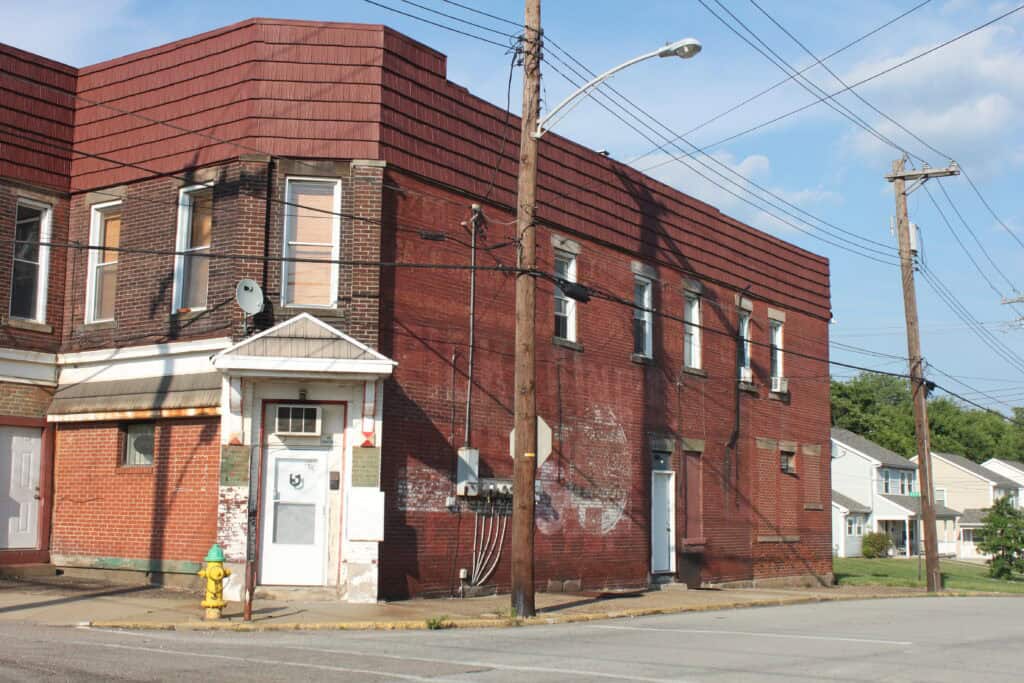
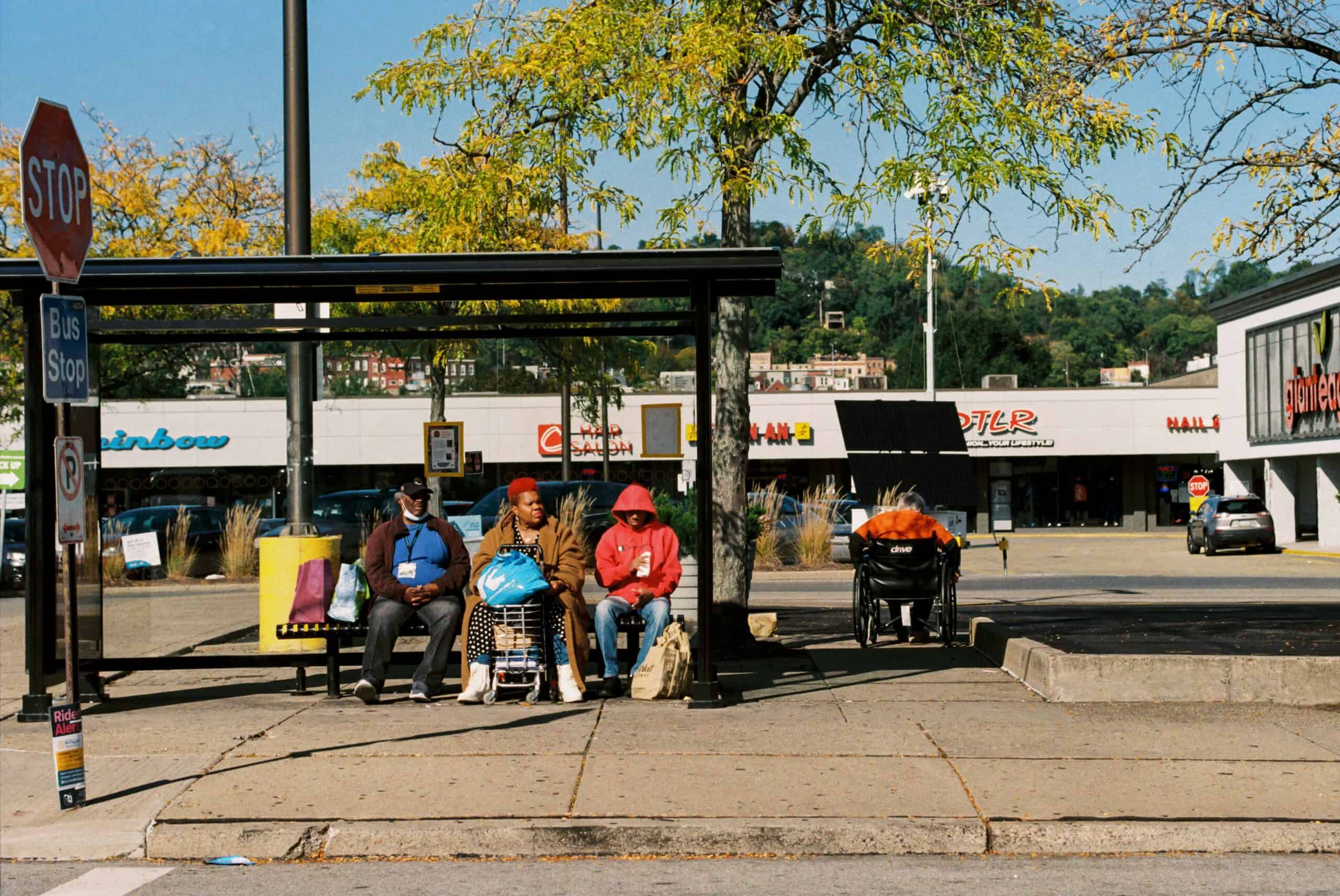
Transportation, or the lack thereof, can also complicate food access in and around the city. Pittsburgh’s steep terrain and river geography can make public transit difficult to navigate and time-consuming, which is especially challenging for those without cars.
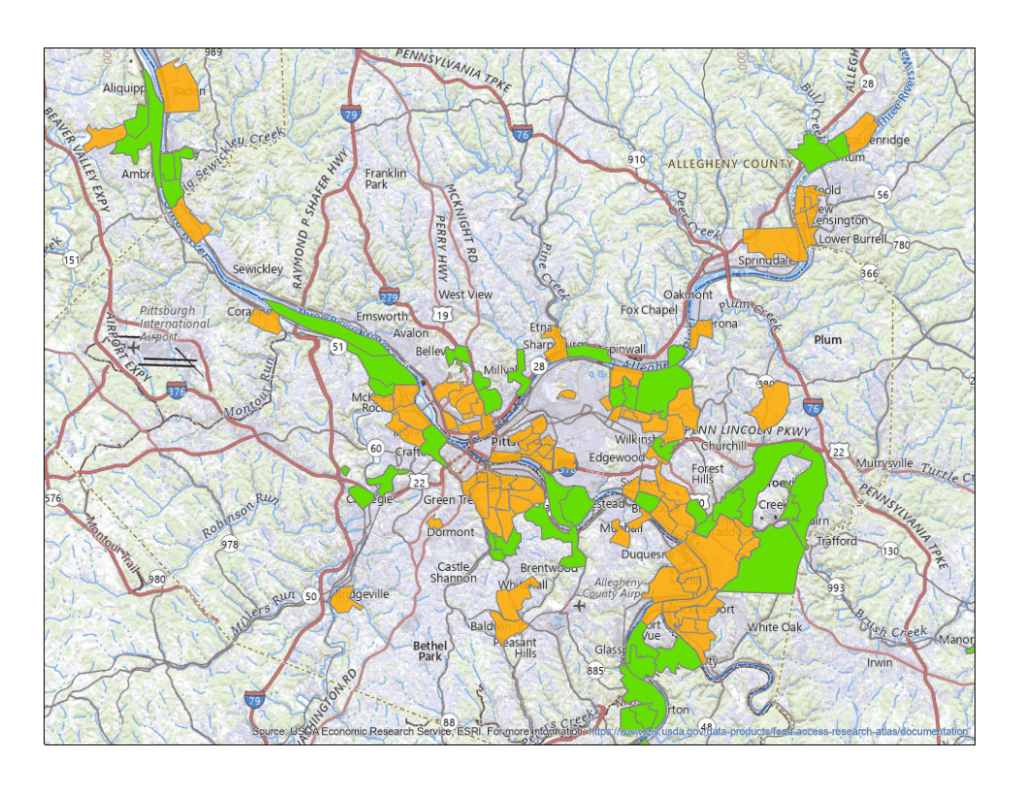
The USDA food access map of Pittsburgh includes low-income census tracts where many residents live more than a mile from a grocery store (shaded in green), as well as those where a large share of residents live more than a half mile from a grocery store (shaded in orange).
Smaller post-industrial cities
Many neighborhoods in Pennsylvania’s smaller cities, such as Erie, Harrisburg, Reading, and Allentown, also face food access problems, particularly in areas with high rates of poverty and legacies of economic disinvestment.
This wasn’t always the case: Decades ago, many of these communities had several grocery stores where residents could shop close to home. But grocery store consolidation and the rise of national supermarket chains led to the shuttering not just of independent groceries, but also chain supermarkets in urban neighborhoods as companies shifted focus to larger, more profitable suburban stores.
Rural Pennsylvania
“Food deserts” are usually discussed as an urban issue, but people in rural Pennsylvania—which encompasses 48 of the state’s 67 counties—also face challenges accessing fresh, affordable food, even if they’re surrounded by agricultural land. Rural Pennsylvanians with limited food access live in low-income communities and may need to drive 10 miles or more to reach a grocery store. Given the country’s car-centric culture and poor rural transit infrastructure, this can be extremely difficult without a vehicle, especially for seniors and people with disabilities.
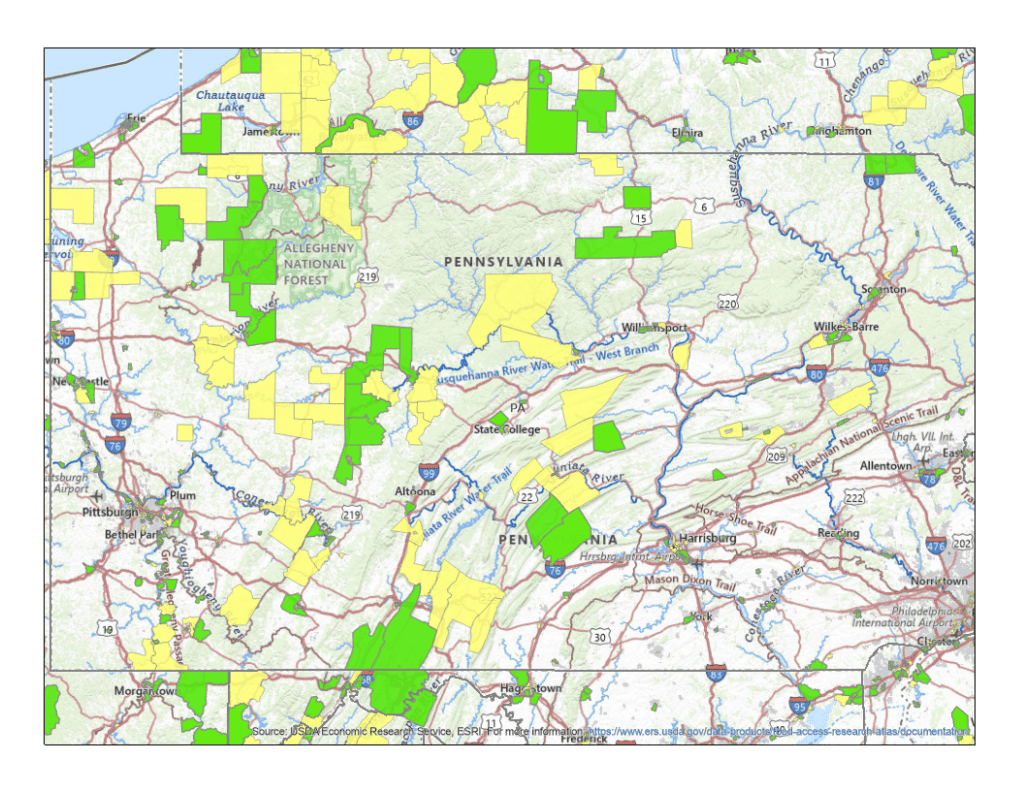
This USDA map of Pennsylvania shows the green-shaded areas where residents have limited food access, and it also includes a measure identifying areas where a significant number of households have no vehicle access or live more than 20 miles from the nearest grocery store (shaded in yellow).
How communities are fighting for food justice
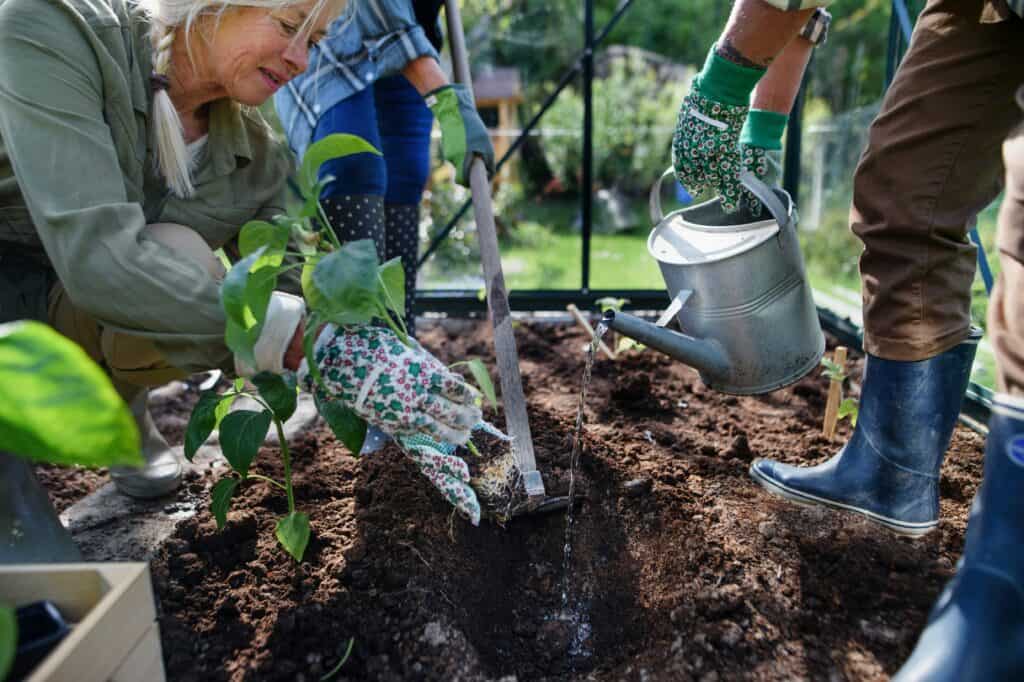
Across the commonwealth, community groups and local residents are devising their own solutions to limited food access, often focusing on community control over food systems rather than relying only on grocery store chains. This often looks like community gardens and urban farming, which center food sovereignty—where people have agency over the food they grow and eat.
“Gardens are a demonstration of agency and power,” public health professor, farmer, and Philadelphia food justice advocate Ashley Gripper told Health Policy Research Scholars in 2025. “They’re about feeding ourselves, caring for each other, and creating self-determined paths to healing and wellbeing,” she said.
In Philadelphia, Black neighborhoods and low-income communities have, on average, more community gardens and urban farms than other areas. Local groups like Soil Generation and Sankofa Community Farm help further this work, increasing access to fresh food while also building community economic power.
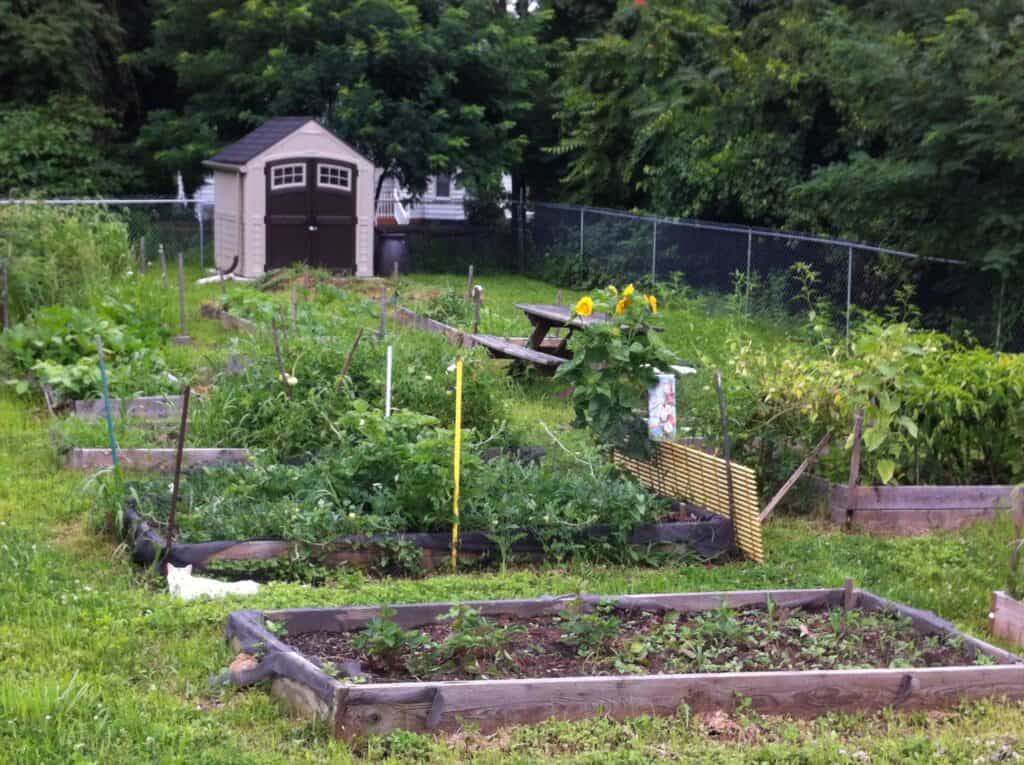
Elsewhere in Pennsylvania, communities are working to shrink the grocery gap with myriad efforts that include community gardens and urban farms as well as mobile food markets, community refrigerators, farmers market food benefit programs, or even simply driving neighbors in need to the grocery store.
At the state level, Pennsylvania’s Fresh Food Financing Initiative provides grants to retail businesses aiming to increase fresh food access in underserved neighborhoods, supporting residents as well as local farmers.
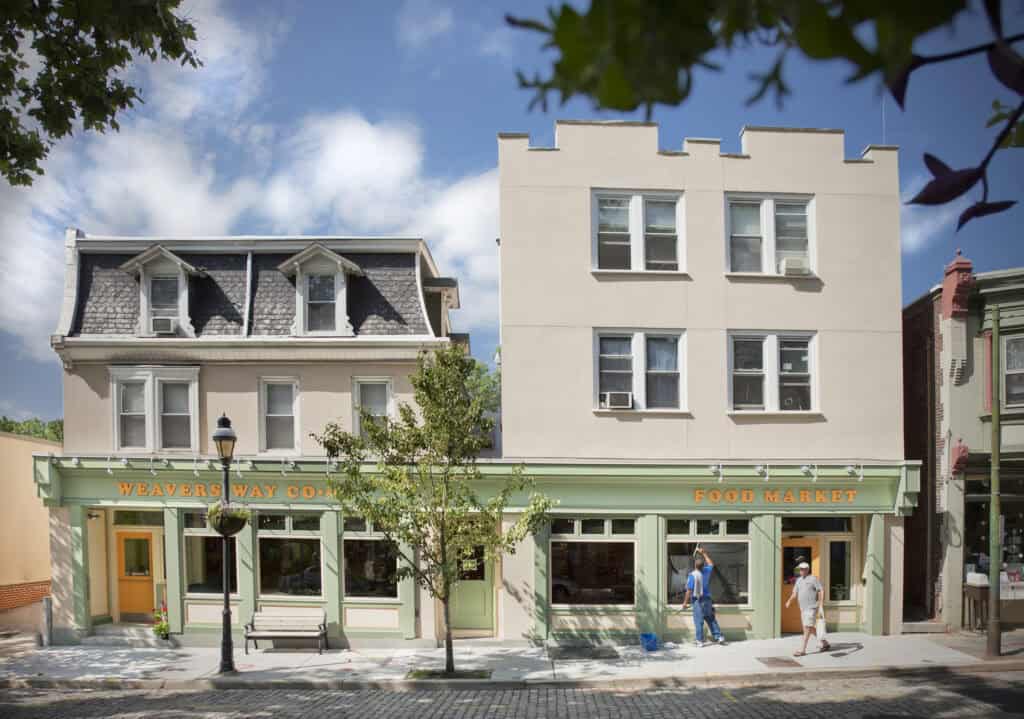
Still, advocates say that creating lasting change isn’t as simple as opening a new supermarket, and that truly strengthening food access will require addressing the deeper structural forces that shape both food systems and the economic barriers to healthy food.