From ceremonial-grade pours in the East Village to a shaken matcha cocktail in Brooklyn, 12 NYC cafes prove there’s more to matcha than a green latte.
Matcha is having a moment in New York City. Can you still get a cup of coffee? Sure. Between Starbucks and Dunkin’ alone, hundreds of coffee shops can be found throughout the five boroughs. But even these major corporate players are getting in on the action.
But a wave of more distinct matcha offerings has cropped up from Staten Island to the Bronx, and everywhere in between. If you’re wondering where to find the best matcha in New York City, start by understanding what to look for.
3 things to know about matcha
What exactly is matcha?
Matcha is a ground powder made from steamed, dried, and ground tea leaves (tencha). The tea is typically shaded for four weeks, steamed to stop oxidation and keep its bright green color, then dried and ground into a powder.
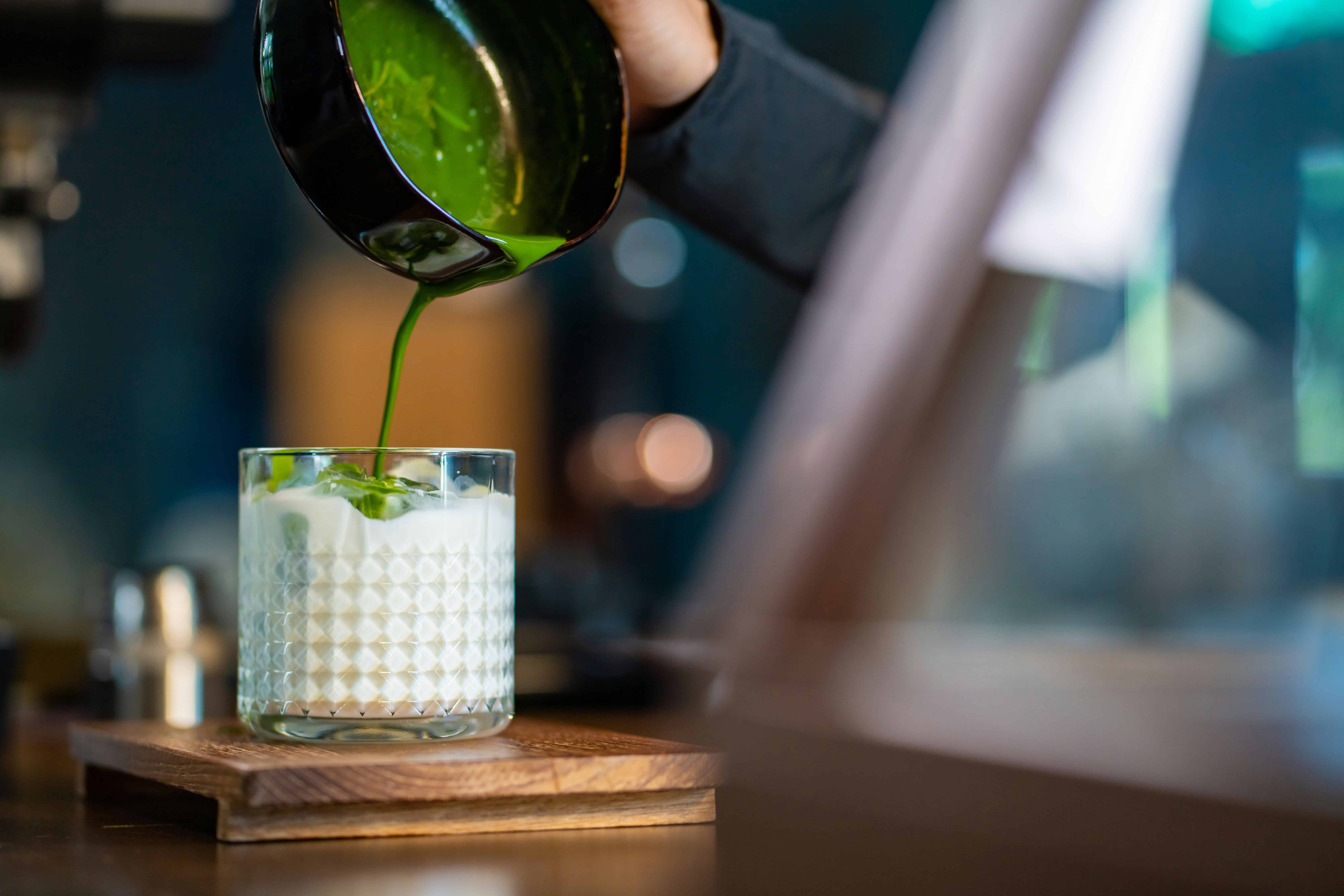
Using a bowl (chawan), whisk (chasen), and hot (but not boiling) water, the matcha is transformed into a velvety, bright green elixir that can be used in both hot and cold beverages.
Don’t necessarily be swayed by “ceremonial grade” nomenclature, which can often be found on menus. The term isn’t regulated by any governing body and is often used as a marketing tagline. If you want real insight into the source and quality, ask your barista about the origin of the cafe’s tencha.
Does matcha have caffeine, and how does it compare to coffee?
Short answer: yes. Matcha does have caffeine, and like other teas, the amount varies. Reputable cafes measure matcha in grams, so the more matcha powder, the higher the caffeine level. According to Healthline, because of these variances, an 8 oz. cup of matcha can have 38 to 176 mg of caffeine. By comparison, an average cup of coffee contains approximately 100 mg of caffeine.
What are the health benefits of matcha?
Matcha is a type of green tea known for its catechin, a type of antioxidant. Other properties include polyphenols (anti-inflammatory) and the amino acid L-theanine (improved concentration). While an occasional matcha drink is unlikely to overhaul your well-being, preliminary research suggests it may offer health benefits.
How much does a matcha latte cost?
As a point of reference, we’ve indicated the cost of a typical matcha latte at each cafe, when available. Variables include the quantity and quality of the matcha used, the type of cafe (grab-and-go vs. sit-down cafe), and location. Milk alternatives (oat milk is common) and add-ons may also affect the cost of your matcha latte.
Now that you’re prepared, here are 12 places to find the best matcha in New York City, borough by borough.
Manhattan
Setsugekka, East Village
Where: 74 East 7th St.
Matcha latte: (hot or cold) $6-$16.50
Located in the East Village, Setsugekka (which translates from three Kanji characters meaning snow, moon, and flowers) offers a traditional teahouse experience, where customers can enjoy a range of teas at the bar or on traditional tatami mats.
The cafe sources tencha from throughout Japan in its leaf form, then grinds it on-site. In addition, tea master Souheki Mori offers tea ceremonies and lessons for a deeper understanding of Japanese tea culture.
Kustom, Hell’s Kitchen
Where: 400 West 47th St.
Matcha latte: From $7
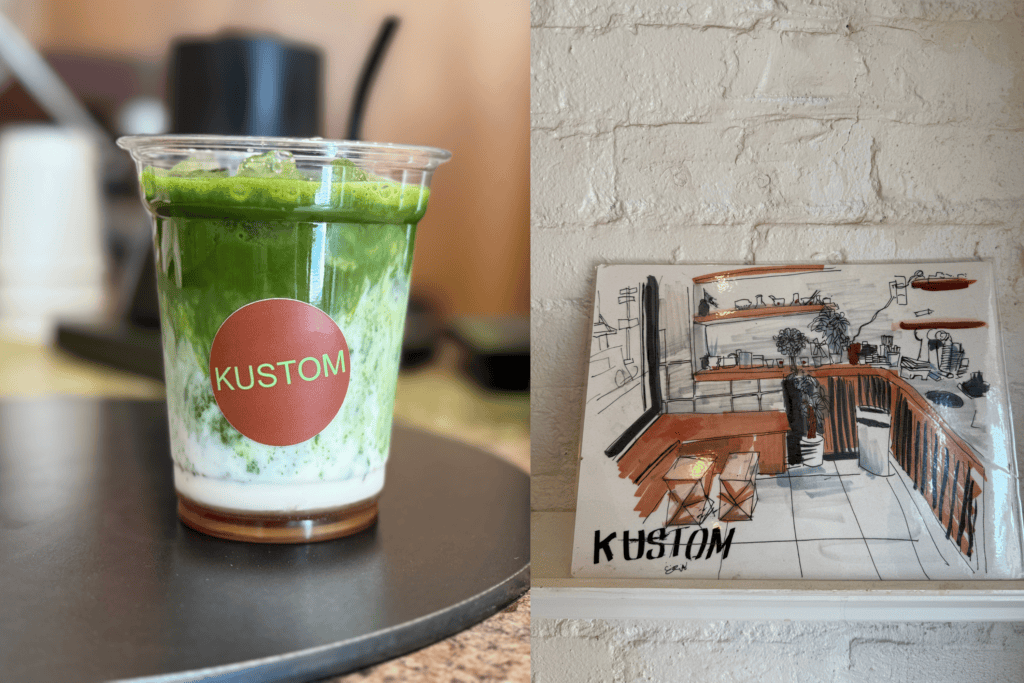
Located just west of the Theater District, consider grabbing a matcha rather than an espresso (although you can get that, too) at Kustom before heading to your Broadway show.
After extensive taste-testing, founder Bob Kim made a bold move. He switched from Japanese matcha to sourcing ceremonial-grade matcha directly from a farm on South Korea’s Jeju Island.
“The reputation of a particular region matters less than the actual taste and quality of the product,” says Kim. “At the same time, we’re excited to introduce New Yorkers to the distinctive character of Jeju-grown matcha and show that exceptional matcha can come from Korea as well.”
The tiny storefront offers a handful of seats, mellow background music, and showcases a few pieces of original art that pay tribute to the small business.
12 Matcha, Noho
Where: 54 Bond St.
Matcha latte: From $7
12 Matcha offers retail matcha powders and an on-site cafe in partnership with fifth-generation, Japan-based tea wholesaler Hotta Katsutaro Shoten and tea master Haruhide Morita. It sources its tea from Kyoto’s Shirakawa region and uses only first-harvest leaves.
12 Matcha goes a step further than most, filtering its water through a custom system using binchotan, a Japanese charcoal made from oak. The building has flair, too, dating back to 1874. French architecture studio Ciguë reimagined the cast-iron infrastructure into an expansive two-level environment, with the top floor offering a light-filled cafe and the lower level serving as a multi-functional space for tastings, tea research, and product development.
Brooklyn
Matchaful Ritual Bar
Where: 92 Berry St., Williamsburg
Premium Limited Reserve Matcha: From $9
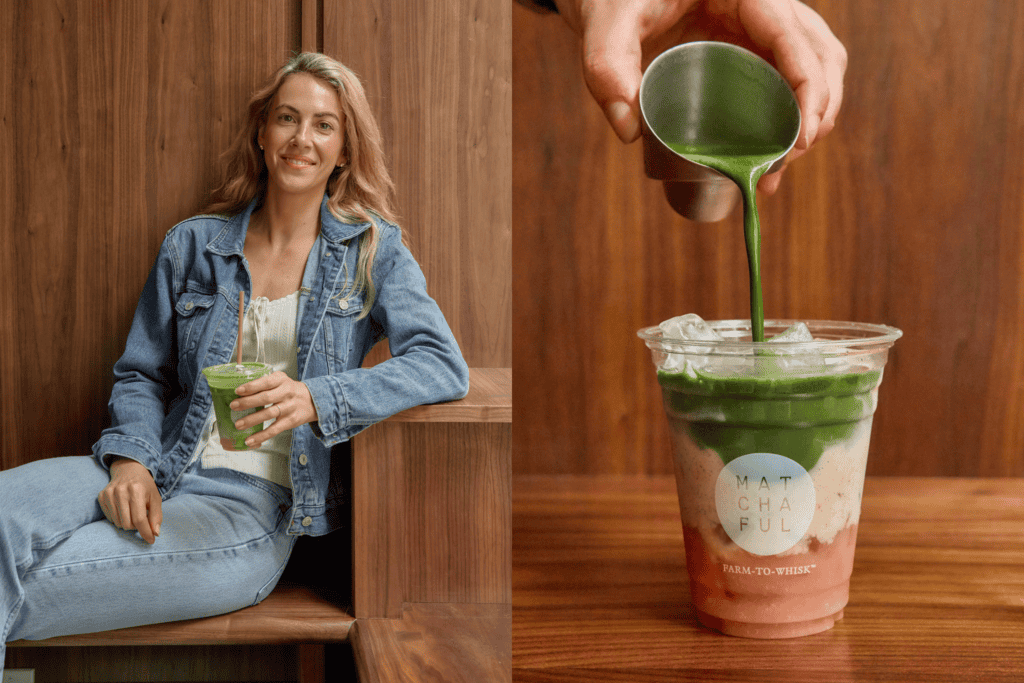
Matchaful founder Hannah Habes is one of the few female matcha entrepreneurs in the country, leveraging her experience with a large-scale food and beverage company and her passion for clean eating.
After taste-testing more than 100 varieties and a research trip to Japan, Habes settled on a sustainable farmer in Shizuoka Prefecture. The farmer manages the entire process in-house, shading the tea leaves with solar panels that help supply power to nearby towns.
With nine cafes throughout Manhattan and Brooklyn, including the recently opened Park Avenue location and soon-to-come Tribeca outpost, matcha enthusiasts will want to head to the Matchaful Ritual Bar to discover some of the best matcha in New York City.
Reservation-only 45-minute classes include guided tastings, limited reserve matcha flights, and participatory whisking ceremonies.
Kettl, Greenpoint
Where: 70 Greenpoint Ave.
Matcha latte: From $6.50
Zach Mangan founded Kettl in 2010, and, with wife and business partner, Minami, spent two years developing relationships with Japanese tea producers. The company’s flagship Brooklyn location offers prepared matcha beverages, loose teas, matcha, and ceramics sourced from four regions throughout Japan.
Intimate classes at the Greenpoint Ave. location (not to be confused with Kettl Matcha Sen Mon Ten, its other Brooklyn outpost at 38 Norman Ave.) include an introduction to matcha, a deconstruction of the matcha latte, and a guided omakase experience featuring three seasonal selections of loose-leaf teas and one stone-milled matcha.
Katabaru, East Williamsburg
Where: 128 Meserole St.
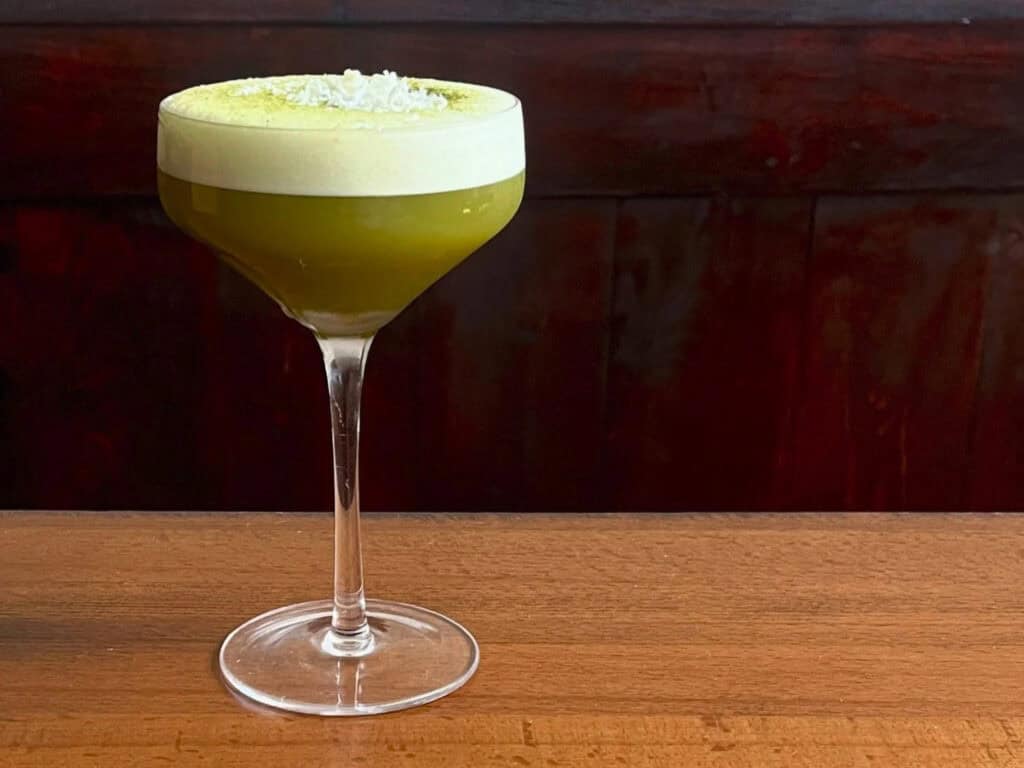
Matcha cocktail: $18
Tea houses and cafes have entered the world of matcha madness, combining it with everything from strawberry puree to espresso (called a “dirty matcha” and packing a caffeine jolt). Now, mixologists are getting in on the action.
The menu showcases southern Japan’s Kyushu region, including specialties like Nagasaki Champon, thin noodles in a chicken and seafood broth topped with pork belly, shrimp, clams, chikuwa (Japanese fish cake), cabbage, and bean sprouts. But matcha finds its way onto the menu, too.
Fair Moon Awaits, a shaken combination of matcha, aged rum, pineapple, lemon, honey, and frothy egg white, has been Katabaru’s signature cocktail. The Grass Pillow, meanwhile, pairs matcha with cream, honey, soda, and vanilla, for a nostalgic nod to a classic egg cream.
For dessert, consider the matcha tiramisu, prepared with Uji matcha, ladyfingers, whipped cream, and tsubu-an, a sweet red bean paste.
Queens
Verse, Astoria
Where: 28-13 Astoria Blvd.
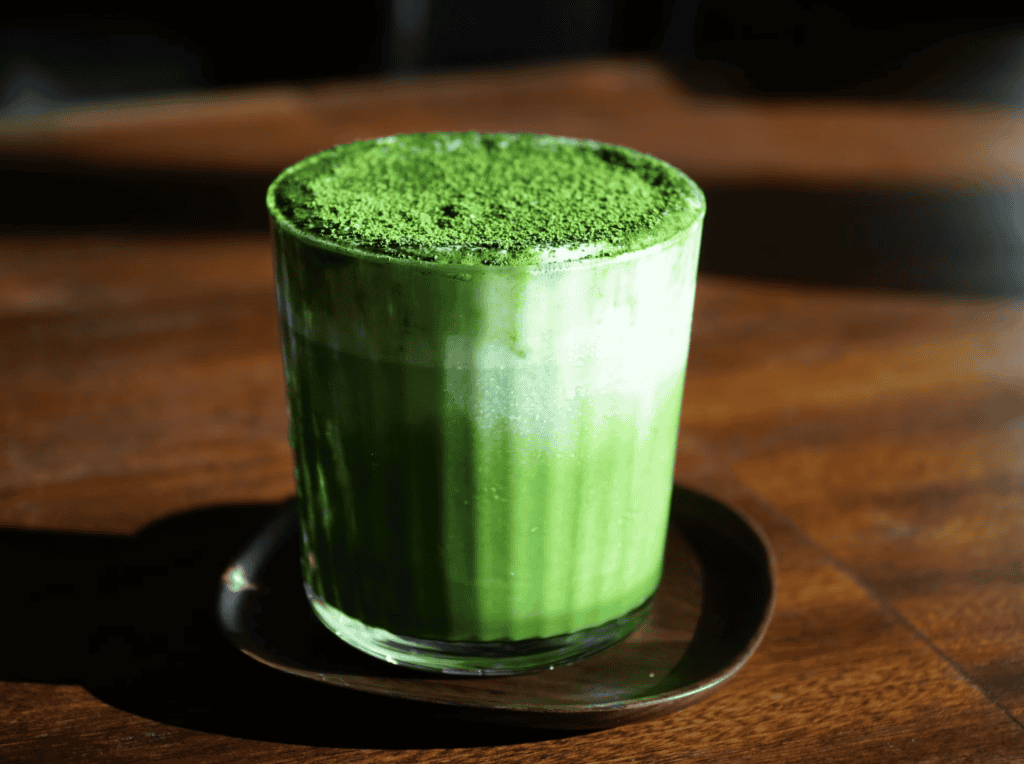
Iced matcha Einspänner: $6.50
In Astoria, Verse lives up to its name, offering seasonal fusion beverages like honeydew matcha and berry yuzu matcha.
Beyond ingredients, Verse also finds inspiration in European coffeehouse culture. The iced matcha Einspänner originates from Vienna and is typically made with espresso or strong coffee. Here, matcha replaces the base, then topped with whipped cream and dusted with matcha powder.
A full pastry case offers light bites, or for a more substantial meal, the chirashi bowl overflows with raw fish layered on seasoned sushi rice.
Taku Parlor, Long Island City
Where: 5-50 50th Ave.
Matcha soft serve: $7.50
Takumen celebrates its tenth anniversary as a go-to izakaya spot in Long Island City. “Historically, Izakaya was where people gathered and bonded over drinks,” says chef, restaurateur and creative director Kiyo Shinoki. “It was often a crossroad of cultures.”
The expansive menu reflects Shinoki’s perspective, with everything from miso-glazed chicken wings to Hawaiian tuna poke. More recently, the venue added Taku Parlor, a shop-in-shop concept offering soft-serve ice cream (vanilla, matcha, or swirl).
For matcha and more, try the decadent cream anmitsu, a composed dessert towering with hojicha kanten, shiratama mochi, anko (red bean paste), matcha soft serve, kinako, and homemade maple sauce.

Nippon Cha, Bayside
Where: 39-34 Bell Blvd.
Matcha latte: From $7
Nippon Cha traces its roots to Japan’s Mizoguchi family, whose tea legacy spans roughly 400 years. Over the centuries, the company has expanded to become an international distributor of some of the country’s finest teas.
Locals and visitors alike can experience single-origin, first-harvest matcha at the Bell Blvd. location, where you can try usucha, the purest form of whisked matcha, along with various hot and iced drinks.
The full menu makes it worth the trip (accessible by Long Island Railroad from Manhattan), as does the retail selection of matcha powders and preparation tools.
The Bronx
Sundays Off Cafe, Pelham Bay
Where: 1508 Crosby Ave.
Matcha latte: $7.50
Even though Central Park gets most of the attention, Pelham Bay Park is New York City’s largest municipal park at over 2,700 acres. And a day in the great urban outdoors requires an energy boost.
Enter Sundays Off Cafe. Self-described as a “mom and pop” spot for coffee, Sundays Off Cafe is perfectly positioned for a grab-and-go spot before exploring the park from its southwest entrance. Take the 6 train from Grand Central, and in under an hour, it’ll feel like an entirely different city.
Sundays Off may not offer the most expansive matcha menu, but it fits nicely into an itinerary for explorers who want to see another side of New York City.
Staten Island
Cafe Juliet, Castleton Corners
Where: 1883 Victory Blvd.
Matcha latte: $6.50-$7.95 (hot or iced)
If you’re looking for an excuse to take the no-cost Staten Island Ferry, take note of Cafe Juliet (which will require an additional bus ride once arriving at St. George Terminal).
Casual, friendly counter service and a large number of menu items, from wraps and avocado toast to organic egg dishes, make Cafe Juliet the go-to spot for a hearty brunch. And then there’s the matcha.
Classic matcha lattes (hot or cold) are available, but why settle when the best-selling Cosmo & Wanda (matcha latte topped with strawberry cold foam), an insider’s nod to Nickelodeon’s animated series “The Fairly OddParents,” beckons?
“Best” may be subjective, but there is no arguing that finding matcha in New York City is an embarrassment of riches.