Planning a camping trip? Explore the best dispersed camping in California, from Big Sur’s coastal ridges to remote forests and scenic desert hideaways.
Whether you’re looking to wake up to waves crashing along the Big Sur coast or fall asleep under the stars in a quiet desert canyon, California has no shortage of incredible places to camp. And with dispersed camping available on millions of acres of public land, you can experience some of the state’s most spectacular landscapes for free and without the crowds you might find at a traditional campground.
However, dispersed camping isn’t the same as pulling into a developed campground. Most sites lack restrooms, drinking water, picnic tables, and fire rings, so you’ll need to come prepared and follow Leave No Trace principles to help protect these places for future visitors. If you’re ready to trade amenities for solitude and unforgettable views, keep reading to discover some of the best spots for dispersed camping in California.
What is dispersed camping?
Dispersed camping takes place outside of a developed campground, usually on public lands like National Forests or Bureau of Land Management (BLM) areas. This type of camping is free, but it’s also quite primitive—you don’t typically have access to amenities you’d find at a traditional campground, such as restrooms, running water, or trash collection.
Rules for dispersed camping in California
While there aren’t check-in times or quiet hours like at most regular campgrounds, there are still rules you have to follow while dispersed camping in California.
First, there is a limit to how long you can camp on public lands in the state: no more than 14 days within any period of 28 consecutive days. If you’re going to set up camp and then go explore nearby areas, remember that you can’t leave personal property unattended for more than 10 days.
While most public lands in California are fair game for dispersed camping, stay away from areas specifically marked “closed to camping” or where camping might adversely affect local wildlife species or natural resources.
Campers are required to pack out all their trash and must dispose of any sewage or hazardous materials in a manner that doesn’t impact or pollute the surrounding area.
Now that we’ve covered the basics, here are six of the Golden State’s best dispersed camping spots.
Alabama Hills
For dispersed camping with cinematic mountain views, head to Alabama Hills, a formation of rounded rocks and hills located at the base of Mt. Whitney in the Sierra Nevada. The picturesque area has served as a backdrop for countless TV shows and movies, including “Iron Man” and “Gladiator.”
There are 48 dispersed camping sites in Alabama Hills, with about half of them located along scenic Movie Road. Dispersed camping is only allowed at designated sites, which are easy to find because they’re marked by a brown sign with a tent symbol on it. There are also signs indicating where camping isn’t allowed (featuring a tent and a red line).
About 20 of the sites are only accessible to those with a four-wheel-drive vehicle. This map shows which sites require a specialized vehicle and which don’t.
Big boulders help create some privacy between sites. Beyond the boulders, campers can enjoy views of Mt. Whitney and other parts of the Sierra Nevada.
Camping in Alabama Hills requires a free permit, but the permit doesn’t guarantee you a spot. Instead, the sites are available on a first-come, first-served basis. A free campfire permit is also required.
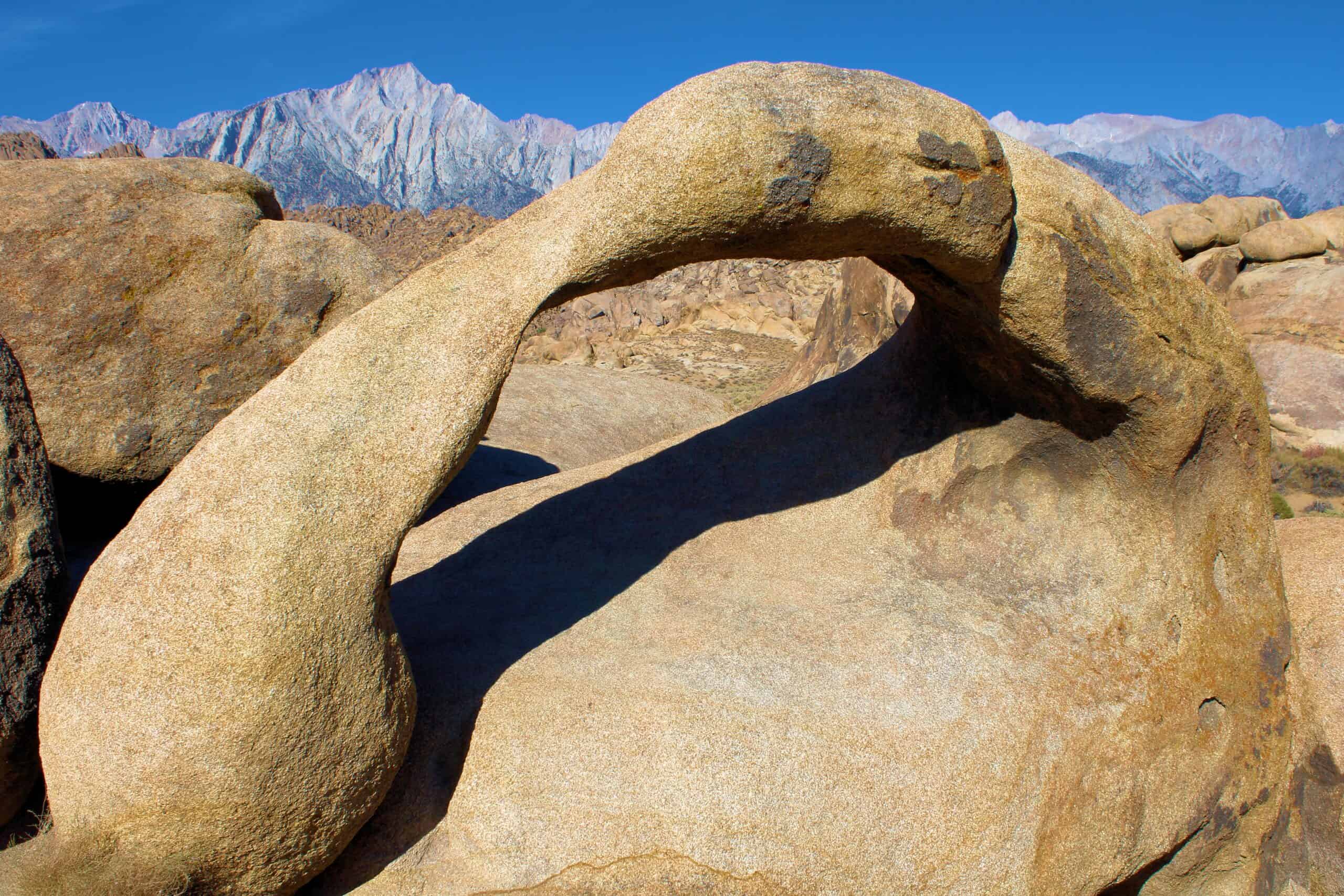
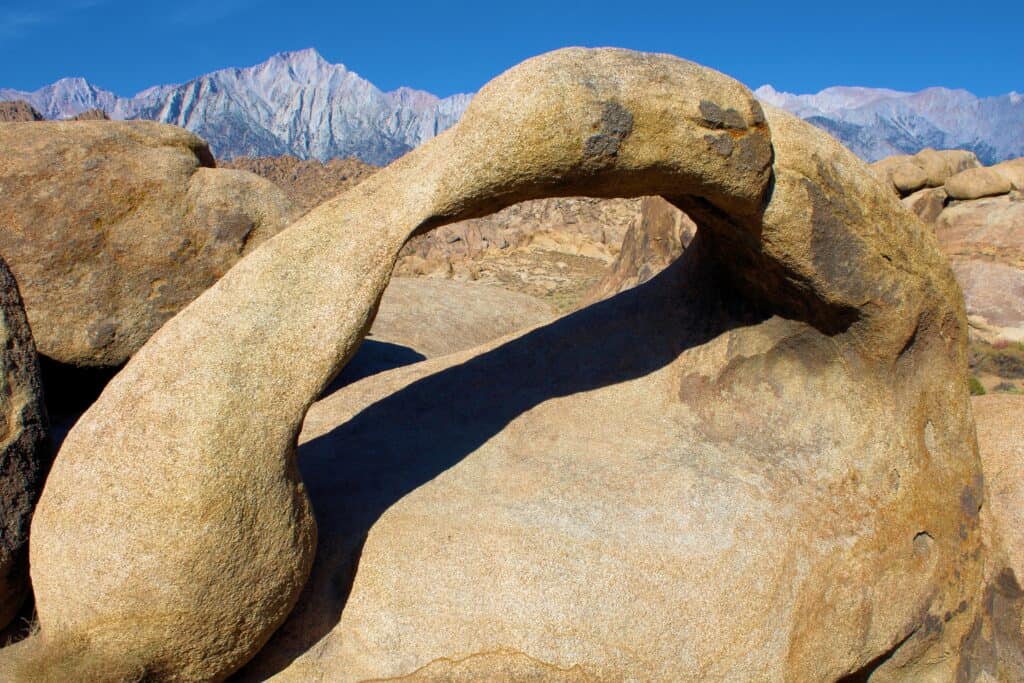
Hiking and climbing are both common activities in the Alabama Hills area. The short, mostly flat Mobius Arch Loop Trail is a popular option because it leads to Mobius Arch, an iconic rock formation that frames the Eastern Sierra peaks.
Clear Creek Management Area
Clear Creek Management Area spans 75,000 acres in central California and offers a rugged, remote camping experience. More than 63,000 acres are public land, meaning you have plenty of room to spread out and explore.
The landscape features a mix of grasslands, woodlands, and rocky ridgelines, with elevations ranging from 1,830 feet at Pine Canyon to 5,241 feet atop San Benito Mountain.
Depending on where you camp, you may find views of the Central Valley and the Sierra Nevada Mountains, while other areas feel secluded and deep in the backcountry. One important thing to keep in mind: due to naturally occurring asbestos, camping is prohibited within the Serpentine Area of Critical Environmental Concern (ACEC).
Clear Creek is also popular among rockhounds. The area is considered one of the most mineral-rich regions in California, with more than 150 semi-precious minerals and gemstones documented here, including jadeite, serpentine, cinnabar, and the rare blue gemstone benitoite, which is California’s official state gem.
Before visiting, make sure to obtain the appropriate permit. Depending on your plans, you may need a vehicle permit, a day-use permit for certain protected areas, or both.
Kelso Dunes
Kelso Dunes is a popular hike in the Mojave National Preserve, and it’s also an excellent spot for dispersed camping.
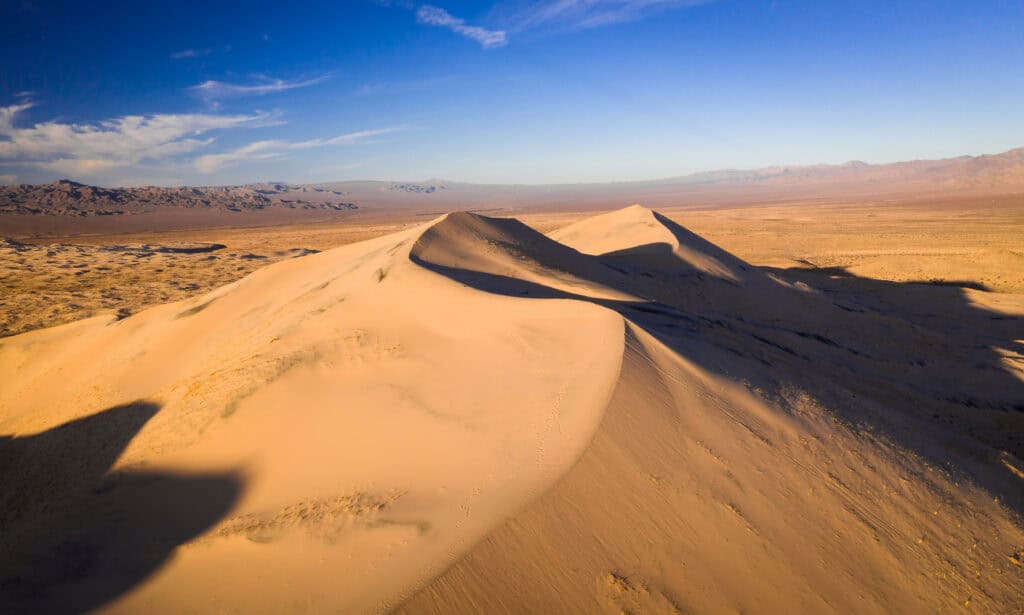
Campsites sit at the edge of the stunning sand dune field, which spans about 45 square miles. Also called “singing” or “booming” sands, the dunes are known for the loud booming sound they produce when dry sand avalanches down them.
Camping at Kelso Dunes is allowed only at established undeveloped campsites, all of which are first-come, first-served. The campsites are well spaced out, and some have fire pits.
The area is also known as an excellent spot for stargazing.
Modoc National Forest
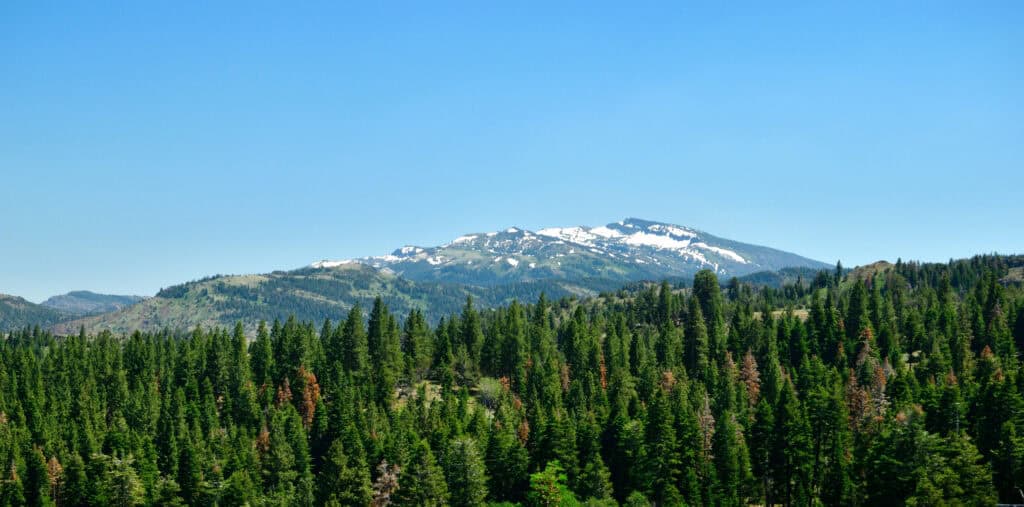
Modoc National Forest covers more than 1.6 million acres and is home to diverse landscapes ranging from dense forests and open meadows to rugged mountains and volcanic plateaus. With vast stretches of public land and relatively light visitation compared to some of California’s more famous forests, it’s an ideal destination for campers seeking solitude and lots of space.
Devil’s Garden Plateau, a mile-high volcanic plateau, is a popular spot for dispersed camping that’s known for its great views and quiet surroundings. Plus, the plateau’s remote location and minimal light pollution make it one of the best places in California for stargazing.
Modoc National Forest is also home to the Warner Mountains, a dramatic 60-mile-long range that rises to almost 10,000 feet. Here, you can enjoy forested campsites, scenic overlooks, and access to hiking trails with impressive views of the surrounding valleys and high desert landscape.
If you’re looking for more established dispersed camping areas, Duncan Reservoir South Site offers a peaceful setting with fire rings and easy access via a graded dirt road. Tickner Road is another favorite, with spacious campsites among towering pines and enough room to accommodate larger RVs and fifth-wheel trailers.
Painted Canyon
With its prime location about 30 minutes south of Joshua Tree National Park in the Mecca Hills Wilderness, Painted Canyon is a favorite spot among dispersed campers looking for dramatic desert scenery and easy access to hiking. The canyon is famous for its slot canyons and striking geological formations that glow in shades of red, gold, and pink at sunrise and sunset.
Dispersed camping is available on public land near the Painted Canyon Trailhead, making it easy to spend the night before exploring one of Southern California’s most popular desert hikes. The nearby Ladder Canyon and Painted Canyon Loop leads hikers through winding slot canyons, over a series of ladders, and past towering canyon walls that showcase the region’s unique geology.
Despite its proximity to Joshua Tree, Painted Canyon offers a quieter camping experience with plenty of opportunities to spread out among the desert landscape. Just be sure to come prepared with plenty of water, as there are no services or reliable water sources in the area.
Additionally, summer temperatures regularly exceed 100 degrees Fahrenheit here, and access roads can become sandy or impassable after heavy rain, so it’s a good idea to check current conditions before your trip.
Prewitt Ridge
Prewitt Ridge is perched high above Big Sur and boasts beautiful views of the rugged coastline and blue waters below. There are plenty of informal campsites scattered along the ridgeline, many of which are positioned to take full advantage of the area’s scenery.
There are also several hiking trails nearby if you want to explore the area further.
The steep access road to Prewitt Ridge can be rough and dusty, particularly after storms, so a high-clearance vehicle is recommended. It’s also important to note that campfires are strictly prohibited here because the area is so dry, but portable gas stoves are allowed with the proper permit.
Dispersed camping tips
Dispersed camping offers more freedom than staying in a developed campground, but it also comes with more responsibility. Since there are no restrooms, trash services, or designated campsites, following a few best practices helps protect the landscape and ensures these areas remain open for future visitors.
Choose your campsite carefully
Whenever possible, set up camp in an area that’s already been used rather than creating a new campsite. Reusing established spots helps minimize damage to vegetation and prevents unnecessary erosion.
Keep your campsite at least 200 feet away from lakes, rivers, and streams to protect water quality and wildlife habitats. If you do need to camp in an unestablished area, choose durable surfaces like bare soil, gravel, or rock instead of fragile plants or grasses.
Plan for safe drinking water
Don’t assume natural water sources are safe to drink. The easiest option is to bring enough potable water for your trip. If that’s not practical, pack a portable water filter or purifier. You can also boil water collected from streams or lakes to help eliminate harmful bacteria and parasites before drinking it.
Know how to handle bathroom breaks
In areas without restroom facilities, human waste should be buried in a cathole. Dig a hole at least six inches deep and at least 100 feet away from water sources, trails, and your campsite.
After use, fill the hole back in with the removed soil and disguise the area with natural materials like leaves or small sticks. If you use toilet paper, pack it out rather than burying it. Natural materials, such as leaves, can be left in the cathole.
Follow Leave No Trace principles
The simplest rule of dispersed camping is to leave the area exactly as you found it. Pack out all trash, leftover food, and gear, and avoid leaving anything behind.