Six celestial events are set to take place in the sky above Arizona between June and August. Learn more about each one and how to view them.
Arizona astrophiles have a lot to look forward to this summer. Six major celestial events will light up the sky above the Grand Canyon State between late June and mid-August, including multiple meteor showers.
A celestial event is just another way of saying an observable occurrence in the sky. In addition to meteor showers, these events can include solar and lunar eclipses, conjunctions (where planets appear close together), and oppositions (when Earth passes directly between the sun and an outer planet).
Keep reading to discover what to watch for across the sky in Arizona and when to look up to enjoy the show.
June 29: Strawberry Moon
Full moons occur when Earth is located directly between the sun and the moon so that the moon is fully illuminated. The first full moon of the summer is the Strawberry Moon, which will reach peak illumination in Arizona on Jun. 29 at 4:56 p.m. local time.
The Strawberry Moon will also be the first micromoon of the summer. (A micromoon occurs when a full moon coincides with the moon’s farthest point from Earth and therefore appears smaller and dimmer than other full moons.)
If you’re hoping the Strawberry Moon will appear reddish like its namesake fruit, we have some unfortunate news for you: The name comes from several Native American tribes that use it to signal the start of strawberry season and has nothing to do with the moon’s hue.
Today, we tend to think of moon names as fun nicknames, but according to the Farmer’s Almanac, the names were historically used to track seasons. This Strawberry Moon actually has several alternative names, including:
- Blooming Moon: used by the Anishinaabe people to indicate the flowering season
- Green Corn Moon: used by the Cherokee people to suggest it’s time to care for young crops
- Hoer Moon: used by the Western Abenaki people, also in reference to young crops
- Birth Moon: used by the Tlingit people to refer to the time when certain animals are born
- Egg Laying Moon and Hatching Moon: used by the Cree people, also in reference to the time when many animal babies are born
For the best view of this year’s Strawberry Moon (and other celestial events in this roundup), consider visiting a designated dark sky area. In Arizona, there are more than 20 such areas recognized for exceptional starry nights and a protected nocturnal environment.
July 29: Buck Moon
Summer’s second full moon—and second micromoon—will rise on Jul. 29 and reach peak illumination at 7:36 a.m. Arizona time. Because the Buck Moon peaks during the daytime, the best time to view it is when it’s rising after sunset.
According to the Farmer’s Almanac, July’s full moon is called the Buck Moon because male deer (which are called bucks) are growing new antlers during the month of July. Other names for the moon include:
- Feather Moulting Moon: used by the Cree people
- Salmon Moon: used by the Tlingit people to indicate when fish return to an area and are ready to be harvested
- Berry Moon and Halfway Summer Moon: used by the Anishinaabe people
- Moon When the Chokecherries are Ripe: used by the Dakota people
- Month of the Ripe Corn Moon: used by the Cherokee people
- Raspberry Moon: used by the Algonquin and Ojibwe people
- Thunder Moon: used by the Western Abenaki people to reference stormy weather
July 30-31: Southern Delta Aquarids Meteor Shower
The Southern Delta Aquarids Meteor Shower—the first in a string of summer showers—is suspected to originate from comet 96P/Machholz, an active comet that orbits the sun about once every five years.
This year, the annual summer shower will be active from about Jul. 12 to Aug. 23, but the American Meteor Society predicts its peak will occur between Jul. 30 and 31.
Unfortunately, this shower is made up of faint meteors that are difficult to spot, and the shower is best seen in the Southern Hemisphere. However, it can be seen in the US, particularly in the southern part of the country. (In 2026, the full moon on Jul. 29 may reduce visibility significantly.)
Because this shower is particularly difficult to spot, consider following these tips to increase your odds of seeing it:
- Head to a dark location away from city lights, such as one of the designated dark sky areas mentioned above.
- Lie flat on your back (bring a blanket or a sleeping bag) and look up at the sky halfway between the horizon and the zenith (the point in the sky directly above you).
- Give your eyes about 30 minutes to adjust and be patient—the shower will last until dawn.
July 30-31: Alpha Capricornids Meteor Shower
The Alpha Capricornids Meteor Shower will coincide with the Southern Delta Aquarids Meteor Shower, lasting from about Jul. 12 to Aug. 12, with the peak occurring between Jul. 30 and 31.
This annual summer shower originates from debris left behind by comet 169P/NEAT, a dying comet considered to be nearing extinction. Alpha Capricornids isn’t very strong (it produces about five meteors per hour), but it’s known for producing slow-moving, bright fireballs.
This shower can be seen equally well from both sides of the equator; however, like with the Southern Delta Aquarids, the Jul. 29 full moon will compromise the shower’s visibility.
August 12-13: Perseids Meteor Shower
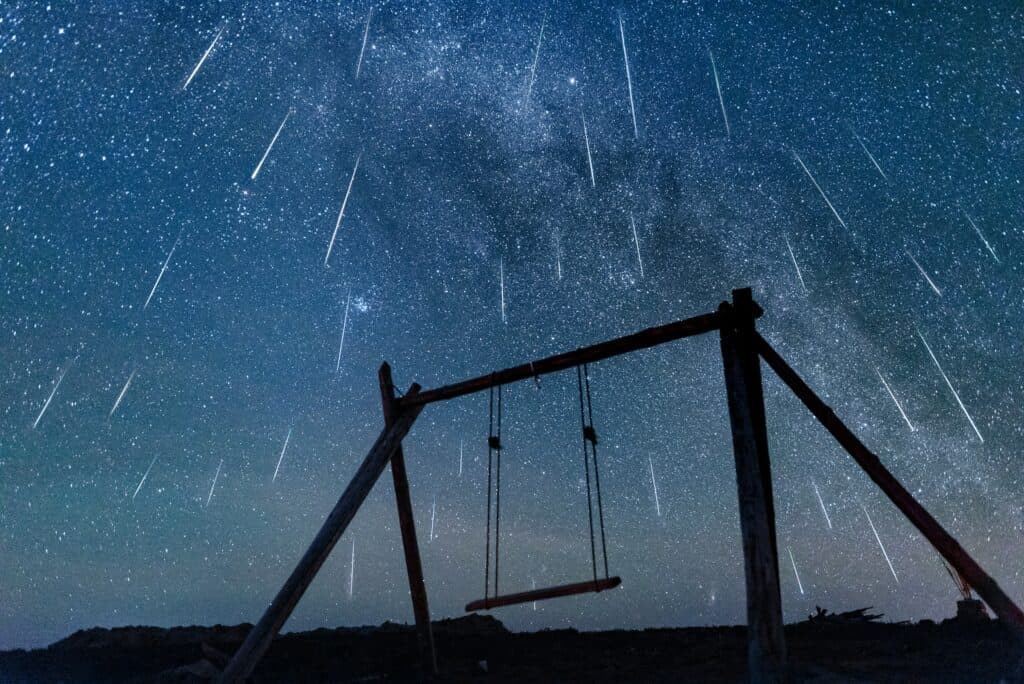
When it comes to summer meteor showers, nature saved the best for last. The Perseids Meteor Shower, which will be active from about Jul. 17 to Aug. 24 and peak between Aug. 12 and 13, will be much easier to see than the Southern Delta Aquarids and Alpha Capricornids.
This celestial phenomenon can produce between 30 and 50 shower members per hour, and because the moon will be zero percent full during the shower’s peak, visibility will be high.
The Perseids Meteor Shower occurs annually when Earth passes through the debris trail of comet 109P/Swift-Tuttle, a large, periodic comet.
August 28: Sturgeon Moon
The last full moon of the summer will peak around 12:18 a.m. on Aug. 28 on the East Coast, or at about 9:18 p.m. on Aug. 27 in Arizona.
The Sturgeon Moon is named after the prehistoric-looking lake sturgeon native to the Great Lakes and Lake Champlain. Years ago, the fish was easily caught in late summer and was a staple in the diets of Native Americans who lived in the region. (Now, sturgeon are much rarer, due to factors like overfishing and habitat damage.)
Alternative names for the Sturgeon Moon include:
- Flying Up Moon: used by the Cree people to describe the time when young birds are ready to learn to fly
- Corn Moon: used by the Algonquin and Ojibwe people to signal it’s time to harvest crops
- Harvest Moon: used by the Dakota people, also in reference to the time when you should start gathering crops
- Ricing Moon: used by the Anishinaabe people, also signifying that it’s harvest time
- Black Cherries Moon: used by the Assiniboine people to refer to the time when chokecherries become ripe
- Mountain Shadows Moon: used by the Tlingit people
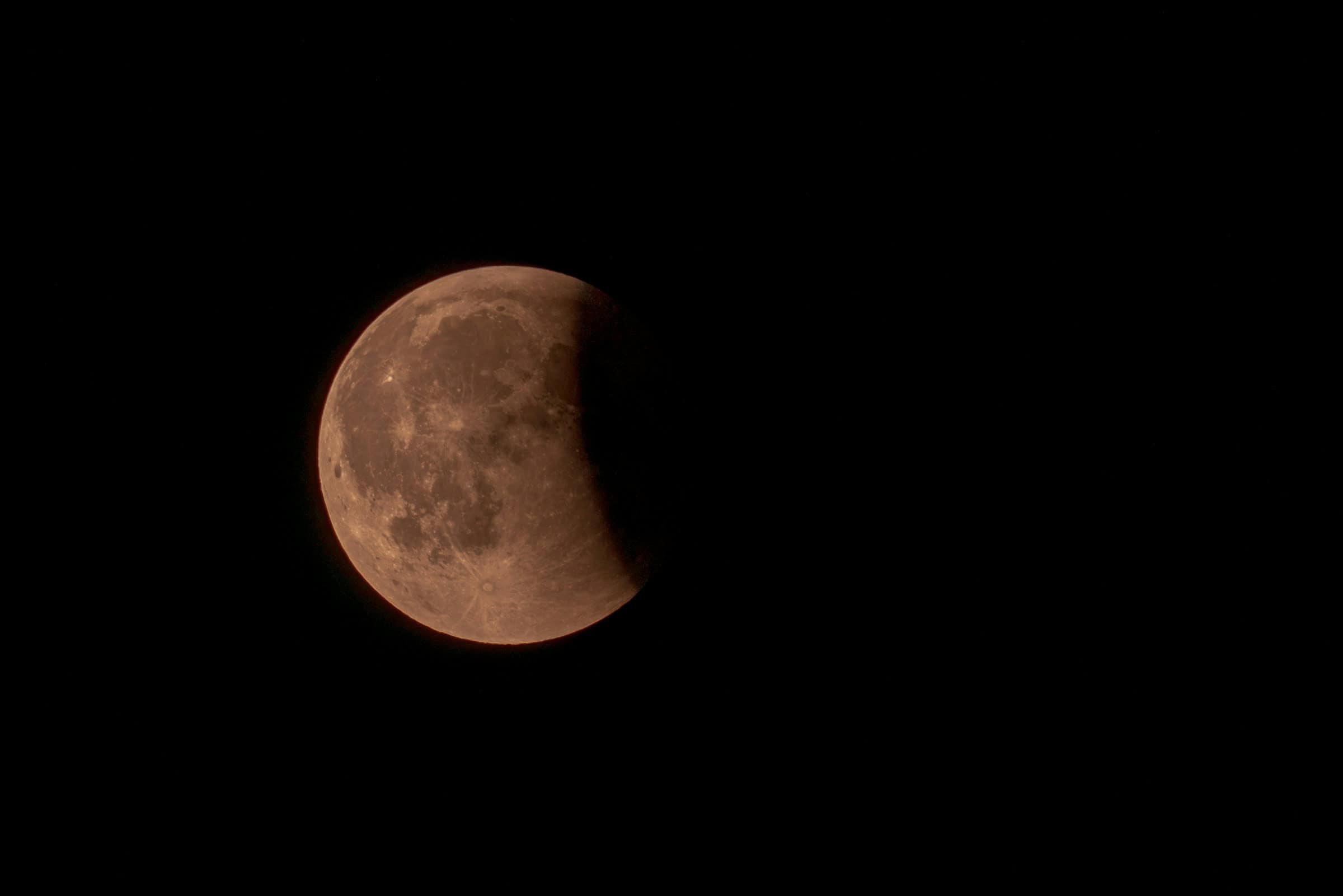
The Sturgeon Moon coincides with another celestial event: a partial lunar eclipse during which about 96 percent of the moon will move into the Earth’s umbra (the darkest part of the shadow cast by the planet). In Arizona, the partial eclipse will start around 6:37 p.m. on Aug. 27 and end around 12:01 a.m. on Aug. 28. (You can find the most optimal time to view in your specific city here.)