With celestial events like full moons, eclipses, and shooting stars, summer is the season to look to the sky in Nevada.
It’s a bird. It’s a plane. It’s a celestial event in Nevada.
A celestial (or astronomical) event is a phenomenon in space that’s visible to the naked eye, including moon phases, eclipses, meteor showers, and elongations of planets.
From the summer solstice (Earth’s longest day) on Jun. 21 through the autumn equinox (beginning of fall) on Sept. 23, Nevadans will experience several celestial events.
Here’s a look at 8 of the coolest, followed by 5 suggestions for where to stargaze in Nevada.
1. Strawberry Moon, June 29
The first full moon of summer is traditionally known as the Strawberry Moon. This nickname dates back to the strawberry harvests of Native American tribes, according to the Old Farmer’s Almanac. This moon has many other nicknames too, including Birth Moon, Horse Moon, Hot Moon, and Mead Moon.
As the Strawberry Moon rises from the Southeastern horizon at sunset, it takes on a red, pink, or orange hue before settling back to its normal silvery-white or golden tinge. The extra moonlight may obscure the stars, but the moon itself will appear large in the night sky.
2. Earth at Aphelion, July 6
Aphelion is the point in the Earth’s elliptical orbit when our planet is farthest away from the Sun. It happens every year, about two weeks after the summer solstice.
At Aphelion, the Earth is over 94 million miles away from the Sun; farther, by more than 3 million miles, than when it’s at Perihelion (closest to the Earth).
While it may seem counterintuitive that we’re farthest away on a hot summer day, our weather on Earth has nothing to do with our distance from the sun. Instead, it has to do with the length of daylight and how long our axis’ tilt remains above the horizon.
When the Earth is at Aphelion, the Sun may appear slightly smaller in the sky than usual.
3. Buck Moon, July 29
The eighth of 13 full moons for 2026, and the second of summer, July’s full moon is the Buck Moon (a.k.a. Thunder Moon, Hay Moon, and Wyrt Moon). Noted by the Farmer’s Almanac, Native Americans named this full moon after male deer, or bucks, whose new antlers are currently growing in. Bucks shed their antlers every year, then regrow them back bigger and better than before.
The Buck moon can be viewed with the naked eye in the days before, during, and after Jul. 29.
4. Mercury at Greatest Elongation West, August 2
Mercury holds the distinction of being the smallest planet in our solar system and the closest to the Sun, with the fastest orbit. Because it’s so close to our 4.5 billion-year-old yellow dwarf star, it’s risky to view it with the naked eye when the sun is above the horizon.
Mercury appears at its farthest from the Sun during its greatest elongation (angular distance), which happens twice every 116 days or four months. During its upcoming greatest western elongation, the Swift Planet will be farthest from the Sun in the morning. The best time to take advantage of this elongation is within the week of Aug. 2, right before sunrise or right after sunset.
5. Total Solar Eclipse, August 12
The Moon will pass between the Earth and the Sun on Aug. 12, obscuring our view of the Sun on the Blue Planet. While the second solar eclipse of 2026 is a total solar eclipse, we will have less than 90 percent coverage in Nevada. It will appear as a partial solar eclipse.
Coverage improves the farther north you go, with the best coverage in the US expected in Alaska or on the Canadian border. Don’t look directly at the sun during a total or partial eclipse without the right eye protection.
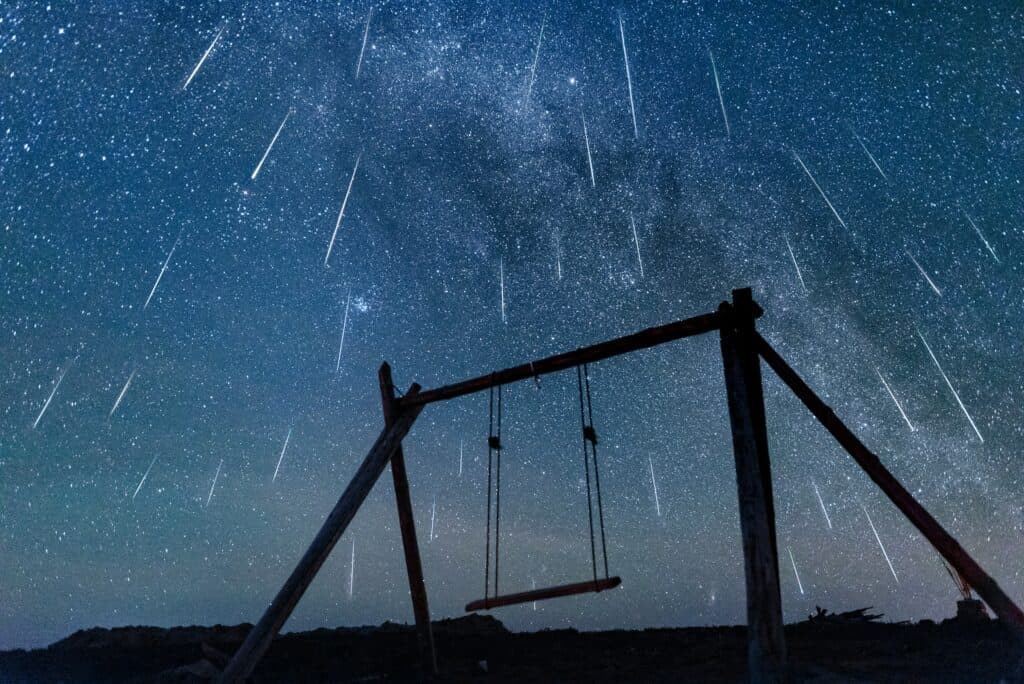
6. Perseid Meteors, August 12-13
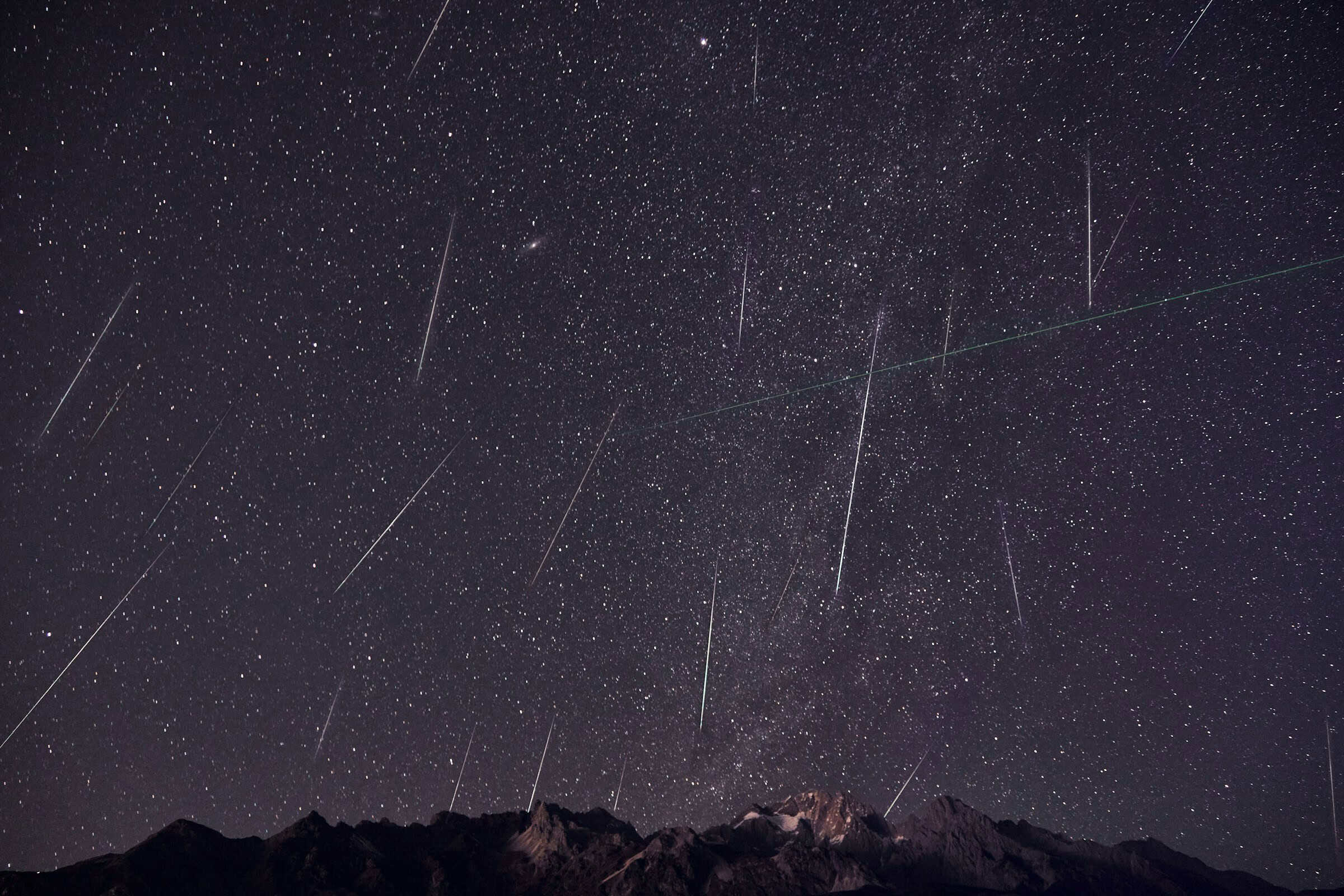
The year’s brightest spectacle of shooting stars, you might say, the Perseid Meteor Shower is the greatest show on Earth (sorry, Ringling Bros.). Made from tiny space rocks from the Swift-Tuttle comet (discovered in 1862), it gets its name from its origin constellation, Perseus. The shower shares the sky with a New Moon this year, which means it will be nice and dark.
Perseid peaks in the early morning hours of Aug. 12 and 13. You may be able to see up to 100 meteors in an hour if you head to a dark enough place. “According to the astronomy website EarthSky, “This shower rises to a peak gradually, then falls off rapidly,” strengthening in number “as late night deepens into the wee hours…often best just before dawn.”
7. Venus at Greatest Elongation East, August 15
Paling to only the Sun and the Moon in terms of brightness, Venus is the solar system’s hottest planet. Known as Earth’s Twin, it’s rocky like Earth and similar in size, but its average surface temperature is about 900 degrees Fahrenheit, whereas Earth’s is 59 degrees Fahrenheit.
Venus generally appears as a morning or evening star, just before sunrise or after sunset. At its farthest distance from the sun—its greatest eastern elongation—it appears as an “evening star.”
8. Partial Lunar Eclipse of the Sturgeon Moon, August 27-28
The final lunar eclipse of 2026 is a Partial Lunar Eclipse during a Sturgeon Moon, and it should be viewable from Nevada and anywhere else on the night side of Earth. It’s projected that 93 percent of this full moon will enter into the Earth’s shadow, making it appear close to a total lunar eclipse for nearly 200 minutes.
The Sturgeon Moon, also known as the Grain Moon, Corn Moon, Lynx Moon, and Lightning Moon, is named after the fish, which is abundant in the American Great Lakes in August.
This eclipse is safe to view with the naked eye.
5 places to view celestial events in Nevada
Our state has some of the darkest skies in the country, away from the bright lights of Las Vegas and Reno. With that in mind, here are five suggestions for stargazing throughout Nevada.
1. Great Basin National Park
A premier International Dark Sky Park, recognized by Dark Sky International (formerly the International Dark Sky Association), Great Basin National Park is home to the Great Basin Astronomy Festival in September (date TBA), an Astronomy Amphitheater, and Dark Sky Ranger talks. You can stargaze from just about anywhere in this park.
2. Park to Park in the Dark
The 317-mile stargazing Nevada route between Death Valley and Great Basin National Park on US-95 and US-6 is known as the “Starry-est Route in America.” It naturally lends itself to telescope viewing and astrophotography.
3. Massacre Rim Wilderness Study Area
One of only 13 Dark Sky Sanctuaries in the world, Massacre Rim is one of the darkest places on our planet. Located in Northwestern Nevada, about 230 miles north of Reno, it’s extremely remote, with no paved roads, so a high-clearance, 4-wheel-drive vehicle is required.
4. Clair Blackburn Memorial Stargazing Park
Nationally recognized for its dark skies, Tonopah has a stargazing park dedicated to professional and amateur astronomers. Located 211 miles from Las Vegas off US 95, it’s normally open 24 hours, 7 days a week.
5. Valley of Fire State Park
This 40,000-acre state park, only 49 miles from Las Vegas via Interstate 15, closes at sunset, but you can stargaze here on a guided or self-guided moonlit hike, typically offered once a month by Valley of Fire rangers.