From Niagara to Skaneateles, learn the meanings behind nine New York place names with Haudenosaunee roots.
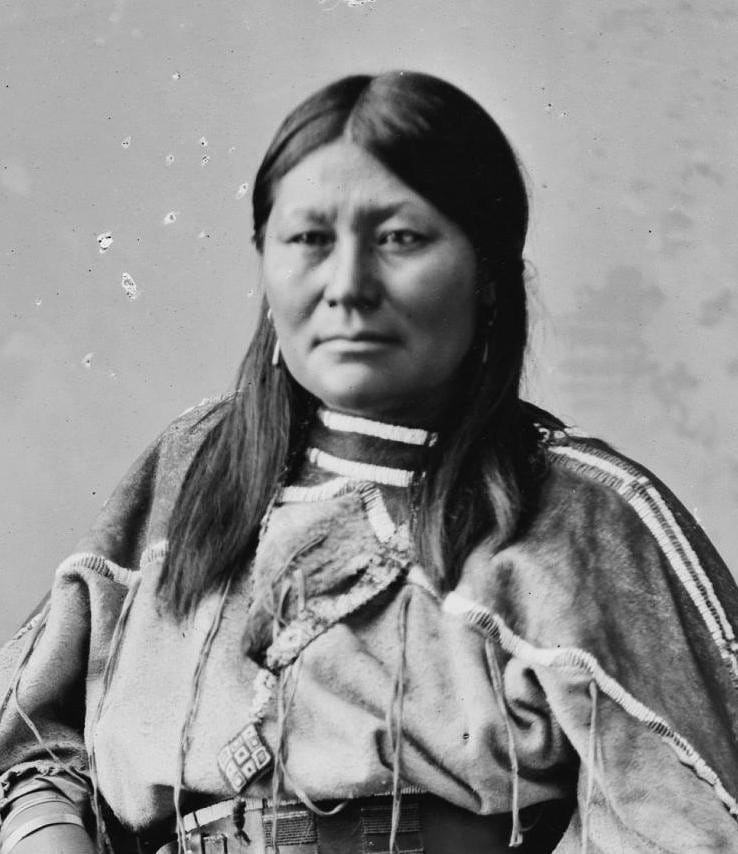
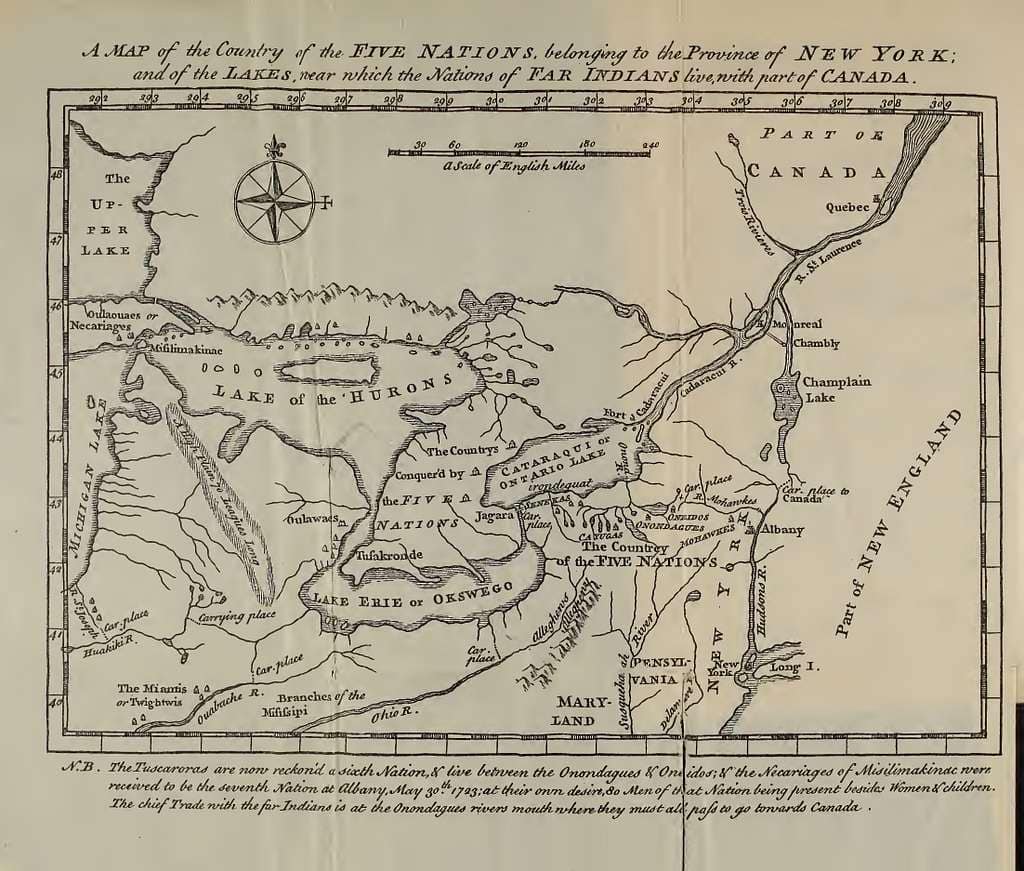
Long before New York was a state, it was home to a confederacy (and it still is). Not the Confederacy from the American Civil War, but the Haudenosaunee Confederacy, also known as the Iroquois Confederacy. This group was made up of six Native American nations: the Mohawk, the Oneida, the Onondaga, the Cayuga, the Seneca, and (later) the Tuscarora.
If you’re a New Yorker, some of these names may already sound familiar. That’s because, to this day, many places in New York bear Haudenosaunee names, either from their original inhabitants or given by Europeans after the people they encountered. While this is by no means an exhaustive list, here are some familiar New York places and the meanings behind their Haudenosaunee names.
1. Genesee County
Genesee County isn’t the only place in New York called “Genesee” (there’s also a town in Allegany County, and a historical museum outside of Rochester). The name is popular for a reason, though. The name Genesee comes from a Seneca word meaning “beautiful valley.” The name traveled with settlers, too: Genesee County, Michigan, is named after New York’s.
2. Honeoye
The Hamlet of Honeoye is best known for its beautiful lakeside views, but its name also deserves your attention. Honeoye, which is the name of both the hamlet and the lake it stands beside, comes from a Seneca word that translates to “lying finger” or “where the finger lies.” The name is said to come from a local story about a man who was bitten on the finger by a rattlesnake and cut off the finger to save his life, leaving it “lying” by the lake.
3. Niagara Falls
One of the most famous natural wonders in the Empire State, Niagara Falls and the surrounding Niagara County, takes its name from an Iroquoian word first transliterated as “Onguiaahra” in 1641. It referred to both the Niagara River and a group of the Neutral Nation, an Iroquoian-speaking people who lived nearby. The Mohawk, part of the Haudenosaunee, used a similar word. There is some debate over different potential meanings of the name, but the two most prominent possible translations are “neck,” referring to the Niagara River connecting Lake Erie and Lake Ontario, or “place of thundering waters,” a more obvious, if less likely, reference to the (notoriously noisy) falls themselves.
4. Oneida
East of Syracuse and west of Utica, you’ll find the City of Oneida. As you may have noticed above, though, Oneida isn’t just the name of a city in New York State; it’s the name of a people. Specifically, the Oneida were one of the six nations that made up the Haudenosaunee Confederacy. The name “Oneida” translates roughly to “people of the standing stone,” and there is a town of Oneida in Wisconsin, which is located on a sovereign Oneida reservation. More infamously, in the 19th century, the Oneida Community, which was located near the City of Oneida in New York, was a utopian group that was highly controversial for its belief in “free love.”
5. Oneonta
One of the northernmost cities in the Appalachian Mountain Range, Oneonta is beloved for its scenic mountainside location. The town is also home to a branch of the State University of New York, SUNY Oneonta. According to scholars at SUNY Oneonta, the name “Oneonta,” a Mohawk word, can be literally translated as “rocks sticking out.” This is already an appropriate name for a mountain town, but in the case of Oneonta, it specifically refers to the exposed bedrock on the northern and eastern sides of the city.
6. Saratoga Springs
While the “springs” part in Saratoga Springs is an obvious English reference to the natural mineral springs in the area, which formed the basis of the spas that the city was once best known for, the name “Saratoga” is actually an English mispronunciation of a Mohawk word. While etymologists continue to debate the exact meaning and origins of the name, the visitor’s advice website for Saratoga Springs lists “Saratoga” as a mispronunciation of “Serachtuague,” the Mohawk for “place of the fast-moving waters.” The mineral springs that made Saratoga Springs a popular resort were also beloved by the Haudenosaunee as a spot to bathe and drink.
7. Schenectady
The City of Schenectady is just northwest of Albany along the Mohawk River. That makes sense, as the name “Schenectady” comes from a Mohawk word. The Mohawk initially gave the name to the settlement the Dutch established in the 17th century at Fort Orange, in what is now Albany. The Mohawk called it “Schau-naugh-ta-da,” meaning “the place over the pine plains,” a reference to the pine barrens that separated Mohawk country from the Hudson River. The name Schenectady is actually a reversal of the original Mohawk meaning, as the Dutch eventually carried the name to their new settlement on the Mohawk River, which was “over the pine plains” from Albany instead.
8. Skaneateles
An affluent resort town sometimes known as the “gem of the Finger Lakes,” Skaneateles is a popular place for a relaxing getaway. As its nickname suggests, it’s located on one of the Finger Lakes—Skaneateles Lake—not coincidentally. The name “Skaneateles,” which both the lake and the town share, is originally an Onondaga word, the Onondaga being one of the nations of the Haudenosaunee Confederacy. In the Onondaga language, “Skaneateles” means “long lake,” which is an unsurprising name for an oblong lake and the town beside it!
9. Ticonderoga
From the famous fort to the beloved brand of pencils, Ticonderoga is a well-known name in New York State and beyond, and is the name of a town in Essex County. The town and the fort give better clues to the name’s meaning than the pencils—the name “Ticonderoga” has nothing to do with wood or writing. Instead, it’s derived from the Iroquoian word used by the Mohawk, cheonderoga, meaning “where two waters meet.” The town of Ticonderoga is located where the La Chute River drains Lake George into Lake Champlain—hence, two waters meeting.