Dogs and cats make fine pets, though you can get a lot more ambitious in Kentucky by inviting one of these exotic animals into your home.
Have you ever watched a show or movie that prominently featured an animal and thought, “Ooh, that would be a cool pet to have?”
Maybe you find Jub-Jub, Selma’s pet iguana from “The Simpsons,” to be incredibly cute. Perhaps you watched “The Lion King” and wanted to have a good laugh with hyenas. The cast of “Zooptopia” isn’t just putting on a movie; they’re a wishlist.
You may not be able to make all your animal dreams come true, but there are many different options when it comes to exotic pet ownership in Kentucky.
Owning exotic animals in Kentucky
Owning any type of pet will require a change in your general lifestyle. Exotic pets are often more complex, requiring ample space, specialized diets, and regular exercise. Some animals may require a permit or other special paperwork to own as a pet, especially if they’re endangered.
Before adding any of these pets to your home, do extensive research on what you’ll need to properly care for them.
Here are eight surprising animals you can own in Kentucky, listed in alphabetical order.
1. Alpaca

My most memorable alpaca experience came while traveling the Inca Trail in Peru. The animals, which are a domesticated species of camelid, are hanging out all over the place. They’ll come over to you in search of snacks, occasionally galloping at a decent speed, but more often than not, they’re super casual with their pace. It’s delightful.
The Kentucky Department of Fish & Wildlife lists the alpaca as a “permit exempt species,” meaning they don’t require any permits for importation, transportation, or possession. Alpacas come in two breeds: huacaya and suri. The former is far more common, though both breeds can live about 15 to 20 years.
Alpacas are also pretty easy to handle; perhaps their worst habit is spitting to show their disapproval (like when someone gets too close to their food). However, if you were to have one as a pet, you’d likely need at least one more, ideally two or three more. They are herd animals and do their best in livestock settings, such as farms or areas with lots of grass. Llamas are also legal in Kentucky, though they typically grow to double the weight of alpacas.
2. Camel
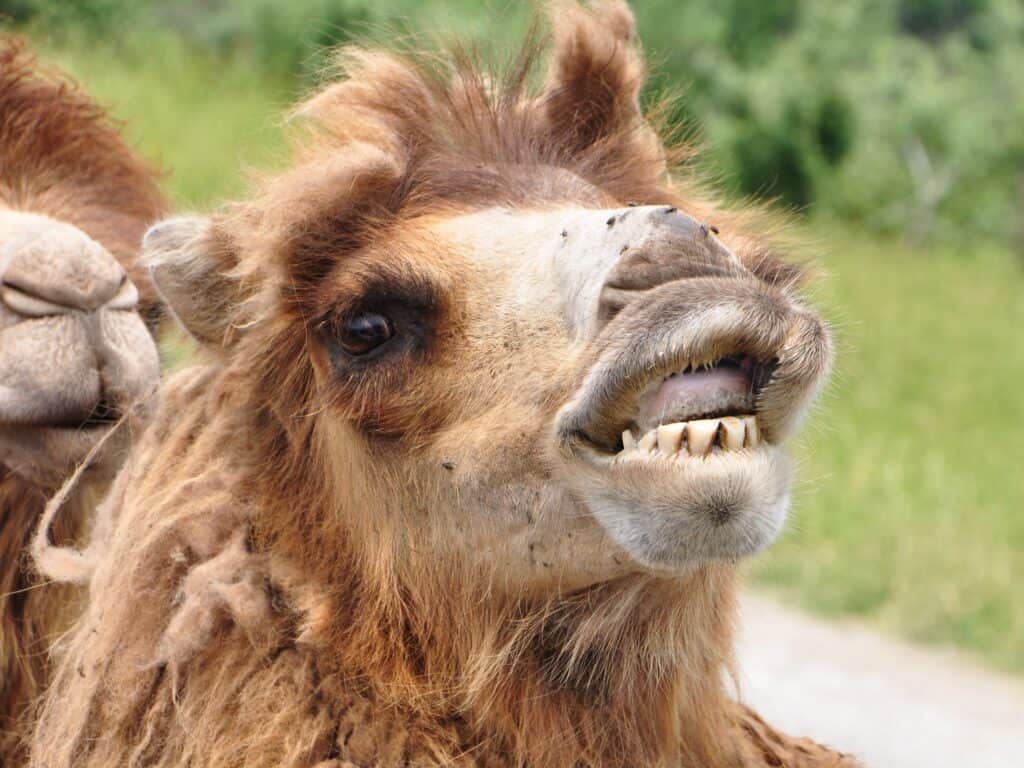
Camels are most easily recognized by their hump or humps. GEICO even ran an entire commercial series around a camel working in an office and being excited about Hump Day, or the middle of the week. But the humps serve a purpose: They store fat that the camel can convert into energy and water, allowing them to travel long distances. Additionally, camels can close off their nostrils and have double rows of eyelashes, both of which help prevent them from being irritated by sand.
Camels are legal to own in Kentucky. Of course, most apartment dwellers and single-family homeowners don’t have room for a camel. Bactrian camels can get as long as 11.5 feet, as tall as 5.9 feet, and weigh up to 1,100 pounds, while dromedary camels can grow to 11.2 feet long, 6.6 feet tall, and weigh up to 1,320 pounds. They need ample space to roam around.
3. Capybara
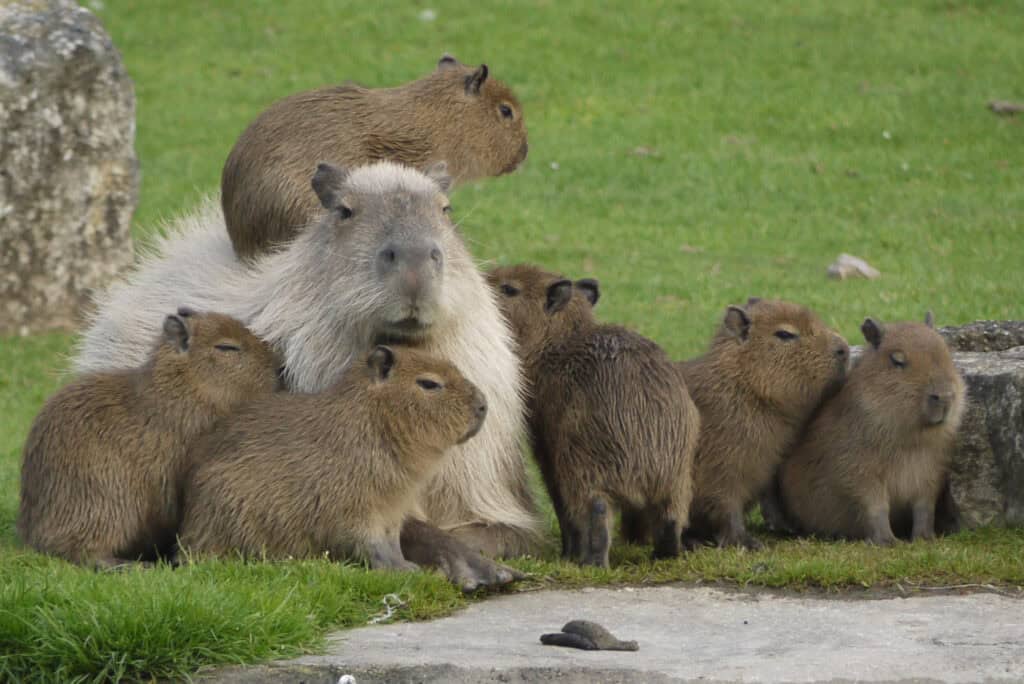
Capybaras are native to South America and are the world’s largest living rodents. They share characteristics with guinea pigs, except these cuddly creatures can reach up to 4.6 feet long and weigh between 77 and 143 pounds. That’s certainly too big for a guinea pig cage!
One particular capybara, Gilbert, went viral in 2025 when she made an appearance at the Ohio Renaissance Festival. Gilbert was there to help promote the book, “Gilbert the Cranky Capybara Makes a Friend,” which is published by the Louisville-headquartered Line by Lion Publications. Despite some people questioning Gilbert’s presence, it reinforced the lesson for all of us that capybaras are, in fact, legal to own in Kentucky (though you do need a special permit to have them).
4. Chinchillas
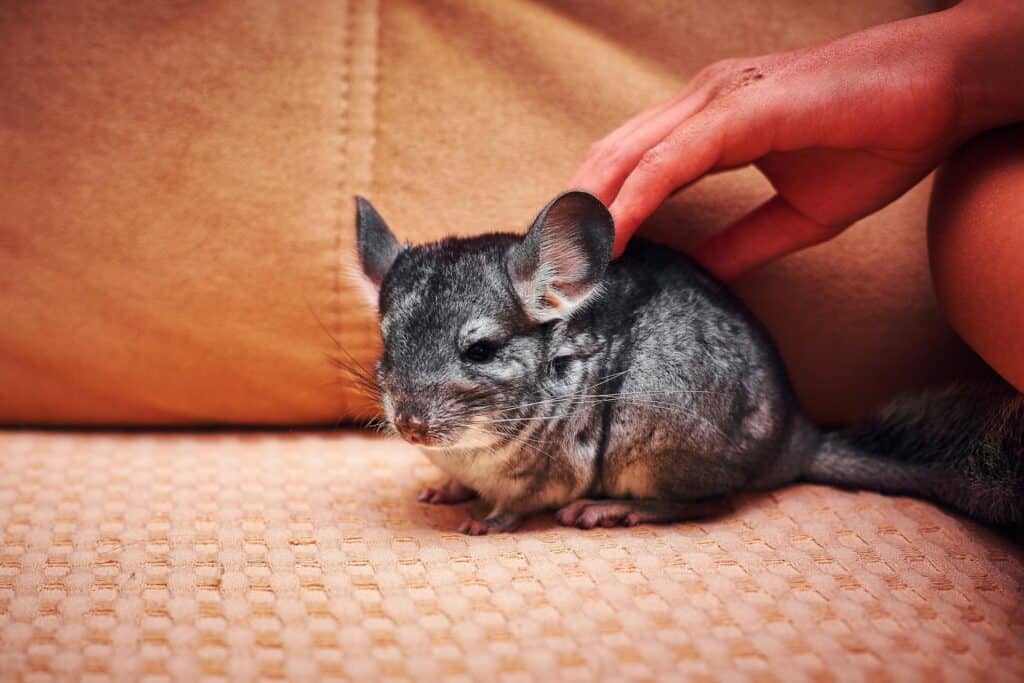
Chinchillas are small creatures; they only weigh a pound or two and grow up to 14 inches long. Yet they’re pretty darn athletic. They can clear six feet with a single jump, and some chinchilla owners report seeing their chinchillas leap onto the tops of their refrigerators. They’re social creatures and prefer living in a herd as they run and jump around. And just like us humans, they have sensitive hearing, with loud, unfamiliar noises causing them some panic.
Should you bring a chinchilla into your home, you’ll need to get used to their nocturnal schedule. They need a lot of fiber to stay healthy, and they tend to eat their own poop. If you can stomach that, you just might make it as a chinchilla owner.
5. Mink
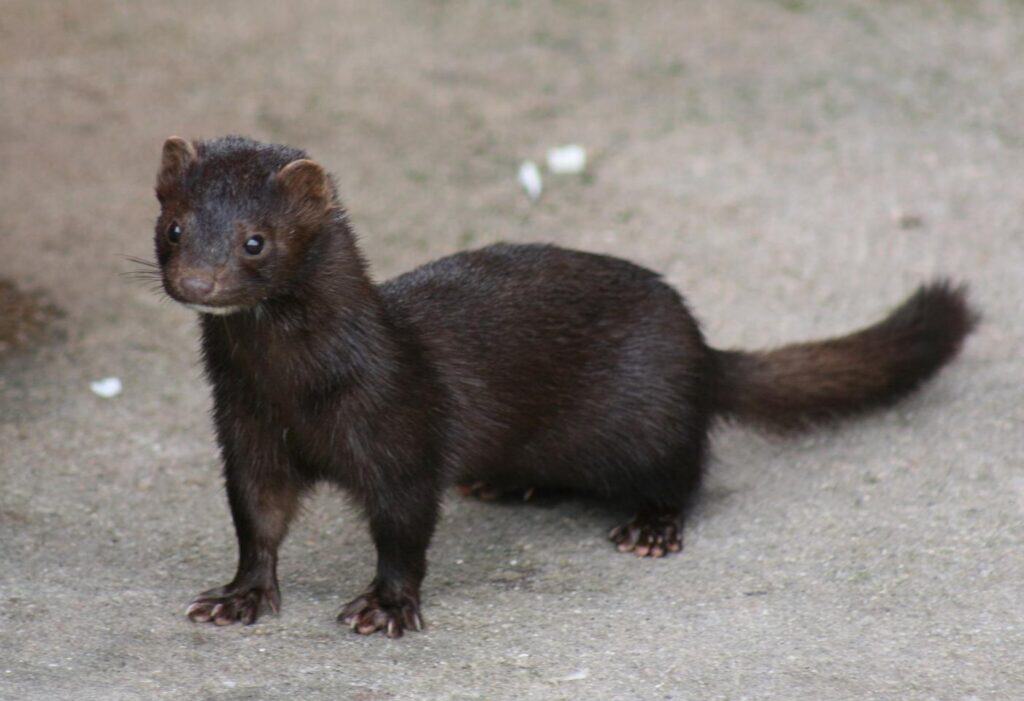
Pet minks look similar to ferrets, but the two animals require different types of care. Most notably, a mink needs a place to swim, since it’s an aquatic animal. They have a pretty robust diet of muscle and organ meat, liver, and raw bone, and they require a large enclosure with plenty of free space to roam. Despite their cute look, they’re not the easiest pets to own and care for.
Mink fur is a popular luxury fashion item, and some people even question whether domesticated minks are actually domesticated or still wild animals. In fact, a few years ago, researchers uncovered that minks can regrow their brains to their original size if they’re left in the wild or remain feral for long enough—essentially “un-domesticating” their brains. That’s not a typical trait for animals, making minks even more unique.
6. Peafowl
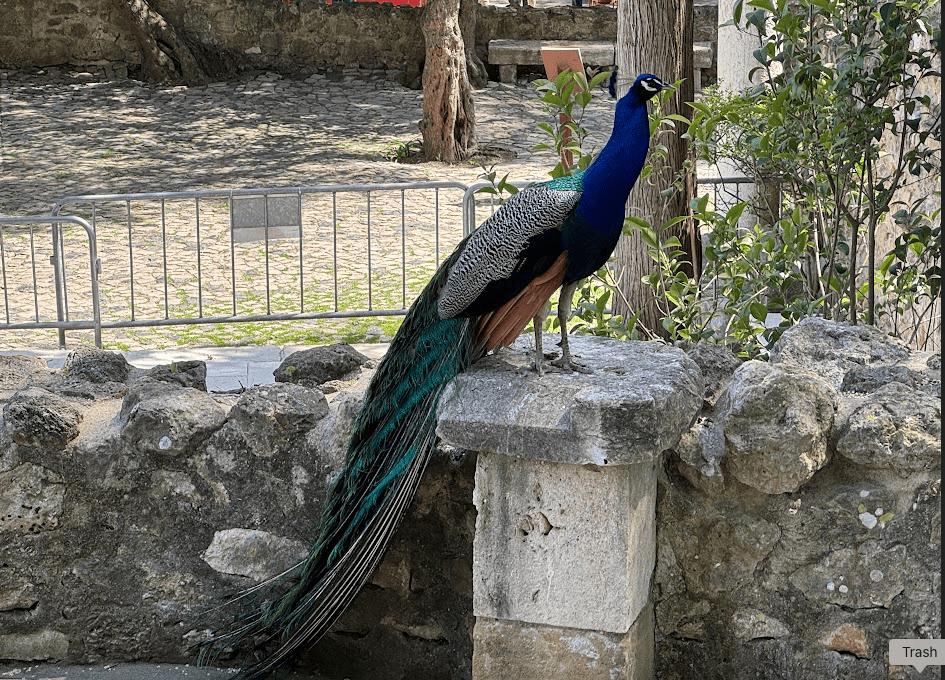
Few things are as majestic as a peafowl extending its feathers. At Copenhagen’s Tivoli Gardens, one of the oldest operating amusement parks in the world, there’s a ballet stage where the curtain is a peacock’s feathers fanning out. Look how cool it is!
The peafowl originated in India and Sri Lanka and is more commonly called a peacock (male) or a peahen (female). In Kentucky, you don’t need a permit to have one as a pet. What you will need is lots of room: peacock tail trains can extend up to six feet long, and these noisy foragers will also likely nibble at plants or other vegetation in your garden. On the plus side, peacocks are gorgeous, lay eggs, and can help keep pests at bay, including spiders, ticks, locusts, and mice.
7. Toucan
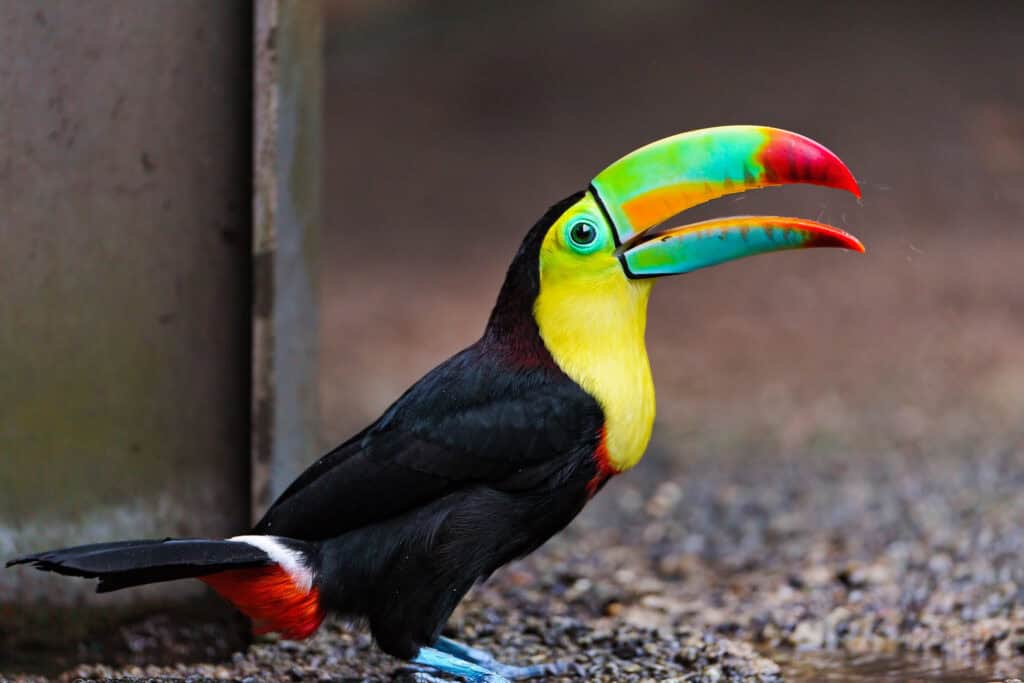
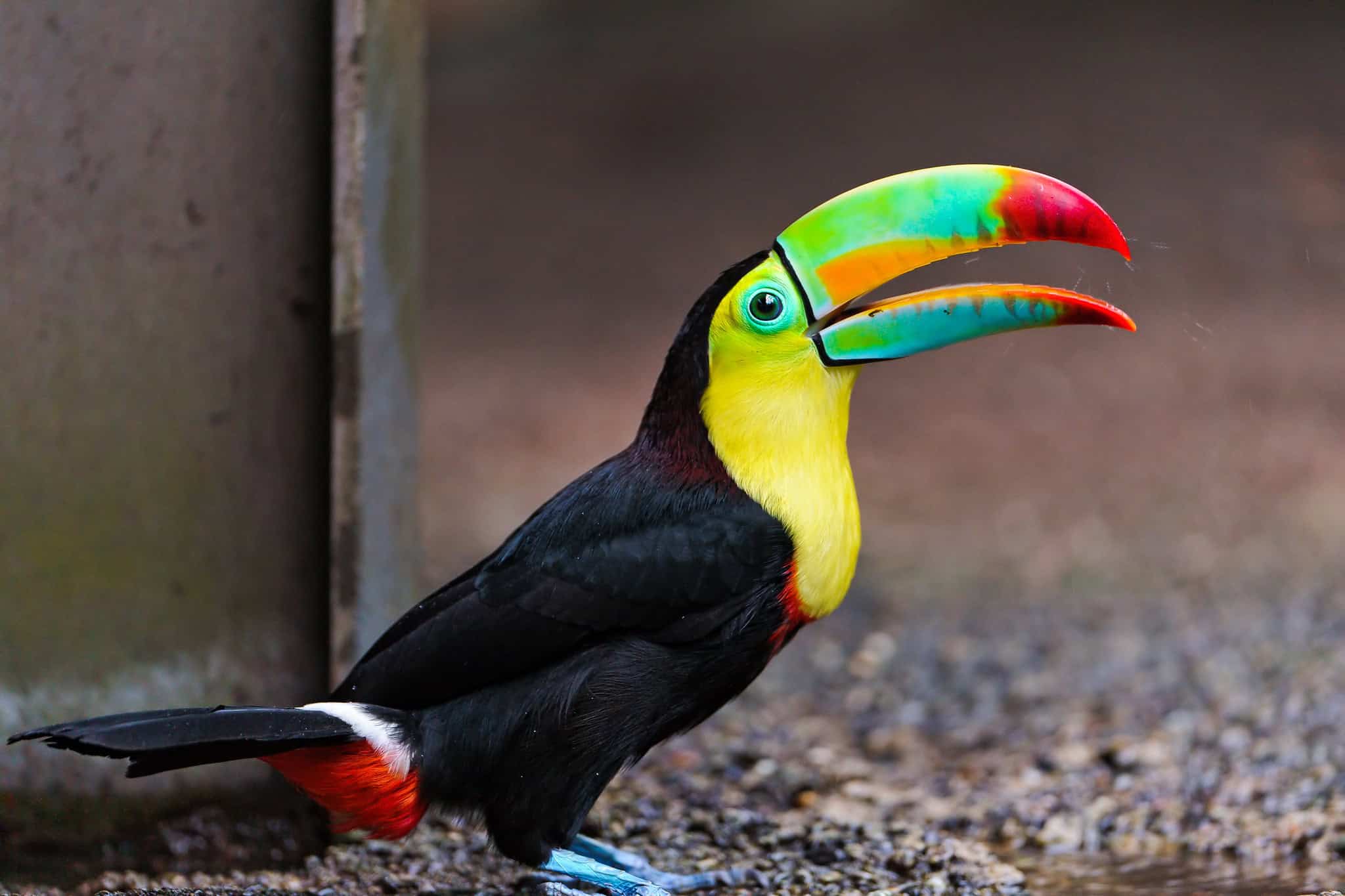
Toucans are not related to kangaroos, though you might briefly think they are, because these birds can bounce with the best of them. Their short legs necessitate hops instead of steps, and they use trees for resting, nests, and food. They also have impressive eyesight and a tongue covered with spikes to help grip food—whether fruits or insects—and their colorful beaks are made from keratin, which is found in human nails and hair.
Granted, just because you can have a toucan as a pet in Kentucky doesn’t necessarily mean you should. As Chrissann, “The Toucan Lady” of Adventures in Toucanland, wrote, “I do not recommend toucans as pets.” She noted that her days are ruled by their schedule, that her family has had to move several times to meet space and safety requirements, and that they’ve spent tens of thousands of dollars on their care, from food to vet visits. So, maybe don’t try to own a toucan and just get a box of Froot Loops instead.
8. Yak
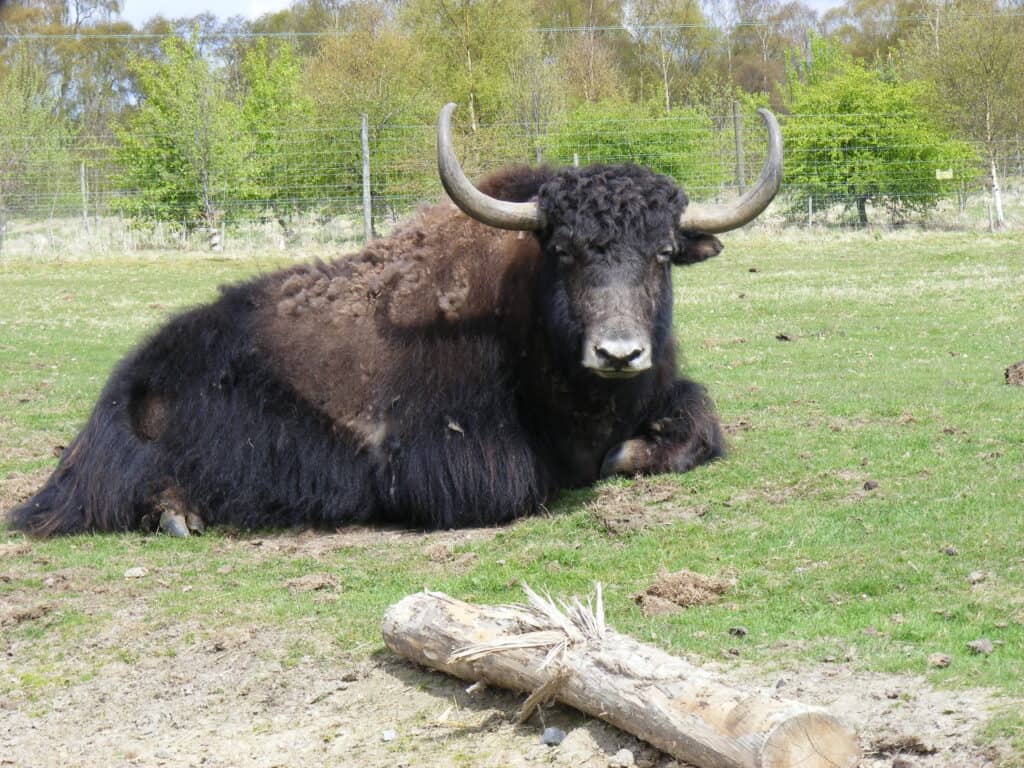
Yaks are generally gentle herd animals that can produce quality fiber, milk, and meat, with their hair often used for cloth and rope. They can also act as draft animals on a farm or homestead, helping pull heavy loads or vehicles. Male yaks are bigger than females, weighing as much as 2,200 pounds in the wild, though tamed yaks are smaller. Adult males tend to roll solo or in small groups, so they’re often a better choice for domesticated pets.
Though they’ve evolved to withstand extreme temperatures and living conditions, yaks are at their best with good shelter and a proper diet, including plenty of high-quality hay and water. Additionally, they require a specialty manure management plan to help remove their waste without issue. If it sounds like too much, simply enjoy a rendition of “Yakety Sax.”