Utah’s lakes, springs, creeks, waterfalls, and ponds offer summer plunge options beyond your local municipal swimming pool.
Swimming pools are fine. But if you’re looking to do more than just cool off, Utah’s diverse landscapes—from alpine meadows to desert flatlands—provide more memorable ways to hit the water.
Some swimmers love the bracing, cold lakes of the mountains. Others want to dip their toes in the slightly warmer waters in Utah’s red rock deserts. And those who don’t like cold water at all might opt for the soothing experience of a geothermal pool.
Though these places offer natural beauty (including wildlife sightings), they also lack lifeguards, water stations, and depth markings. Make sure to bring water and sunscreen, don’t swim alone, and check weather conditions before heading out. Flash floods are a real danger, especially in the desert.
1. Babylon Arch Beach
Location: Red Cliffs National Conservation Area, Leeds
Cost: Free
A visit to Babylon Arch Beach requires an approximately three-mile round-trip hike on a trail alternating between rocky and sandy terrain. That lack of easy car access is one reason why this “secret” swimming hole isn’t a crowded spot.
Located inside Red Cliffs Natural Conservation Area, it’s also a literal example of the journey being the destination. Before you reach the shores of Virgin River—and the trail’s tiny namesake arch—you pass lots of scenic sandstone rock formations, many of which feature tiny slots and niches that are perfect for kids to play in.
Babylon Arch is best visited in early summer, when temps are cooler and waters are higher, but even then, the sand can get very hot. Bring water shoes or sandals, and opt to visit earlier in the day. Dogs are allowed, as long as they are leashed. Don’t forget to bring plenty of water—including for your pups.
2. Burraston Ponds
Location: 480 S. 200 W., Mona
Cost: Free
Located about 30 miles from Provo between Nephi and Santaquin, this spring-fed pond is known for its cool, clear waters, lush vegetation, and abundant wildlife. Burraston Ponds is also known for its rope swings…past tense. Those are now prohibited, but the trees they once hung from still offer lots of welcome shade during hot summer days.
A popular fishing and birding spot, the area also attracts boaters, but only non-motorized craft are allowed, making it much safer (and quieter) for swimmers.
Note that it can be a popular draw for families, and so may be crowded, though if you’re with your kiddos, having other kids for them to play with can be a plus for parents.
3. Calf Creek
Location: Escalante Field Station. 755 W. Main St., Escalante
Cost: $5 per vehicle per day
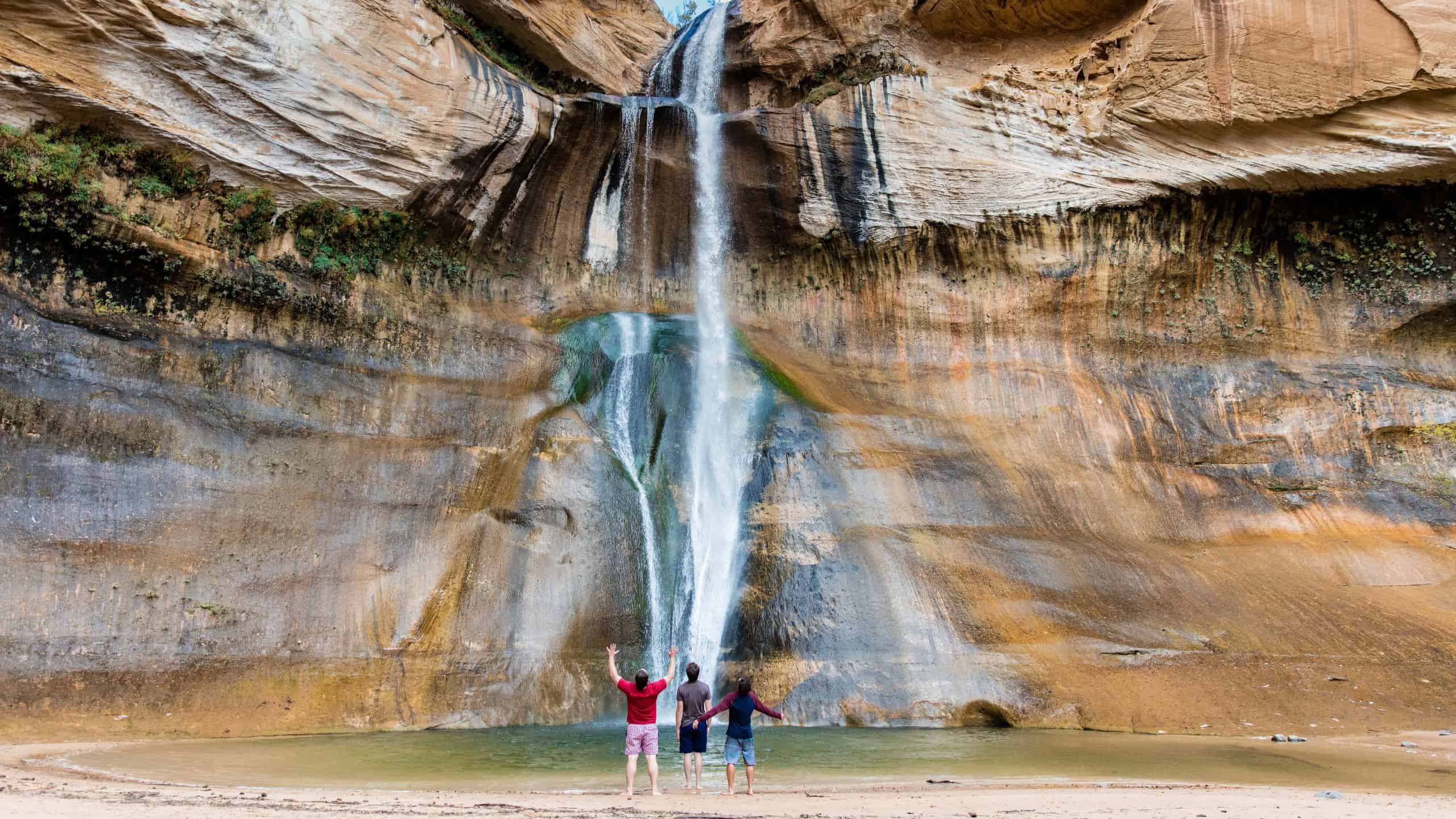
Calf Creek, a perennial stream tucked inside the Grand Staircase-Escalante National Monument, offers two swimming options: the ponds fed by Upper and Lower Calf Creek Falls.
With a flush, easy-to-hike trail and a spectacular 126-foot waterfall, the Lower Falls tend to be more popular and busy. The hike to Upper Calf Creek Falls follows a more demanding trail with steep inclines and slickrock.
The trail forks as you approach the falls, with the left and right paths leading to the head and foot of the falls. At the top, the 87-foot-high waterfall cascades into a tree-lined pool; the lower trail offers a bigger pond for swimming and splashing.
Access the trails via Utah Scenic Byway 12. Because it’s more shaded than some Southern Utah spots, Calf Creek can be a comfortable hike and swim, even on hotter summer days.
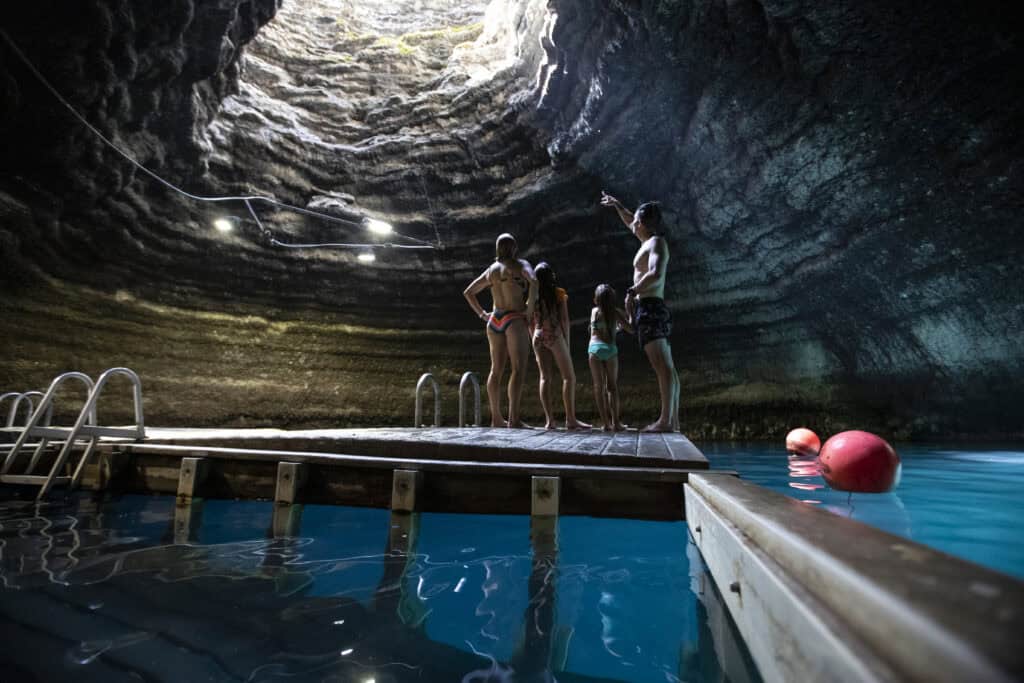
4. The Crater at Homestead
Location: 700 Homestead Dr, Midway
Cost: $30
Hours: Mon.-Fri, 10:30 a.m-9:30 p.m.; Sat. & Sun, 9:30 a.m.-9:30 p.m.
One of the most unusual natural swimming spots in Utah—or maybe the world—is The Crater at Homestead. A 10,000-year-old limestone crater encased in a giant beehive-shaped dome, it holds a 65-foot-deep geothermal spring that’s sometimes explored by scuba divers, but is more often frequented by swimmers and soakers.
After entering through a 110-foot-long tunnel, you’ll find changing rooms where you can slip on your suit for a relaxing bob or backstroke in bathtub-temperature waters. Deep within the cool dome, out of the sun, this is a viable swim destination for summer—especially for those who blanch at the thought of a swim in one of Utah’s icy mountain lakes.
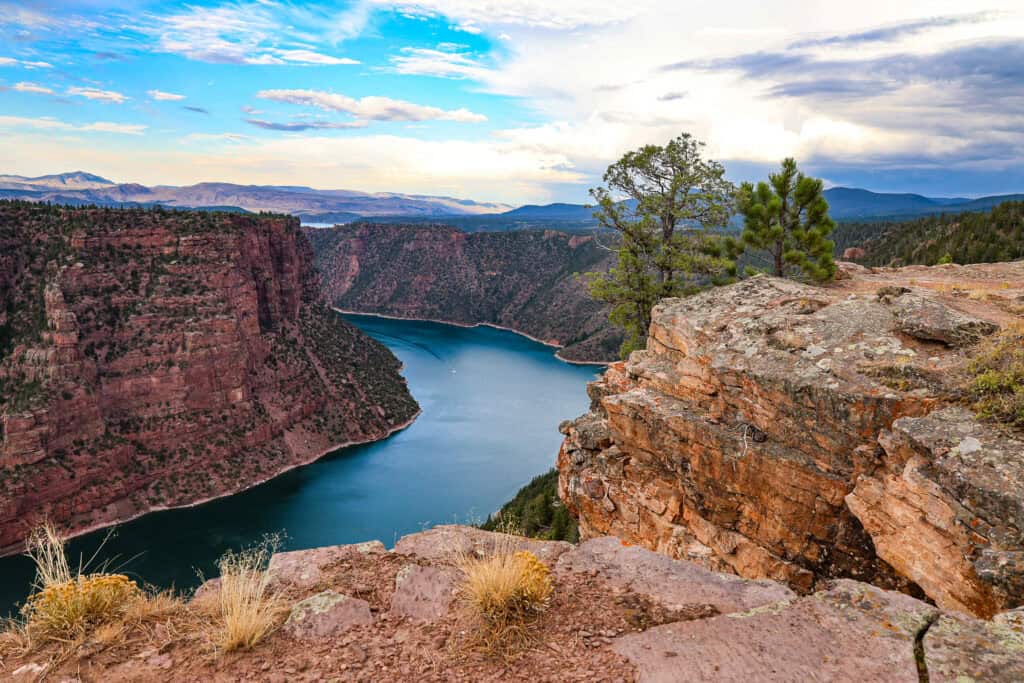
5. Flaming Gorge National Recreation Area
Location: 25 Utah 43, Manila
Cost: $5 day use pass
The 91-mile-long Flaming Gorge reservoir, located on the Utah/Wyoming border, has more than 300 miles of shoreline, and swimmers are welcome to take a swim anywhere along that long ribbon of water.
The reservoir does attract paddleboarders, kayakers, and boaters, so if you prefer to stick with a designated swim area, check out Lucerne Swim Beach (located in Manila and the Lucerne Campground) or Sunshine Cove (near Dutch John and Mustang Ridge Campground).
Note that nearby Green River, with its dangerously cold water and fast current, is best avoided. Instead, visit Ashley National Forest for some unsupervised (but safer) rivers and streams to swim and play in.
6. Mill Creek Waterfall
Location: Powerhouse Ln., Moab
Cost: Free
Mill Creek Waterfall in Moab is easily accessible by an easy, short hike—fewer than two miles round-trip. Find a map at the trailhead, then follow painted arrows to reach the 30-foot falls, which empty into a small pond/grotto.
The hike is full of lovely views of red rock canyons, with some of the walls featuring petroglyphs and pictographs. Know you will get your feet wet even before you don your suit—there are a few creeks to be jumped before you reach the falls.
This is an easy, kid- and dog-friendly hike (though leashes are required, always!). The trail is just a few miles from Moab city proper, but don’t let that proximity to civilization discourage you from bringing a big bottle of water and slapping on plenty of sunscreen.
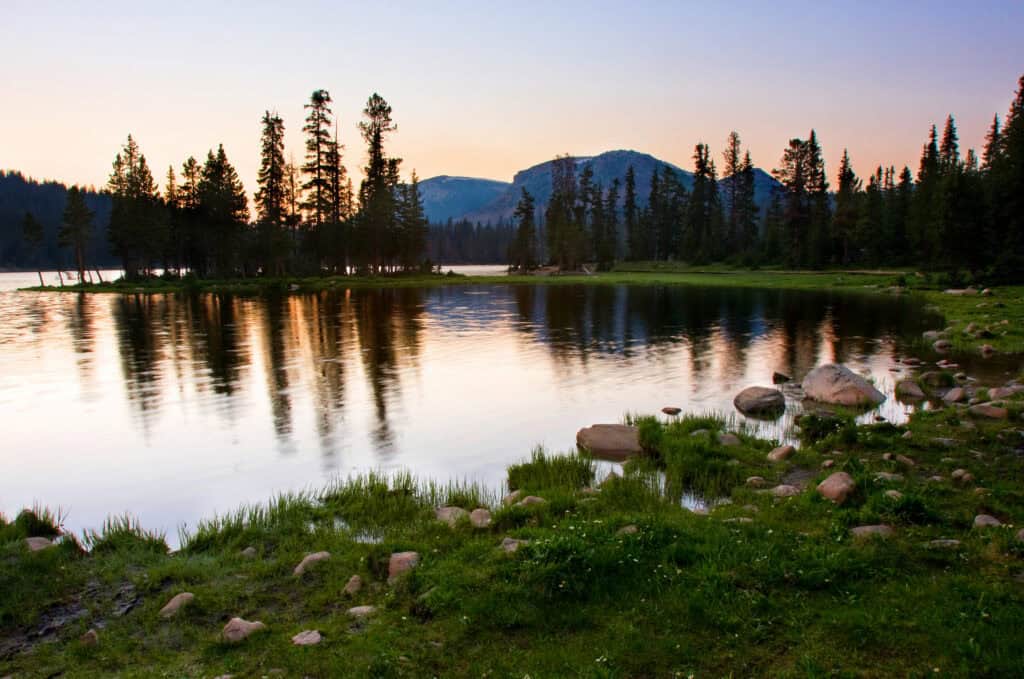
7. Mirror Lake
Location: Mirror Lake Scenic Byway (UT-150), Kamas
Cost: $10 for a three-day pass
If you’ve ever wanted to do a polar plunge in August, Mirror Lake would be one good place to do it. Located high in the Uintas at 10,400 feet, it is fed by snowmelt and is well-known for its chilly waters. (The lake, which covers 53 acres and is 36 feet deep, warms only slightly during the hottest days of August.)
The shore is accessible via a 1.5-mile trail curving around the lake. Because it’s stocked with multiple types of trout, it’s a popular fishing and boating spot, so watch for passing boats and/or fishing lines being cast into the water. Most people enter the water for a very quick dip—more serious swims require the warmth and protection of a wetsuit.
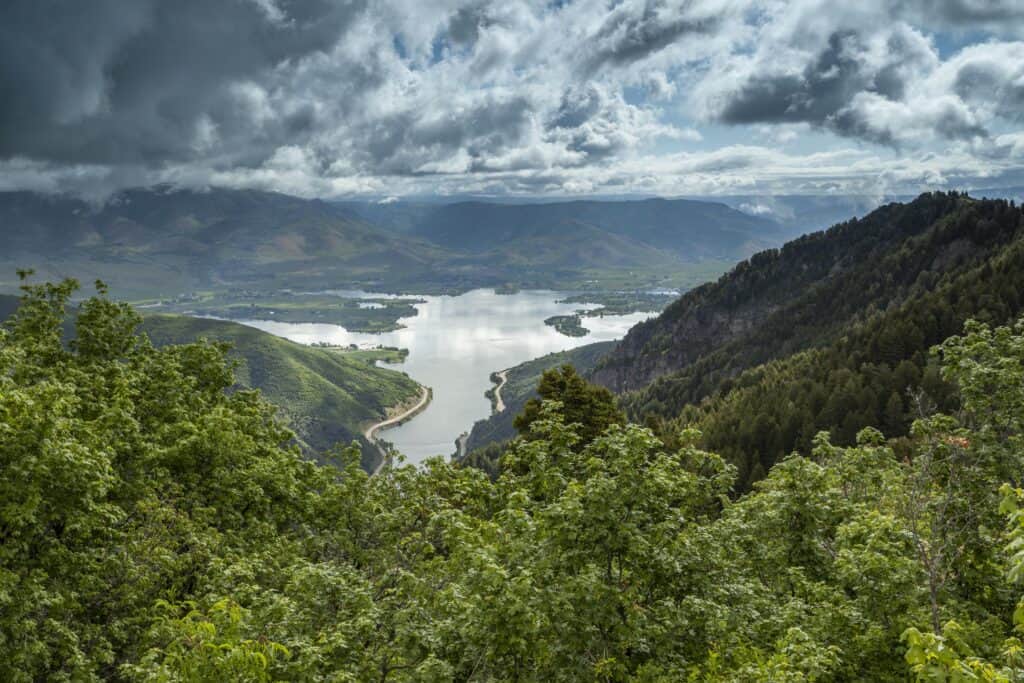
8. Pine View Reservoir
Location: Hwy. 39 (Ogden Canyon), Ogden/Hwy. 158, Huntsville
Cost: $20-$23 day pass; Pelican/Quist Beach and Spring Creek are free.
Ogden Valley’s 2,870-acre Pine View Reservoir is only 15 minutes away from Ogden proper, and has multiple designated swim areas, including Spring Creek, Cemetery Point, Anderson Cove, Pelican/Quist Beach and Middle Inlet Beach.
The park is undergoing renovations this summer, and so will close off some trails and access points. Many of the swim beaches, including Pelican/Quist, will remain open. Fees and pet policies can vary by area of the park, and weather conditions change throughout the summer. Check the National Forest Service’s Pine View page for updates before your visit.
9. Tibble Fork Reservoir
Location: American Fork Canyon, American Fork
Cost: $6-$10 per car per day fee
Another option for those who love cold mountain water, Tibble Fork Reservoir offers a sandy swim beach and diving dock, plus it’s closed to motorized boats. Sitting at an elevation of 6,378 feet in the Wasatch Mountains, its waters hit 70 to 75 degrees during the hottest part of the summer, though its average is closer to 69 degrees.
Tibble Fork’s beauty, accessibility, and cool water attract crowds during the summer, but traffic (both human and auto) is lighter earlier in the day. If the beach is really crowded, change plans and head to the equally picturesque, but more remote, Silver Lake Flat Reservoir, which is also located in American Fork Canyon.
10. Toquerville Falls
Location: 7QX3+F7, LaVerkin
Cost: Free
The spectacular Toquerville Falls, located outside of Zion National Park, sit at the end of a rocky, twisting five-mile road that’s best accessed by Jeep, SUV, or ATV. The (very bumpy) drive in takes about 30 minutes. But the drive is more than worth it.
Fed by nearby LaVerkin Creek, the water cascades over red sandstone cliffs, creating shallow, tiered pools, with deeper water at the base of the falls. The views are spectacular, the water is cold, and the experience is unlike any other in Utah.
Toquerville Falls is on completely wild BLM land, which means there are no restrooms or amenities. Pack everything you need—and leave with everything you bring in. Be aware that the rocks can get slippery, and cliff diving can be extremely unsafe. Due to the ruggedness of the landscape, be sure you have a good spare tire in the car.