From the Wasatch canyons to red-rock country near Moab, here’s where and when to go leaf peeping in Utah this fall.
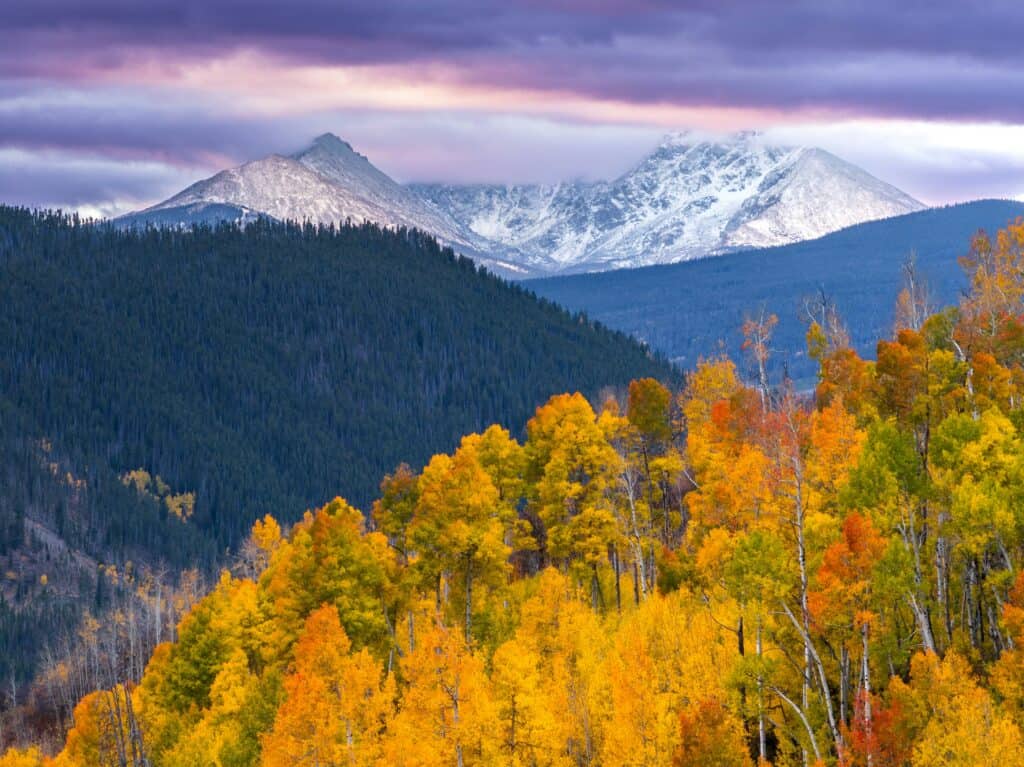
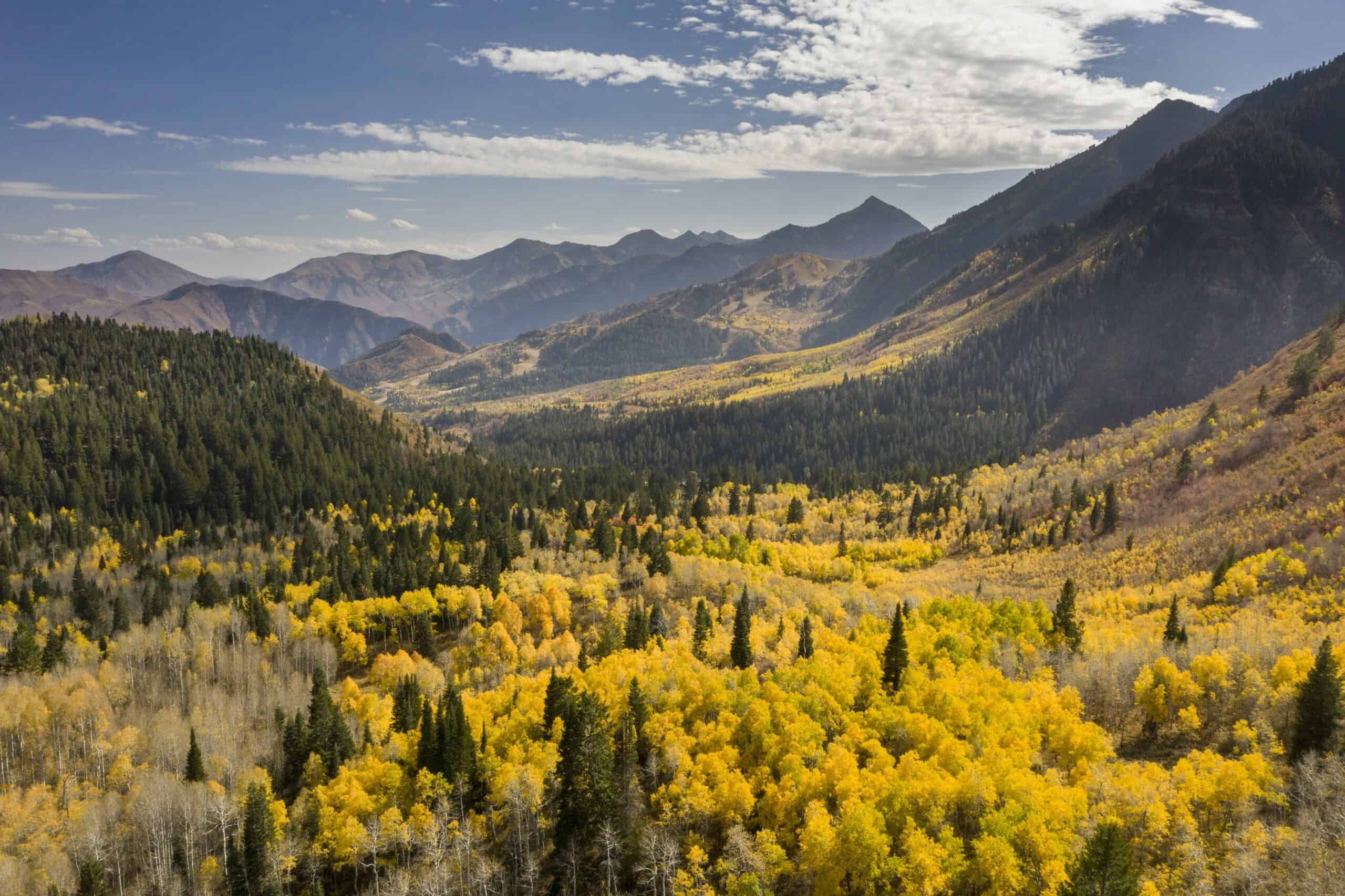
Utah doesn’t get talked about as a fall foliage destination in the way New England does, but it should. The state is home to enormous stands of quaking aspen—including Pando, a single 106-acre organism near Fish Lake believed to be one of the largest living things on Earth—plus canyon maples, Gambel oak, and cottonwoods that turn Utah’s mountains into sheets of gold, orange, and red each September and October.
The color shows up across wildly different landscapes, too. You can catch aspens glowing above 9,000 feet in the Wasatch on the weekend, then drive south to watch cottonwoods turn gold against Zion National Park’s sandstone cliffs a few weeks later. Suffice it to say, Utah turns into a leaf-peeper’s playground every autumn, and not many outside the state even know it. Here’s our 2026 guide to going leaf peeping in Utah, from the high canyons to the red-rock desert.
How this year is shaping up
Leaf change is never an exact science, but experts lean on elevation, moisture, and temperature trends to make educated predictions. Color typically starts at high elevation and works its way down into the valleys as days shorten and nights cool.
This year comes with some uncertainty. Utah saw a record-low snowpack over the winter, a hot summer, and a historic amount of acreage burned by wildfire, all of which can stress trees, according to University of Utah biology professor David Bowling. Drought-stressed trees can drop their leaves early or turn duller colors instead of the vivid displays Utah is known for.
There’s a silver lining, though. Utah, along with western Wyoming, eastern Idaho, and western Montana, saw above-average rain in mid-to-late summer, which should help nudge this year’s timing back toward normal rather than sharply early. Utah State University forest ecologist Darren McAvoy noted that some areas that missed out on snowpack still got decent spring moisture, which should help take the edge off the drought stress. Bottom line: Expect a solid season, though maybe not the state’s most dazzling one on record.
Note for 2026: Utah saw significant wildfire activity this summer, including a fire that briefly closed parts of American Fork Canyon in July (it’s since fully reopened). Nothing below is closed as of this writing, but given how active the season’s been, it’s worth checking Utah Fire Info or the relevant Forest Service alerts page before heading out.
Best places to view fall colors
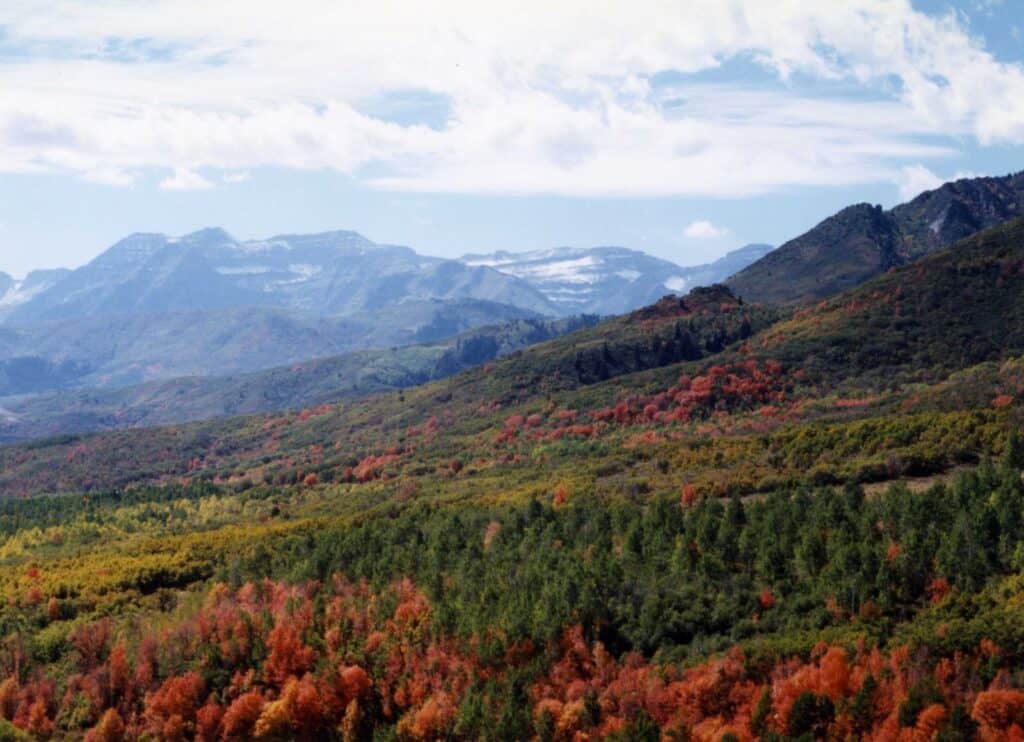
Below are Utah’s top leaf-peeping regions, organized roughly by when each one is expected to peak, from the high Wasatch canyons in late September to the low desert country of southern Utah that can hold color into November. As always, exact timing shifts with the weather, so it’s worth checking a live fall foliage map before you head out.
Northern Utah and the Wasatch Front
Peak dates: Sept. 20-Oct. 10
Bigtooth maples in the lower canyons tend to turn red first, from mid-to-late September, and the aspens up high follow, holding gold through mid-October.
Big and Little Cottonwood canyons
Just southeast of Salt Lake City, Big Cottonwood Canyon is a glacially carved canyon that’s home to Solitude and Brighton ski resorts, with easy pullouts and trails like the one to Silver Lake. For a longer drive, continue up and over Guardsman Pass toward Park City and Heber Valley, where the aspens turn early. Just south, Little Cottonwood Canyon is narrower and steeper, with pockets of aspen around Alta and Albion Basin that draw crowds fast, so an early start helps.
New fee areas took effect in both canyons in June 2026, so a day-use pass or valid recreation pass is now required to park at most trailheads, including roadside pullouts.
Alpine Loop Scenic Byway
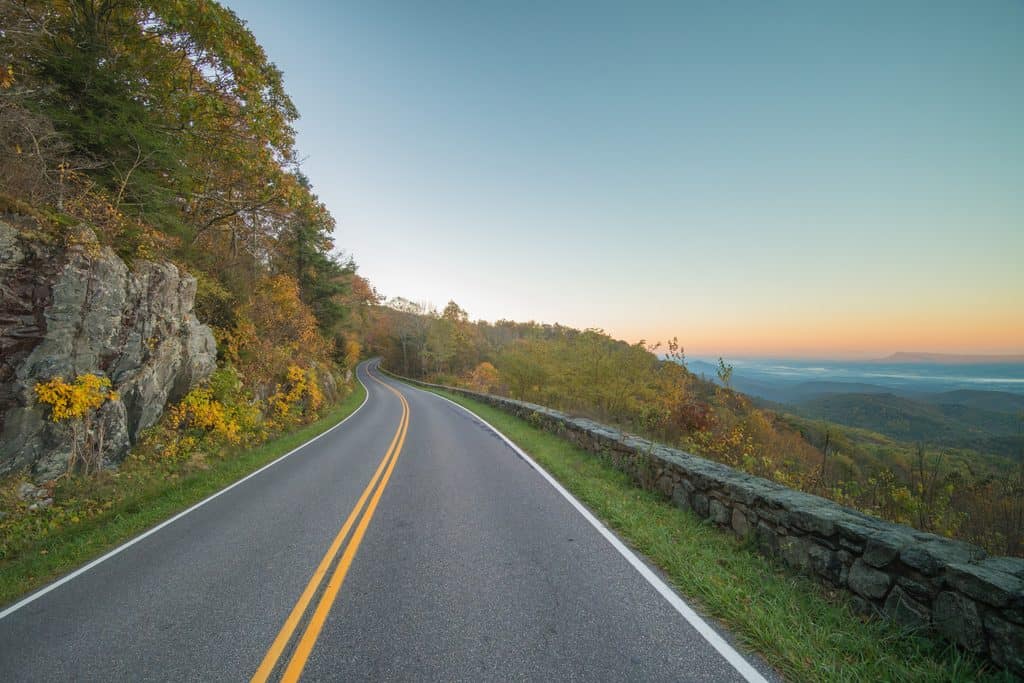
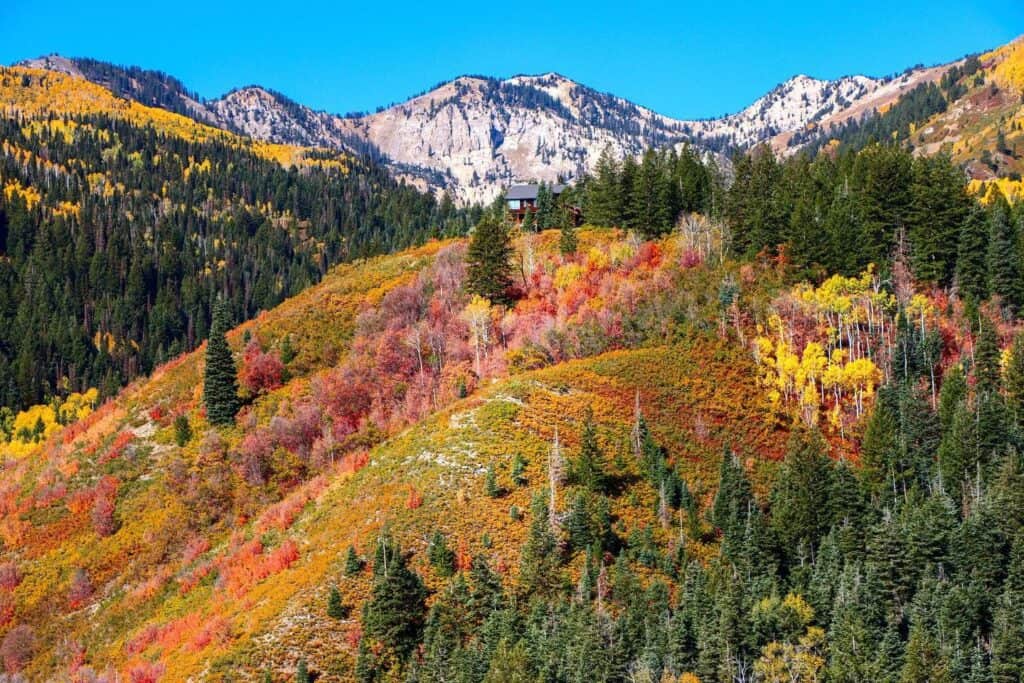
Widely considered one of the best fall drives in the state, the Alpine Loop winds about 20 miles between American Fork Canyon and Provo Canyon, circling Mount Timpanogos and passing Sundance Mountain Resort and Cascade Springs along the way. It’s popular enough that traffic can crawl to a standstill at peak color, so plan for a slow, scenic drive rather than a quick trip.
A recreation pass is required to park at trailheads and picnic areas along the route, including near Timpanogos Cave and Cascade Springs.
Logan Canyon Scenic Byway
Tucked into the Uinta-Wasatch-Cache National Forest in far northern Utah, Logan Canyon runs alongside the Logan River past limestone cliffs and dense aspen groves, and it draws noticeably smaller crowds than the canyons closer to Salt Lake City. Trails like Wind Cave, Tony Grove Lake, and the Crimson Trail all offer strong foliage views.
A day-use fee applies at Tony Grove and a few other developed sites, payable at an on-site kiosk or in advance online; most roadside pullouts along the byway remain free.
Monte Cristo Scenic Byway
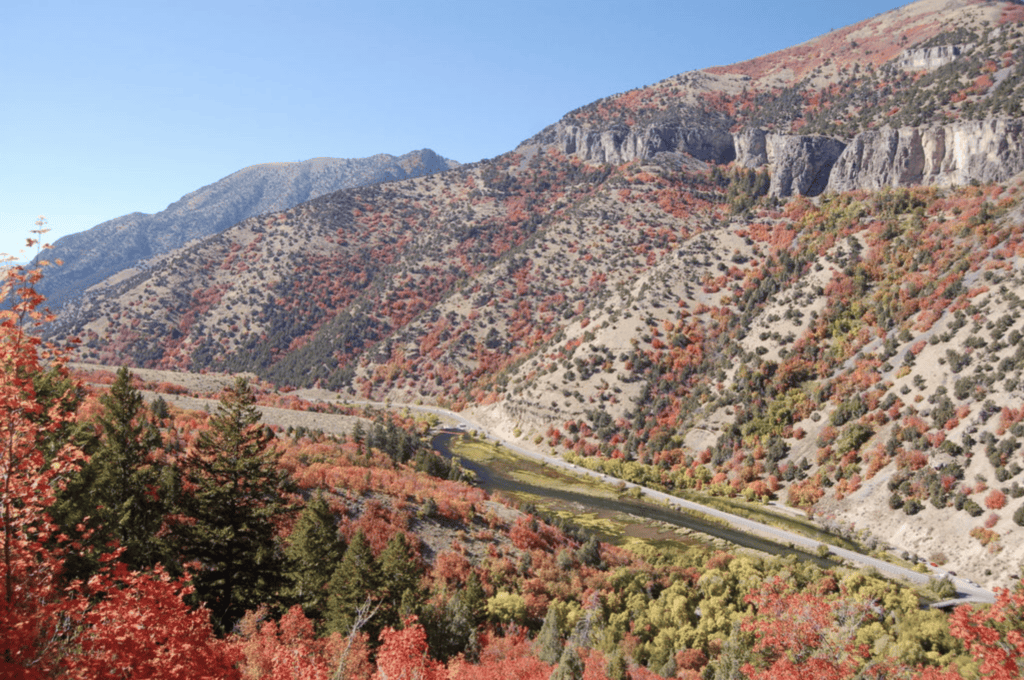
A locals’-favorite fall drive in northern Utah, Monte Cristo (State Route 39) flies a bit under the radar compared with routes farther south. Running between Huntsville and Woodruff, the road climbs past 9,000 feet near Monte Cristo Summit, opening into wide-open meadow and valley views.
Expect golden aspens mixed with spruce and fir near the summit, with sagebrush and riparian color lower down; best timing runs mid-to-late September. Driving the byway itself is free; only an overnight stay at Monte Cristo Campground carries a fee. The road closes for the winter, typically from late November through mid-May.
Central Utah
Peak dates: Sept. 20-Oct. 5
Nebo Loop Scenic Byway
Connecting Payson and Nephi, the Nebo Loop is a 35-mile national scenic byway that climbs above 9,000 feet beneath Mount Nebo, Utah’s tallest peak in the Wasatch Range. Highlights include Payson Lakes, the short hike to Grotto Falls, and Devil’s Kitchen, a red-rock geologic site known for its eroded cliffs and spires. Payson Lakes charges a day-use fee (an annual Payson Lakes/Maple Lake pass is also available); driving the rest of the byway and stopping at Devil’s Kitchen is free.
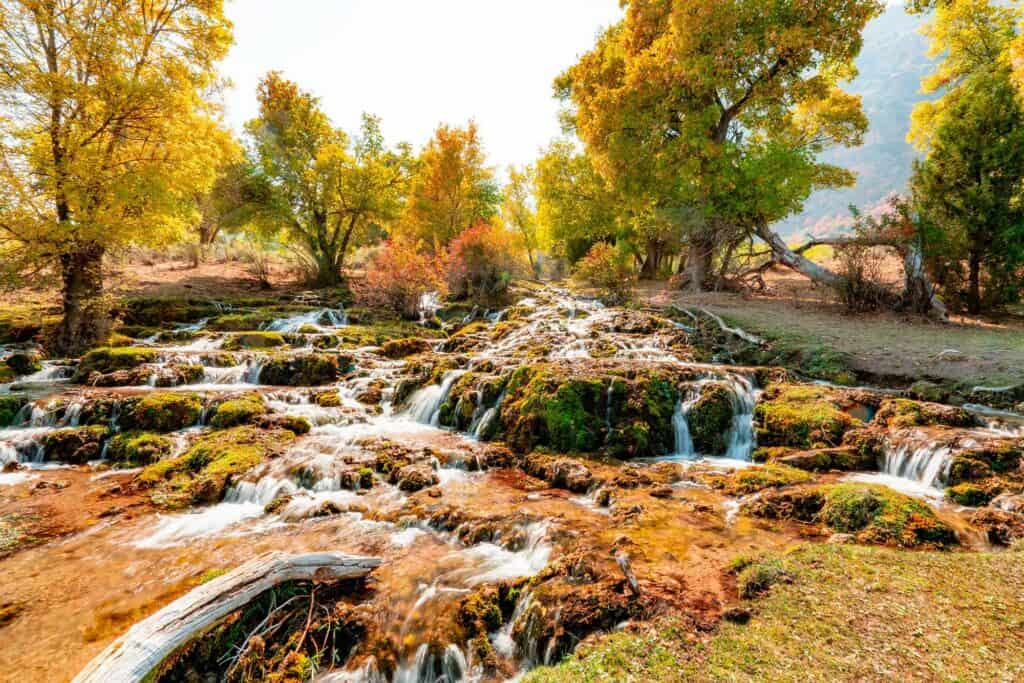
Pando and Fishlake National Forest
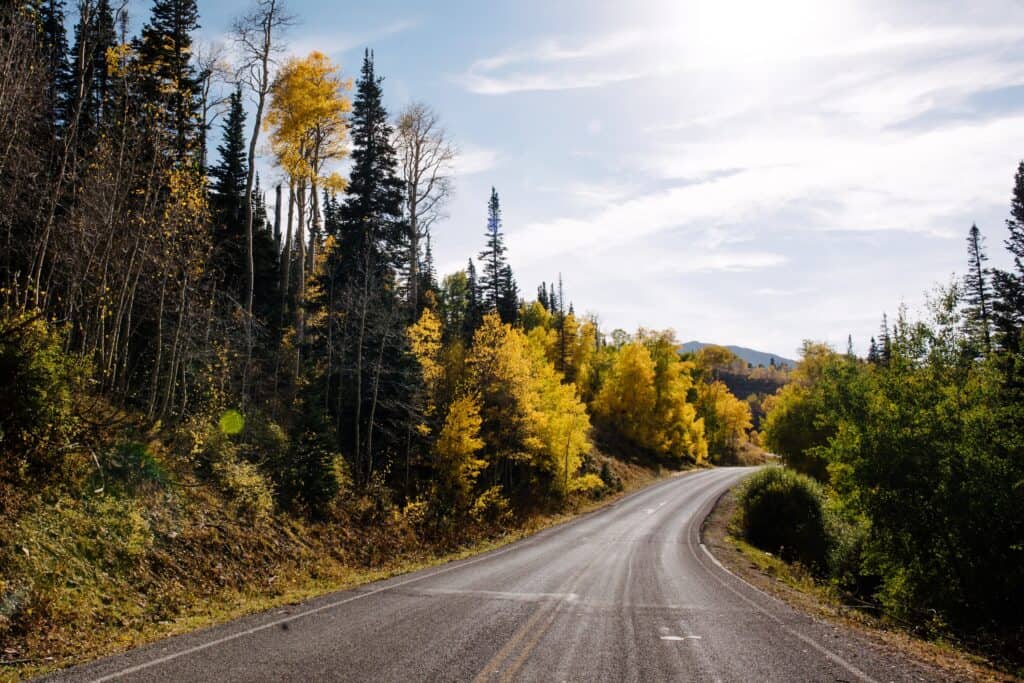
Roughly halfway between Richfield and Torrey, Pando sits just off State Route 25 near Fish Lake. Because the grove is a single connected organism, it tends to turn color in near-unison, making for a strikingly uniform wall of gold. Viewing it from the roadside pullouts is free, with no permit required.
Southeastern Utah
Peak dates: Sept. 25-Oct. 15
This window covers the high-elevation aspens in the La Sals; cottonwoods along the Colorado River in Moab turn later, keeping their color into late October and November.
La Sal Mountain Loop
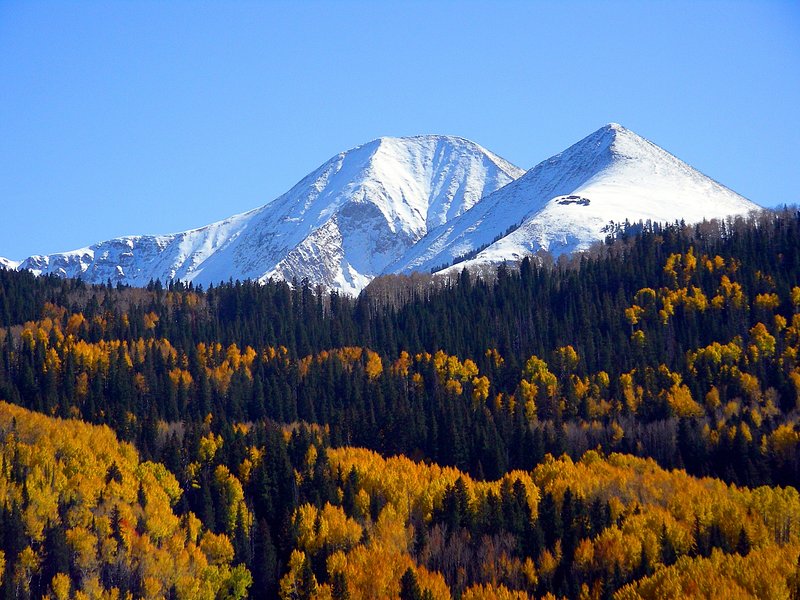
Above the red rock of Moab, the La Sal Mountains climb past 12,000 feet, and the roughly 60-mile La Sal Mountain Loop Road is one of the more dramatic drives in the state, climbing through golden aspens with red desert views of Arches and Canyonlands national parks visible in the distance. It’s far less crowded than the Alpine Loop. Down in town, cottonwoods along the Colorado River hold their signature shade into November.
The loop itself is a free public road with no entrance fee; nearby Arches and Canyonlands charge their own separate park entrance fees if you plan to detour into either.
Southern Utah
Peak dates: Sept. 15-Nov. 5
Utah’s national parks and high plateaus bring up the rear of the season, but they also span the widest window of any region, from Cedar Breaks’ aspens in mid-September to St. George’s low-elevation color holding into November.
Cedar Breaks National Monument
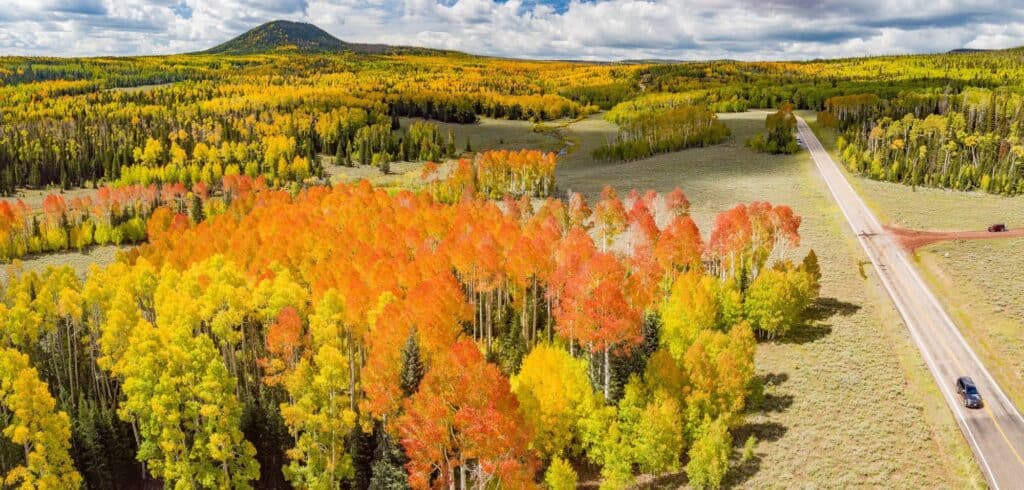
At more than 10,000 feet, Cedar Breaks is one of the earliest and most reliable spots in southern Utah to see color, typically peaking from mid-to-late September. Quaking aspens ring a natural amphitheater of red and orange rock along Utah State Route 148, with the Point Supreme Overlook and the Alpine Pond Trail among the best viewpoints.
Entrance is $25 per vehicle for a seven-day pass, and the America the Beautiful annual pass is accepted. Route 148 closes for the winter, so this is strictly a fall-before-the-snow-flies destination.
Zion National Park
Zion offers two distinct windows. Kolob Canyons, the park’s less-visited northwest section, turns first with golden aspens. The main Zion Canyon, with its cottonwoods and maples along the Virgin River, peaks weeks later and holds color into November, making this a good option for anyone planning a late-season trip. Around St. George, lower-elevation color can hold on longer still, making the St. George/Zion corridor the longest fall season anywhere in the state.
Entrance is $35 per vehicle for seven days (also covered by the America the Beautiful pass); as of Jan. 1, 2026, non-U.S. residents age 16 and up pay an additional $100 per-person surcharge.