When it’s time to unplug, it’s time for a vacation. Why not give dispersed camping in Georgia a try? Here’s everything you need to know about this trending camping style.
When wanderlust strikes, some folks immediately book flights and hotels abroad while others head to the nearest beach. Those seeking a more peaceful refuge take to the woods for camping.
Camping allows you to be fully immersed in nature, surrounded by trees rustling, birds chirping, and campfires crackling. Few things can beat popping up a tent with access to waterfalls, swimming holes, hikes, and more, plus it’s an unmatched chance to be away from work and cell towers to be truly offline.
Today’s campgrounds cover all bases. There are yurts and other glamping experiences which in some cases rival even the most luxurious 5-star hotels. There are sites at private RV resorts and some state parks with concrete slabs for even, dry set-up. There are campgrounds centered around a stocked fishing pond or direct access to a popular trailhead.
And, there are campsites that are so off the grid, they’re only accessible by hiking in with just the items on your back. But one growing trend is dispersed camping, an almost unofficial, leave-no-trace style that skips designated sites and paid campgrounds altogether in favor of open, undeveloped public land.
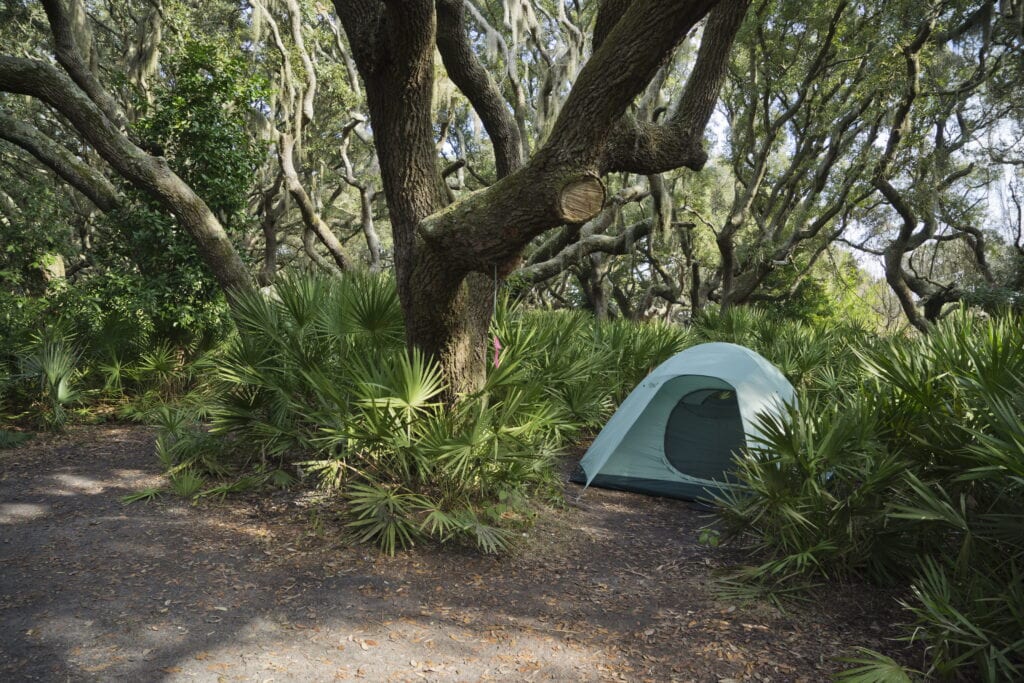
What is dispersed camping?
By definition, dispersed camping is free camping on public land, generally National Forests, outside of a developed or designated campground. There aren’t any services or facilities provided. No trash pick-up, fire pits, or facilities. Just campers and the land around them.
Dispersed camping has likely existed for as long as public land has. Early campers found their own spots in the woods long before formal campgrounds existed. The practice took on a more official shape with the creation of the U.S. Forest Service in 1905, which began managing the forest reserves, established in 1891, that would later become today’s national forests.
In recent years, however, dispersed camping has risen in popularity due to overcrowded and increasingly expensive campgrounds, the post-pandemic boom in outdoor recreation, and the rise of van-life culture on social media. If you’re looking for scenic dispersed camping in Georgia, read on!
The state is home to two national forests: Chattahoochee National Forest and the Oconee National Forest
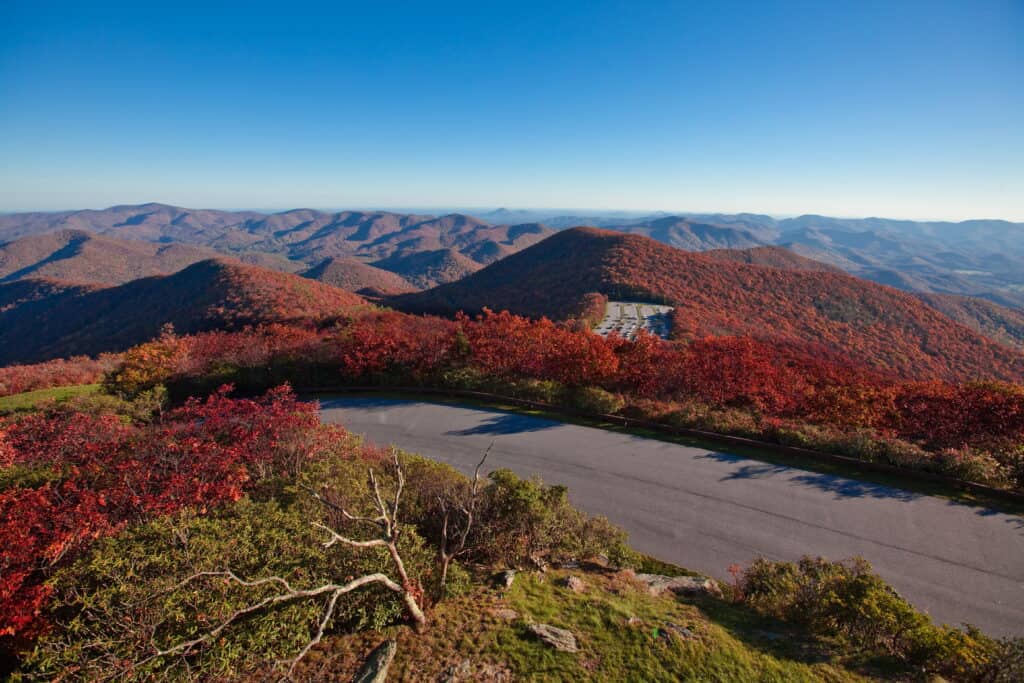
Both are managed together as The Chattahoochee-Oconee National Forest. They span more than 865,000 acres across 26 counties, and include some of the state’s most popular natural attractions such as Brasstown Bald, Georgia’s highest peak, and the southern start of the Appalachian Trail.
Since dispersed camping is unofficial and unmarked, only one spot is named outright by the U.S. Forest Service on its official recreation pages. The rest have earned their reputation the old-fashioned way, through word of mouth and years of campers returning to the same forest roads.
A no-frills field in the Cohutta Mountains draws campers seeking real solitude
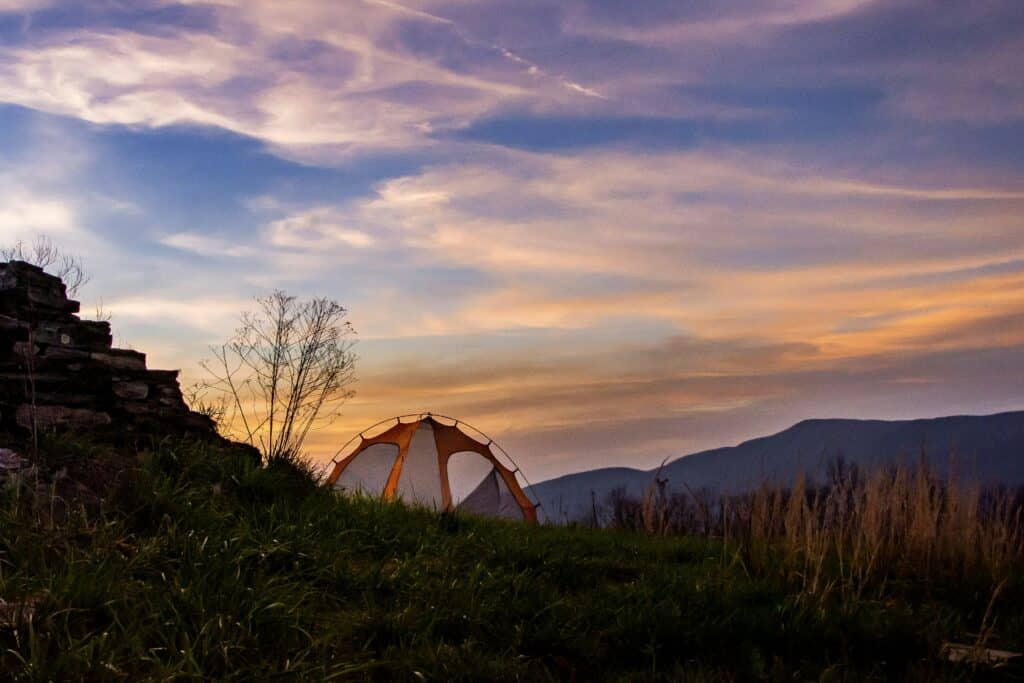
This large, grassy meadow does not have designated campsites, water, or restrooms. As such, Ball Field is in every way the definition of dispersed camping. It is, however, the only U.S. Forest Service-sanctioned dispersed camping area in Georgia.
Located in Murray County, Ball Field sits approximately one mile from the Lake Conasauga Recreation Area, where campers will find $5 parking. Campers should plan to pack in everything they need and pack out everything they bring, including trash and human waste.
From Ball Field, hikers can access Emery Creek Trail, or for those interested in Cohutta Wilderness hiking, Tearbritches Trailhead sits across the road.
A hidden North Georgia cascade shares its banks with a scattering of tent sites
This stretch of Dicks Creek, also known locally as Waters Creek Falls, offers a handful of primitive campsites tucked along a single winding forest road. Some are close to the water while others sit just off the main trail.
The waterfall is a popular place for day tourists, and with only five or six spots available, arriving early makes the difference between having a campsite or not.
For a bonus stop, nearby DeSoto Falls, with two waterfalls, is a scenic add-on for campers looking to fill a second day before heading home.
A restored Blue Ridge stream keeps its wild brown trout close to camp
Jones Creek Dispersed Area is situated in the Blue Ridge Ranger District in Lumpkin County. It offers riverside camping along a restored stream known for its wild brown trout population.
Roughly eight to ten designated sites run along the creek, some large enough for groups. Getting there means navigating Forest Service Road 77A, which turns rough fast after rain and calls for a high-clearance vehicle.
A nearby trail leads to Jones Creek Falls and a series of small cascades. Take note: anglers will need both a Georgia fishing license and a trout license to cast a line.
A remote barrier island gives boaters and paddlers a coastal escape from the mainland
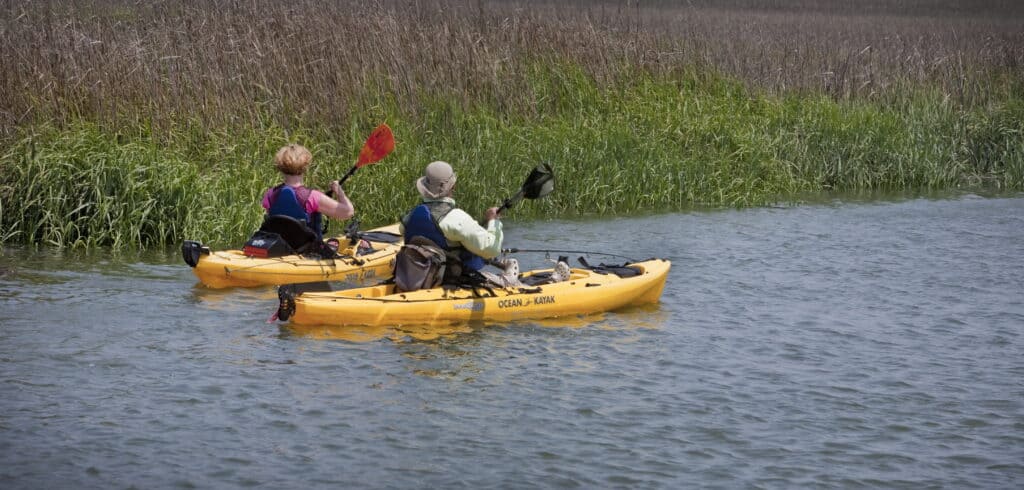
Near Savannah and only accessed by water, Little Tybee Island offers dispersed camping on the coast.
This natural area and wildlife reserve spans more than 6,500 acres, including marsh, beach, and maritime forest. With no bridges, docks, or development of any kind, reaching it requires a kayak, canoe, or private boat, making it one of the more adventurous destinations on this list.
Like our other dispersed camping in Georgia sites above, camping here follows leave-no-trace principles. That means packing in everything you need and packing out everything you bring, including waste.
Beyond camping, the island’s undeveloped beaches are ideal for shelling and birdwatching, and boaters often pair the trip with a stop at the Tybee Island Lighthouse.
It’s worth noting the rules here have been in some flux, particularly after illegal semi-permanent camps and structures cropped up on the island. Anyone planning a trip should check directly with Coastal Resources or the Wildlife Conservation Section before heading out to confirm current rules and regulations.
Boondocking: Another type of camping
For RVers and van-lifers, it’s also worth knowing about this trending, free, no-hookup camping that’s a close cousin to dispersed camping. Boondocking is really about the style of camping, rather than where it happens.
That can mean a night in a National Forest, at a Wildlife Management Area, or on Army Corps of Engineers land, but it can just as easily mean parking overnight in a Walmart or Cracker Barrel lot (with the owner’s blessing), staying on a friend’s rural property, or pulling off on any other stretch of unimproved land where RV and van camping isn’t prohibited.