From biblical references to double meanings, these Georgia town names range from Southern charm to silly strangeness.
The Peach State is no stranger to quirk. Whether it’s approving exotic animals for pets or hosting an annual fire ant festival, Georgia has its fair share of oddities. And for some towns, that uniqueness is baked right into the name. Some town names are belly-laugh-inducing, while others are wildly inappropriate.
And trust me, I speak from experience. I myself spent my formative years in Cumming, a town name that brought about many a joke when I landed myself in college in a neighboring state. So buckle up, dear reader.
We’re taking a tour through the Georgia map, one interestingly named Georgia town at a time. Smirks are encouraged; smiles are guaranteed.
Santa Claus
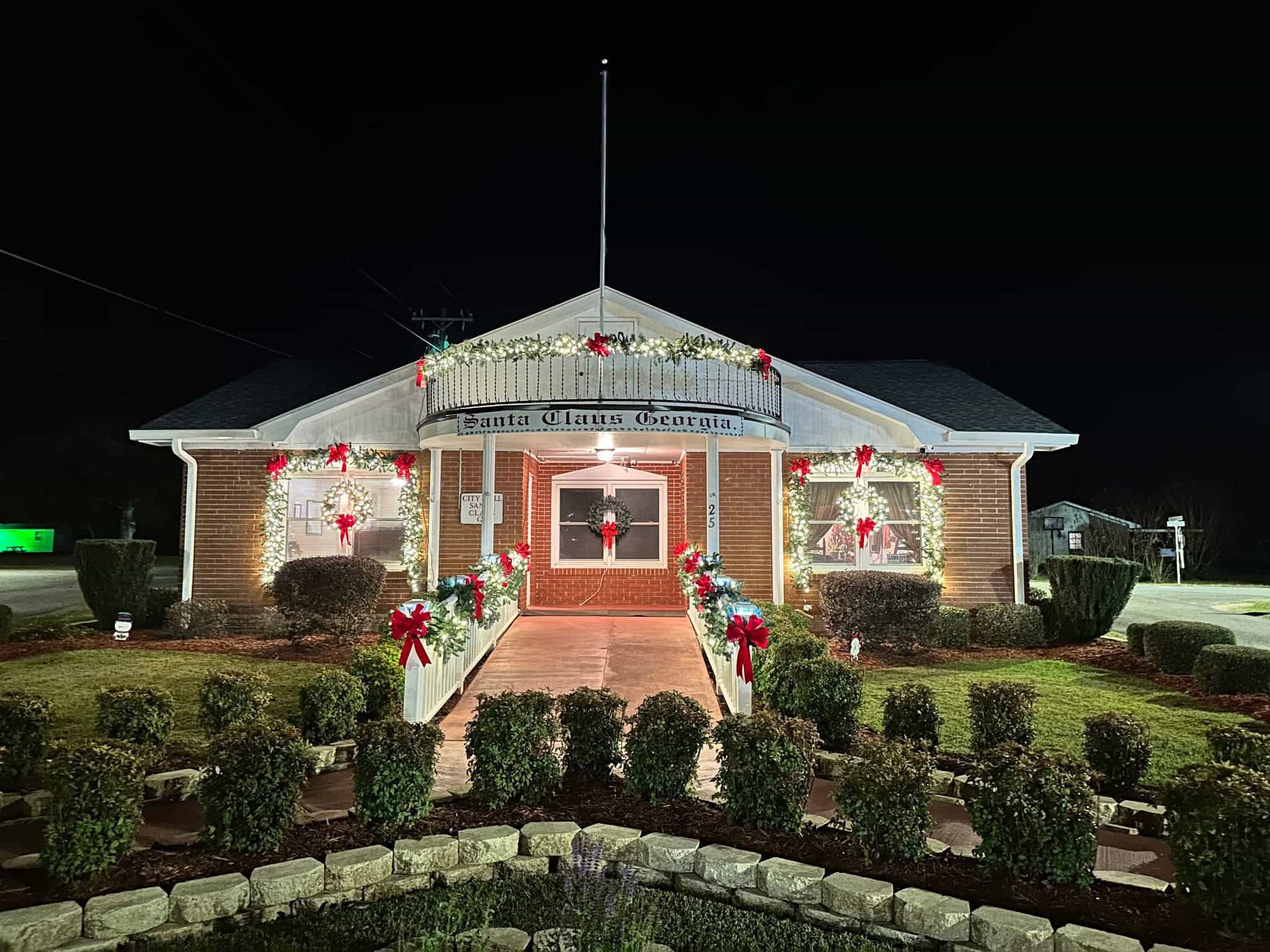
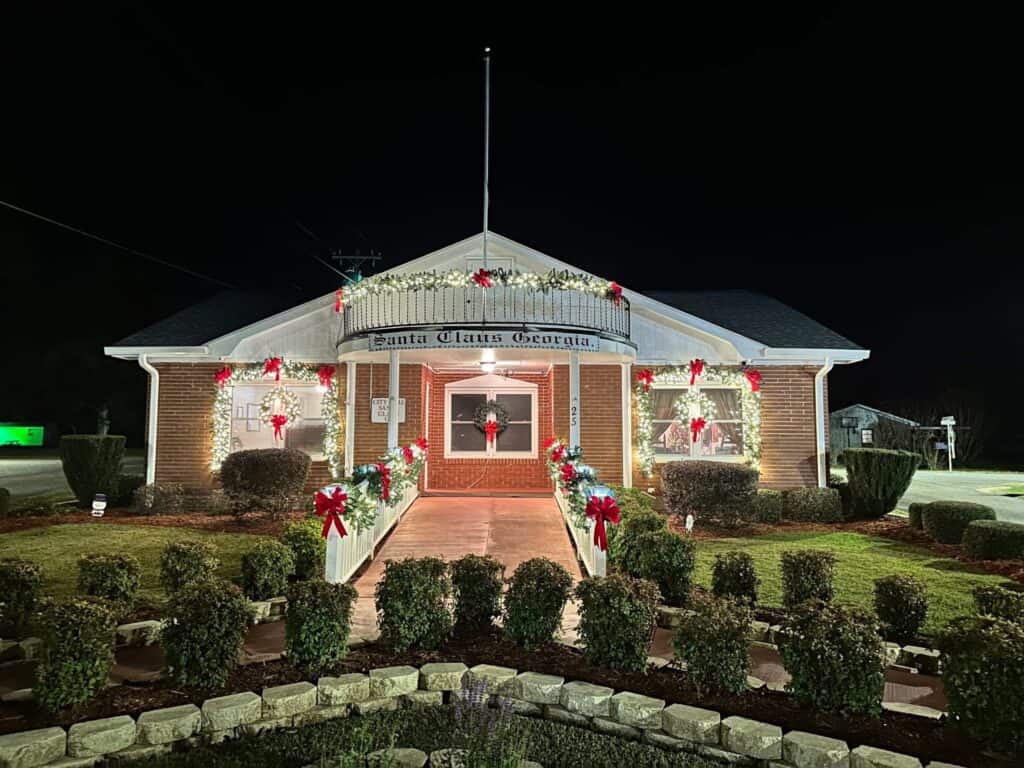
Santa Claus is one of just a handful of places in the world that share the red-suited man’s name. This one sits only 15 minutes from Vidalia. Pecan farmer Calvin Greene founded it, hoping the festive name would lure tourists to his pecan business.
Today, the town embraces its identity, with Christmas-named streets like Candy Cane Lane and Reindeer Street. City Hall itself sits at 25 December Drive.
Bethlehem
Bethlehem got its name from a local Methodist church, and it leans into the biblical connection. Street names include Star Street and Manger Avenue.
Every December, people drive in from across Georgia to have their holiday cards stamped with the post office’s Bethlehem postmark, applied by hand on a canceling machine. In peak years, the tiny office has processed over 130,000 pieces of Christmas mail.
Enigma
There’s no mystery here. Before it was Enigma, this Berrien County town was known as “Gunn and Weston.” When founder John A. Ball decided the settlement deserved an official designation, he and other residents presented two options to state officials: Lax and Enigma.
He soon found that Lax was already spoken for, leaving Enigma as the winner. At the result, Ball shrugged and reportedly retorted, “It was a puzzle what to name it anyway.” What an enigma! The town was incorporated in 1906.
Climax
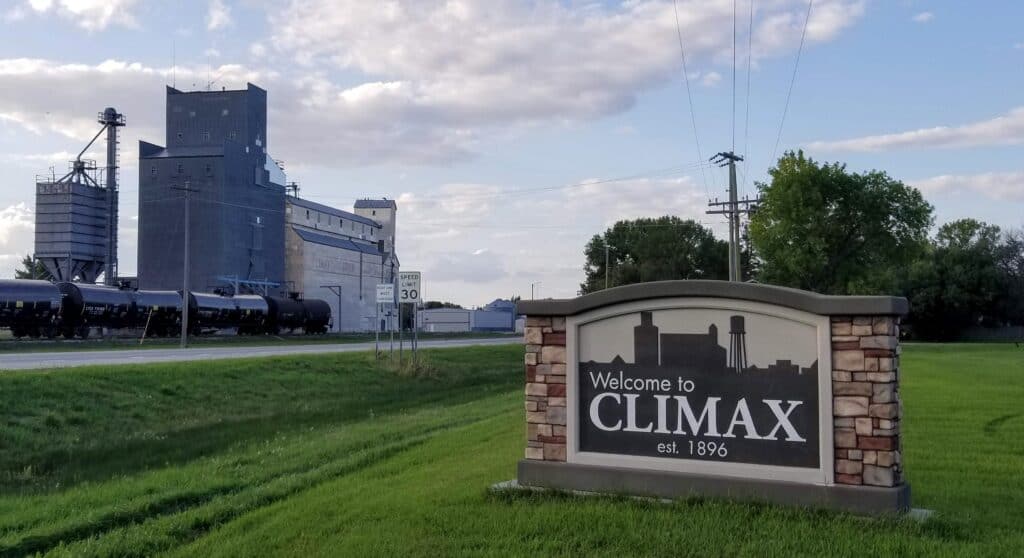
This moniker might make you raise your eyebrow, but before you get any wild ideas, this South Georgia town received its title in 1883. It’s named because it sits at the highest point on the railroad line between Savannah and the Chattahoochee River.
Between
Earning its name honestly, Between sits directly in the middle of Walton County’s two largest cities, Loganville and Monroe (and roughly equidistant from Atlanta and Athens). In the early 1900s, the town faced a choice. It could be annexed by one of its larger city neighbors or strike out on its own.
Residents chose independence, incorporating in 1908. When it came time to pick a name, they didn’t overthink it. Between was a perfect fit. It’s also the name of a book, Between, Georgia, by author Joshilyn Jackson.
Social Circle
Legend says this town got its name from a weary traveler who stopped at the settlement’s well and was greeted warmly by a group of locals. But other accounts claim the town was so-called before this game of telephone began.
Regardless, Social Circle has embraced its name, becoming known as “Georgia’s Greatest Little Town.” Its small-town charm has also made it a favorite filming location, appearing in productions like “The Dukes of Hazzard” and “Sweet Magnolias.”
Ty Ty
Pronounced tie-tie, the town takes its name from Ty Ty Creek, itself named for the titi trees along its banks. The agricultural community of under 700 sits about 11 miles west of Tifton, and is home to TyTy Nursery, a mail-order plant grower.
Doerun
Unsurprisingly, this town name comes straight from nature. In its early days, hunters spotted a small stream cutting through trees and called it “a perfect doe run.” The name stuck, and the town was officially chartered in 1899.
Today, this Colquitt County community of fewer than 1,000 residents still runs on its land and agricultural roots. It’s best known for its May Day parade and festival held annually in the spring.
Ideal
Its first title was Joetown, but when two railroad businessmen came to town and noticed the Macon County pass-through would be an “ideal” spot for a train station, they figured they were onto something. The Georgia General Assembly officially incorporated the town of Ideal in 1906. Today, Ideal covers just over one square mile and is home to 400 residents.
Experiment
Experiment gets its name literally. It comes from the Georgia Experiment Station, established in Spalding County in 1888 as one of the nation’s first state agricultural research stations. The station’s work led to improved crop varieties like Empire cotton and Georgia 101 corn, and helped shape food preservation and improve pest control. Since then, Experiment has helped develop and improve farming practices in Georgia and beyond.
Ball Ground
The name comes from stickball, a traditional Cherokee game similar to lacrosse, played here long before settlers arrived and named the town for it.
Local lore, first recorded in an 1891 Ball Ground News account, adds a wilder twist. Legend (and the newspaper) says the site hosted a 1532 game (on July 4th, no less) between Native Americans and Hernando de Soto’s men, refereed by the Fountain of Youth founder himself. It’s a fun story, but don’t expect a historical marker to back up the de Soto claim.
While the tall tale doesn’t have any firm facts behind it, the references to the indigenous game and town name are rooted in oral histories.
Shakerag
Also known as Sheltonville, this Johns Creek community was nicknamed Shakerag sometime after settlers found a gold nugget nearby in the 1840s, sparking a small-scale gold rush along Cauley Creek.
Today it’s a quiet residential area that’s home to Shakerag Park, which boasts Georgia’s first cricket scoreboard. There, you’re more likely to see shaking pom-poms, instead of rags, to cheer on local teams.
Butts County
This one might be cheating just a little. After all, it’s the name of an entire county, not just a town, but it couldn’t be left out. It rounds out the caboose of the list, pun very much intended.
It’s named after Captain Samuel Butts, who died from a gunshot wound during the Creek War in 1814. The county also has a surprising claim to fame. Some of its landscapes served as the backdrop for Hawkins, Indiana, in “Stranger Things” on Netflix.