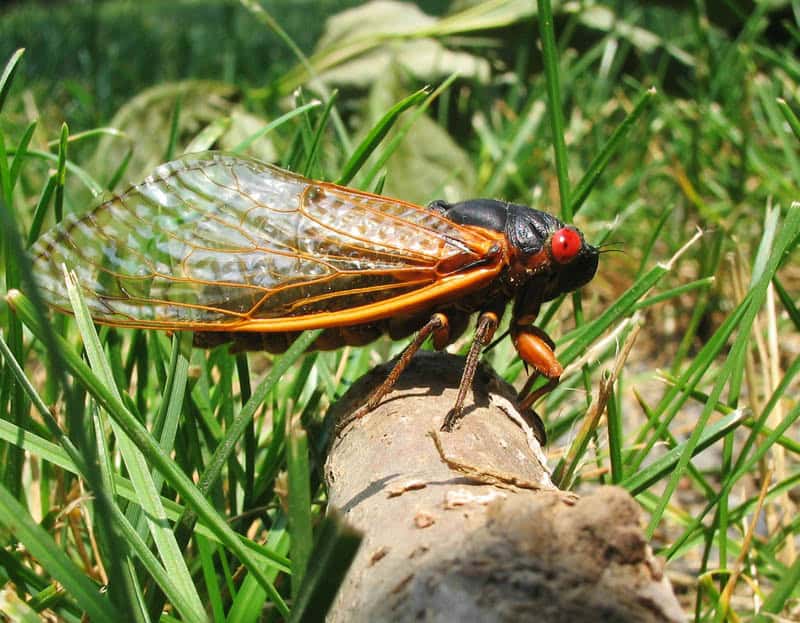
Can cicadas predict how hot of a summer we’re going to have? Science says no, but it’s a fun theory.
Cicadas have provided the soundtrack to countless Texas summers. They have a distinct noise you quickly learn to become familiar with, but what if that singing was carrying a message along with it? Some residents have established a theory that during the years when cicadas begin their activity early, it means we’re in for a particularly hot summer. But is there any truth behind that?
If you ask entomologist Molly Keck, who works in San Antonio with the Texas A&M AgriLife Extension Service, the short answer is no. Keck spoke with Chron about cicadas and their patterns and noted that their behavior actually tells us more about springtime than summer. We’ll get into why that is below, but first let’s go over some basic facts about these insects so we can have a better understanding of Keck’s scientific overview.
Male cicadas are the only ones that produce the loud buzzing or singing noise we associate with the bugs. They create the sound by rapidly buckling and unbuckling tymbals (AKA ribbed membranes) on their abdomens and do this as a way of attracting females. In response, the female cicadas will flick their wings, which does make a soft sound of its own, but it’s not nearly as loud or noticeable as the distinctive buzzing of the males.
So, why are people saying that cicadas have something to do with how hot the summer is going to be? The insects typically start to emerge each year when soil temperatures are around 65 degrees, but they don’t start singing until temperatures increase to roughly 72 to 75 degrees. Once it gets into the high 80s or low 90s though, they’ll reduce the amount of noise they’re making and move into shadier spots to prevent heat stress.
Keck said, “The earlier they come out, the sooner we start to hear the singing,” which really says more about springtime temperatures than anything else.
There’s more of a connection between cicadas and spring weather than summer
The noise made by cicadas doesn’t really tell us anything about how hot summer temperatures are going to be, unfortunately. What they can tell us, though, is how warm or cold our winters have been. If the temperatures have been warmer, the soil will heat up more quickly, which means cicadas will come out early because they’ll hit that ideal 65 degree sweet spot.
As Molly Keck said during an interview with Chron, “If we had a really cold winter and it didn’t warm up for a while in the spring, then we’re going to hear them later. The variation is going to be more dependent on previous weather patterns.” If it’s a rainy winter, that may delay their emergence, but Keck said it can be hard to tell sometimes because “Texas weather is so random. We can have a mild spring and then a very hot summer, or a cold spring and then a hot summer.”
Another monkey wrench in the equation? Several species of cicada call Texas home, and each one has it own distinct call and preferences regarding ideal temperatures for emergence. Keck explained, “It’s hard to figure out what’s going on because there are so many variables.” She added, “I feel like I’m hearing cicadas later this summer than I ever have. We’re already in the middle to end of June, and I just started noticing them last week.”
All that is to say: There’s really no way of telling how hot things are going to get in the Lone Star State, but at least we know that when the temperatures start to rise, that incessant buzzing will slowly quiet down as the cicadas similarly try to find a cool shaded place to hang out.